




Showing 1–16 of 492 results

Filter by price
Filter by brands

- National Instruments
- PXI Systems
- PXI Chassis
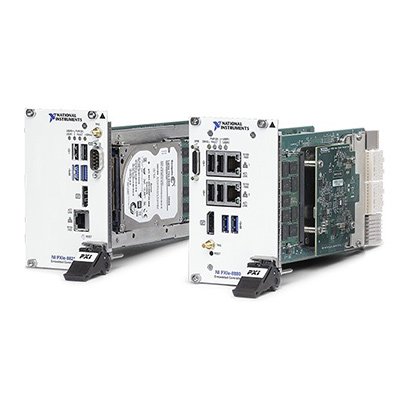
- PXI Controller
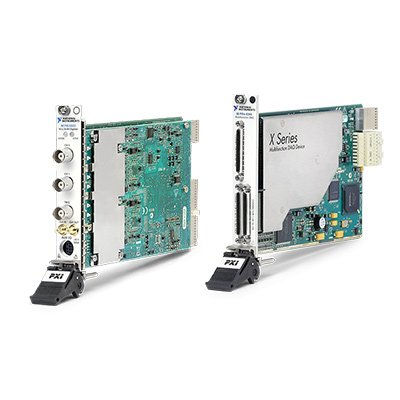
- PXI Modules
- PXI Semiconductor Test
- PXI FPGA and RIO Modules
- PXI MXI Interfaces
- PXI Programmable Power Supplies & SMU
- PXI Sensor Measurements
- PXI Signal Generators
- PXI Vision
- PXI Data Acquisition
- PXI Oscilloscopes/Digitizers
- PXI Counter/Timers
- PXI RF and Wireless Test
- PXI GPIB, Ethernet and VXI
- PXI Switches
- PXI Digital Multimeters
- PXI Digital Input/Output
- PXI Industrial Communication
- PXI Dynamic Signal Analysis
- PXI Data Streaming
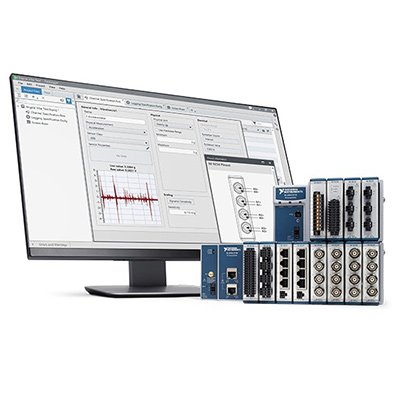
- CompactDAQ Systems
- CompactRIO Systems
- PCI Modules
- USB Devices
- USRP Software Defined Radio Device
- PXI Systems
- keysight
- Tektronix

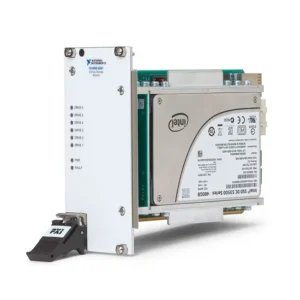

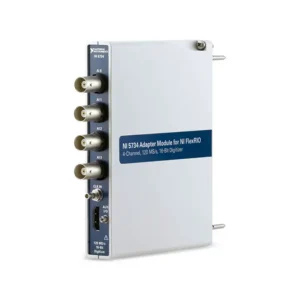


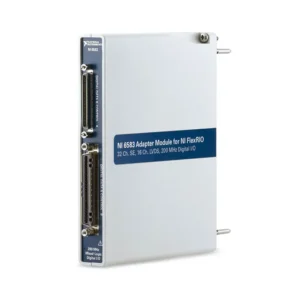

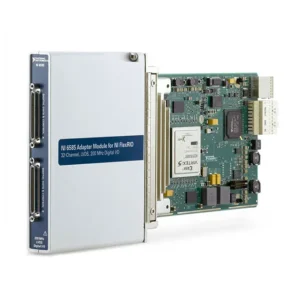

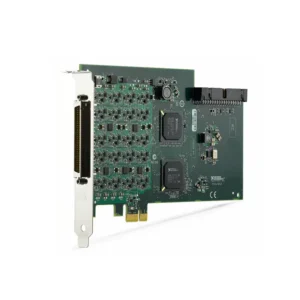
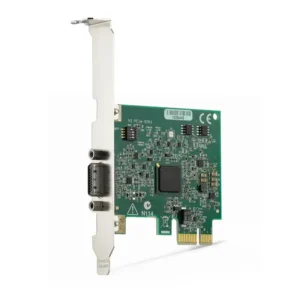
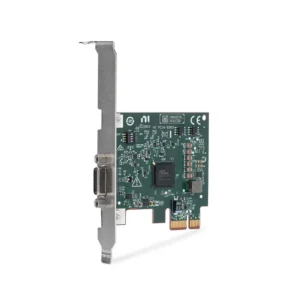

NI PXI and PXIe Systems
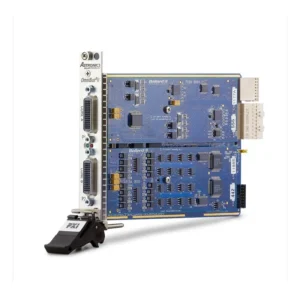
NI PXI Systems provide a modular platform for automated test, measurement, data acquisition, control and validation. A complete PXI system combines a chassis, embedded or remote controller, instrument modules, software, cables and accessories into one synchronized test platform.
PXI and PXI Express systems can integrate oscilloscopes, digitizers, digital multimeters, data acquisition modules, RF instruments, source measure units, programmable power supplies, switches, FPGA hardware and sensor interfaces. Their modular architecture allows engineers to configure systems for current requirements while retaining the ability to expand or replace individual components.
What Is a PXI System?
PXI stands for PCI eXtensions for Instrumentation. It combines the electrical architecture of PCI or PCI Express with a rugged modular form factor, dedicated timing resources and software-based instrument control.
A PXI system normally contains three primary hardware groups:
- A chassis that provides slots, power, cooling, PCI or PCI Express communication and timing resources
- An embedded controller or remote-control connection that runs the operating system and test software
- One or more instrument modules selected for the required measurements, stimulus, switching or processing
Compared with a collection of standalone instruments, PXI provides a compact and highly integrated platform with shared communication, triggering and synchronization resources. It is widely used where channel density, repeatability, automation and coordinated measurements are important.
Core PXI System Components
| System Component | Function | Key Selection Criteria | PXISOURCE Category |
|---|---|---|---|
| PXI Chassis | Provides module slots, backplane communication, power, cooling, triggering and reference clocks | Slot count, PXI or PXIe compatibility, hybrid slots, bandwidth, cooling and synchronization | PXI Chassis |
| PXI Controller | Runs the operating system, drivers, test application and data-processing tasks | Processor, memory, storage, operating system, peripheral connections and chassis interface | PXI Controller |
| PXI Modules | Perform measurement, signal generation, switching, communication, synchronization and processing | Measurement type, channels, accuracy, bandwidth, sample rate, isolation and driver support | PXI Modules |
| Cables and Accessories | Connect instruments to devices under test, sensors, fixtures and external systems | Connector, pinout, voltage, bandwidth, impedance, shielding and terminal-block compatibility | Selected according to the installed modules |
| Software and Drivers | Configure instruments, execute test sequences, analyze data and generate reports | Operating-system support, driver version, development environment and application compatibility | NI drivers, LabVIEW, TestStand, VeriStand and compatible third-party software |
A chassis, controller and module may each be described as PXI compatible while still being unsuitable as a complete system. Verify the slot type, PCI Express topology, power, cooling, operating system, driver version, connector and accessories before ordering.
PXI and PXI Express Comparison
| Feature | Classic PXI | PXI Express |
|---|---|---|
| Data Bus | Parallel PCI architecture | Serial PCI Express architecture |
| Typical Use | Legacy systems and applications with moderate data-transfer requirements | New systems, high-speed acquisition, RF, FPGA and data-streaming applications |
| Bandwidth | Shared PCI bandwidth | Higher point-to-point and switched PCI Express bandwidth |
| Module Connector | PXI-compatible backplane connector | PXIe-compatible connector with PCI Express lanes |
| Backward Compatibility | Accepts compatible classic PXI modules | Selected chassis hybrid slots may accept compatible PXI modules |
| Best Selection Strategy | Maintain an existing validated PXI installation when its performance remains sufficient | Preferred for new systems requiring higher throughput and future expansion |
PXI and PXI Express modules are not mechanically or electrically interchangeable in every slot. A PXIe chassis may provide PXIe peripheral slots, hybrid peripheral slots and specialized timing or system-controller slots. Review the exact chassis slot map before assigning modules.
Main PXI Instrument Families
| Instrument Family | Primary Function | Typical Applications |
|---|---|---|
| PXI Data Acquisition | Multifunction analog input, analog output, digital I/O and counter measurements | Automated measurement, laboratory research, process validation and hardware testing |
| PXI Oscilloscopes and Digitizers | High-speed waveform acquisition and transient capture | Electronic validation, communications, radar and component characterization |
| PXI Digital Multimeters | Precision voltage, current, resistance and frequency measurements | Functional test, device characterization and production test |
| PXI Signal Generators | Analog, arbitrary waveform and function generation | Stimulus-response testing, device validation and waveform simulation |
| PXI Power Supplies and SMUs | Programmable power, precision sourcing and simultaneous measurement | Semiconductor, battery, power-management IC and component testing |
| PXI Switches | Automated signal routing and channel expansion | Production test, high-density scanning and multipoint measurements |
| PXI RF and Wireless Test | RF generation, signal analysis and transceiver testing | Wireless devices, aerospace, radar, communications and spectrum applications |
| PXI Semiconductor Test | Parametric measurement, digital pattern testing, power and signal routing | Wafer test, IC characterization, validation and production test |
| PXI Sensor Measurements | Conditioned acquisition for temperature, strain, vibration, pressure and displacement sensors | Structural, automotive, aerospace, acoustic and environmental testing |
| PXI FPGA and RIO Modules | User-programmable FPGA processing and deterministic I/O | Custom protocols, inline processing, real-time control and high-speed triggering |
| PXI Synchronization | Clock distribution, timing, triggering and multichassis synchronization | Phase-coherent acquisition, coordinated stimulus and distributed test systems |
| PXI Data Streaming | High-throughput storage and continuous data transfer | RF recording, long-duration digitizer acquisition and waveform playback |
How to Configure a PXI System
1. Define the Test Requirements
Begin with the devices and signals that must be measured or generated. Record the signal type, voltage and current limits, frequency range, required accuracy, channel quantity, sample rate, test duration, isolation and synchronization requirements.
Separate essential requirements from future expansion. This prevents the system from being underspecified while avoiding unnecessary cost for features that will not be used.
2. Select the Instrument Modules
Build the module list before selecting the chassis. For every module, record its PXI or PXIe interface, required slot width, maximum power consumption, cooling requirement, connector type and necessary terminal blocks or cables.
Check measurement specifications under the actual operating conditions. Maximum sample rate, resolution or channel count alone does not establish system accuracy or throughput.
3. Select the Chassis
The chassis must provide enough compatible slots for the controller and all instrument modules. Include spare capacity for synchronization modules, PXI switches, storage hardware and future expansion.
Important chassis specifications include:
- Number and type of peripheral slots
- PXIe, hybrid and classic PXI slot compatibility
- PCI Express lane width and generation
- Backplane segment and switch topology
- Available power and cooling per slot
- Reference clocks and trigger-bus resources
- Operating-temperature and acoustic-noise requirements
- Rack-mount, benchtop or portable installation
4. Choose Embedded or Remote Control
An embedded PXI controller installs directly in the system-controller slot and provides a self-contained platform. It is often preferred for compact, transportable and validated production systems.
A remote controller connects the chassis to an external computer through an appropriate PXI remote-control interface. This approach can provide greater computing flexibility, easier workstation upgrades or access to specialized host hardware.
| Control Architecture | Advantages | Considerations |
|---|---|---|
| Embedded Controller | Integrated, compact and easier to deploy as one validated system | Processor and storage upgrades normally require controller replacement |
| Remote Desktop Computer | Flexible processor, graphics, memory and storage selection | The host PCIe slot, cable, adapter and remote link must be compatible |
| Laptop-Based Control | Portable development and field-service configuration | Connection bandwidth and operating-system support may limit demanding applications |
5. Calculate System Bandwidth
High-speed modules generate data that must pass through the module interface, chassis backplane, PCI Express switches, controller connection, system memory and storage. The slowest point in this path determines the sustainable throughput.
Estimate the payload data rate using:
Data rate = active channels × sample rate × transferred bytes per sample.
Include simultaneous instruments, input and output traffic, protocol overhead, file operations and processing requirements. Large PXIe chassis may divide slots among multiple PCI Express segments, so module placement can affect total performance.
6. Verify Power and Cooling
High-performance RF, FPGA, digitizer, processor and storage modules may require substantially more cooling than conventional instruments. Add the power and cooling requirements of every installed module and check both the chassis total and the capacity of each selected slot.
Maintain the specified airflow direction, install filler panels in empty slots and keep air inlets unobstructed. Thermal limits should be evaluated at the highest expected ambient temperature rather than only under laboratory conditions.
7. Plan Timing and Synchronization
Installing modules in one chassis does not automatically make their acquisitions simultaneous or phase coherent. Determine which modules must share a reference clock, sample clock, start trigger or timestamp.
Applications involving RF channels, synchronized digitizers, stimulus-response measurements or multiple chassis may require dedicated synchronization hardware and careful clock distribution. Trigger latency, skew, jitter and cable delay should be included in the timing design.
8. Confirm Connectivity and Accessories
PXI modules are frequently supplied without the complete cabling needed for the application. Confirm front-panel connectors, terminal blocks, breakout boxes, probes, switch matrices, interconnect cables and fixture wiring for every instrument.
Accessories must meet the signal voltage, current, frequency, impedance and insulation requirements. A mechanically compatible cable may still reduce measurement bandwidth or create an unsafe configuration.
9. Verify Software Compatibility
Check the operating system, instrument driver and application-software versions before hardware procurement. A module may remain electrically compatible with a chassis while no longer being supported by the intended operating system or current driver release.
For existing programs, also confirm the driver API, device names, channel syntax, calibration functions and replacement-module behavior. A newer instrument may require code changes even when it performs the same general measurement.
PXI System Bandwidth and Data Path
| Data-Path Element | What to Verify | Common System Risk |
|---|---|---|
| Instrument Module | PCIe generation, lane width, DMA support and transferred sample format | The module interface cannot transfer its maximum generated data rate |
| Chassis Slot | Slot type, lane width and connection to the chassis switch | A high-throughput module is installed in a lower-bandwidth slot |
| Chassis Segment | Shared upstream bandwidth and traffic from neighboring modules | Several modules compete for one PCI Express link |
| Controller Connection | Embedded or remote interface bandwidth | The controller link limits the aggregate chassis throughput |
| System Memory | Memory capacity, bandwidth and buffer architecture | Software cannot process or move buffers quickly enough |
| Storage | Sustained write speed, capacity and recording duration | Short benchmark performance does not continue through a full test |
PXI Software and Driver Ecosystem
PXI hardware is controlled through the driver appropriate to each instrument family. Common NI drivers include NI-DAQmx, NI-SCOPE, NI-DMM, NI-SWITCH, NI-FGEN, NI-DCPower, NI-RFSA, NI-RFSG, NI-Digital Pattern and FlexRIO software.
NI Measurement & Automation Explorer can be used to identify installed devices, inspect chassis configuration, run self-tests and configure supported hardware. Application development and deployment may use:
- LabVIEW for custom test, measurement and control applications
- TestStand for automated test sequencing and report generation
- VeriStand for real-time test and hardware-in-the-loop systems
- FlexLogger for supported data-logging and sensor applications
- LabWindows/CVI, C, C++, C# or Python with compatible instrument drivers
Verify licensing, operating-system support and driver compatibility for the complete system. The chassis, controller and instrument modules can require different support packages.
Typical PXI System Applications
- Automated production and functional testing
- Semiconductor characterization and production test
- Automotive electronic control unit and battery validation
- Aerospace, defense, radar and electronic warfare testing
- Wireless, RF and communications-device validation
- High-speed digitizer and waveform-recording systems
- Structural, acoustic, vibration and environmental testing
- Hardware-in-the-loop and real-time control systems
- Power electronics, energy storage and motor testing
- Scientific research and multichannel laboratory measurement
- Device calibration and metrology automation
- Legacy instrument replacement and test-system modernization
PXI System Expansion and Multichassis Systems
A PXI system can be expanded by adding modules to unused compatible slots or connecting additional chassis through supported remote-control hardware. Expansion planning should include aggregate PCI Express bandwidth, controller resources, synchronization and physical cable routing.
Multichassis systems may require dedicated timing modules to distribute reference clocks and triggers. If phase alignment or deterministic response is required, confirm the complete synchronization architecture before selecting the expansion hardware.
Legacy PXI System Replacement
Replacing a legacy chassis, controller or instrument module requires more than selecting the newest product with similar headline specifications. The replacement may use a different PCI Express architecture, connector, accessory, timing method, operating system or driver API.
Review the following before approving a system migration:
- Classic PXI, hybrid or PXIe slot compatibility
- Controller interface and operating-system support
- Instrument driver and application-code compatibility
- Channel count, range, accuracy and bandwidth
- Triggering, clocks and synchronization behavior
- Front-panel connector and cable pinout
- Terminal blocks, switching fixtures and test adapters
- Calibration method and traceability requirements
- Chassis power, cooling and acoustic performance
- Requalification and production-validation requirements
A newer module may provide better performance while still requiring code changes, new cables, different signal conditioning or fixture rewiring. System-level validation should be completed before retiring the original hardware.
New and Pre-Owned PXI Systems
New hardware may be preferred for new production programs, long service life and current software support. Pre-owned PXI equipment can be appropriate for maintaining legacy systems, replacing discontinued modules, expanding validated test stations or reducing procurement lead time.
When evaluating pre-owned hardware, request the complete model and part number, hardware revision, functional test status, connector condition and available calibration documentation. Controllers and storage devices should also be checked for drive health, memory configuration and installed operating-system licensing.
PXI System Procurement and RFQ Guide
Provide the following information for a technically matched PXI system quotation:
- Application and device under test
- Required measurements and generated signals
- Complete module models or required instrument functions
- Signal ranges, channel quantities and sample rates
- Accuracy, bandwidth and synchronization requirements
- Required chassis size and available rack space
- Embedded or remote-controller preference
- Existing chassis, controller and module models
- Operating system and NI software versions
- Required cables, terminal blocks and accessories
- Calibration and documentation requirements
- New or pre-owned hardware preference
- Required quantity, delivery date and destination
When comparing quotations, confirm whether controllers, storage, operating systems, cables, terminal blocks, rack-mount accessories, calibration documents and software licenses are included. A quotation containing only the chassis and measurement modules may not represent a complete deployable system.
FAQ
What components are required for a complete PXI system?
A basic PXI system requires a compatible chassis, an embedded controller or remote-control interface, and at least one instrument module. Most applications also require software, drivers, cables, terminal blocks, fixtures and synchronization accessories.
What is the difference between PXI and PXIe?
Classic PXI uses a PCI-based parallel bus, while PXI Express uses PCI Express connections and provides substantially higher data throughput. PXIe is generally preferred for new high-performance systems, while classic PXI remains important for maintaining legacy installations.
Can PXI modules be installed in a PXIe chassis?
Only when the chassis provides a compatible hybrid peripheral slot and the module supports that slot configuration. A standard PXIe peripheral slot does not automatically accept a classic PXI module. Check the chassis slot map and module connector before installation.
Can PXIe modules be installed in a classic PXI chassis?
No. PXIe modules require PXI Express-compatible connectors and PCI Express backplane communication. They cannot operate in a classic PXI-only peripheral slot.
Should I use an embedded or remote PXI controller?
Use an embedded controller when a compact, self-contained and easily deployed system is preferred. Use remote control when the application benefits from an external workstation, specialized host hardware or more flexible processor and storage upgrades.
Does every PXIe slot provide the same bandwidth?
No. Slots may have different PCI Express lane widths, generations and connections to chassis switches. Multiple slots may also share an upstream link. Review the chassis topology when configuring high-speed digitizers, RF instruments, FPGA modules and storage devices.
Are modules automatically synchronized when installed in one chassis?
No. A common chassis provides timing and trigger resources, but the application must configure the relevant clocks, triggers and acquisition timing. Phase-coherent or multichassis systems may require dedicated synchronization modules.
Can different PXI instrument families be combined in one chassis?
Yes. A system can combine compatible data acquisition, RF, switching, power, DMM, digitizer, FPGA and sensor modules. The chassis must provide the correct slots, bandwidth, power and cooling for the complete configuration.
Can a PXI system operate without LabVIEW?
Yes. Depending on the module and driver, PXI instruments can be controlled through LabWindows/CVI, C, C++, C#, Python and other supported environments. Driver availability and API support should be verified for the selected operating system.
How many spare PXI slots should a new system include?
The appropriate reserve depends on the expected system life and expansion plan. Include space for future instruments, switching, synchronization or storage, while confirming that the chassis can also provide the additional power, cooling and bandwidth.
Is pre-owned PXI hardware suitable for production testing?
It can be suitable when the model, revision, functionality, calibration status and software compatibility are verified. Production systems should also maintain appropriate spare inventory and a documented replacement plan for discontinued components.
Explore PXI System Components
Select a PXI or PXIe chassis according to slot count, bandwidth and cooling requirements. Choose an embedded or remote PXI controller for system operation, then configure the required PXI instrument modules for measurement, signal generation, switching, RF, power, synchronization and data processing.
Related NI Measurement Platforms
PXI is suited to high-performance automated test systems requiring modular instruments and precise synchronization. For portable or distributed data acquisition, review NI CompactDAQ systems. For standalone real-time control and FPGA-based industrial applications, consider NI CompactRIO systems. For computer-based measurement with fewer modules, explore NI PCI and USB data acquisition products.
NI PXI Systems from PXISOURCE
PXISOURCE supports engineers, system integrators and procurement teams with PXI chassis selection, controller matching, instrument-module sourcing, slot compatibility review, system expansion and legacy-hardware replacement. Send the required measurements, module list, chassis preference, software environment and product condition for a technically matched quotation.
Need help configuring an NI PXI system? Email sales@pxisource.com or contact PXISOURCE through WhatsApp.