






Showing all 2 results

Filter by price
Filter by brands

- National Instruments
- PCI ModulesPCI Modules
- PXI Systems
- PXI Chassis
- PXI Controller
- PXI Modules
- PXI Semiconductor Test
- PXI FPGA and RIO Modules
- PXI MXI Interfaces
- PXI Programmable Power Supplies & SMU
- PXI Sensor Measurements
- PXI Signal Generators
- PXI Vision
- PXI Data Acquisition
- PXI Oscilloscopes/Digitizers
- PXI Counter/Timers
- PXI RF and Wireless Test
- PXI GPIB, Ethernet and VXI
- PXI Switches
- PXI Digital Multimeters
- PXI Digital Input/Output
- PXI Industrial Communication
- PXI Dynamic Signal Analysis
- PXI Data Streaming
- CompactDAQ Systems
- CompactRIO Systems
- PCI Modules
- USB Devices
- USRP Software Defined Radio Device
- keysight
- Tektronix

NI PCI FPGA and RIO Devices
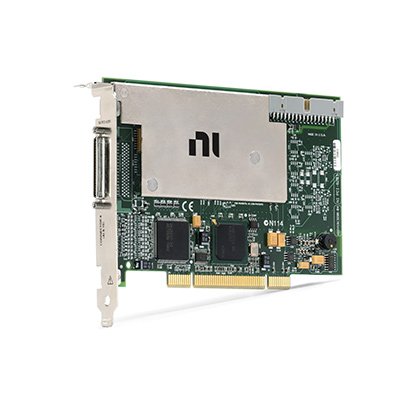
NI PCI FPGA and RIO devices combine a host-computer interface, user-programmable FPGA and application-specific I/O in a plug-in board. These devices are designed for engineers who need deterministic timing, parallel processing, custom triggering, protocol implementation or hardware-level control that cannot be achieved with a conventional fixed-function data acquisition card.
PCI and PCI Express RIO devices are commonly used in automated test, hardware-in-the-loop simulation, power electronics, motion systems, custom digital interfaces and high-speed data processing. Selecting the correct device requires reviewing the host-computer slot, FPGA resources, analog and digital I/O, connector pinout, DMA throughput, signal conditioning and software compatibility.
What Is a PCI FPGA and RIO Device?
RIO means Reconfigurable I/O. Instead of relying entirely on fixed measurement and timing functions, an RIO device includes an FPGA that can be configured with application-specific hardware logic. The FPGA operates independently of the host operating system and can perform multiple tasks in parallel with precise hardware timing.
A typical PCI or PCIe RIO application includes:
- A PCI or PCI Express board installed in an industrial or desktop computer
- A user-programmable FPGA for timing, triggering, control and signal processing
- Integrated analog, digital, counter or specialized I/O, depending on the device
- External interface circuitry, cables or terminal accessories
- A host application for configuration, logging, visualization and system control
- Registers, interrupts or DMA FIFOs for communication between the FPGA and host
The FPGA configuration is compiled into a device-specific bitfile and deployed to the supported hardware. The host application can then exchange commands and data with the FPGA while the hardware performs time-critical operations.
PCI FPGA and RIO Device Categories
| Device Category | Typical I/O Architecture | Primary Capability | Best Fit |
|---|---|---|---|
| Multifunction RIO | Analog input, analog output, digital I/O and counter or timing resources | Combines multiple measurement and control functions with programmable FPGA logic | Custom automated test, HIL and mixed-signal control systems |
| Digital RIO | Parallel or individually configurable digital lines | Custom digital protocols, pattern generation, edge detection and deterministic sequencing | Digital interface validation and device control |
| FPGA Coprocessor | FPGA processing resources with host and application-specific interfaces | Offloads repetitive, parallel or low-latency calculations from the host processor | Data preprocessing, custom triggering and algorithm acceleration |
| High-Throughput RIO | FPGA, high-speed I/O and DMA-based host transfer | Processes or reduces high-rate data before transferring it to the computer | Streaming acquisition, high-speed test and protocol analysis |
| Legacy PCI R Series | Conventional PCI interface with model-specific multifunction or digital I/O | Maintains existing R Series test and control systems | Legacy-system maintenance and validated equipment replacement |
| PCIe RIO | PCI Express host interface with FPGA-based I/O and data transfer | Provides a newer point-to-point host connection and potentially greater transfer capability | Modern PC-based FPGA test and control systems |
PCI and PCI Express are different electrical and mechanical interfaces. A conventional PCI card cannot be installed in a PCIe slot, and a PCIe card cannot be installed in a conventional PCI slot. Verify the computer motherboard, slot connector, slot width, available power and operating-system support before selecting a device.
Key Capabilities of PCI FPGA and RIO Hardware
Deterministic Hardware Timing
FPGA logic executes in hardware rather than as a normal operating-system process. This enables repeatable timing for waveform generation, event detection, trigger response, digital sequencing and closed-loop decisions. Required timing resolution depends on the FPGA clock, implemented design and I/O architecture of the exact device.
Parallel Processing
Independent FPGA functions can operate simultaneously. A design may acquire inputs, generate outputs, monitor limit signals, decode a digital protocol and transfer data to the host at the same time without scheduling every operation through one sequential software thread.
Custom Triggering and Decision Logic
The FPGA can evaluate several input conditions and generate application-specific triggers or responses. This is useful when a test must react to signal combinations, timing windows, protocol states or events that are not supported by a standard DAQ trigger engine.
Inline Signal Processing
Filtering, averaging, decimation, threshold detection, pulse measurement and other algorithms can be implemented before data reaches the host computer. FPGA preprocessing can reduce the required PCIe bandwidth and host-processor workload.
Custom Digital Protocols
Digital RIO devices can implement proprietary or specialized interfaces when the electrical levels and timing requirements are compatible with the selected hardware. Protocol state machines, handshaking, encoding, decoding and fault insertion can be implemented in the FPGA design.
How to Select a PCI FPGA and RIO Device
1. Verify the Computer Slot
Determine whether the host computer provides conventional PCI or PCI Express slots. For PCIe hardware, confirm the physical connector length, electrical lane width and available system bandwidth. A mechanically longer slot may support a smaller-lane card, but the motherboard documentation should be checked before purchase.
Also review the computer’s available slot power, cooling, adjacent-card clearance and BIOS configuration. Industrial computers should be evaluated with all planned acquisition, communication and graphics cards installed.
2. Define the Required FPGA Tasks
List every operation that must execute with deterministic timing. Typical FPGA tasks include:
- Hardware-timed analog and digital I/O
- Custom trigger generation
- Pulse-width, frequency and period measurement
- Encoder or position tracking
- Digital protocol implementation
- Closed-loop control
- Signal filtering and event detection
- Fault insertion and DUT simulation
- Data reduction before host transfer
Separating FPGA tasks from host-software tasks helps determine the required logic, memory, DSP resources and communication architecture.
3. Match the Electrical I/O
Confirm the number and type of analog inputs, analog outputs and digital lines. For each signal, review its voltage range, input impedance, output-drive capability, update rate, common-mode limits and grounding arrangement.
FPGA programmability does not change the electrical limits of the board. A digital line designed for logic-level signals must not be connected directly to 24 V industrial signals, motors, solenoids or relay coils unless the hardware documentation explicitly supports that connection.
External isolation, level translation, current drivers, signal conditioning and protection may be required between the RIO device and the equipment under test.
4. Size the FPGA Resources
Compare the application with the FPGA resources available on the exact device. Important resources may include:
- Lookup tables and configurable logic
- Flip-flops and registers
- Block memory
- DSP or multiplier resources
- Available clock domains
- DMA channels and FIFO capacity
- Support for external or reusable FPGA IP
A design that fits logically may still fail to meet its required clock rate. Allow resource margin for routing, timing closure, debugging functions and later feature expansion.
5. Calculate Host Transfer Requirements
When the FPGA sends continuous data to the computer, estimate the minimum payload rate:
Data rate = active channels × sample rate × transferred bytes per sample.
Use the transferred data width rather than only the converter resolution. Include timestamps, status information, headers, output streams and simultaneous devices where applicable.
The PCI or PCIe interface, DMA implementation, host memory, driver, file format and storage device must all sustain the required rate. Provide additional margin for bus overhead and temporary software delays.
6. Review Triggering and Synchronization
Determine which signals must be synchronized and how clocks and triggers will be distributed. Multiple plug-in devices do not automatically share the same sampling clock merely because they are installed in one computer.
Check the available external clock, trigger and reference connections. If the system includes DAQ, motion, communication or PXI hardware, define the complete timing architecture before ordering.
7. Confirm Connector and Cable Compatibility
PCI RIO boards may use high-density connectors that require model-specific cables, terminal blocks or custom interface assemblies. Confirm the connector type, pinout, shield arrangement, cable length and mating hardware.
When replacing an existing card, do not assume that two devices with similar channel counts use the same pin assignment. Incorrect cabling can damage the board, external circuitry or device under test.
8. Verify the Software Toolchain
Confirm compatibility between the exact hardware model and the planned versions of:
- LabVIEW
- LabVIEW FPGA Module
- NI-RIO or the applicable R Series driver
- FPGA compilation tools
- Windows or other supported operating systems
- TestStand, VeriStand or additional system software
Legacy PCI FPGA devices may require older driver, LabVIEW or compilation-tool versions. Hardware compatibility and source-code migration should be checked before changing the development computer or operating system.
LabVIEW FPGA Development Workflow
LabVIEW FPGA provides a graphical environment for creating hardware logic for supported NI FPGA targets. A typical project contains separate FPGA and host components.
- Create the supported RIO hardware target in a LabVIEW project.
- Configure the device I/O and FPGA resources.
- Develop the FPGA VI for deterministic and parallel operations.
- Simulate or test the design where supported.
- Compile the FPGA VI into a target-specific bitfile.
- Download or deploy the bitfile to the device.
- Use a host application to configure, monitor and exchange data with the FPGA.
- Validate timing, electrical behavior and error handling on the complete system.
The host application may communicate through controls, indicators, interrupts or DMA FIFOs, depending on the device and application. Large continuous data streams normally use DMA, while configuration values and low-rate status information can use registers.
PCI RIO Compared with Other NI Platforms
| Platform | Processing Architecture | I/O Architecture | Best Fit |
|---|---|---|---|
| PCI or PCIe FPGA and RIO | Host computer plus plug-in FPGA device | Integrated or model-specific onboard I/O | PC-based deterministic test, custom interfaces and FPGA processing |
| PCI or PCIe DAQ | Host-controlled fixed-function measurement engine | Analog, digital and counter I/O configured through the DAQ driver | Standard acquisition and generation without custom FPGA logic |
| CompactRIO | Embedded real-time processor with FPGA | Modular C Series I/O | Standalone, rugged and distributed control or monitoring |
| PXI or PXIe FPGA Modules | PXI controller with modular FPGA instrumentation | Multifunction RIO, FlexRIO or software-designed instruments | High-performance synchronized modular test systems |
A PCI FPGA card depends on its host computer and does not provide the standalone embedded real-time controller architecture of CompactRIO. CompactRIO is generally more appropriate when an application must run independently of a desktop computer or operate in a distributed industrial environment.
PCI RIO or Conventional PCI Data Acquisition?
A conventional PCI or PCIe DAQ device is normally the simpler choice when the application requires standard analog input, analog output, digital I/O or counter operations already supported by NI-DAQmx.
Select FPGA-based RIO hardware when the application requires one or more of the following:
- Application-specific hardware timing
- Custom trigger logic
- Parallel low-latency processing
- Closed-loop decisions performed directly in hardware
- Custom digital protocol implementation
- FPGA-based data reduction or signal processing
- Behavior that cannot be configured through a standard DAQ driver
FPGA flexibility introduces additional development, compilation and verification work. The selection should be based on an actual timing or processing requirement rather than FPGA capability alone.
Signal Conditioning and Electrical Protection
Many PCI FPGA and RIO devices provide direct electrical I/O without the sensor conditioning found in dedicated measurement modules. Depending on the signal, the system may require external amplification, filtering, attenuation, isolation, excitation or level conversion.
Review the following before connecting external equipment:
- Maximum input voltage
- Digital logic thresholds
- Output current per channel and per connector
- Input and output protection
- Ground-reference arrangement
- Common-mode voltage
- Power-up and power-down line states
- Behavior before the FPGA bitfile is loaded
Machine and personnel safety functions should use appropriately rated independent safety hardware. Application FPGA logic should not be treated as a safety-rated controller unless the complete implementation has been designed and certified for that purpose.
Typical PCI FPGA and RIO Applications
- Hardware-in-the-loop simulation
- Power-electronics control and validation
- Custom digital protocol interfaces
- Motor, encoder and position testing
- Device-under-test emulation
- Protocol-aware triggering and fault insertion
- Automotive electronic control unit testing
- Aerospace actuator and sensor simulation
- Semiconductor and electronic-device validation
- Production test sequencing
- High-speed data preprocessing
- Custom counters, timers and pulse measurements
- Research instrumentation
Legacy PCI R Series Replacement
Replacing a legacy PCI R Series device requires more than matching the number of channels. The FPGA target, I/O resources, connector pinout, electrical specifications, host interface and software toolchain may all be different.
Review the following before approving a replacement:
- Conventional PCI or PCI Express host interface
- FPGA family and available logic resources
- Analog and digital channel specifications
- Connector and cable pinout
- FPGA clock and timing behavior
- DMA FIFO and host communication architecture
- Driver and operating-system support
- LabVIEW and LabVIEW FPGA versions
- Availability of the original FPGA and host source code
- Required compilation tools
- Existing calibration and system-validation requirements
An existing compiled bitfile is generally associated with a specific FPGA target and should not be assumed to operate on a different replacement device. Migration may require source-code modification, recompilation, connector changes and complete timing requalification.
PCI FPGA and RIO Procurement and RFQ Guide
Provide the following information for device selection and quotation:
- Required NI model or existing device part number
- PCI or PCI Express host slot
- Host-computer manufacturer and model
- Required analog and digital channel count
- Signal voltage levels and output-drive requirements
- Required sample, update or digital clock rate
- Deterministic timing and latency requirements
- FPGA processing and protocol requirements
- Expected host data-transfer rate
- Required cables, terminal blocks and interface accessories
- LabVIEW, LabVIEW FPGA and driver versions
- Operating system
- Existing FPGA source code or compiled bitfile availability
- New or pre-owned hardware preference
- Required quantity, destination and delivery date
For pre-owned hardware, request device-recognition results, FPGA programming verification, I/O functional testing and inspection of the host and external connectors. Detection by the operating system alone does not verify every I/O channel or FPGA function.
FAQ
What does RIO mean?
RIO means Reconfigurable I/O. NI RIO hardware uses a programmable FPGA to implement custom timing, triggering, processing and control functions close to the physical I/O.
What is the difference between a PCI RIO device and a standard PCI DAQ card?
A standard DAQ card provides predefined acquisition, generation and timing functions through a driver such as NI-DAQmx. A RIO device allows engineers to create application-specific FPGA logic for deterministic and parallel operation.
Do PCI RIO devices require LabVIEW FPGA?
Creating or modifying FPGA logic normally requires a compatible LabVIEW FPGA development environment and the correct device driver and compilation tools. A completed application may deploy a previously compiled bitfile without requiring development tools on every runtime computer, subject to the applicable software and licensing requirements.
Can a PCI FPGA device directly control 24 V industrial equipment?
Only when the exact device specifications support the required voltage and current. Many FPGA digital lines use lower-voltage logic levels and require external isolation, level conversion and output drivers for industrial signals, relays, motors or solenoids.
Can I install a PCI device in a PCI Express slot?
No. Conventional PCI and PCI Express use different bus architectures and connectors. The host computer must provide a compatible physical and electrical slot.
Can an existing FPGA bitfile be used on a replacement card?
Not automatically. FPGA bitfiles are normally compiled for a specific hardware target. A different device may require the original source code to be updated, recompiled and validated.
Can PCI RIO hardware operate without a host computer?
The FPGA can execute its compiled hardware logic independently of normal host-software scheduling, but a PCI or PCIe card still depends on the host computer for installation, power and application-level operation. Use CompactRIO when a standalone embedded real-time controller is required.
How is high-rate data transferred from the FPGA to the computer?
Supported devices commonly use DMA FIFOs for continuous block transfers. Registers and interrupts may be used for configuration, commands and lower-rate status information. The available methods and channel quantities depend on the exact hardware target.
Related NI Measurement and Control Platforms
Review NI PCI and USB devices for additional PC-based data acquisition and communication hardware. For rugged standalone FPGA control, consider CompactRIO systems. For modular synchronized FPGA instrumentation, explore NI PXI systems.
NI PCI FPGA and RIO Devices from PXISOURCE
PXISOURCE supports engineers, system integrators and procurement teams with PCI and PCIe slot compatibility review, R Series replacement, connector and accessory matching, software-version review and sourcing for PC-based FPGA test systems. Send the existing hardware model, host-computer specifications, I/O requirements, timing requirements and software versions for a technically matched quotation.
Need help selecting an NI PCI FPGA and RIO device? Email sales@pxisource.com or contact PXISOURCE through WhatsApp.