





Showing 1–16 of 21 results

Filter by price
Filter by brands

- National Instruments
- PXI Systems
- PXI Chassis
- PXI Controller
- PXI Modules
- PXI Semiconductor Test
- PXI FPGA and RIO Modules
- PXI MXI Interfaces
- PXI Programmable Power Supplies & SMU
- PXI Sensor Measurements
- PXI Signal Generators
- PXI Vision
- PXI Data Acquisition
- PXI Oscilloscopes/Digitizers
- PXI Counter/Timers
- PXI RF and Wireless Test
- PXI GPIB, Ethernet and VXI
- PXI Switches
- PXI Digital Multimeters
- PXI Digital Input/Output
- PXI Industrial Communication
- PXI Dynamic Signal Analysis
- PXI Data Streaming
- CompactDAQ Systems
- CompactRIO Systems
- PCI Modules
- USB Devices
- USRP Software Defined Radio Device
- PXI Systems
- keysight
- Tektronix
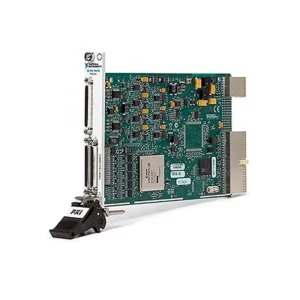
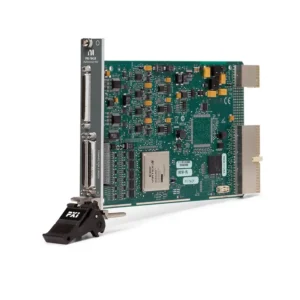
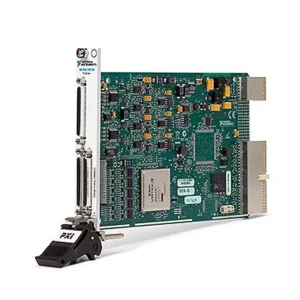
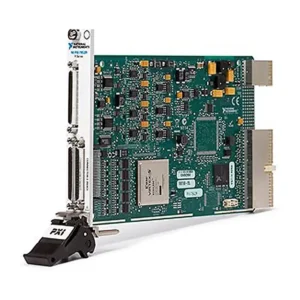
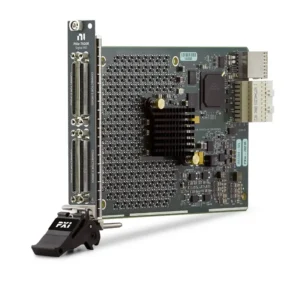

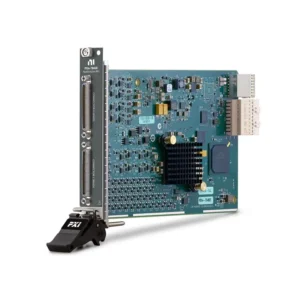
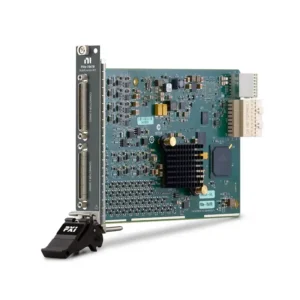
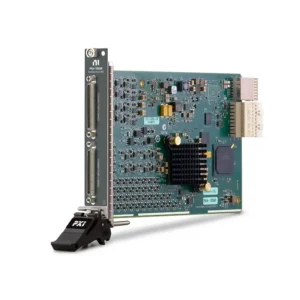
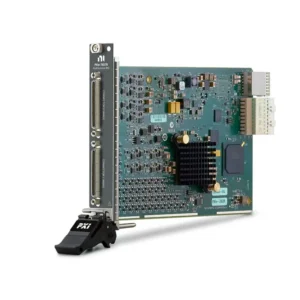
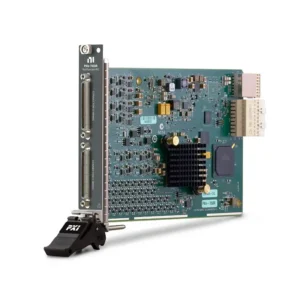
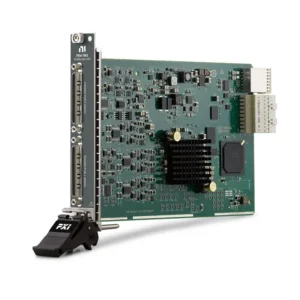
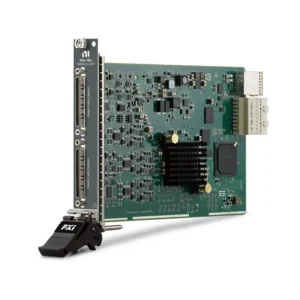
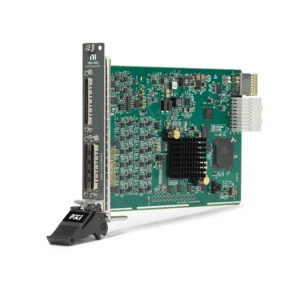
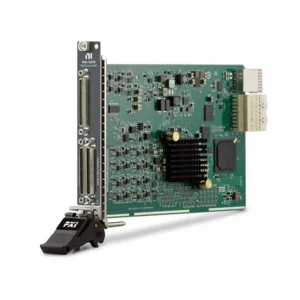
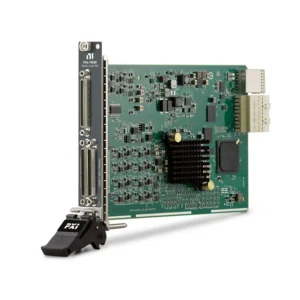
NI PXI FPGA and RIO Modules
NI PXI FPGA and RIO modules combine user-programmable FPGA processing with deterministic digital, analog or adapter-based I/O. They allow engineers to implement custom timing, triggering, protocol handling, signal processing and closed-loop control directly in hardware instead of relying entirely on the PXI controller’s operating system and processor.
The category includes several different architectures. R Series modules integrate an FPGA with defined analog and digital I/O, FlexRIO FPGA modules connect to compatible application-specific adapter modules, and FlexRIO coprocessors provide high-performance FPGA processing, memory and peer-to-peer data movement for demanding PXI Express systems.
What Are PXI FPGA and RIO Modules?
A field-programmable gate array executes many operations in parallel using hardware logic created for the application. This provides predictable timing and low-latency response for tasks that can be difficult to implement reliably with software running on a conventional operating system.
Depending on the selected module, an FPGA can read analog or digital inputs, generate outputs, execute control algorithms, process samples, implement custom communications and exchange data with other PXIe instruments. The functionality is defined by the FPGA application rather than limited to a fixed instrument personality.
FPGA programmability also increases development requirements. Engineers must select the appropriate I/O architecture, design and compile the FPGA application, verify timing closure, manage DMA data transfer and validate the complete system under worst-case operating conditions.
Main PXI FPGA and RIO Architectures
| Architecture | Hardware Configuration | Best Fit | Important Selection Issue |
|---|---|---|---|
| Digital R Series | User-programmable FPGA with a large number of configurable digital I/O lines | Custom protocols, PWM, encoders, state machines and deterministic digital control | Logic voltage, line count, memory and required I/O protection |
| Multifunction R Series | FPGA with integrated analog input, analog output and digital I/O | Hardware-in-the-loop testing, sensor simulation and closed-loop control | AI/AO channel count, sample rate, analog range and FPGA resources |
| FlexRIO FPGA Module | FPGA carrier combined with a compatible FlexRIO adapter module | High-speed acquisition, generation, RF, imaging and specialized digital interfaces | Adapter compatibility, FPGA resources, DRAM and streaming bandwidth |
| FlexRIO Coprocessor | High-performance FPGA, onboard DRAM, auxiliary digital interfaces and PXIe connectivity | Inline processing, peer-to-peer streaming and FPGA acceleration | PCIe topology, data rate, peer-to-peer compatibility and external I/O requirements |
R Series and FlexRIO are not interchangeable product names. An R Series module includes its defined physical I/O on the module. A FlexRIO FPGA module normally requires a compatible FlexRIO adapter module to provide the analog, digital, RF or imaging interface required by the application.
Current NI PXI FPGA and RIO Module Selection
| Model | Unique Category | Core Architecture | Best Fit |
|---|---|---|---|
| PXI-7841 | Legacy PXI Multifunction RIO—LX30 | Virtex-5 LX30 FPGA with eight analog inputs, eight analog outputs and 96 digital I/O lines | Maintaining established classic PXI control and HIL systems |
| PXI-7842 | Legacy PXI Multifunction RIO—LX50 | Larger Virtex-5 LX50 FPGA with the same general multifunction I/O architecture | Legacy applications requiring more FPGA resources |
| PXI-7851 | Legacy High-Speed RIO—LX30 | Virtex-5 LX30 multifunction RIO with higher analog acquisition and generation rates | Faster classic PXI HIL, control and sensor-simulation applications |
| PXI-7852 | Legacy High-Speed RIO—LX50 | Virtex-5 LX50 FPGA with high-speed multifunction analog and digital I/O | Legacy applications needing both faster analog I/O and more FPGA capacity |
| PXIe-7820 | Digital RIO Without DRAM | Kintex-7 160T FPGA with 128 configurable digital I/O lines | Custom protocols, high-channel-count digital control and hardware-timed logic |
| PXIe-7821 | Digital RIO With DRAM | Kintex-7 160T digital RIO architecture with 128 DIO lines and onboard DRAM | Digital applications requiring local waveform or data buffering |
| PXIe-7846 | 500 kS/s Multifunction RIO | Kintex-7 160T FPGA with eight AI, eight AO and 48 DIO channels | General-purpose PXIe HIL, control and mixed-signal interfacing |
| PXIe-7847 | Buffered 500 kS/s Multifunction RIO | Kintex-7 160T multifunction RIO with onboard DRAM | Mixed-signal applications requiring longer FPGA-side buffering |
| PXIe-7856 | 1 MS/s Multifunction RIO—Base | Kintex-7 160T FPGA with eight AI, eight AO and 48 DIO channels | Faster control loops, waveform processing and sensor simulation |
| PXIe-7857 | 1 MS/s Multifunction RIO—DRAM | Kintex-7 160T multifunction RIO with 512 MB onboard DRAM | High-rate mixed-signal applications requiring local data storage |
| PXIe-7858 | Large-FPGA 1 MS/s Multifunction RIO | Kintex-7 325T FPGA, multifunction I/O and 512 MB DRAM | Complex algorithms requiring more FPGA logic, memory and DSP resources |
| PXIe-7861 | High-Channel Analog Input RIO—160T | Kintex-7 160T FPGA with 16 AI, eight AO and 32 DIO channels | Multichannel acquisition combined with deterministic output and control |
| PXIe-7862 | High-Channel Analog Input RIO—325T | Kintex-7 325T FPGA, expanded analog input architecture and onboard DRAM | Complex multichannel acquisition and real-time signal-processing algorithms |
| PXIe-7865 | High-Channel Analog Output and 5 V DIO | Kintex-7 160T FPGA with two AI, 24 AO and 32 5 V input-tolerant DIO channels | Sensor simulation and output-intensive HIL interfaces |
| PXIe-7867 | High-Channel Analog Output RIO—160T | Kintex-7 160T FPGA with expanded analog output capability and onboard DRAM | Multichannel stimulus generation and deterministic actuator simulation |
| PXIe-7868 | High-Channel Analog Output RIO—325T | Kintex-7 325T FPGA with six AI, 18 AO, 48 DIO and 512 MB DRAM | Complex output-intensive HIL and mixed-signal simulation systems |
| PXIe-7912 | KU040 FlexRIO Coprocessor | Kintex UltraScale KU040 FPGA, 4 GB DRAM, auxiliary DIO and PCIe Gen 3 x8 interface | Peer-to-peer processing, data reduction and FPGA acceleration |
| PXIe-7915 | KU060 FlexRIO Coprocessor | Larger Kintex UltraScale KU060 FPGA with 4 GB DRAM and high-bandwidth PXIe connectivity | Resource-intensive signal processing and high-throughput FPGA applications |
| PXIe-7971 | FlexRIO FPGA Without DRAM | Kintex-7 325T FPGA with 136 configurable adapter-interface lines and no onboard DRAM | Streaming applications that do not require large local waveform storage |
| PXIe-7972 | FlexRIO FPGA With 2 GB DRAM | Kintex-7 325T FPGA, 136 configurable adapter-interface lines and 2 GB DRAM | Custom high-speed instruments requiring substantial FPGA-side buffering |
| PXIe-7975 | Large-FPGA FlexRIO With 2 GB DRAM | Kintex-7 410T FPGA, 136 configurable adapter-interface lines and 2 GB DRAM | Large DSP designs, high-speed acquisition and advanced custom instrumentation |
The table identifies the major architectural differences. Confirm the complete part number, hardware revision, connector accessory, FPGA target support and software compatibility before replacing or ordering a module.
How to Select a PXI FPGA and RIO Module
1. Begin With the Required Physical I/O
Define the actual signals before comparing FPGA sizes. Record the number of analog inputs, analog outputs and digital lines together with voltage ranges, logic levels, sample rates, update rates, protection requirements and connector types.
If the required I/O already matches an R Series module, its integrated architecture may simplify system design. If the application requires specialized high-speed analog, RF, camera or digital interfaces, a FlexRIO FPGA module and compatible adapter may be more appropriate.
2. Choose R Series, FlexRIO or a Coprocessor
Choose R Series when the module’s integrated I/O matches the application and must operate under custom FPGA timing. Choose FlexRIO when the physical front end is provided by an application-specific adapter. Choose an FPGA coprocessor when the primary requirement is processing data received from other PXIe instruments.
Do not purchase a FlexRIO FPGA module without confirming its adapter module. Conversely, a FlexRIO adapter is not a complete PXIe instrument without a compatible FPGA module or integrated FlexRIO carrier.
3. Calculate FPGA Resource Requirements
Compare FPGA logic resources, block RAM, DSP slices, clocking resources and supported compilation targets. Filters, FFTs, resampling, protocol engines and parallel control loops can consume significantly different resource types.
The FPGA with the highest nominal logic capacity is not automatically the best choice. A design may be limited by DSP slices, block memory, routing congestion, I/O placement or timing closure before all general logic resources are used.
4. Match Analog Performance
For multifunction RIO, verify analog channel count, resolution, input range, output range, maximum sample or update rate, simultaneous sampling, settling time and protection limits. A dedicated converter per channel may permit independent or multirate operation, but the FPGA application must be designed to use that capability.
For closed-loop control, calculate the complete loop delay, including conversion, FPGA processing and output settling. Maximum sample rate alone does not describe achievable control-loop performance.
5. Verify Digital Electrical Compatibility
Digital lines must be compatible with the connected device’s logic standard, input thresholds, output drive and maximum voltage. Some modules offer selectable I/O voltage families, while others use fixed-voltage or 5 V input-tolerant interfaces.
Input tolerance does not necessarily mean that an output can generate the same voltage. External level translation, buffering, isolation or protection may be required.
6. Determine Memory and Buffering Needs
Onboard DRAM can store waveforms, capture long records, support lookup tables and buffer data when the host or peer device cannot accept every sample immediately. Applications that process samples continuously without long local records may not require external DRAM.
Different modules provide different DRAM sizes, bank structures, bus widths and achievable FPGA access rates. Verify whether the proposed algorithm can schedule memory access without interrupting time-critical I/O processing.
7. Review PXIe and Peer-to-Peer Bandwidth
For large data streams, calculate the payload rate from all active channels and compare it with the module interface, chassis segment, system-controller link and receiving instrument. Published PCIe bandwidth is not the same as sustained application throughput.
Peer-to-peer streaming can transfer data between supported PXIe devices without routing every sample through the controller. Support depends on the module, FPGA design, driver and chassis topology and must be verified for the complete configuration.
8. Confirm Chassis and Slot Compatibility
Classic PXI modules require compatible PXI or hybrid peripheral slots. PXI Express modules require PXIe-compatible slots. Also check lane width, PCIe generation, slot cooling capacity and shared segment bandwidth.
A module may be mechanically compatible with a slot while receiving less bandwidth than the application requires. Review the chassis backplane diagram before assigning slots to FPGA, storage, digitizer or RF modules.
9. Check Software and Compilation Support
Confirm the supported LabVIEW, LabVIEW FPGA Module, NI-RIO driver, FPGA compilation tools and operating system. Older modules may require earlier software versions or specific compilation environments.
When deploying an existing bitfile, confirm that it was compiled for the exact FPGA target and hardware personality. Bitfiles generally cannot be moved between different FPGA models without recompilation and design verification.
FPGA Processing Compared With CPU Processing
| Requirement | FPGA | PXI Controller CPU |
|---|---|---|
| Deterministic I/O Response | Hardware-timed and highly predictable | Depends on the operating system and application architecture |
| Parallel Operations | Many independent operations can execute simultaneously | Limited by processor cores and software scheduling |
| Custom Digital Protocols | Can implement bit-level timing and state machines | Normally requires external hardware for precise timing |
| Complex User Interfaces and File I/O | Not the preferred platform | Well suited to displays, logging and system management |
| Development and Modification | Requires compilation and hardware-timing verification | Software builds and debugging are generally faster |
Most systems use both resources. The FPGA performs deterministic I/O and time-critical processing, while the controller handles configuration, sequencing, file storage, user interfaces, networking and higher-level analysis.
R Series Versus Conventional PXI DAQ
A conventional DAQ module provides predefined acquisition, generation, triggering and counter functions through a standard driver. It is usually the more efficient choice when those functions already satisfy the test requirement.
R Series exposes I/O to FPGA logic so engineers can create custom timing engines, triggering rules, processing pipelines and control functions. This flexibility is valuable for unusual or tightly timed applications but requires FPGA development and validation.
Review PXI Data Acquisition modules when the application requires standard analog and digital measurement rather than programmable hardware behavior.
FlexRIO FPGA and Adapter Compatibility
A FlexRIO system normally combines an FPGA module with an adapter module that provides the physical signal interface. Adapter families may support high-speed analog input, analog output, RF, Camera Link, digital protocols or custom interfaces.
Before pairing an FPGA module and adapter, verify:
- Explicit adapter and FPGA-module compatibility
- Required FPGA family and available resources
- Adapter connector and cabling
- Supported sample rate and data width
- Required I/O voltage banks and clocking resources
- Example projects, CLIP files or socketed-component-level IP
- LabVIEW FPGA and driver-version support
- Module power and chassis cooling requirements
Compatibility should be confirmed using the exact model and part number. Physical connection alone does not guarantee that an adapter has the required software support or FPGA interface definition.
Software and FPGA Development
NI PXI FPGA applications commonly use LabVIEW FPGA to create hardware logic, compile the design and generate a bitfile for the selected target. The host application communicates with the compiled FPGA through registers, interrupts, DMA FIFOs and supported peer-to-peer interfaces.
NI-RIO provides device communication and deployment support. Depending on the module and application, developers may also use the LabVIEW FPGA Interface C API, HDL integration nodes, CLIP interfaces or adapter-specific instrument-design libraries.
A complete development workflow should include:
- Functional simulation of algorithms and fixed-point arithmetic
- Verification of FPGA resource utilization and timing closure
- Testing of DMA FIFO depth and overflow behavior
- Validation of startup and safe-output states
- Review of clock-domain crossings and external clocks
- Fault, timeout and communication-loss handling
- Documentation of the source project and compiled bitfile
- Archiving compatible software, drivers and compilation tools
Typical PXI FPGA and RIO Applications
- Automotive ECU hardware-in-the-loop testing
- Power-electronics and inverter control validation
- Motor, actuator and encoder simulation
- Custom serial and parallel digital protocols
- High-speed closed-loop control
- Sensor and transducer simulation
- Semiconductor device test and protocol interfacing
- Radar, RF and wideband signal processing
- Real-time filtering, FFT and data reduction
- Machine vision and high-speed image processing
- Trigger routing and event-response systems
- Research instrumentation and experimental interfaces
Accessories and Connectivity
R Series modules may require shielded connector blocks, VHDCI cables, breakout accessories, terminal blocks or custom interface boards. FlexRIO applications additionally require the correct adapter module and its signal-specific cabling.
Review connector pinout, shielding, grounding, logic level, cable impedance and maximum cable length. A generic cable with a compatible connector may not provide the required signal integrity or pin mapping.
For HIL systems, interface electronics may also be needed for isolation, voltage translation, fault insertion, signal conditioning and protection. The FPGA module should not be connected directly to field voltages that exceed its documented limits.
Legacy FPGA Module Replacement
Replacing a legacy FPGA module is more complex than replacing a conventional fixed-function instrument. The application may depend on the exact FPGA target, pin assignment, analog architecture, connector, DMA implementation and compilation toolchain.
Compare the following before approving a replacement:
- FPGA family, logic resources, block RAM and DSP slices
- Analog and digital channel configuration
- Sample rates, signal ranges and logic levels
- Connector pinout, cable and terminal accessory
- Onboard DRAM and DMA architecture
- PXI or PXIe slot and backplane compatibility
- LabVIEW FPGA target and NI-RIO support
- Third-party IP, HDL, CLIP and adapter dependencies
- Compilation results and achievable clock rates
Even when a newer module provides more FPGA resources, the application normally requires migration, recompilation and complete I/O requalification. Preserve the original source project, bitfile, software installer and wiring documentation before replacing hardware.
PXI FPGA and RIO Procurement and RFQ Guide
Provide the following information for accurate module selection and quotation:
- Required NI model and complete part number
- R Series, FlexRIO FPGA or coprocessor architecture
- Analog input, analog output and digital I/O requirements
- Signal ranges, logic levels and channel quantities
- Required sample rate, loop rate or timing resolution
- FPGA algorithm and approximate resource requirements
- Onboard DRAM and buffering requirements
- Required FlexRIO adapter module and cables
- Existing PXI chassis, controller and proposed slot
- Peer-to-peer or stream-to-disk requirements
- LabVIEW, LabVIEW FPGA and NI-RIO versions
- Existing FPGA source project or compiled bitfile
- Required quantity and preferred product condition
- Delivery destination and required delivery date
For pre-owned FPGA hardware, request device-recognition results, successful self-test information, connector inspection and confirmation of the exact part number. If possible, validate the module with the intended FPGA bitfile, adapter and cabling rather than relying only on chassis detection.
FAQ
What is the difference between R Series and FlexRIO?
R Series modules combine an FPGA with defined analog or digital I/O on one module. FlexRIO separates FPGA processing from the application-specific I/O adapter, allowing the FPGA platform to be paired with compatible high-speed analog, RF, digital or imaging interfaces.
Does a FlexRIO FPGA module work without an adapter module?
It can provide FPGA and PXIe processing resources, but most FlexRIO measurement applications require a compatible adapter to connect external signals. Adapter compatibility must be verified for the exact FPGA module.
When should I use an FPGA coprocessor?
Use a coprocessor when the primary requirement is FPGA processing, buffering or peer-to-peer data handling for information produced by other PXIe instruments. It is not a direct replacement for an R Series module with integrated multifunction I/O.
Is the FPGA faster than the PXI controller?
The FPGA is better suited to deterministic parallel operations and low-latency I/O response. The controller CPU is better suited to operating-system services, user interfaces, file handling and complex sequential software. Most systems divide work between both.
Can an existing FPGA bitfile run on a different module?
Normally not without modification and recompilation. FPGA bitfiles are compiled for a specific target, FPGA type and I/O architecture. A replacement module may also change pin mapping, timing, DMA resources and supported IP.
Why is onboard DRAM important?
DRAM provides storage for long waveforms, large lookup tables and temporary data buffers. It is valuable when the FPGA must capture or generate more data than can fit in block RAM or when host transfers may be temporarily interrupted.
Can PXI FPGA modules communicate directly with other instruments?
Selected PXIe FPGA modules support peer-to-peer streaming with compatible instruments. Support depends on the exact devices, driver, FPGA design and chassis topology and should be validated before finalizing the system.
Can a classic PXI R Series module be installed in a PXIe chassis?
Only when the chassis includes a compatible hybrid peripheral slot that supports the module’s backplane connector. PXIe-only peripheral slots do not accept classic PXI modules.
Recommended PXI FPGA and RIO Modules
Consider the PXIe-7821 for high-channel-count digital RIO with onboard memory, the PXIe-7858 for large-FPGA multifunction I/O, the PXIe-7915 for UltraScale FPGA coprocessing, or the PXIe-7975 for high-resource FlexRIO applications requiring 2 GB DRAM.
Related NI PXI Solutions
Combine FPGA modules with compatible PXI and PXIe chassis and a suitable PXI controller. Review PXI Data Streaming for sustained recording, PXI Industrial Communication for standardized bus interfaces and PXI Semiconductor Test for automated device validation systems.
NI PXI FPGA and RIO Modules from PXISOURCE
PXISOURCE supports engineers, system integrators and procurement teams with R Series and FlexRIO architecture selection, model sourcing, adapter compatibility review, chassis verification and legacy FPGA hardware replacement. Send the required I/O configuration, FPGA project information, chassis model, software version and preferred hardware condition for a technically matched quotation.
Need help selecting an NI PXI FPGA or RIO module? Email sales@pxisource.com or contact PXISOURCE through WhatsApp.