



Showing 1–16 of 206 results

Filter by price
Filter by brands

- National Instruments
- PXI Systems
- PXI Chassis
- PXI Controller
- PXI Modules
- PXI Semiconductor Test
- PXI FPGA and RIO Modules
- PXI MXI Interfaces
- PXI Programmable Power Supplies & SMU
- PXI Sensor Measurements
- PXI Signal Generators
- PXI Vision
- PXI Data Acquisition
- PXI Oscilloscopes/Digitizers
- PXI Counter/Timers
- PXI RF and Wireless Test
- PXI GPIB, Ethernet and VXI
- PXI Switches
- PXI Digital Multimeters
- PXI Digital Input/Output
- PXI Industrial Communication
- PXI Dynamic Signal Analysis
- PXI Data Streaming
- CompactDAQ Systems
- CompactRIO Systems
- PCI Modules
- USB Devices
- USRP Software Defined Radio Device
- PXI Systems
- keysight
- Tektronix


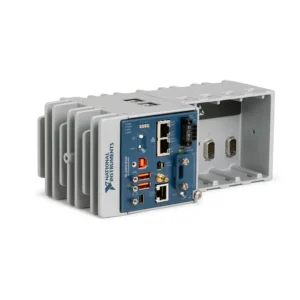
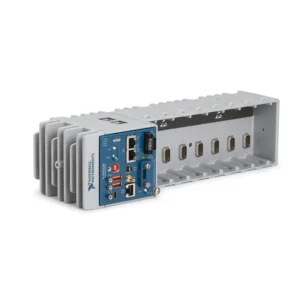
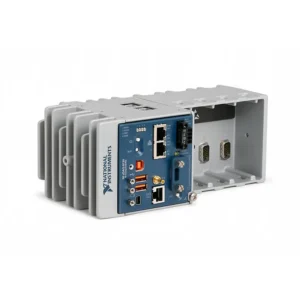
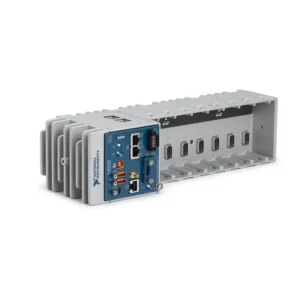


NI CompactDAQ Systems
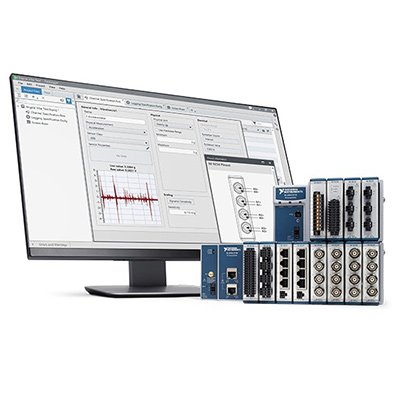
NI CompactDAQ systems provide modular data acquisition for sensors, electrical signals, digital states and communication interfaces. A typical system combines a CompactDAQ chassis, selected C Series modules, terminal accessories and PC-based software for measurement, logging, analysis and automated test.
CompactDAQ is well suited to laboratory measurements, portable data logging, environmental monitoring, validation testing and distributed acquisition. Select the system from the actual signal and timing requirements, then confirm chassis connectivity, module compatibility, data throughput, accessories and software support.
CompactDAQ System Architecture
| System Component | Primary Function | What to Verify |
|---|---|---|
| CompactDAQ Chassis | Provides C Series slots, power, timing and connection to a host or network | Slot count, connection type, power capability, environmental suitability and module support |
| C Series I/O Modules | Acquire sensor signals, generate outputs and connect to external equipment | Signal type, range, channel count, sample rate, isolation and conditioning |
| Host Computer or Embedded Controller | Runs acquisition, logging, visualization and analysis software | Operating system, processor performance, memory, storage and network connection |
| Terminal Blocks and Cables | Connect field wiring and provide module-specific interface arrangements | Pinout, sensor wiring, connector type, cable length and shielding |
| Acquisition Software | Configures channels, timing, triggering, scaling and data storage | Driver support, supported modules, file format and required analysis functions |
CompactDAQ Chassis Architectures
| Chassis Architecture | Connection Approach | Best Fit | Key Selection Consideration |
|---|---|---|---|
| USB CompactDAQ | Direct connection to a local computer | Benchtop measurement, portable test and laboratory logging | Host-computer location, cable routing and available USB connectivity |
| Ethernet CompactDAQ | Network connection to a computer or distributed measurement architecture | Remote monitoring, distributed test and equipment integration | Network topology, bandwidth, addressing and electrical environment |
| Embedded CompactDAQ | Integrated controller and C Series chassis architecture | Standalone logging, portable test and deployed measurement applications | Controller resources, operating system, storage and software compatibility |
Available features vary by exact chassis model. Confirm the required slot count, connection method, supported modules, timing features, power requirements and environmental specifications before purchasing.
How to Select a CompactDAQ System
1. Identify the Required Signals
List every sensor, transducer, actuator and external device that must connect to the system. Identify the electrical output rather than only the measured physical parameter.
For example, temperature can require thermocouple, RTD, thermistor or conditioned-voltage input hardware. Pressure can use bridge, current-loop, voltage or digital-network interfaces. The appropriate C Series module depends on the actual sensor output and conditioning requirement.
2. Select Suitable C Series Modules
Choose modules for analog input, analog output, digital I/O, temperature measurement, dynamic signals, communication, counter, motion or specialized functions. Confirm input range, channel count, signal conditioning, excitation, isolation and supported acquisition mode.
Use a dedicated sensor module when the application requires functions such as cold-junction compensation, RTD excitation, bridge completion, IEPE power, encoder measurement or network protocol support.
3. Determine Channel Count and Chassis Size
Count the required channels and allow room for reference inputs, triggers, diagnostic signals and future expansion. Mixed-module CompactDAQ systems can combine several I/O types in one chassis, provided the chassis supports the selected modules.
Slot count is only one chassis requirement. Also review power availability, timing behavior, maximum system data rate and the physical installation environment.
4. Define Sample Rate and Timing Requirements
Temperature and slow process measurements may need only a few samples per second, while dynamic signals, vibration, waveform capture and digital events can require much faster acquisition. Select the required measurement bandwidth before choosing sample rate and hardware.
Determine whether channels must be measured simultaneously or only logged at approximate time intervals. Simultaneous sampling and shared timing are especially important for phase-sensitive vibration, power, force and motion measurements.
5. Review Chassis Connectivity
Select USB, Ethernet or embedded-controller architecture according to the installation and control arrangement. A local laboratory test may favor direct USB connectivity, while remote equipment or distributed measurements can require Ethernet networking.
For network-connected systems, account for cable routing, network traffic, IP configuration, switch capacity, remote-access requirements and data security.
6. Plan Data Logging and Storage
Estimate the expected data volume from the active channel count, sample rate, data type and recording duration. Continuous high-rate systems must also account for computer memory, storage performance, file format and background software activity.
Use buffered acquisition and test the final system at the intended channel configuration and recording duration. A short benchmark does not always represent sustained data logging behavior.
C Series I/O for CompactDAQ
NI C Series modules provide the measurement and control functions of a CompactDAQ system. Module categories include:
- Analog input for voltage, current and conditioned sensor outputs
- Analog output for setpoints, stimulus and actuator control
- Digital input and output for machine status, alarms, relays and interlocks
- Temperature modules for thermocouples, RTDs and thermistors
- Dynamic-signal modules for waveform, vibration and high-speed acquisition
- Communication modules for CAN, CAN FD, LIN, serial and Ethernet interfaces
- Counter and motion modules for encoders, pulses, RPM and positioning functions
- Specialty modules for custom or application-specific interfaces
Not every C Series module is supported by every CompactDAQ chassis. Confirm the complete chassis, module, driver and operating-system combination before finalizing the system.
Software and Data Analysis
Supported CompactDAQ systems commonly use NI-DAQmx for device discovery, channel configuration, timing, triggering, scaling and acquisition. LabVIEW can be used to create custom measurement and control applications, while supported logging tools can simplify channel configuration and data recording.
Before deployment, verify the required software version, operating-system support, analysis toolkit, file format and available storage. Applications that combine high-rate acquisition with display, logging and analysis should use an architecture that keeps time-critical acquisition separate from slower tasks.
Signal Integrity and Connectivity
Terminal Blocks and Cable Selection
Choose accessories that match the C Series module, sensor wiring and installation environment. Terminal blocks and cables can provide sensor-specific connections, shielding paths, cold-junction compensation, bridge configuration or connector conversion.
Grounding and Isolation
Review sensor grounding, common-mode voltage, cable routing and external power supplies. Long cable runs, industrial machinery, switching supplies and motors can introduce noise or ground-potential differences that affect measurement accuracy.
System Synchronization
For systems using several modules or chassis, plan clocks, triggers and reference signals at the complete-system level. Do not assume that separate measurements are automatically synchronized because they use the same software application.
Typical CompactDAQ Applications
- Multichannel sensor measurement and data logging
- Automotive and aerospace validation testing
- Thermal, environmental and process monitoring
- Strain, force, load, pressure and torque measurements
- Sound, vibration and dynamic waveform acquisition
- Electrical, power and battery-system testing
- CAN, LIN, serial and industrial communication logging
- Portable field measurements and equipment troubleshooting
- Laboratory automation and custom test fixtures
- Production validation and quality-control systems
CompactDAQ System Procurement Guide
Provide the following information for an accurate CompactDAQ system recommendation:
- Measured parameter, control requirement or communication interface
- Sensor, transducer, instrument or device manufacturer and model
- Electrical output type, signal range, excitation and sensor wiring details
- Required channel quantity, sample rate, bandwidth and recording duration
- Need for simultaneous sampling, triggering or multichassis synchronization
- Required chassis connection: USB, Ethernet or embedded controller
- Grounding, isolation, common-mode and installation conditions
- Required terminal blocks, cables, adapters and accessories
- Host computer or existing CompactDAQ controller details
- Operating system, NI driver and software environment
- Required quantity, preferred product condition and delivery destination
FAQ
What is included in a CompactDAQ system?
A complete system normally includes a CompactDAQ chassis, selected C Series I/O modules, suitable terminal accessories, connection to a host computer or embedded controller, and compatible acquisition software.
What is the difference between CompactDAQ and CompactRIO?
CompactDAQ is primarily designed for PC-based modular measurement and logging. CompactRIO combines modular I/O with embedded real-time and FPGA capability for deterministic control, custom processing and autonomous operation.
Can I mix analog, digital and temperature modules in one CompactDAQ chassis?
Yes, a CompactDAQ chassis can support mixed C Series I/O types when the selected modules are compatible with that chassis and the complete system meets timing and power requirements.
Do all CompactDAQ modules sample at the same time?
Sampling behavior depends on the selected modules and timing configuration. Confirm whether the application needs simultaneous sampling, synchronized acquisition or only time-correlated logging.
Why is the terminal block important?
The terminal block provides the physical connection to sensors and field wiring. It can also affect signal conditioning, connector type, shielding, measurement accuracy and supported sensor configuration.
Related NI Modular Platforms
Explore NI CompactDAQ systems for chassis, controllers and C Series I/O. Choose CompactRIO systems for embedded real-time and FPGA-based control, or use NI PXI systems for high-channel-count automated test and modular instrumentation.
NI CompactDAQ Systems from PXISOURCE
PXISOURCE supports engineers and procurement teams with CompactDAQ system configuration, chassis and module compatibility review, terminal-accessory matching and sourcing for new measurement systems, spare inventory and legacy replacements.
Need help configuring the right NI CompactDAQ system? Email sales@pxisource.com or contact PXISOURCE on WhatsApp.