




Showing 1–16 of 34 results

Filter by price
Filter by brands

- National Instruments
- PXI Systems
- PXI Chassis
- PXI Controller
- PXI Modules
- PXI Semiconductor Test
- PXI FPGA and RIO Modules
- PXI MXI Interfaces
- PXI Programmable Power Supplies & SMU
- PXI Sensor Measurements
- PXI Signal Generators
- PXI Vision
- PXI Data Acquisition
- PXI Oscilloscopes/Digitizers
- PXI Counter/Timers
- PXI RF and Wireless Test
- PXI GPIB, Ethernet and VXI
- PXI Switches
- PXI Digital Multimeters
- PXI Digital Input/Output
- PXI Industrial Communication
- PXI Dynamic Signal Analysis
- PXI Data Streaming
- CompactDAQ Systems
- CompactRIO Systems
- PCI Modules
- USB Devices
- USRP Software Defined Radio Device
- PXI Systems
- keysight
- Tektronix




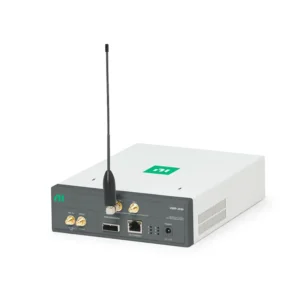
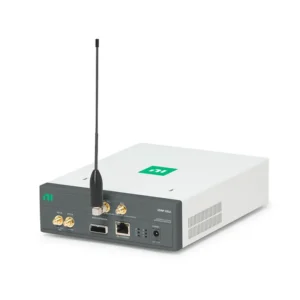
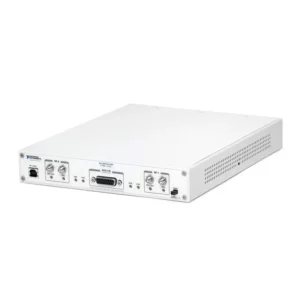
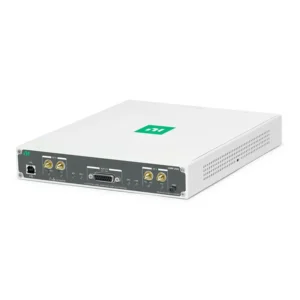
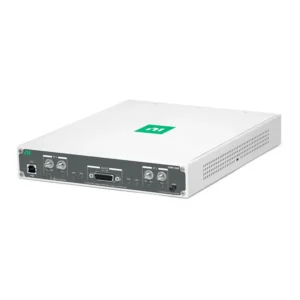


NI and Ettus USRP Software Defined Radio Devices
NI and Ettus Research USRP software defined radio devices provide programmable RF receive and transmit platforms for wireless research, communications prototyping, spectrum monitoring, signal recording and algorithm development. USRP hardware converts between RF signals and digital I/Q samples while host software or onboard programmable resources implement the application-specific signal processing.
Select a USRP device by frequency coverage, instantaneous bandwidth, receive and transmit channels, duplex operation, host interface, FPGA resources, synchronization, RF performance and software compatibility. Antennas, cables, filters, amplifiers, clocks and host-computer performance must also be considered as part of the complete SDR system.
USRP Device Architectures
| USRP Architecture | Host Connection | Primary Strength | Best Fit |
|---|---|---|---|
| USB-Connected USRP | Direct USB connection to a host computer | Compact deployment and straightforward PC-based SDR development | Education, laboratories, portable experiments and prototype systems |
| Networked USRP | Ethernet connection to a workstation or network | Remote installation, multichannel streaming and flexible host placement | Wireless research, distributed RF systems and spectrum monitoring |
| High-Performance USRP | High-throughput network or supported PCIe data path | Wideband streaming, advanced FPGA processing and scalable synchronization | Massive MIMO, radar, communications research and demanding RF applications |
| Embedded USRP | Integrated processor and FPGA architecture | Standalone or remotely deployed SDR processing | Mobile, field, autonomous and embedded wireless systems |
| NI Integrated USRP | Model-dependent host, network or integrated controller architecture | Integration with supported NI software and automated test workflows | Research, validation, prototyping and software-defined instrumentation |
USRP models within the same family can have different frequency ranges, bandwidths, channel counts, FPGA resources and synchronization features. Verify the complete model number before ordering.
How to Select a USRP Software Defined Radio Device
1. Define the Required Frequency Range
Identify the lowest and highest RF frequencies the application must receive or transmit. Include the complete operating range, guard bands, expected interference and any planned external frequency conversion.
Also confirm that the selected antennas, filters, amplifiers, attenuators and cables support the same frequency range. RF performance is limited by the complete signal path, not only the USRP front end.
2. Determine Instantaneous Bandwidth
Instantaneous bandwidth defines how much spectrum can be captured, processed or generated at one time. Select bandwidth according to the widest signal, number of carriers, channelization requirement or spectrum-monitoring span.
Wider bandwidth increases host data rate, storage demand and signal-processing load. Confirm that the host interface and application can sustain the required I/Q sample stream.
3. Select Receive and Transmit Channels
Determine the number of independent receive and transmit channels required. Single-channel applications have different hardware needs from diversity, beamforming, direction-finding and MIMO systems.
Confirm whether the application needs receive-only operation, transmit-only generation, alternating transmit and receive, or simultaneous transmit and receive. Duplex capability and channel behavior vary by device.
4. Calculate Host Data Throughput
Estimate the streaming requirement from the complex sample rate, I/Q data format and number of active channels:
Payload rate = complex sample rate × transferred bytes per I/Q sample × active channels.
Add margin for transport overhead, metadata, operating-system activity, processing and file writing. USB, Ethernet and PCIe-connected devices have different practical throughput limits and host-computer requirements.
5. Evaluate FPGA Requirements
The FPGA can perform filtering, digital upconversion, digital downconversion, channelization, triggering, modulation, demodulation and custom data reduction. Applications requiring processing close to the RF data path should evaluate available FPGA resources and supported development methods.
FPGA processing can reduce host bandwidth by sending processed results instead of every raw sample. Custom FPGA development also adds design, compilation, validation and maintenance requirements.
6. Define Clocking and Synchronization
Multichannel, MIMO, beamforming and coherent measurement applications can require shared reference clocks, timing signals, triggers or GPS-disciplined timing. Available clock inputs, outputs and synchronization features vary by model.
Multiple devices connected to one host or network are not automatically phase coherent. Define the required frequency alignment, time alignment, phase relationship and startup procedure before selecting hardware.
7. Review RF Input and Output Levels
Confirm expected receive signal level, nearby interferers, transmitter output requirements and external gain stages. Strong RF inputs can overload or damage a receiver, while weak signals can require suitable filtering and low-noise amplification.
Do not connect a high-power transmitter directly to a USRP receiver input. Use appropriately rated attenuators, couplers, filters or shielded conducted-test arrangements.
Host Interface and Streaming Architecture
USB-Connected SDR
USB-connected USRP devices are suitable for compact PC-based development and portable SDR systems. Verify the required USB connection, host-controller performance, memory, processor load and storage throughput.
Networked SDR
Networked USRP devices allow greater separation between the RF hardware and host computer. Confirm network interface speed, host adapter, switch configuration, packet handling and dedicated bandwidth for continuous I/Q streaming.
PCIe Data Paths
Supported high-performance systems can use PCIe-based data paths for demanding throughput or low-latency operation. Confirm the host adapter, cable, PCIe slot, lane allocation, operating system and supported driver configuration.
MIMO and Multidevice Synchronization
MIMO and coherent-array applications require more than matching radio models. Review channel count, sample-clock distribution, reference frequency, timing signals, trigger behavior, cable matching and phase-calibration methods.
Power-up, tuning and retuning can affect phase relationships depending on the device and architecture. Applications requiring repeatable phase coherence should include a defined calibration and verification procedure.
Distributed RF systems should also consider network latency, timestamp handling, clock distribution, antenna placement and cable delay.
USRP Software Ecosystem
USRP Hardware Driver (UHD) provides a common software interface for supported Ettus Research and NI USRP devices. UHD is used by applications and development environments to configure frequency, gain, sample rate, channels, timing and data streaming.
USRP hardware can be used with supported environments such as GNU Radio, C++, Python and NI software workflows, depending on the exact device. Some platforms also support FPGA development frameworks or RFNoC-based processing.
Before purchasing or replacing hardware, verify:
- UHD and firmware compatibility
- Operating-system support
- GNU Radio or application-software version
- LabVIEW and NI driver requirements where applicable
- FPGA image and development-tool compatibility
- Host network or USB driver configuration
Antennas, Cables and RF Accessories
Select antennas by frequency range, polarization, gain, impedance and intended environment. Wideband SDR hardware does not make an antenna suitable outside its designed frequency range.
RF cables and adapters should be selected for connector type, frequency rating, insertion loss and power handling. Cable loss becomes increasingly important at higher frequencies and can significantly affect received or transmitted signal levels.
Typical supporting components include:
- Bandpass, low-pass, high-pass and notch filters
- Fixed or variable RF attenuators
- Low-noise amplifiers and power amplifiers
- Directional couplers, splitters and combiners
- External frequency references and timing sources
- Shielded enclosures and conducted-test accessories
RF Safety and Regulatory Considerations
RF transmission can be subject to spectrum allocation, licensing, output-power and geographic restrictions. Operate only within authorized frequencies and power levels, or use a properly attenuated conducted connection or shielded test environment.
Verify receiver input limits and transmitter output conditions before connecting antennas, amplifiers or external equipment. Incorrect RF connections can damage the device or create unintended interference.
Typical USRP Applications
- Software-defined radio research and education
- 5G, private wireless and communications prototyping
- MIMO, beamforming and direction-finding development
- Spectrum monitoring and signal recording
- Radar, sensing and passive RF research
- Satellite, telemetry and GNSS experiments
- Wireless security and protocol analysis
- Electronic test and RF algorithm validation
- Embedded and remotely deployed SDR systems
- Custom FPGA-based RF signal processing
USRP Procurement and RFQ Guide
Provide the following information for accurate USRP selection and quotation:
- Required USRP model or preferred platform family
- Receive, transmit or transceiver application
- Required frequency range and instantaneous bandwidth
- Required receive and transmit channel quantity
- Need for simultaneous transmit and receive operation
- MIMO, phase-coherent or multidevice synchronization requirements
- Required I/Q sample rate and recording duration
- Host connection: USB, Ethernet, PCIe or embedded operation
- Expected RF input and output signal levels
- Required antennas, cables, filters, clocks and RF accessories
- UHD, GNU Radio, LabVIEW, FPGA or RFNoC software requirements
- Host-computer operating system and interface capability
- Required quantity, preferred product condition and delivery destination
FAQ
What is a USRP?
A USRP is a software defined radio platform that converts RF signals to and from digital I/Q samples. Software and programmable hardware implement the required wireless or signal-processing application.
What is instantaneous bandwidth?
Instantaneous bandwidth is the amount of spectrum that can be processed at one time. It affects the widest signal or group of channels that can be captured or generated simultaneously.
Can all USRP devices transmit and receive simultaneously?
No. Duplex behavior, channel configuration and simultaneous transmit-receive capability vary by model. Verify the exact device architecture for the intended application.
Can multiple USRP devices operate coherently?
Compatible devices can be synchronized using supported reference and timing methods, but multiple radios are not automatically phase coherent. Coherent applications require suitable clocking, cabling, configuration and calibration.
Does a USRP include antennas and RF accessories?
Not necessarily. Antennas, RF cables, filters, attenuators, amplifiers and external timing accessories should be selected for the required frequency range and application.
Related NI Test and Measurement Platforms
Explore the broader NI product catalog for test and measurement hardware. Use NI PCI and USB devices for PC-connected measurement, or choose NI PXI systems for modular RF, high-throughput acquisition and automated validation.
NI and Ettus USRP Devices from PXISOURCE
PXISOURCE supports engineers, universities, laboratories and procurement teams with USRP platform selection, host-interface review, synchronization planning, software compatibility checks and RF accessory matching for research, development, deployment and legacy replacement.
Need help selecting the right USRP software defined radio device? Email sales@pxisource.com or contact PXISOURCE on WhatsApp.