




Showing all 6 results

Filter by brands

- National Instruments
- PXI Systems
- PXI Chassis
- PXI Controller
- PXI Modules
- PXI Semiconductor Test
- PXI FPGA and RIO Modules
- PXI MXI Interfaces
- PXI Programmable Power Supplies & SMU
- PXI Sensor Measurements
- PXI Signal Generators
- PXI Vision
- PXI Data Acquisition
- PXI Oscilloscopes/Digitizers
- PXI Counter/Timers
- PXI RF and Wireless Test
- PXI GPIB, Ethernet and VXI
- PXI Switches
- PXI Digital Multimeters
- PXI Digital Input/Output
- PXI Industrial Communication
- PXI Dynamic Signal Analysis
- PXI Data Streaming
- CompactDAQ Systems
- CompactRIO Systems
- PCI Modules
- USB Devices
- USRP Software Defined Radio Device
- PXI Systems
- keysight
- Tektronix


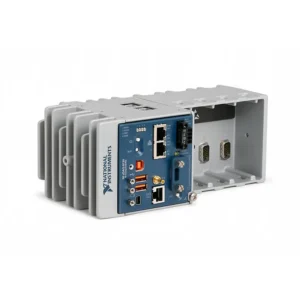
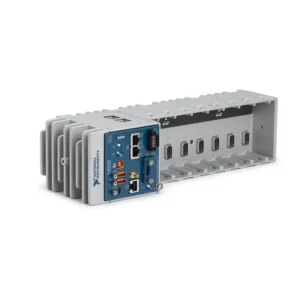
NI CompactDAQ Controllers
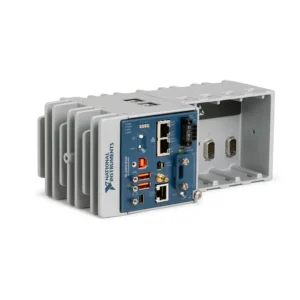
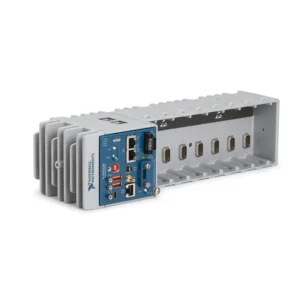
NI CompactDAQ Controllers combine an embedded computer, C Series module slots, data acquisition hardware and industrial communication interfaces in one standalone system. They are designed for applications that require local data logging, measurement, monitoring or control without a continuously connected external computer.
CompactDAQ controllers are used in distributed test systems, machine monitoring, environmental testing, automotive validation, industrial data acquisition and long-duration sensor logging. They provide a practical middle ground between a PC-connected CompactDAQ chassis and a fully FPGA-based CompactRIO system.
What Is a CompactDAQ Controller?
A CompactDAQ controller is an integrated embedded measurement system. Unlike a standard USB or Ethernet CompactDAQ chassis, it includes its own processor, memory, storage, operating system support and C Series module slots.
The controller can run acquisition, logging, analysis and communication applications locally. This reduces dependence on an external host computer and allows the measurement system to be installed closer to machinery, vehicles, test cells or remote sensors.
A CompactDAQ controller already includes C Series module slots and embedded processing. It is not normally combined with a separate CompactDAQ chassis. Select the controller according to the required slot count, software environment, processor performance, operating temperature and installed C Series I/O modules.
CompactDAQ Controller Architecture
| System Element | Role in the System | What to Confirm |
|---|---|---|
| Embedded Controller | Runs the operating system, NI drivers, acquisition application, logging and communications | Processor, memory, storage, operating-system support and lifecycle requirements |
| C Series Module Slots | Accept compatible measurement, control and communication modules | Required slot count, module support, sample timing, power and channel configuration |
| Network and Peripheral Interfaces | Connect the controller to a network, display, storage, serial devices or external systems | Ethernet, USB, serial, CAN/LIN, removable storage and remote-access requirements |
| Software Environment | Configures hardware and runs measurement or control applications | NI-DAQmx version, LabVIEW support, Windows or NI Linux Real-Time configuration |
| Cables and Accessories | Connect modules to sensors, fixtures, actuators and industrial equipment | Connector, terminal block, signal range, shielding, isolation and wiring requirements |
CompactDAQ Controller vs CompactDAQ Chassis
| Feature | CompactDAQ Chassis | CompactDAQ Controller |
|---|---|---|
| Processing Location | External PC or network host | Integrated embedded processor |
| Standalone Operation | Requires a connected host for application execution | Can execute supported applications locally |
| Best Fit | Benchtop, portable and PC-based acquisition | Distributed, industrial, remote and long-duration measurement |
| System Expansion | Uses C Series modules in the chassis | Uses C Series modules in the integrated controller slots |
| Deployment Consideration | Host computer must remain available to operate the system | Controller operating system, storage and remote-management strategy must be planned |
Explore CompactDAQ chassis when a PC-connected USB, Ethernet or wireless acquisition system is preferred. Select an embedded controller when local computing and independent system operation are required.
NI CompactDAQ Controller Model Classification
| Model | Unique Category | Key Differentiator | Best Fit |
|---|---|---|---|
| cDAQ-9132 | 4-Slot Embedded CompactDAQ Controller | 1.33 GHz dual-core Intel Atom processor with four C Series slots | Standalone sensor acquisition, machine monitoring and compact embedded measurement |
| cDAQ-9133 | 8-Slot Embedded CompactDAQ Controller | 1.33 GHz dual-core Intel Atom processor with eight C Series slots | Higher-channel-count standalone data acquisition and distributed monitoring |
| cDAQ-9134 | 4-Slot Extended-Temperature CompactDAQ Controller | 1.33 GHz dual-core Intel Atom processor, four slots and extended-temperature design | Rugged industrial and field measurement systems with compact I/O requirements |
| cDAQ-9135 | 8-Slot Extended-Temperature CompactDAQ Controller | 1.33 GHz dual-core Intel Atom processor, eight slots and extended-temperature design | Expanded industrial data acquisition and remote monitoring applications |
| cDAQ-9136 | High-Performance 4-Slot CompactDAQ Controller | Higher-performance controller generation with four C Series slots | Compact embedded systems requiring stronger local processing capability |
| cDAQ-9137 | High-Performance 8-Slot CompactDAQ Controller | 1.91 GHz quad-core Intel Atom processor with eight C Series slots | High-channel-count embedded acquisition, local logging and distributed test systems |
The cDAQ-9132 through cDAQ-9137 family is primarily differentiated by four-slot or eight-slot capacity, processor generation and environmental configuration. Confirm the exact part number because operating system, storage and installed hardware options can vary by configuration.
How to Choose a CompactDAQ Controller
1. Determine Whether Local Processing Is Required
Select a CompactDAQ controller when the system must acquire, log or process data without relying on a continuously connected external computer. This is useful for remote equipment, test cells, mobile installations, long-duration tests and industrial deployments.
If the application only requires PC-based acquisition near the measurement location, a standard CompactDAQ chassis can be simpler and more cost-effective.
2. Select Four or Eight C Series Slots
Choose the controller according to the complete module plan. Four-slot controllers suit compact systems with a limited number of I/O functions, while eight-slot controllers support larger mixed-signal systems containing temperature, voltage, current, vibration, strain, digital I/O and communication modules.
Leave expansion capacity when future requirements may include additional sensor types, counters, CAN/LIN interfaces, digital control or spare channels.
3. Match Processor Performance to the Application
Processor requirements depend on more than the data acquisition rate. Consider local data logging, file management, networking, display requirements, analysis, database communication, protocol handling and application code running at the same time.
Applications requiring frequent analysis, multiple communication tasks or high channel counts generally benefit from the higher-performance controller generation. Test the intended application with representative channel counts and acquisition duration before deployment.
4. Choose the Operating-System Strategy
Some CompactDAQ controller configurations support Windows Embedded Standard 7, NI Linux Real-Time or both, depending on the exact model and part number. Windows is appropriate when the application depends on Windows software, drivers or familiar desktop workflows.
NI Linux Real-Time is intended for deterministic timing and dedicated measurement or control tasks. Real-time performance depends on the complete software design, timing architecture and I/O configuration; simply installing a real-time operating system does not make every application deterministic.
5. Confirm C Series Module Compatibility
The controller determines the embedded computing platform, while the installed C Series modules determine the signal interfaces. Verify module support, sample rate, channel count, signal conditioning, isolation, connector and terminal accessories for every required measurement.
For mixed measurements, also confirm how modules share timing and whether simultaneous acquisition is necessary. Temperature logging and high-speed vibration acquisition can have very different timing and throughput requirements.
6. Review Network, Storage and Remote Access
Define how the controller will communicate with the rest of the system. Consider Ethernet network topology, IP management, remote access, cybersecurity requirements, removable storage, local file retention and post-test data transfer.
For long recordings, calculate storage use before deployment:
Required storage = continuous data rate × recording duration.
Allow margin for file-system overhead, metadata, operating-system space and safe data transfer after the test.
Software and Deployment Considerations
CompactDAQ controllers are commonly configured through NI Measurement & Automation Explorer and use NI-DAQmx for supported I/O configuration and data acquisition. Application development can use LabVIEW and compatible programming environments, subject to the selected operating system and installed driver versions.
Before commissioning the controller, confirm:
- Operating system installed on the exact controller configuration
- NI-DAQmx version and supported C Series modules
- LabVIEW, LabVIEW Real-Time or other application-software compatibility
- Required startup behavior after power restoration
- Network security, static IP, remote access and firewall requirements
- Local data storage, file retention and backup workflow
- Application deployment method and recovery media
CompactDAQ Controller Applications
- Industrial machine monitoring and condition monitoring
- Automotive vehicle, powertrain and component testing
- Remote sensor acquisition and distributed data logging
- Environmental and long-duration measurement systems
- Energy, battery and power-electronics validation
- Structural, strain, force, pressure and vibration testing
- Automated functional test and production monitoring
- CAN, LIN and industrial communication data acquisition
- Laboratory systems requiring unattended local logging
- Embedded engineering research and validation systems
CompactDAQ Controller vs CompactRIO
CompactDAQ controllers provide embedded processing with C Series measurement modules and are well suited to standalone data acquisition, logging, monitoring and moderate control applications. They are generally selected when standard NI-DAQmx-based acquisition and local computing meet the application requirements.
Choose CompactRIO systems when the application requires user-programmable FPGA hardware, advanced deterministic control, custom high-speed protocols or a dedicated embedded real-time architecture beyond the CompactDAQ controller platform.
Legacy Controller Replacement
When replacing a cDAQ-9132 through cDAQ-9137 controller, do not select a replacement only by slot count. Compare processor capability, operating system, C Series module support, driver compatibility, network interfaces, removable storage, environmental rating and installed application software.
Legacy applications may depend on a specific Windows Embedded version, LabVIEW runtime, NI-DAQmx release, IP configuration or startup procedure. Back up the deployed application, configuration files and measurement data before changing the controller hardware.
CompactDAQ Controller Procurement and RFQ Guide
Provide the following information for a technically matched controller quotation:
- Required controller model or existing installed model
- Number and model of C Series modules
- Required channel count, sample rate and measurement types
- Four-slot or eight-slot controller requirement
- Windows Embedded or NI Linux Real-Time preference
- Application software, NI-DAQmx and LabVIEW versions
- Local logging, storage and data-transfer requirements
- Ethernet, serial, CAN/LIN and external-device requirements
- Installation temperature, power and environmental conditions
- Required cables, terminal blocks and mounting accessories
- New or pre-owned hardware preference
- Required quantity, delivery date and destination
FAQ
Does a CompactDAQ controller need a separate chassis?
No. A CompactDAQ controller already includes embedded computing and C Series module slots. It is a complete controller and acquisition platform, not a processor card that installs into a separate CompactDAQ chassis.
Can a CompactDAQ controller run without a connected PC?
Yes. It can run supported deployed applications locally. A computer may still be used for initial configuration, programming, maintenance, remote access or retrieving recorded data.
Should I choose a four-slot or eight-slot CompactDAQ controller?
Select four slots for compact systems with limited I/O requirements. Select eight slots when the application needs more C Series modules, more measurement types or realistic future expansion capacity.
Can a CompactDAQ controller use the same C Series modules as a CompactDAQ chassis?
Many C Series modules are supported across CompactDAQ platforms, but compatibility must be checked for the exact controller model, module model and NI-DAQmx version. Do not assume compatibility from the connector alone.
Is a CompactDAQ controller the same as CompactRIO?
No. CompactDAQ controllers focus on embedded data acquisition and local processing with C Series I/O. CompactRIO is intended for applications requiring a user-programmable FPGA and a more advanced embedded real-time control architecture.
Can a CompactDAQ controller be used for long-duration logging?
Yes, when storage capacity, continuous data rate, power stability and data-transfer procedures have been planned for the required recording duration. Verify the application with a representative full-duration test before deployment.
Related NI CompactDAQ Products
Use NI C Series modules to configure the required sensor, analog, digital and communication interfaces. For host-computer-based systems, explore CompactDAQ chassis. Review the complete CompactDAQ system range for matching components.
NI CompactDAQ Controllers from PXISOURCE
PXISOURCE supports engineers, system integrators and procurement teams with CompactDAQ controller selection, C Series module compatibility review, software-environment checks, legacy controller replacement and complete standalone measurement-system sourcing. Send the installed modules, software version, required sample rate, operating environment and preferred product condition for a technically matched quotation.
Need help selecting the right NI CompactDAQ controller? Email sales@pxisource.com or contact PXISOURCE on WhatsApp.