




Showing all 16 results

Filter by price
Filter by brands

- National Instruments
- PXI Systems
- PXI Chassis
- PXI Controller
- PXI Modules
- PXI Semiconductor Test
- PXI FPGA and RIO Modules
- PXI MXI Interfaces
- PXI Programmable Power Supplies & SMU
- PXI Sensor Measurements
- PXI Signal Generators
- PXI Vision
- PXI Data Acquisition
- PXI Oscilloscopes/Digitizers
- PXI Counter/Timers
- PXI RF and Wireless Test
- PXI GPIB, Ethernet and VXI
- PXI Switches
- PXI Digital Multimeters
- PXI Digital Input/Output
- PXI Industrial Communication
- PXI Dynamic Signal Analysis
- PXI Data Streaming
- CompactDAQ Systems
- CompactRIO Systems
- PCI Modules
- USB Devices
- USRP Software Defined Radio Device
- PXI Systems
- keysight
- Tektronix
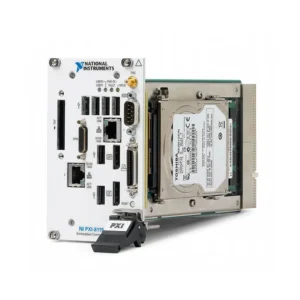


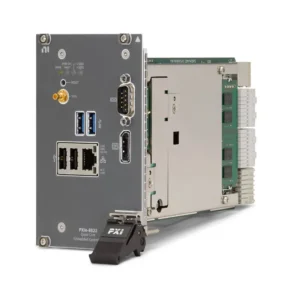
In stock


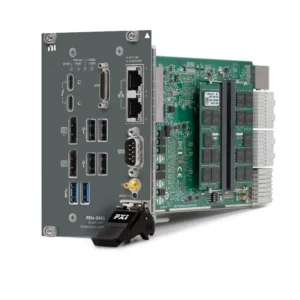
In stock
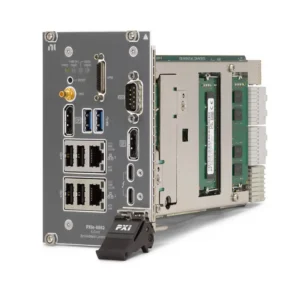
In stock


NI PXI Controllers and PXIe Embedded Controllers
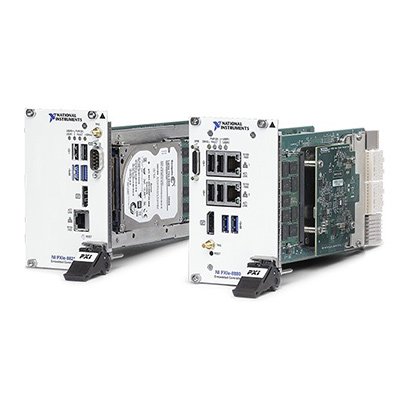
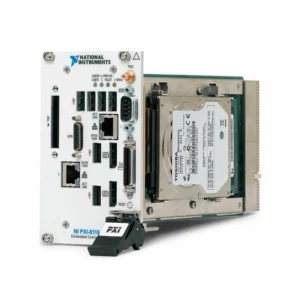
A PXI controller is the computing and system-management core of a PXI modular test platform. Installed in the system controller slot of a compatible PXI or PXI Express chassis, it runs the operating system, instrument drivers, test software, automation sequences, data-processing applications, and network services required to control the complete PXI system.
Unlike an individual measurement module, the controller does not normally perform the primary measurement itself. Its role is to coordinate installed instruments, move data between modules and software, execute test logic, manage local storage and communications, and provide the computing resources required by the application. For this reason, controller selection can directly affect software compatibility, system throughput, boot time, data logging capability, test execution speed, and the long-term maintainability of the test station.
PXISOURCE provides National Instruments PXI and PXIe embedded controllers for automated test equipment, semiconductor validation, data acquisition, RF testing, automotive electronics, aerospace and defense applications, production test, research laboratories, and legacy system replacement. Controllers can be combined with compatible PXI Chassis and PXI Modules to build complete modular test platforms.
What Does a PXI Controller Do?
The PXI controller performs a role similar to the computer in a conventional automated test system, but it is integrated directly into the PXI chassis and communicates with modular instruments through the chassis backplane.
A typical embedded controller is responsible for:
- Operating System Execution: Running Windows, real-time, or other supported software environments depending on the controller model.
- Instrument Control: Communicating with PXI and PXIe modules through drivers and application software.
- Test Sequencing: Running automated test procedures, production sequences, and system-level control software.
- Data Processing: Performing calculations, waveform analysis, signal processing, database communication, and report generation.
- Data Storage: Recording measurement data, logs, test results, and application files to local storage.
- External Connectivity: Connecting the PXI platform to enterprise networks, instruments, displays, USB devices, or external automation systems.
Because the controller performs several system-level functions simultaneously, the correct model should be selected according to the complete test workload rather than only the minimum CPU specification required to boot the system.
Embedded PXI Controller vs Remote PXI Control
One of the first architecture decisions is whether the PXI chassis should use an embedded controller or be connected to an external computer through a remote interface.
Embedded PXI Controller
An embedded controller is installed directly in the chassis and creates a self-contained PXI test system. This architecture is widely used in production test, laboratory automation, rack-mounted systems, semiconductor equipment, and applications where the test station needs to operate independently without a separate desktop computer.
Advantages of an embedded architecture can include:
- Compact system integration
- Direct connection to the PXI backplane
- Reduced external cabling
- Self-contained software and storage
- Simplified rack and production-line installation
Remote PXI Control
Remote control uses an external PC or workstation connected to the PXI chassis through a high-speed interface such as MXI. This can be useful when the application requires a specific workstation configuration, large external storage, high-end GPU resources, centralized computing, or easier PC replacement.
Customers considering this architecture can review compatible PXI MXI Interfaces.
From a procurement perspective, embedded and remote architectures should not be compared only on controller price. The total system cost should include the controller or host PC, interface hardware, cables, operating system, software environment, rack space, maintenance strategy, and future upgrade requirements.
How to Select a PXI Controller
Selecting a PXI controller requires matching the computing platform to both the installed hardware and the software workload. Processor generation is important, but it is only one part of the decision.
1. Confirm Chassis Compatibility
The first step is confirming that the controller is mechanically and electrically compatible with the intended chassis. A PXIe embedded controller is designed for the system controller slot of a compatible PXI Express chassis, while older PXI controllers may belong to different generations and bus architectures.
For a new system, the controller and chassis should ideally be selected together. For a replacement project, purchasing teams should provide both the existing controller model and chassis model so that compatibility can be reviewed before ordering.
2. Evaluate Processor Performance
CPU performance affects more than test-software launch speed. A PXI controller may need to control multiple instruments, process measurement data, execute automation sequences, communicate with databases, generate reports, perform mathematical analysis, and manage user interfaces at the same time.
A moderate processor can be sufficient for switching, digital I/O, or relatively low-rate measurements. More demanding workloads—such as high-speed digitization, RF processing, semiconductor test, multi-site automation, or large data acquisition systems—may benefit from higher-performance multi-core processors.
Procurement should therefore avoid selecting a controller based only on the processor family name. The engineering team should estimate the real software workload and required system lifetime.
3. Determine Memory Requirements
System memory becomes important when software processes large waveforms, performs multi-channel analysis, caches test results, operates multiple applications simultaneously, or executes complex automation frameworks.
Insufficient memory can limit system responsiveness even when the processor itself is adequate. For long-life production systems, some memory margin can also be useful as test software becomes more complex over time.
When replacing an older controller, memory requirements should be evaluated against the current software configuration rather than assuming that the original minimum memory specification remains adequate.
4. Evaluate Local Storage
PXI embedded controllers commonly use internal storage for the operating system, drivers, application software, measurement files, calibration information, logs, and test results.
Storage requirements depend heavily on the application. A controller running a simple switching sequence may require relatively little working storage, while a high-speed acquisition or production-data system may generate large amounts of measurement data.
Engineers should consider:
- Operating system and software installation size
- Local waveform or measurement storage
- Test-result retention requirements
- Database or log-file generation
- Recovery-image requirements
- Future software growth
For applications that continuously generate large datasets, local controller storage should not automatically be treated as the final data repository. Network storage or dedicated data infrastructure may be more appropriate.
PXIe Bandwidth and Controller-to-Chassis Performance
In high-performance PXIe systems, controller selection can influence how effectively data is transferred between installed modules and the computing environment.
This is especially important when the chassis contains:
- PXI Oscilloscopes/Digitizers
- PXI RF and Wireless Test instruments
- PXI Data Acquisition modules
- FPGA-based instruments
- High-speed data streaming hardware
- Multiple instruments acquiring simultaneously
A powerful CPU does not automatically eliminate a backplane bottleneck. Engineers should review the complete architecture, including chassis topology, controller interface bandwidth, module throughput, storage speed, and application data flow.
For procurement teams, this means that two controllers with similar CPU specifications may not necessarily be equivalent replacements in a high-throughput PXIe system.
Operating System and Software Compatibility
Operating system compatibility is one of the most important considerations in both new systems and replacement projects. Different controller generations may support different operating systems, driver versions, BIOS environments, and software stacks.
The system may depend on:
- NI LabVIEW
- NI TestStand
- NI-DAQmx
- Instrument-specific drivers
- Third-party test software
- Database clients
- Custom C/C++ or .NET applications
- Legacy operating systems
A technically faster controller can still be a poor replacement if the existing application cannot run in the supported software environment.
For validated production systems, controller migration should therefore be treated as both a hardware and software project.
Network, USB and External I/O Requirements
PXI embedded controllers commonly provide external interfaces for networking, displays, keyboard and mouse, USB peripherals, storage devices, and communication with other automation equipment.
Procurement teams should confirm required external connections before selecting a substitute controller. This is especially important when the existing station relies on:
- Multiple Ethernet connections
- External USB devices
- Specific display interfaces
- Serial communication
- External storage
- Network databases or manufacturing systems
A controller can be compatible with the chassis but still create integration problems if the required external interfaces differ from the original installation.
Engineering Applications for PXI Controllers
Automated Test Equipment and Production Test
In production test systems, the controller typically runs the test sequence, communicates with measurement instruments, manages barcode or device information, evaluates pass/fail criteria, stores results, and exchanges data with manufacturing systems.
Reliability and software stability may be more important than selecting the highest available processor performance. A production controller also needs sufficient lifecycle support because replacing the computing platform can require revalidation of the complete test station.
Semiconductor Test and Device Validation
Semiconductor applications can place substantial demands on the controller due to parallel instrument control, rapid test sequencing, large result sets, multiple devices under test, and communication with external handlers or manufacturing infrastructure.
Higher CPU performance, sufficient memory, fast storage, and strong PXIe communication capability can be important when the system contains multiple SMUs, digital instruments, switching resources, or synchronized measurement modules.
RF and Wireless Test
RF systems frequently generate large waveform datasets and may require significant processing for demodulation, spectral analysis, communication measurements, or automated validation.
In these systems, controller CPU performance, memory, data-transfer architecture, and storage should be evaluated together rather than independently.
High-Speed Data Acquisition
High-channel-count or high-sample-rate acquisition systems can generate more data than the controller can practically store or analyze if the architecture is undersized.
Engineers should identify whether data will be processed in real time, streamed to disk, transferred to another computer, or reduced inside FPGA or measurement hardware before it reaches the controller.
Automotive and HIL Systems
Automotive validation systems may use the PXI controller to coordinate DAQ, digital I/O, communication buses, fault insertion, switching, and external simulation equipment.
For systems expected to remain in service across multiple vehicle programs, lifecycle and software compatibility can be particularly important procurement considerations.
Aerospace, Defense and Research Systems
Research and aerospace systems often combine multiple instrument types and custom software. Depending on the workload, these systems may prioritize processor performance, network connectivity, storage capacity, synchronization, or long-term configuration stability.
Popular NI PXI and PXIe Controller Models
PXISOURCE provides a broad range of NI embedded controllers for current systems, upgrades, and legacy replacement projects. Frequently requested PXIe controller models include PXIe-8881, PXIe-8880, PXIe-8861, PXIe-8842, PXIe-8840, and PXIe-8820.
Customers maintaining earlier PXI Express platforms may also require controllers such as PXIe-8135 and PXIe-8133.
These controllers belong to different generations and should not be treated as direct replacements solely because they occupy the system controller position. CPU architecture, RAM, storage, operating system support, external interfaces, PXIe performance, and software compatibility should all be considered before substitution.
Choosing Between High-Performance and General-Purpose PXI Controllers
The highest-performance controller is not always the most cost-effective option.
A general-purpose controller may be entirely appropriate for:
- Switching systems
- Moderate-rate DAQ
- Basic production test
- Instrument control
- Simple automation sequences
Higher-performance controllers are more valuable when the application includes:
- Large waveform processing
- High-speed RF analysis
- Multi-site semiconductor testing
- Heavy parallel software execution
- Large data-transfer workloads
- Complex analysis or database processing
From a procurement standpoint, the goal should be to select enough computing headroom for the expected service life without paying for performance the application will never use.
Legacy PXI Controller Replacement
Controller replacement is often more complicated than chassis replacement because the controller contains the operating system and software environment that directly runs the test application.
A legacy production station may depend on:
- A specific Windows version
- A particular LabVIEW runtime
- Older instrument drivers
- Custom DLLs or libraries
- Database software
- TestStand sequences
- Hardware-specific configuration files
Replacing an old controller with a newer model may therefore require operating-system migration, driver updates, application testing, database validation, and potentially complete station requalification.
For systems where production downtime is expensive, sourcing the same controller model can sometimes be the lower-risk maintenance strategy.
Models such as PXIe-8135 and PXIe-8133 may still be required for legacy installations even when newer controller families are available.
PXI Controller Procurement Guide
Confirm the Exact Controller Model
Do not order only according to a description such as “PXIe embedded controller.” Confirm the complete model requested by engineering because different controller generations can have substantial differences in processor, storage, interfaces, software environment, and lifecycle status.
Confirm the Chassis Model
Provide the PXI or PXIe chassis model together with the controller request. This helps verify that the proposed controller is appropriate for the existing platform.
Confirm the Software Environment
For replacements, confirm the operating system, LabVIEW or TestStand environment, driver dependencies, and any legacy software requirements before approving an alternative controller.
Confirm Memory and Storage Requirements
Two controllers from the same family may have different configurations or storage requirements. Procurement should ensure that the quoted configuration meets the engineering specification rather than comparing only the base model name.
Confirm Required External Interfaces
Check Ethernet, USB, display, serial, and other connections used by the current system. A controller that fits the chassis may still require changes to the station if the external interface configuration differs.
Confirm Availability and Project Timeline
Current and legacy controllers can have very different supply situations. Providing the required delivery date allows the sourcing strategy to be evaluated against project deadlines.
Information to Include in a PXI Controller RFQ
For an accurate quotation and compatibility review, customers should provide:
- Exact controller model number
- Required quantity
- PXI/PXIe chassis model
- Required product condition
- Operating system requirement if applicable
- Memory or storage requirement if specified
- Required delivery date
- Shipping destination
- Existing controller model when purchasing a replacement
For complete PXI projects, customers can also provide the controller, chassis, and module bill of materials so that the complete system can be evaluated together.
PXI Controller Procurement FAQ
1. How do I know whether a PXI controller is compatible with my chassis?
Provide the exact controller and chassis model numbers. Compatibility depends on controller generation, chassis architecture, system-controller slot requirements, PXI/PXIe platform type, and potentially firmware or software environment. For replacement projects, the safest approach is to compare the existing controller and chassis combination before ordering.
2. Can I replace an old PXI controller with a newer PXIe controller?
Sometimes, but it should not be considered a direct replacement without engineering review. A newer controller may require a different operating system, newer drivers, updated software, different external connections, or revalidation of the test station. In a production environment, maintaining the original controller generation may sometimes involve less risk.
3. How much CPU performance do I need for a PXI controller?
The answer depends on the software workload rather than the number of installed modules alone. Basic switching or control systems require relatively little computation, while RF analysis, waveform processing, semiconductor test, high-speed DAQ, and parallel execution can require substantially more processor performance. Engineering should evaluate expected CPU workload and future software growth before procurement selects a model.
4. How much RAM and storage should I specify?
Memory requirements depend on application complexity, waveform size, simultaneous software processes, and analysis workload. Storage requirements depend on the operating system, installed software, local logging, waveform recording, and test-result retention. It is normally better to specify realistic application requirements rather than purchase only the minimum supported configuration.
5. Should I use an embedded PXI controller or an external PC with MXI?
Embedded controllers are useful for compact, self-contained production and laboratory systems. Remote control can be preferable when the project requires a specific workstation, easier computer upgrades, substantial external storage, or specialized processing resources. The correct choice depends on the complete system architecture and maintenance strategy.
6. What should I check when purchasing a discontinued PXI controller?
Confirm the exact model, configuration, operating system requirements, storage condition, chassis compatibility, external interfaces, and whether the existing software depends on specific drivers or hardware revisions. If the controller is replacing a failed production unit, providing information from the original controller can reduce compatibility risk.
7. Why can two PXI controllers with similar processors have different prices?
Controller value is determined by more than CPU model. Differences can include PXIe interface architecture, memory capacity, storage, ruggedization, I/O interfaces, product generation, operating system support, lifecycle status, supply availability, and condition. Procurement should compare the complete controller configuration rather than processor specification alone.
8. What should I compare when evaluating PXI controller quotations?
Compare the exact model and configuration, product condition, memory and storage, included components, supported software environment, availability, lead time, warranty or testing information where applicable, logistics terms, and chassis compatibility. For a replacement project, a technically correct controller that preserves the existing software environment can be more valuable than a lower-priced alternative requiring system redevelopment.
NI PXI Controllers from PXISOURCE
PXISOURCE supports engineers, system integrators, laboratories, and purchasing teams sourcing NI PXI and PXIe embedded controllers for new automated test systems, system upgrades, production equipment maintenance, and legacy hardware replacement. We can assist with model confirmation, chassis compatibility, availability checks, controller generation comparison, lead-time evaluation, and project-based quotation.
Continue exploring the complete PXI Systems range, including PXI Chassis, PXI Modules, and PXI MXI Interfaces.
Email:sales@pxisource.com