



Showing all 8 results

Filter by price
Filter by brands

- National Instruments
- PXI Systems
- PXI Chassis
- PXI Controller
- PXI Modules
- PXI Semiconductor Test
- PXI FPGA and RIO Modules
- PXI MXI Interfaces
- PXI Programmable Power Supplies & SMU
- PXI Sensor Measurements
- PXI Signal Generators
- PXI Vision
- PXI Data Acquisition
- PXI Oscilloscopes/Digitizers
- PXI Counter/Timers
- PXI RF and Wireless Test
- PXI GPIB, Ethernet and VXI
- PXI Switches
- PXI Digital Multimeters
- PXI Digital Input/Output
- PXI Industrial Communication
- PXI Dynamic Signal Analysis
- PXI Data Streaming
- CompactDAQ Systems
- CompactRIO Systems
- PCI Modules
- USB Devices
- USRP Software Defined Radio Device
- PXI Systems
- keysight
- Tektronix


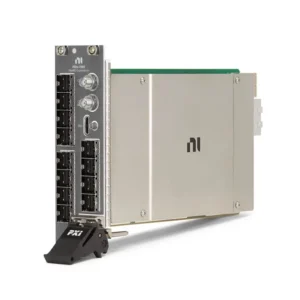

NI PXI Data Streaming and Storage Modules
NI PXI Data Streaming solutions move continuous measurement data between PXI instruments, system memory, FPGA processors, storage modules and playback hardware. They are used when an acquisition exceeds the instrument’s onboard memory or when recorded waveforms must be continuously written to or read from disk at high sustained rates.
A reliable streaming system depends on the complete data path—not only the storage module. Engineers must calculate the generated data rate and verify the acquisition module interface, PXIe slot bandwidth, chassis segments, controller connection, host memory, storage throughput, software buffering and cooling. Procurement teams must also confirm capacity, slot requirements, operating-system support and the expected recording duration.
What Is PXI Data Streaming?
PXI data streaming is the continuous transfer of measurement or waveform data through a PXI or PXI Express system. Data may move from an acquisition module to host memory, from memory to storage, between supported PXIe instruments or from storage to a generator for waveform playback.
Streaming differs from a finite acquisition. In a finite acquisition, data is stored temporarily in the instrument’s onboard memory and transferred after the measurement completes. Continuous streaming is required when the acquisition duration or waveform size exceeds the available onboard memory.
PXI Express is preferred for demanding streaming applications because it uses PCI Express links between peripheral slots, chassis switches and the system controller. A complete NI PXI system must provide sufficient bandwidth at every point in this path.
PXI Data Streaming Architectures
| Architecture | Data Path | Best Fit | Primary Limitation |
|---|---|---|---|
| Finite Onboard Acquisition | Instrument to onboard memory, followed by transfer to the controller | Short bursts, triggered captures and measurements that fit in module memory | Recording duration is limited by onboard memory capacity |
| Stream to Host Memory | Instrument through the PXIe backplane and controller to system RAM | Real-time analysis, buffering and moderate-duration acquisition | Host memory is temporary and has limited capacity |
| Stream to Disk | Instrument to host memory and then to an internal or external storage volume | Long-duration recording and preservation of raw measurement data | Storage must sustain the complete write rate without interruption |
| Stream from Disk | Storage to host memory and then to a waveform generator or other output module | RF record and playback, waveform replay and repeatable stimulus generation | Read throughput, output timing and waveform format must all be compatible |
| Peer-to-Peer Streaming | Direct transfer between compatible PXIe instruments or FPGA modules | Low-latency processing without routing every sample through host memory | Requires supported hardware, drivers and a compatible chassis topology |
| FPGA Preprocessing | Instrument data is filtered, decimated or analyzed before host transfer | Reducing bandwidth and implementing deterministic real-time processing | Requires FPGA resources, development software and custom engineering |
The PXIe-8267 is a high-speed storage target but does not support direct peer-to-peer transfers from another PXIe module. Instrument data is normally transferred through the controller and host memory before being written to the PXIe-8267. P2P capability should not be assumed merely because two devices are installed in the same chassis.
NI PXI Data Streaming Module
| Model | Unique Category | Key Specifications | Best Fit |
|---|---|---|---|
| PXIe-8267 | High-Speed NVMe Data Storage | 4 TB, four M.2 NVMe SSDs, PCIe Gen 3 x8 module interface, up to 5 GB/s sustained sequential read/write throughput and one-slot PXIe form factor | High-speed digitizer recording, RF record and playback, signal intelligence and multichannel sensor acquisition |
The PXIe-8267 provides a dedicated high-throughput storage volume inside a PXI Express chassis. It is intended for large sequential files rather than serving as a replacement for the controller’s operating-system drive. Actual application throughput depends on the PXIe slot, chassis backplane, controller, file system, data format and acquisition software.
How to Design a PXI Data Streaming System
1. Calculate the Generated Data Rate
Begin with the number of active channels, samples per second and number of bytes transferred for each sample:
Data rate = active channels × sample rate × stored bytes per sample.
Use the transferred or stored sample width rather than only the ADC resolution. For example, an 18-bit converter may transfer each sample as a 32-bit value. Include I/Q components, timestamps, headers, multiple instruments and simultaneous input and output streams where applicable.
The result is the minimum payload rate. Driver overhead, file-system activity, metadata, data conversion and other bus traffic require additional performance margin.
2. Determine Whether Streaming Is Necessary
Calculate the total data volume by multiplying the data rate by the longest continuous acquisition time. Compare this value with the instrument’s onboard memory. If the acquisition fits completely in onboard memory, a finite record may be simpler and place fewer real-time demands on the PXIe backplane.
Continuous streaming is required when the test duration exceeds onboard memory or when the data must be processed, monitored or stored while acquisition continues.
3. Check Per-Slot Bandwidth
The acquisition module and PXIe-8267 must each be installed in slots that provide sufficient PCI Express generation and lane width. A module with a Gen 3 x8 interface cannot deliver its full potential through a lower-bandwidth slot or backplane connection.
Physical PXIe compatibility alone is not enough. Review the chassis manual to confirm the PCIe link assigned to each slot.
4. Review Chassis Segments
Large PXIe chassis often divide peripheral slots across multiple PCI Express switches or segments. Instruments within one segment may share an upstream link to the controller. Several individually compatible modules can therefore exceed the aggregate bandwidth of their shared segment when streaming simultaneously.
Distribute high-throughput acquisition modules across suitable segments and account for traffic in both directions. Slot placement should be planned from the chassis backplane diagram rather than determined only by physical convenience.
5. Verify Controller and Host-Memory Performance
For stream-to-disk acquisition using the PXIe-8267, data generally passes through the controller and host memory. The controller link, memory bandwidth, processor activity and software architecture can therefore become bottlenecks even when the storage module and acquisition instrument are individually fast enough.
A remote controller or MXI connection must also provide adequate sustained bandwidth. The external host computer’s PCIe slot configuration, chipset and memory performance are part of the data path.
6. Confirm Sustained Storage Performance
Storage should be selected according to sustained sequential write performance, not short-duration burst or cache performance. A drive may initially write at a high rate and then slow after its cache fills, temperature rises or background garbage collection begins.
The PXIe-8267 is specified for up to 5 GB/s sustained sequential read/write throughput. The achievable application rate can be lower because of chassis topology, controller limitations, file formatting, software overhead and storage condition.
7. Calculate Recording Duration
Approximate recording time can be calculated by dividing usable storage capacity by the sustained data rate:
Recording duration = usable storage capacity ÷ continuous data rate.
| Continuous Data Rate | Approximate Data per Hour | Approximate Time for 4 TB |
|---|---|---|
| 100 MB/s | 360 GB | About 11.1 hours |
| 500 MB/s | 1.8 TB | About 2.2 hours |
| 1 GB/s | 3.6 TB | About 66 minutes |
| 2 GB/s | 7.2 TB | About 33 minutes |
| 5 GB/s | 18 TB | About 13 minutes |
These are planning estimates based on decimal capacity and do not include file-system formatting, reserved space, metadata or operating margin. The usable recording time should be verified on the configured system.
8. Allow Bandwidth Margin
Do not design a system in which the calculated data rate exactly equals the published limit of the slowest component. Allow margin for PCIe protocol overhead, file-system activity, driver operations, background processes and future channel expansion.
The final configuration should be benchmarked using the intended channel count, sample format, acquisition duration and file format before production deployment.
Understanding the PXIe-8267 Data Path
| Data-Path Component | What to Verify | Possible Bottleneck |
|---|---|---|
| Acquisition Instrument | Sample rate, active channels, transferred data width, onboard memory and DMA support | The module generates more data than its PCIe link can transfer |
| Peripheral Slot | PCIe generation, lane width and slot compatibility | A high-bandwidth module is installed in a slower slot |
| Chassis Segment | Shared switch, upstream link and simultaneous module traffic | Multiple modules compete for one segment link |
| System Controller | PCIe connection, memory bandwidth, processor workload and operating system | All streams must pass through a limited controller link |
| Host Memory | Buffer size, memory-copy operations and producer-consumer architecture | Software does not remove data from driver buffers quickly enough |
| Storage Module | Sustained write rate, usable capacity, temperature and drive condition | Storage slows during a long acquisition |
| File Format | Write block size, metadata, scaling, compression and file segmentation | Small or fragmented writes reduce throughput |
PXIe Chassis and Cooling Requirements
The PXIe-8267 uses a PCI Express Gen 3 x8 module interface and requires a chassis slot with at least 58 W of cooling capacity. Not every PXIe chassis or slot can provide the necessary link bandwidth and thermal performance.
Before installation, verify:
- PXIe slot type and PCI Express generation
- Lane width between the selected slot and chassis switch
- Bandwidth from that segment to the system controller
- Minimum 58 W slot-cooling capability
- Ambient-temperature limits with the selected chassis
- Airflow configuration and installation of filler panels
- Location of other high-power or high-throughput modules
Review available PXI and PXIe chassis by both bandwidth and cooling capability. Slot count alone is not a sufficient selection criterion for a data-streaming system.
Controller and Remote Connection Selection
The PXI controller must sustain the combined traffic of all acquisition and output modules while also running the test application, file system and analysis processes. Review its PCIe connection to the chassis, memory capacity, memory bandwidth, processor resources and supported storage configuration.
When using a remote computer, include the complete MXI or Thunderbolt connection in the bandwidth calculation. A high-bandwidth chassis cannot compensate for a slower remote-controller link.
Software and File-Format Considerations
PXI Platform Services provides system-level identification and support for the chassis and storage module. The acquisition instrument still requires its own driver, such as NI-DAQmx, NI-SCOPE, NI-RFSA or the applicable FlexRIO software.
Streaming applications commonly use a producer-consumer architecture:
- The acquisition driver transfers data into preallocated memory buffers.
- A processing loop performs only time-critical operations.
- A separate disk-writing loop writes large sequential blocks to storage.
- Error, overflow and available-space conditions are monitored continuously.
TDMS provides structured channels, metadata and engineering information, while raw binary files can reduce format overhead in specialized high-rate applications. The selected format should be benchmarked with the actual data type, block size and metadata requirements.
Avoid repeatedly opening files, performing small unbuffered writes or carrying out intensive display and analysis operations in the acquisition loop. Long recordings may also need automatic file segmentation so individual files remain manageable.
Peer-to-Peer Streaming and FPGA Processing
NI peer-to-peer streaming allows supported PXIe instruments to exchange raw data through compatible PCI Express paths without moving every sample through host memory. This can reduce controller workload and latency when data must be processed by an FPGA coprocessor or transferred between supported instruments.
P2P support depends on the exact module, firmware, driver and chassis topology. Compatible modules should normally be placed on suitable PXIe segments to avoid unnecessary switch and controller paths.
The PXIe-8267 itself does not provide a direct P2P storage endpoint. If an application requires FPGA preprocessing followed by disk recording, the processed stream must still be transferred through a supported host-memory and storage-writing path.
Explore PXI FPGA and RIO modules when real-time filtering, decimation, triggering or data reduction is required before storage.
Storage Capacity, Endurance and Data Integrity
High-speed recording can write many terabytes during one test session. Storage selection should therefore consider not only throughput and capacity but also total data written, expected test frequency, temperature and the required service life.
The PXIe-8267 supports NVMe storage features including TRIM, garbage collection and S.M.A.R.T. where supported by the operating system. Monitor drive health and available capacity as part of system maintenance.
High-speed storage is not automatically redundant storage. If data cannot be recreated, define a separate backup or transfer workflow after acquisition. Confirm whether loss of capacity, a controller interruption or unexpected power removal could affect the test record.
Typical PXI Data Streaming Applications
- RF spectrum recording and waveform playback
- Radar, electronic warfare and signal-intelligence capture
- Continuous high-speed digitizer acquisition
- Wideband I/Q data recording
- Multichannel acoustic, vibration and sensor recording
- Aerospace and automotive validation tests
- Long-duration transient and event capture
- High-speed digital and serial-interface testing
- Scientific imaging and experimental data collection
- Automated validation requiring raw-data retention
Legacy Data Storage Replacement
Replacing an older PXI storage system requires checking more than nominal capacity. Legacy modules may use mechanical disks, SATA interfaces, external drive enclosures or older PCIe generations. A newer NVMe module may require a different PXIe chassis, operating system, driver and thermal configuration.
Compare the following before approving a replacement:
- PXI Express generation and lane width
- Chassis segment and controller bandwidth
- Sustained read and write performance
- Usable storage capacity and recording duration
- Required slot power and cooling
- Operating-system and driver support
- Application file paths and storage-volume configuration
- Data migration and backup requirements
Production applications should be requalified with a continuous full-duration test rather than only a short disk-speed benchmark.
PXI Data Streaming Procurement and RFQ Guide
Provide the following information for system review and quotation:
- Required storage-module model and part number
- Acquisition, RF, digitizer or FPGA module models
- Number of active channels and sample rate
- Transferred data type or bytes per sample
- Required continuous recording or playback duration
- Calculated aggregate input and output data rates
- Existing PXIe chassis and selected slot numbers
- Embedded or remote controller model
- Operating system and NI driver versions
- File format and real-time processing requirements
- Required quantity and preferred product condition
- Delivery destination and required delivery date
For pre-owned storage hardware, request module recognition and functional test results and confirm the installed drive configuration, drive-health information and physical condition. Storage devices should not be evaluated only by whether the PXI controller detects them.
FAQ
What is the difference between data streaming and onboard-memory acquisition?
Onboard-memory acquisition stores a finite record inside the instrument before transferring it. Data streaming continuously moves samples while acquisition is running and is required when the record is larger than the onboard memory or must be processed in real time.
How fast is the PXIe-8267?
NI specifies up to 5 GB/s sustained sequential read/write throughput. Actual application performance depends on slot bandwidth, chassis topology, controller performance, host memory, file system, software and drive operating conditions.
How long can 4 TB record data?
Recording time depends on the continuous data rate. At 1 GB/s, the theoretical duration is approximately 66 minutes. At 5 GB/s, it is approximately 13 minutes. File-system overhead and reserved operating margin reduce the usable duration.
Does the PXIe-8267 support direct peer-to-peer streaming?
No. The PXIe-8267 does not provide direct P2P transfer from an acquisition or FPGA module. Data normally passes through the controller and host memory before being written to the storage volume.
Can the PXIe-8267 reach full speed in any PXIe slot?
No. Full performance depends on a compatible slot, sufficient PCIe generation and lane width, adequate segment bandwidth and a controller path that can sustain the transfer. The chassis must also meet the module’s cooling requirement.
Why does streaming stop even when the average disk speed appears sufficient?
Short disk benchmarks may use cache and do not represent a full-duration test. Buffer overflow can also result from temporary write-rate drops, PCIe contention, small file operations, memory copies, display processing or background software activity.
Can network storage replace a PXIe data storage module?
Only when the complete network and storage system has been validated at the required sustained rate and latency. Standard Ethernet or shared network storage may be suitable for transferring files after a test but may not sustain demanding real-time acquisition.
Recommended PXI Data Streaming Product
The PXIe-8267 is the primary NI PXI data storage module for high-throughput stream-to-disk and stream-from-disk applications. Pair it with a bandwidth-compatible PXIe chassis, controller and acquisition instrument selected for the calculated continuous data rate.
Related NI PXI Solutions
Use PXI oscilloscopes and digitizers for high-speed waveform acquisition, PXI RF and wireless instruments for wideband I/Q recording, or PXI data acquisition modules for multichannel measurement systems.
NI PXI Data Streaming Solutions from PXISOURCE
PXISOURCE supports engineers, system integrators and procurement teams with PXI data-rate calculation, PXIe chassis and controller compatibility review, storage-module sourcing and legacy-system replacement. Send the acquisition-module models, channel configuration, sample format, recording duration, chassis model and preferred hardware condition for a technically matched quotation.
Need help configuring an NI PXI data streaming system? Email sales@pxisource.com or contact PXISOURCE through WhatsApp.