






Showing 1–16 of 38 results

Filter by price
Filter by brands

- National Instruments
- PCI ModulesPCI Modules
- PXI Systems
- PXI Chassis
- PXI Controller
- PXI Modules
- PXI Semiconductor Test
- PXI FPGA and RIO Modules
- PXI MXI Interfaces
- PXI Programmable Power Supplies & SMU
- PXI Sensor Measurements
- PXI Signal Generators
- PXI Vision
- PXI Data Acquisition
- PXI Oscilloscopes/Digitizers
- PXI Counter/Timers
- PXI RF and Wireless Test
- PXI GPIB, Ethernet and VXI
- PXI Switches
- PXI Digital Multimeters
- PXI Digital Input/Output
- PXI Industrial Communication
- PXI Dynamic Signal Analysis
- PXI Data Streaming
- CompactDAQ Systems
- CompactRIO Systems
- PCI Modules
- USB Devices
- USRP Software Defined Radio Device
- keysight
- Tektronix

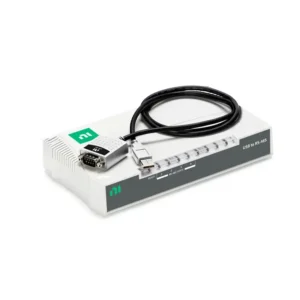


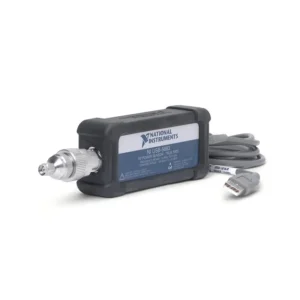
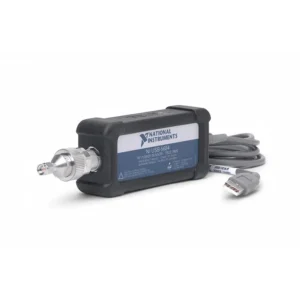
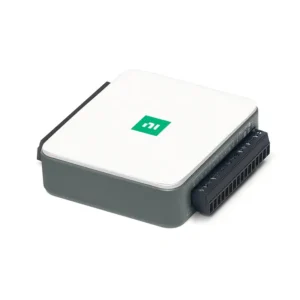
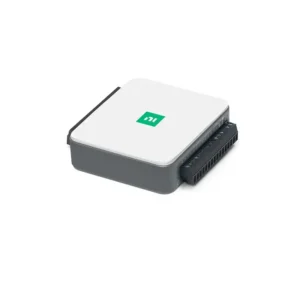
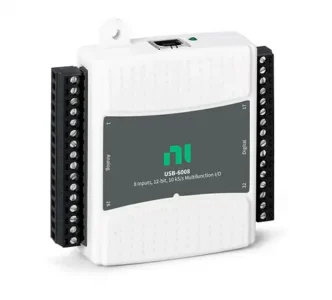
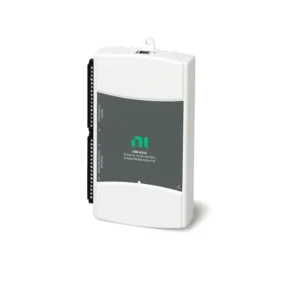
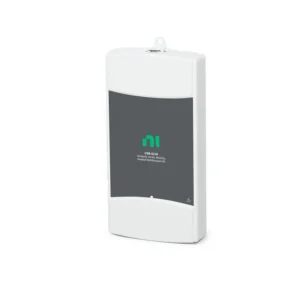
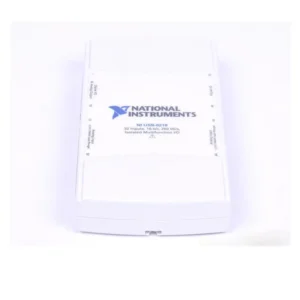
NI USB Devices
NI USB devices connect measurement, control, communication and test hardware directly to a computer. They provide practical PC-based solutions for analog acquisition, digital I/O, sensor measurement, counter and timer functions, industrial communication, high-speed digitizing, FPGA development, RF testing and precision electrical measurement.
Select a USB device according to the application requirement—not only the connection type. Confirm the actual signal, required performance, software support, host-computer capability, timing architecture, accessories and installation environment before choosing hardware.
NI USB Device Categories
| USB Device Category | Primary Function | Typical Applications |
|---|---|---|
| USB Data Acquisition | Analog input, analog output, digital I/O and counter functions | Sensor logging, electrical measurement, control and general automated test |
| USB Sensor Measurement | Conditioned or sensor-specific measurement interfaces | Temperature, strain, force, pressure, vibration and sound measurement |
| USB Digital I/O | Digital monitoring, control and hardware-timed signals | Machine status, test fixtures, relays, alarms and industrial automation |
| USB Counter and Timer | Pulse counting, encoder measurement, frequency and timing functions | Position, RPM, event counting, PWM and motion-related testing |
| USB Industrial Communication | PC access to supported industrial and vehicle communication protocols | CAN, CAN FD, LIN, serial, network logging and equipment integration |
| USB FPGA and RIO | Reconfigurable I/O with custom FPGA timing and processing | Custom digital logic, deterministic test fixtures and prototype systems |
| USB RF and Wireless Test | RF receive, transmit, I/Q streaming and software-defined radio functions | Wireless research, spectrum monitoring and communications development |
| USB High-Speed Digitizers | Triggered waveform capture and fast analog acquisition | Transient analysis, electrical validation and waveform recording |
| USB Digital Multimeters | Precision voltage, current and resistance measurement | Calibration, production test, device characterization and electrical validation |
How to Select an NI USB Device
1. Define the Application Function
Start with the result the system must provide: sensor data logging, digital machine control, communication monitoring, waveform capture, RF signal processing, precision electrical measurement or custom FPGA logic.
One physical signal can support different engineering goals. A motor encoder may be used for position, speed, event timing or closed-loop control; the required result determines whether a digital input, counter, motion interface or FPGA device is appropriate.
2. Identify the Electrical Interface
Document the signal type, voltage or current range, source impedance, connector, grounding arrangement, cable length and expected fault conditions. For sensors, also record excitation, sensitivity, calibration information and required bandwidth.
Do not select from a device name alone. A pressure transmitter may provide voltage, current, bridge mV/V or digital output, and each interface requires a different USB measurement architecture.
3. Match Performance Requirements
Confirm required channel count, input range, resolution, accuracy, sample rate, analog bandwidth, update rate and recording duration. Dynamic waveforms, precision DMM measurements, digital events and RF I/Q streams all use different performance criteria.
Published resolution or maximum sample rate should not be used as the sole selection factor. Signal conditioning, input noise, host-computer resources, timing behavior and software design affect practical results.
4. Review Timing and Synchronization
Determine whether the application needs software-timed monitoring, hardware-timed acquisition, external triggering, shared clocks or deterministic FPGA processing. Timing requirements are especially important for dynamic signals, digital patterns, counters, motion, RF and multidevice measurements.
Multiple USB devices connected to the same computer are not automatically synchronized. Verify supported trigger, clock and reference-sharing methods when measurements must be time- or phase-aligned.
5. Verify Host Computer and USB Requirements
USB devices rely on a host computer for configuration, acquisition, logging, analysis and user interaction. Confirm operating-system support, available USB ports, processor performance, memory, storage capacity and software compatibility.
For continuous high-rate acquisition, evaluate the complete data path: device output, USB link, host memory, processing, file format and storage. Use direct, reliable connections and validate the final configuration at the required duration.
6. Confirm Accessories, Protection and Installation
Terminal blocks, cables, adapters, probes, attenuators, external power supplies and signal-conditioning hardware can be essential parts of the final system. Confirm the complete connection path before ordering.
Review isolation, grounding, shielding, environmental conditions and electrical protection when connecting to industrial equipment, long cables, powered circuits, motors or high-energy systems.
USB Device Software and Drivers
Supported NI USB devices use the applicable driver and software environment for configuration, acquisition, control and analysis. Examples can include NI-DAQmx for data acquisition, NI-SCOPE for supported digitizers, NI-DMM for supported digital multimeters, NI-XNET for supported vehicle networks and FPGA software tools for RIO hardware.
Before purchasing new or replacement hardware, confirm the existing application software, operating system, driver version, programming interface and required toolkits. A compatible connector does not guarantee that a newer device will work without software or wiring changes.
When to Choose USB, CompactDAQ, CompactRIO or PXI
| Platform | Architecture | Best Fit |
|---|---|---|
| USB Devices | Direct connection between PC and measurement or control hardware | Portable, benchtop and PC-based test applications |
| CompactDAQ | Modular C Series I/O chassis with USB, Ethernet or embedded connectivity | Mixed-signal sensor systems, expandable logging and distributed acquisition |
| CompactRIO | Embedded real-time controller, FPGA and modular C Series I/O | Deterministic control, custom I/O and industrial embedded applications |
| PXI and PXIe | High-performance modular instrumentation chassis | High-channel-count automated test, RF, switching and high-speed acquisition |
Typical NI USB Device Applications
- PC-based data acquisition and sensor logging
- Automated functional, production and validation testing
- Industrial machine status and digital control
- Temperature, strain, force, pressure and vibration measurement
- CAN, CAN FD, LIN, serial and equipment communication logging
- Encoder, counter, PWM and rotational-speed measurement
- High-speed waveform and transient acquisition
- RF software-defined radio and wireless development
- Precision voltage, current and resistance measurement
- Custom FPGA-based test and timing applications
NI USB Device Procurement Guide
Provide the following information for accurate USB device selection:
- Required application: measurement, control, communication, RF, digitizing, DMM or FPGA processing
- Sensor, instrument, controller, network or device manufacturer and model
- Electrical interface, signal range, logic level, protocol or RF frequency range
- Required channel count, sample rate, bandwidth, timing or update-rate requirement
- Need for triggering, synchronization, MIMO, FPGA logic or continuous logging
- Required isolation, grounding, protection and environmental conditions
- Required terminal blocks, cables, probes, antennas, adapters or signal conditioning
- Host-computer operating system, USB connection, storage and software environment
- Existing NI driver, LabVIEW, UHD or other application requirements
- Required quantity, preferred product condition and delivery destination
FAQ
Are all NI USB devices data acquisition devices?
No. NI USB hardware includes data acquisition devices as well as communication interfaces, digitizers, digital multimeters, RF hardware, FPGA/RIO devices and other specialized test equipment.
Can a USB device directly connect to industrial equipment?
Only when the exact electrical interface, voltage range, grounding and protection requirements are compatible. Industrial systems often require isolation, external power, signal conditioning or driver circuitry.
Can USB devices be synchronized?
Synchronization capability depends on the selected devices and supported timing connections. USB connection alone does not guarantee shared clocks, triggers or phase alignment.
When should I choose CompactDAQ instead of a USB device?
Choose CompactDAQ when the application needs modular C Series I/O, more mixed-signal expansion, specialized sensor modules or a chassis-based measurement system.
When should I choose PXI instead of USB hardware?
Choose PXI or PXIe when the application requires high-channel-count instrumentation, demanding data throughput, modular RF test, switching, precise synchronization or a rack-based automated-test architecture.
Related NI Test and Measurement Platforms
Explore NI PCI and USB devices for PC-based test and measurement hardware. Use CompactDAQ systems for modular data acquisition, CompactRIO systems for embedded FPGA and real-time control, or NI PXI systems for high-performance automated test.
NI USB Devices from PXISOURCE
PXISOURCE supports engineers and procurement teams with NI USB device selection, interface and software compatibility review, accessory matching and sourcing for new applications, spare inventory and legacy-system replacement.
Need help selecting the right NI USB device? Email sales@pxisource.com or contact PXISOURCE on WhatsApp.