





Showing 1–16 of 203 results

Filter by price
Filter by brands

- National Instruments
- PCI ModulesPCI Modules
- PXI Systems
- PXI Chassis
- PXI Controller
- PXI Modules
- PXI Semiconductor Test
- PXI FPGA and RIO Modules
- PXI MXI Interfaces
- PXI Programmable Power Supplies & SMU
- PXI Sensor Measurements
- PXI Signal Generators
- PXI Vision
- PXI Data Acquisition
- PXI Oscilloscopes/Digitizers
- PXI Counter/Timers
- PXI RF and Wireless Test
- PXI GPIB, Ethernet and VXI
- PXI Switches
- PXI Digital Multimeters
- PXI Digital Input/Output
- PXI Industrial Communication
- PXI Dynamic Signal Analysis
- PXI Data Streaming
- CompactDAQ Systems
- CompactRIO Systems
- PCI Modules
- USB Devices
- USRP Software Defined Radio Device
- keysight
- Tektronix

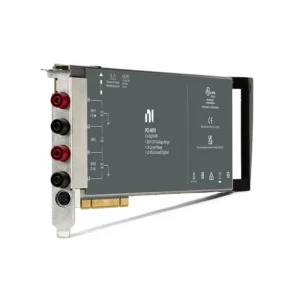
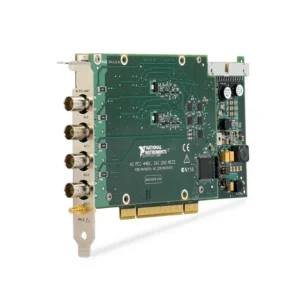
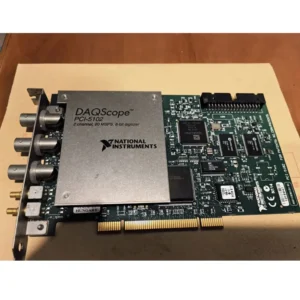
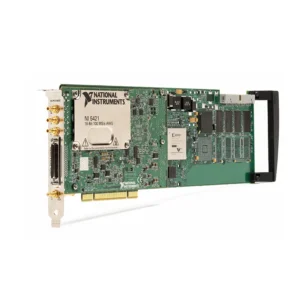
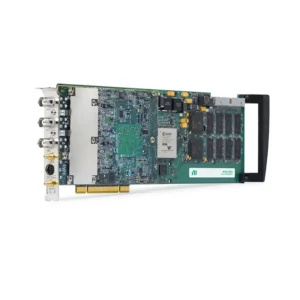
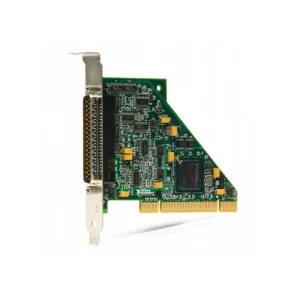
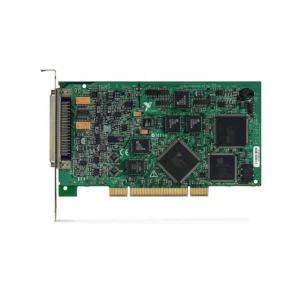
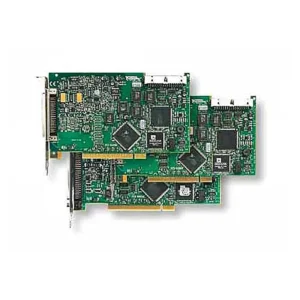
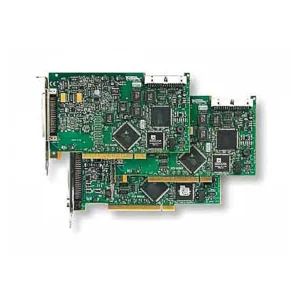
NI PCI and PCIe Modules
NI PCI Modules install directly inside desktop computers, industrial PCs and compatible workstations to provide data acquisition, signal generation, digital control, timing, waveform digitizing, FPGA processing, machine vision and industrial communication functions. PCI and PCI Express devices are widely used in automated test, laboratory measurement, production validation, machine monitoring and legacy-system maintenance.
Selecting the correct module requires matching the measurement function, computer slot, signal type, channel count, sample rate, bandwidth, isolation, timing architecture, connector accessories and software support. Conventional PCI and PCI Express are different interfaces and are not mechanically interchangeable.
Types of NI PCI Modules
| Module Category | Primary Functions | Typical Applications | Key Selection Criteria |
|---|---|---|---|
| PCI Data Acquisition Devices | Analog input, analog output, digital I/O and counter/timer functions | General automated testing, voltage measurement, data logging and machine integration | Channel count, input range, resolution, sample rate and sampling architecture |
| PCI Analog Output Devices | Static or waveform voltage and current generation | Sensor simulation, control setpoints, test stimulus and hardware-in-the-loop systems | Output range, resolution, update rate, settling time and load capability |
| PCI Digital I/O Devices | Digital state monitoring, industrial control and hardware-timed pattern I/O | Test fixtures, relay control, alarm monitoring and production automation | Logic voltage, isolation, direction, current capability and timing mode |
| PCI Counter/Timer Devices | Event counting, frequency measurement, encoder acquisition and pulse generation | Motion monitoring, tachometers, flow meters, PWM and machine timing | Counter quantity, edge rate, timebase accuracy, filtering and buffering |
| PCI Dynamic Signal Acquisition | High-dynamic-range, simultaneously sampled sound and vibration acquisition | Acoustic analysis, vibration testing, NVH and machine-condition monitoring | IEPE conditioning, bandwidth, dynamic range, coupling and anti-alias filtering |
| PCI High-Speed Digitizers | High-speed waveform and transient acquisition | Electronic validation, pulse analysis, communications testing and scientific measurement | Analog bandwidth, sample rate, vertical resolution, memory and triggering |
| PCI FPGA and RIO Devices | User-programmable FPGA processing and reconfigurable digital or analog I/O | Custom protocols, low-latency control, inline processing and specialized test systems | FPGA resources, I/O type, clock rate, adapter compatibility and development software |
| PCI Vision Acquisition | Image acquisition from industrial cameras | Inspection, identification, alignment, measurement and machine guidance | Camera interface, pixel clock, resolution, frame rate and trigger support |
| PCI Industrial Communication Interfaces | CAN, LIN, FlexRay, serial, GPIB and other supported communication interfaces | Automotive networks, instrument control, industrial equipment and protocol testing | Protocol, port count, transceiver, isolation, termination and driver support |
| MXI Interfaces | Connects a host computer to a compatible PXI or PXI Express chassis | Remote control of modular instrumentation and expansion of automated test systems | MXI generation, host interface, chassis interface, cable and topology |
The term “PCI Modules” on this page covers both conventional PCI and PCI Express measurement cards. Always verify the exact bus interface because a PCI card cannot be installed in a PCIe slot, and a PCIe card cannot be installed in a conventional PCI slot.
PCI Compared with PCI Express
| Interface | Architecture | Best Fit | Compatibility Requirement |
|---|---|---|---|
| PCI | Legacy shared parallel computer bus | Existing industrial computers, established test stations and legacy-system maintenance | Compatible PCI slot, voltage keying, bracket clearance, driver and operating-system support |
| PCI Express | Point-to-point serial interface using one or more PCIe lanes | Modern workstations, higher-throughput acquisition and new PC-based systems | Compatible PCIe slot, sufficient lane allocation, mechanical clearance and supported driver |
A physically longer PCIe slot can often accept a shorter-lane card, but motherboard design and lane allocation can affect available bandwidth. Some computer slots also share lanes with graphics cards, storage controllers or other expansion hardware.
For legacy PCI hardware, confirm both the physical connector and its voltage keying. Do not assume that every computer advertised with an expansion slot supports every generation of PCI measurement device.
Representative NI PCI and PCIe Modules
| Model | Unique Category | Primary Capability | Best Fit |
|---|---|---|---|
| PCIe-6363 | Multifunction Data Acquisition | Combines analog input, analog output, digital I/O and four 32-bit counters/timers | General automated measurement and control systems requiring mixed I/O |
| PCI-6704 | Static Analog Output | Multichannel analog voltage and current output for control-level signals | Setpoint generation, process control and multichannel device simulation |
| PCI-6518 | Industrial Digital I/O | Isolated digital input and output for industrial monitoring and control | Factory equipment, test fixtures and higher-voltage digital interfaces |
| PCI-6602 | Dedicated Counter/Timer | Multiple hardware counters for event, frequency, encoder and pulse operations | Motion monitoring and systems requiring several simultaneous timing tasks |
| PCI-4462 | Dynamic Signal Acquisition | Precision simultaneous acquisition for sound and vibration measurements | Acoustic, vibration, structural and rotating-machinery analysis |
| PCI-5922 | High-Resolution Digitizer | Flexible-resolution waveform acquisition for precision electronic measurement | Transient capture, communications analysis and component characterization |
| PCIe-7857R | FPGA and Reconfigurable I/O | User-programmable FPGA with reconfigurable I/O and deterministic processing | Custom timing, control, protocols and inline signal processing |
| PCIe-1433 | Vision Acquisition | Industrial image-acquisition interface for compatible cameras | High-performance machine vision, inspection and synchronized imaging |
| PCIe-8510 | Vehicle Network Interface | PC-based interface for supported automotive network communication | Electronic control unit testing, vehicle-network logging and simulation |
| PCIe-8361 | MXI-Express Host Interface | Host-side connection between a compatible computer and PXI Express system | Controlling a PXIe chassis from an external desktop or workstation |
These models represent major PCI module architectures rather than every device available in the NI product family. Verify the complete model number, hardware revision, connector, cable, driver and operating-system support before ordering.
How to Select an NI PCI Module
1. Identify the Measurement or Interface Function
Begin with the electrical signals and required task. Determine whether the system needs analog acquisition, analog generation, digital monitoring, counter measurement, high-speed waveform capture, sound and vibration acquisition, image capture, FPGA processing or communication with external equipment.
A multifunction DAQ card is appropriate when one system requires moderate numbers of analog, digital and counter channels. Specialized digitizers, dynamic signal devices, vision interfaces and FPGA cards are preferable when the application requires capabilities that are not available from general-purpose DAQ hardware.
2. Verify the Computer Expansion Slot
Inspect the host computer or motherboard to determine whether it provides PCI or PCI Express slots. For PCIe devices, check the physical slot size, available lanes, chipset allocation and whether another installed card blocks the required space.
Also confirm:
- Full-height or low-profile bracket requirements
- Computer power-supply capacity
- Cooling and airflow around the module
- Clearance for cables and adjacent expansion cards
- BIOS and chipset compatibility
- Operating-system and driver support
3. Record Every Required Signal
List all analog inputs, analog outputs, digital lines, counters, triggers, clocks and communication ports. For each signal, record its voltage range, source impedance, grounding arrangement, bandwidth, update rate and connector requirement.
General-purpose analog inputs normally measure voltage or already conditioned sensor signals. Thermocouples, RTDs, strain gauges, IEPE accelerometers, charge-mode sensors and other low-level transducers may require external signal conditioning or a dedicated sensor-measurement platform.
4. Select the Required Input Range and Resolution
Choose an input range that accommodates the complete expected signal, including offset, noise and normal overload conditions. Using an unnecessarily wide input range reduces the portion of the converter range used by the measurement.
ADC resolution alone does not determine system accuracy. Input noise, gain error, offset, temperature drift, source impedance, grounding and external interference also affect usable measurement performance.
5. Determine Sample Rate and Bandwidth
Select the required measurement bandwidth before comparing sample rates. Slow process signals may require only a few samples per second, while transient, acoustic and electronic waveform measurements can require much higher rates.
Check whether the published sample rate applies to each channel or is shared across all active channels. A multiplexed device samples channels sequentially through a shared converter, while a simultaneous-sampling device uses independent conversion paths to preserve interchannel timing.
6. Decide Between Multiplexed and Simultaneous Sampling
Multiplexed DAQ devices are suitable for general voltage acquisition, data logging and applications where small timing differences between channels are acceptable. They can provide a cost-effective combination of analog and digital functions.
Simultaneous sampling is important when phase relationships must be preserved, including:
- Power and energy measurements
- Sound and vibration analysis
- Strain, force and pressure correlation
- Motor and rotating-machinery testing
- Transient-event measurement
- Multichannel waveform comparison
7. Review Isolation and Grounding
Isolation can help manage common-mode voltage, ground-potential differences and industrial electrical noise. Confirm whether the module provides channel-to-channel, bank or bus isolation and verify the associated working-voltage limits.
Non-isolated devices require a carefully designed grounding arrangement. Differential measurement does not provide the same protection as electrical isolation. Long cables, grounded signal sources and machinery installations should be reviewed for ground-loop risk.
8. Confirm Triggering and Synchronization
Determine whether the application needs a digital start trigger, analog trigger, reference trigger, shared sample clock or external timebase. Software-started tasks do not necessarily begin at the same instant.
Hardware synchronization should be used when multiple cards must preserve phase, correlate events or coordinate input and output. Confirm whether the required timing signals can be routed internally through the computer system or must be connected through external terminals.
9. Calculate Data Throughput
For continuous acquisition, calculate the approximate payload rate:
Data rate = active channels × sample rate × transferred bytes per sample.
Include simultaneous input and output streams, digital data, image data, metadata and operating margin. The module, PCIe link, system memory, processor, application and storage device must all sustain the required transfer rate.
10. Confirm Cables and Terminal Accessories
PCI modules normally require an external cable and terminal block, breakout accessory, camera cable, communication cable or adapter module. The module and its connectivity should be selected as one complete assembly.
Verify:
- Board connector and cable part number
- Terminal-block compatibility
- Differential or single-ended wiring
- Shielding and cable-length requirements
- Required signal conditioning
- Connector pinout and legacy-fixture compatibility
PCI Data Acquisition and Analog I/O
PCI and PCIe DAQ devices acquire voltage and compatible conditioned sensor signals directly inside a computer. Multifunction devices may combine analog input, analog output, digital I/O and counters on one board, simplifying general-purpose automated test systems.
Important analog-input specifications include channel count, resolution, input range, maximum sample rate, analog bandwidth, input impedance, common-mode range and sampling architecture.
Analog outputs can generate control setpoints, simulated sensor signals, test stimuli and arbitrary waveforms where supported. Confirm output range, update rate, resolution, current capability, settling time and load impedance.
DAQ analog outputs are control-level signals. Motors, valves, heaters and other power loads normally require an external amplifier, driver or isolated power interface.
PCI Digital I/O and Counter/Timer Modules
Digital I/O modules monitor or control discrete electrical states. Applications include switches, alarms, relays, interlocks, fixture control and digital pattern validation. Selection depends on logic voltage, direction, isolation, output current and whether software-timed or hardware-timed operation is required.
Counter/timer devices measure compatible pulse signals and can perform event counting, frequency and period measurement, pulse-width measurement, encoder position acquisition and pulse-train generation.
Do not assume that every digital line supports counter, encoder or hardware-timed waveform functions. Dedicated timing resources and ordinary static digital I/O lines are different hardware functions.
PCI Dynamic Signal Acquisition
Dynamic signal acquisition devices are designed for sound, vibration and other high-dynamic-range measurements. They commonly provide simultaneous sampling, anti-alias filtering and precision input circuitry. Selected devices may also support IEPE sensor excitation and AC or DC coupling.
Important selection criteria include:
- Voltage or IEPE sensor compatibility
- Input coupling and range
- Frequency range and usable bandwidth
- Dynamic range and input noise
- Sample rate per channel
- Phase matching and synchronization
- Compatible analysis software
PCI High-Speed Digitizers
PCI and PCIe digitizers capture fast waveforms and transient events using oscilloscope-style acquisition hardware. They are used for pulse testing, electronic characterization, communications analysis and scientific measurement.
Choose a digitizer by analog bandwidth, real-time sample rate, vertical resolution, input range, onboard memory, channel count, trigger capability and sustained data-transfer requirement.
Sample rate and analog bandwidth are not interchangeable specifications. The analog front end must pass the signal content, while the converter must sample it at a rate appropriate for the waveform and measurement method.
PCI FPGA and RIO Devices
PCI and PCIe RIO devices combine reconfigurable FPGA processing with digital or mixed-signal I/O. Instead of using only fixed measurement functions, engineers can implement custom timing, triggering, protocols, filtering and closed-loop logic directly in hardware.
FPGA selection should consider:
- FPGA family and available logic resources
- Digital or analog I/O configuration
- Clock rates and timing resolution
- Required DMA channels and host throughput
- Adapter module or cable compatibility
- LabVIEW FPGA and driver licensing
- Compilation and application-maintenance requirements
FPGA hardware is appropriate for applications requiring customization or deterministic processing. A standard DAQ card may be simpler when the task only requires conventional analog, digital or counter measurements.
PCI Vision Acquisition
PCI vision-acquisition devices transfer image data from compatible industrial cameras into a computer for inspection and analysis. Applications include defect detection, dimensional measurement, alignment, identification and machine guidance.
Verify the camera interface, resolution, pixel format, pixel clock, frame rate, cable, trigger signals and camera power arrangement. Camera Link, GigE Vision and other camera standards are not interchangeable merely because they perform image acquisition.
System throughput must support the complete image stream:
Image data rate = width × height × bytes per pixel × frames per second.
Include protocol overhead, multiple cameras and image-processing requirements when selecting the host computer.
PCI Industrial Communication Interfaces
Industrial communication cards connect the computer to instruments, vehicle networks and automation equipment. Depending on the model, supported interfaces may include CAN, LIN, FlexRay, serial communication or GPIB.
Selection requires the exact protocol, transceiver type, port quantity, maximum data rate, isolation, termination, connector, cable and software driver. A physical connector does not by itself identify the supported communication standard.
For vehicle-network interfaces, confirm whether the application requires monitoring, frame transmission, database-based signal conversion, bus simulation or synchronized communication with measurement channels.
MXI Interfaces for PXI System Control
MXI interfaces allow an external computer to control a compatible PXI or PXI Express chassis. A typical system includes a host-interface card, chassis-side interface and matched MXI cable.
The complete MXI generation and connection path must be compatible. Do not combine host cards, chassis interfaces and cables from unrelated MXI families based only on connector appearance.
For high-throughput systems, include the MXI connection in the bandwidth calculation. A high-performance PXIe chassis cannot overcome a slower host link.
Software and Driver Compatibility
The required NI driver depends on the module family. Common examples include:
| Module Family | Common NI Software | Compatibility to Verify |
|---|---|---|
| Multifunction DAQ, Analog I/O, Digital I/O and Counters | NI-DAQmx | Device support, operating system and programming environment |
| High-Speed Digitizers | NI-SCOPE | Instrument model, driver version and acquisition features |
| FPGA and RIO | NI-RIO and LabVIEW FPGA | FPGA target support, compilation tools and required licenses |
| Vehicle Networks | NI-XNET or model-specific driver | Protocol, interface generation and database support |
| Vision Acquisition | NI Vision Acquisition Software | Camera interface, operating system and analysis-software requirements |
| GPIB Instrument Control | NI-488.2 | Controller hardware, operating system and application API |
| PXI and MXI System Components | NI PXI Platform Services | Chassis, controller, interface and operating-system support |
NI Measurement & Automation Explorer can be used with supported devices to confirm recognition, inspect installed drivers, run self-tests and review hardware resources. LabVIEW, C/C++, .NET, Python and other environments may be used where supported by the applicable driver.
Legacy PCI cards may depend on older driver releases or operating systems. Verify the complete hardware and software stack before upgrading the computer or application.
PCI Modules Compared with USB and PXI
| Platform | Primary Advantage | Best Fit | Key Limitation |
|---|---|---|---|
| PCI or PCI Express | Direct installation, compact PC integration and low external-cabling complexity | Dedicated desktop and industrial computer test stations | Computer slot, cooling and operating-system dependence |
| USB | Portable connection and simple installation | Laboratory, portable and laptop-based measurement | External cabling, USB topology and host-controller sharing |
| PXI or PXI Express | Modular instrumentation, synchronization and scalable system integration | Multidevice automated test and high-channel-count systems | Requires a compatible chassis and controller |
| CompactDAQ | Flexible sensor connectivity using interchangeable C Series modules | Distributed sensor measurement and data logging | Not intended to replace specialized high-speed modular instruments |
| CompactRIO | Real-time control and FPGA-based embedded processing | Standalone deterministic control and industrial monitoring | Requires real-time and FPGA development planning |
Typical Applications
- Automated production and functional testing
- Laboratory measurement and engineering research
- Industrial machine monitoring and control
- Electronic component and circuit validation
- Voltage, current and conditioned sensor acquisition
- Analog stimulus and sensor simulation
- Digital test fixtures and relay control
- Encoder, frequency, PWM and event measurement
- Sound, vibration and NVH analysis
- High-speed waveform and transient capture
- Machine vision and automated inspection
- CAN, LIN, FlexRay, serial and GPIB communication
- FPGA-based custom protocols and real-time processing
- Automotive, aerospace and semiconductor validation
- Maintenance of established legacy test systems
Legacy PCI Module Replacement
Replacing a legacy PCI card with a newer PCIe device requires more than matching its channel count. The replacement may use a different computer interface, connector, cable, terminal block, sampling architecture, timing route or driver API.
Compare the following before approving a replacement:
- PCI or PCI Express bus compatibility
- Module height, bracket and mechanical clearance
- Analog input and output channel quantities
- Digital I/O and counter resources
- Input range, output range and signal levels
- Resolution, sample rate and analog bandwidth
- Multiplexed or simultaneous-sampling architecture
- Isolation, grounding and common-mode limits
- Trigger, clock and synchronization capabilities
- Connector, cable and terminal-block pinout
- Driver, operating-system and application-code support
Requalify the replacement using the actual test fixture, sensors, signal sources, acquisition duration and pass/fail limits before returning the system to production.
PCI Module Procurement and RFQ Guide
Provide the following information for accurate module selection and quotation:
- Required NI model and complete part number
- PCI or PCI Express computer interface
- Host computer, motherboard and available slot type
- Required measurement, output or communication function
- Analog, digital, counter, camera or communication channel quantity
- Signal type, voltage range and source impedance
- Required resolution, sample rate and bandwidth
- Need for simultaneous sampling, triggering or synchronization
- Grounding, isolation and common-mode conditions
- Continuous data-rate and recording-duration requirements
- Required cables, terminal blocks and breakout accessories
- Operating system, NI driver and application-software version
- Existing module and accessory models for replacement projects
- Required quantity, preferred product condition and destination
For pre-owned PCI hardware, request device-recognition and functional test results. Inspect the external connector, computer-bus edge connector, bracket and board components for damage or contamination.
FAQ
What is the difference between PCI and PCIe modules?
PCI uses a legacy shared parallel bus, while PCI Express uses point-to-point serial links. Their physical connectors and electrical interfaces are different, so the module must match the computer slot.
Can a PCI module be installed in a PCIe slot?
No. Conventional PCI cards and PCI Express cards are not mechanically or electrically interchangeable.
Can a PCI DAQ module measure sensors directly?
It can measure sensors that provide compatible voltage or current signals. Thermocouples, RTDs, strain gauges, IEPE sensors and other transducers requiring excitation or dedicated conditioning may need external signal-conditioning hardware.
When is simultaneous sampling required?
Simultaneous sampling is important when phase and timing relationships between channels must be preserved, such as power, vibration, dynamic strain and multichannel transient measurements.
Should I choose a multifunction DAQ card or a digitizer?
Choose multifunction DAQ for mixed analog, digital and counter functions at general-purpose acquisition rates. Choose a digitizer when the application requires higher analog bandwidth, faster waveform sampling, deeper acquisition memory or oscilloscope-style triggering.
When should I use a PCI FPGA device?
Use an FPGA or RIO device when the application requires custom hardware timing, unusual digital protocols, deterministic processing or low-latency control that cannot be implemented with a fixed-function DAQ device.
Can a newer PCIe module directly replace an older PCI card?
Not automatically. Compare signal ranges, channel count, sampling architecture, timing functions, connectors, cables, driver support and application code before approving the replacement.
Are cables and terminal blocks included with every PCI module?
They should not be assumed to be included. Verify the module connector and order the compatible cable, terminal block, breakout accessory or adapter required by the application.
Related NI Measurement Platforms
Use NI PXI systems for scalable modular instrumentation and multidevice synchronization, CompactDAQ systems for flexible sensor measurement, or CompactRIO systems for real-time and FPGA-based embedded control. Additional measurement hardware is available through the NI product catalog.
NI PCI Modules from PXISOURCE
PXISOURCE supports engineers, system integrators and procurement teams with NI PCI and PCIe module selection, computer compatibility review, cable and terminal-block matching, software verification and legacy-system replacement. Send the required model, measurement function, signal specifications, computer configuration and software version for a technically matched quotation.
Need help selecting the right NI PCI module? Email sales@pxisource.com or contact PXISOURCE on WhatsApp.