




Showing 1–16 of 68 results

Filter by price
Filter by brands

- National Instruments
- PXI Systems
- PXI Chassis
- PXI Controller
- PXI Modules
- PXI Semiconductor Test
- PXI FPGA and RIO Modules
- PXI MXI Interfaces
- PXI Programmable Power Supplies & SMU
- PXI Sensor Measurements
- PXI Signal Generators
- PXI Vision
- PXI Data Acquisition
- PXI Oscilloscopes/Digitizers
- PXI Counter/Timers
- PXI RF and Wireless Test
- PXI GPIB, Ethernet and VXI
- PXI Switches
- PXI Digital Multimeters
- PXI Digital Input/Output
- PXI Industrial Communication
- PXI Dynamic Signal Analysis
- PXI Data Streaming
- CompactDAQ Systems
- CompactRIO Systems
- PCI Modules
- USB Devices
- USRP Software Defined Radio Device
- PXI Systems
- keysight
- Tektronix





NI CompactRIO Systems
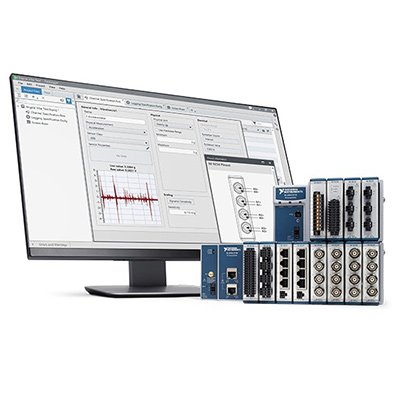
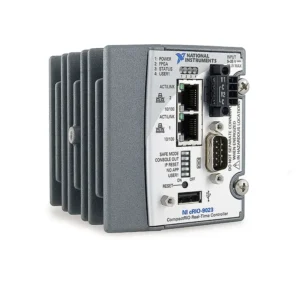
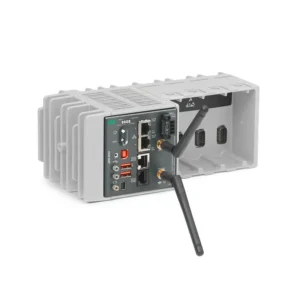
NI CompactRIO systems combine a real-time controller, user-programmable FPGA and modular C Series I/O for embedded measurement, monitoring and control. They are used in industrial automation, machine control, energy systems, automotive validation, robotics, condition monitoring and test applications that require deterministic timing and reliable field integration.
A CompactRIO system is configured as a complete architecture, not as a controller alone. The selected controller, chassis, C Series modules, terminal accessories, power supply, network interfaces, software environment and FPGA design must all support the required application behavior.
CompactRIO System Architecture
| System Component | Primary Function | What to Verify |
|---|---|---|
| CompactRIO Controller | Runs real-time application logic, communications, logging and supervisory control | Processor performance, memory, operating system, network interfaces and software support |
| FPGA | Executes deterministic timing, custom I/O processing and high-speed control logic | FPGA resources, loop timing, custom logic and required development environment |
| C Series I/O Modules | Connect sensors, actuators, networks and external equipment | Signal type, range, channel count, conditioning, isolation and chassis compatibility |
| Chassis | Provides module slots, power distribution, timing and physical system integration | Slot count, module support, environmental rating, power and mechanical requirements |
| Terminal Blocks and Cables | Provide field wiring, connector conversion and module-specific connectivity | Pinout, cable type, shielding, sensor wiring and required accessories |
| External Power and Networking | Support controller operation, communications and integration with surrounding equipment | Power quality, grounding, Ethernet architecture, security and startup behavior |
Why Choose CompactRIO?
Real-Time Control
CompactRIO supports applications that require predictable software execution for control sequences, monitoring logic, communications and deterministic response. Real-time architecture is important when normal desktop operating-system scheduling could introduce unacceptable timing variation.
FPGA-Based Processing
The FPGA can process signals at the hardware level for custom triggering, pulse generation, encoder handling, protocol decoding, filtering, waveform processing and fast control loops. FPGA logic can operate independently of processor and network activity.
Modular C Series I/O
C Series modules allow one CompactRIO system to combine analog, digital, temperature, counter, motion, communication and specialized interfaces. This makes CompactRIO suitable for mixed-signal applications where field devices use different electrical standards.
Embedded Integration
CompactRIO can be integrated into industrial cabinets, test stands, mobile equipment and embedded systems. Final system performance depends on the installed power supply, grounding, enclosure, cable routing, thermal design and environmental conditions.
How to Select a CompactRIO System
1. Define the Application Architecture
Identify whether the application is primarily data logging, real-time control, FPGA signal processing, machine automation, hardware-in-the-loop simulation or embedded monitoring. This determines the required controller, chassis, I/O and software architecture.
Define the full data and control path: field inputs, signal conditioning, FPGA processing, real-time decision logic, outputs, data logging, operator interface and network communication.
2. Select the Required C Series I/O
Choose modules according to the actual electrical interface. Record the required voltage or current range, sensor type, output type, excitation requirement, channel count, update rate, isolation requirement and connector arrangement.
Use dedicated modules when the signal requires specialized conditioning, such as thermocouple cold-junction compensation, RTD excitation, bridge completion, IEPE power, encoder measurement or vehicle-network communication.
3. Determine FPGA Requirements
FPGA development is appropriate when the system needs deterministic timing, fast event response, custom digital logic, specialized filtering, synchronized waveform processing or hardware-level protocol handling.
Estimate FPGA resource needs for logic, memory, DMA transfers, timing loops, signal processing and future expansion. The required FPGA architecture should be defined before selecting a controller for a complex application.
4. Evaluate Controller Performance
Size the controller for real-time tasks, communication protocols, data logging, user interface services, analysis functions and expected system life cycle. Processor requirements can increase significantly when the system logs high-rate data or communicates with multiple devices.
Keep deterministic control work separate from noncritical activities such as file writing, web interfaces, remote desktop access and display updates.
5. Plan Synchronization and Timing
Determine whether measurements and control signals need software correlation, hardware triggering, shared clocks or FPGA-level synchronization. This is especially important for motion, power, dynamic signals, high-speed digital events and mixed-module systems.
Design synchronization for the complete CompactRIO system. Modules installed in one chassis do not automatically provide the timing relationship required for every application.
6. Review Environmental and Electrical Conditions
Confirm operating temperature, vibration, shock, humidity, power quality, grounding, electrical noise and enclosure requirements. Industrial field wiring, motors, relays and long cable runs can affect both measurement quality and controller reliability.
Use appropriate isolation, protection, shielding and power-distribution practices for the installed environment. Safety functions should be designed separately from ordinary application control logic.
CompactRIO Software and Development
CompactRIO applications can combine real-time software with LabVIEW FPGA programming, depending on the selected controller, I/O modules and required behavior. The real-time processor commonly manages control sequences, communication, data logging and supervisory functions, while the FPGA handles deterministic I/O operations.
Before purchase, verify compatibility with the required NI driver version, LabVIEW version, FPGA tools, real-time software environment and target operating system. Existing applications may require software updates or FPGA recompilation when legacy hardware is replaced.
A typical application architecture includes:
- FPGA logic for fast I/O, triggering, custom timing and deterministic processing
- Real-time software for control state machines, alarms, communication and data management
- Host software for configuration, visualization, reporting and historical data review
Connectivity, Signal Conditioning and Accessories
The C Series module and its terminal accessories should be selected together. Terminal blocks, breakout boards and cables can determine the available connector type, sensor wiring method, shield connection, cold-junction compensation, bridge configuration or external interface path.
For sensors and field devices, verify cable length, connector pinout, external excitation, grounding arrangement and required protection. A correctly selected CompactRIO controller cannot compensate for incompatible field wiring or missing signal conditioning.
Physical module compatibility is only one part of a CompactRIO system review. Confirm I/O function, software support, chassis slot capacity, timing behavior, accessories and environmental requirements before finalizing the order.
Typical CompactRIO Applications
- Industrial machine monitoring and embedded control
- Motion, robotics and position-control systems
- Automotive, aerospace and defense test systems
- Power, energy, battery and inverter monitoring
- Hardware-in-the-loop simulation and validation
- Condition monitoring and predictive-maintenance equipment
- Automated test fixtures and production validation
- Environmental and remote monitoring systems
- Custom FPGA-based acquisition and processing
- Laboratory and research control platforms
CompactRIO System Procurement Guide
Provide the following information for an accurate CompactRIO system recommendation:
- Application description and required control or measurement objective
- Existing CompactRIO controller, chassis and C Series module models, if applicable
- Required analog, digital, sensor, counter, motion and communication interfaces
- Signal ranges, sensor outputs, excitation requirements and channel quantities
- Required update rate, sample rate, bandwidth and synchronization behavior
- Need for FPGA processing, deterministic control or real-time response
- Required Ethernet, serial, CAN, CAN FD, LIN or other network interfaces
- Terminal-block, cable, connector and external signal-conditioning requirements
- Power-supply, grounding, enclosure and environmental conditions
- LabVIEW, NI driver, real-time and FPGA software versions
- Required quantity, preferred product condition and delivery destination
FAQ
What is the difference between CompactRIO and CompactDAQ?
CompactDAQ is primarily designed for PC-based measurement and logging. CompactRIO combines modular I/O with an embedded real-time controller and FPGA for deterministic monitoring, control and custom hardware processing.
Do all CompactRIO applications require FPGA programming?
No. FPGA programming is most useful when the application needs deterministic timing, high-speed I/O processing, custom triggering or specialized control logic. Some applications can use supported higher-level I/O methods, depending on the hardware and required behavior.
Can CompactRIO use standard C Series modules?
Many C Series modules are supported by CompactRIO, but compatibility varies by exact module, chassis, controller and software version. Confirm the complete hardware combination before ordering.
Can CompactRIO operate without a host computer?
Yes. CompactRIO is designed for embedded operation and can run deployed applications independently. A host computer can still be used for development, configuration, data review and system supervision.
Why is the terminal block important?
Terminal blocks and cables provide the physical field connection and may support sensor-specific wiring or conditioning functions. The wrong accessory can prevent correct installation or reduce measurement reliability.
Related NI Embedded and Test Platforms
Explore NI CompactRIO systems for controllers, chassis and related embedded hardware. Use CompactDAQ systems for PC-based modular acquisition, or choose NI PXI systems for high-channel-count automated test and instrumentation.
NI CompactRIO Systems from PXISOURCE
PXISOURCE supports engineers, system integrators and procurement teams with CompactRIO system configuration, controller and chassis compatibility review, C Series I/O selection, terminal-accessory matching and sourcing for new installations, spare inventory and legacy replacements.
Need help configuring the right NI CompactRIO system? Email sales@pxisource.com or contact PXISOURCE on WhatsApp.