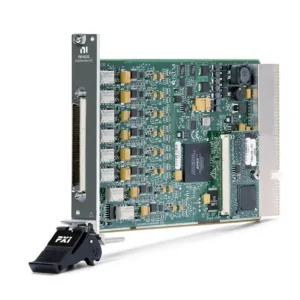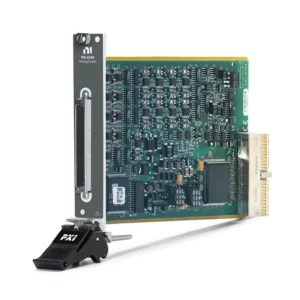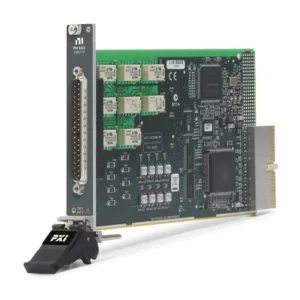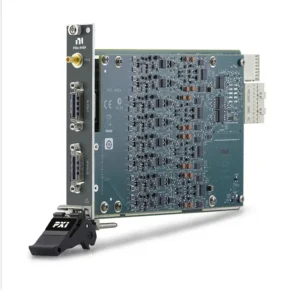




Product Introduction
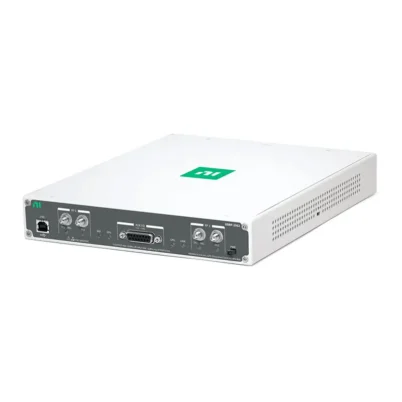
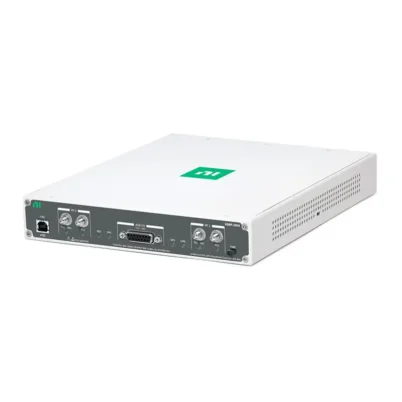
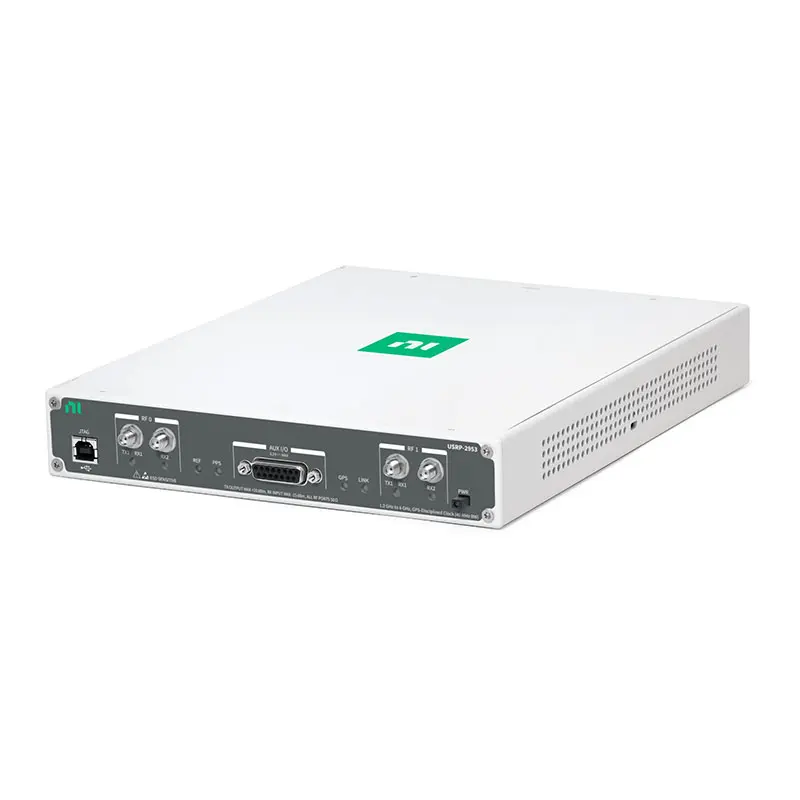
The NI USRP-2953 is a high-performance GPS-disciplined software defined radio (SDR) designed for advanced wireless communications research, synchronized MIMO systems, RF prototyping, radar experimentation, spectrum monitoring, beamforming, direction finding, and FPGA-based signal processing.
Featuring continuous RF coverage from 1.2 GHz to 6 GHz, two transmit channels, two receive channels, 40 MHz or 120 MHz bandwidth configurations, onboard programmable FPGA resources, and an integrated GPS-disciplined oscillator (GPSDO), the USRP-2953 provides a flexible platform for demanding synchronized RF and wireless applications.
Its frequency range covers many important wireless bands, including 2.4 GHz and 5 GHz applications, while its GPSDO enables accurate timing and frequency synchronization for multi-radio and geographically distributed SDR systems.
Product Overview
The NI USRP-2953 belongs to the high-performance NI USRP RIO family and is based on an X310-class architecture with CBX RF front ends and integrated GPS-disciplined timing.
The device provides two transmit and two receive channels operating from 1.2 GHz to 6 GHz. This combination makes it suitable for 2×2 MIMO, multi-antenna communications, high-frequency wireless research, radar, spectrum sensing, direction finding, and custom RF experimentation.
A major difference between the USRP-2953 and the closely related USRP-2943 is the integrated GPSDO. The GPS-disciplined architecture allows the internal clocks to be locked to a GPS reference and provides GPS timing information for applications requiring improved synchronization between SDR devices.
Key Features
1.2 GHz to 6 GHz RF Frequency Range
The USRP-2953 provides continuous RF tuning from 1.2 GHz to 6 GHz for both transmit and receive applications.
- 1.2 GHz to 6 GHz transmit frequency range
- 1.2 GHz to 6 GHz receive frequency range
- Software-programmable center frequency
- Broad high-frequency RF coverage
- Multi-band wireless experimentation
Advantage: The broad frequency range enables one SDR platform to support numerous cellular, WLAN, ISM, radar, and microwave-frequency research applications.
2 Transmit and 2 Receive RF Channels
The USRP-2953 provides two RF transmit channels and two RF receive channels for multi-channel SDR applications.
- 2 RF transmit channels
- 2 RF receive channels
- 2×2 MIMO capability
- Multi-antenna experimentation
- Parallel RF acquisition
- Parallel waveform generation
Advantage: Multi-channel operation enables MIMO, spatial diversity, beamforming, direction finding, and other advanced wireless research applications.
40 MHz and 120 MHz Bandwidth Versions
The USRP-2953 family is available in two primary bandwidth configurations.
- USRP-2953 40 MHz version
- USRP-2953 120 MHz version
- Wideband RF acquisition
- Wideband waveform generation
- High-throughput SDR processing
Advantage: Different bandwidth versions allow engineers to select the appropriate hardware configuration according to signal bandwidth, processing requirements, and host throughput.
Integrated GPS-Disciplined Oscillator
One of the defining features of the USRP-2953 is its integrated GPS-disciplined oscillator (GPSDO).
- Integrated GPSDO
- GPS-referenced frequency synchronization
- GPS timing information
- Internal clock disciplining
- Multi-device synchronization
- GPS location information
Advantage: GPS-based timing and frequency references make the USRP-2953 particularly useful for synchronized multi-radio and geographically distributed SDR systems.
High-Speed I/Q Processing
The USRP-2953 supports high-rate complex I/Q acquisition and generation for demanding wideband RF applications.
- High-speed complex I/Q acquisition
- High-speed waveform generation
- Wideband communications processing
- Real-time RF experimentation
- High-throughput signal streaming
Advantage: High-speed I/Q processing supports advanced communications, radar, spectrum monitoring, and custom RF signal-processing applications.
14-Bit Receiver ADC Architecture
The receiver subsystem incorporates high-speed analog-to-digital conversion for digitizing incoming RF signals.
- 14-bit ADC resolution
- High-speed RF acquisition
- Dual-channel reception
- Complex baseband I/Q processing
- Wideband receiver applications
Advantage: High-speed ADC resources provide the digital signal representation required for advanced software-defined receiver applications.
16-Bit Transmitter DAC Architecture
The transmitter subsystem uses high-speed digital-to-analog conversion for programmable RF waveform generation.
- 16-bit DAC resolution
- Complex I/Q waveform generation
- Digital modulation
- Custom RF waveform development
- Wideband signal generation
Advantage: High-resolution DAC resources support generation of sophisticated digitally modulated and experimental RF waveforms.
Software-Programmable RF Parameters
The USRP-2953 allows key RF parameters to be controlled through compatible SDR software.
- Programmable center frequency
- Programmable transmit gain
- Programmable receive gain
- Configurable sample rate
- Software-defined waveform parameters
Advantage: Engineers can rapidly change radio operating parameters without redesigning the RF hardware.
User-Programmable FPGA
The USRP-2953 includes onboard programmable FPGA resources for implementing custom real-time signal-processing functions.
- FPGA-based DSP
- Digital filtering
- Digital upconversion
- Digital downconversion
- FFT processing
- Signal detection
- Custom triggering
- Low-latency processing
Advantage: FPGA processing enables time-critical algorithms to execute directly inside the SDR hardware, reducing latency and host-processing requirements.
Real-Time FPGA Signal Processing
The programmable FPGA can be used to implement application-specific processing close to the RF front end.
- Real-time filtering
- Channelization
- Signal detection
- FFT processing
- Custom modulation and demodulation
- Data reduction
- Deterministic control
Advantage: FPGA-based processing can reduce the amount of raw I/Q data transferred to the host while providing deterministic low-latency operation.
High-Speed Host Connectivity
The USRP-2953 supports multiple high-speed host interfaces for transferring RF data between the SDR and host processing system.
- 1 Gigabit Ethernet support
- 10 Gigabit Ethernet support
- PCI Express / MXI Express connectivity
- High-throughput I/Q streaming
- Flexible PC and PXI Express integration
Advantage: Multiple host-interface options allow engineers to optimize the system for throughput, FPGA development, installation flexibility, and processing requirements.
External Timing and Reference Support
In addition to its integrated GPSDO, the USRP-2953 supports timing and reference resources for coordinated RF systems.
- GPS-based timing
- External reference support
- Multi-device synchronization
- Coordinated signal acquisition
- Coordinated waveform generation
Advantage: Accurate timing and frequency references are especially valuable in MIMO, beamforming, direction-finding, distributed sensing, and multi-radio communication systems.
Technical Specifications
| Parameter | Description |
|---|---|
| Product Type | GPS-Disciplined Reconfigurable Software Defined Radio |
| Model | NI USRP-2953 |
| Equivalent Architecture | X310 + CBX + GPSDO |
| RF Channels | 2 TX / 2 RX |
| Transmit Frequency Range | 1.2 GHz to 6 GHz |
| Receive Frequency Range | 1.2 GHz to 6 GHz |
| Bandwidth Versions | 40 MHz / 120 MHz |
| Transmit Channels | 2 |
| Receive Channels | 2 |
| ADC Resolution | 14-bit |
| DAC Resolution | 16-bit |
| Signal Architecture | Complex Baseband I/Q |
| RF Configuration | Software Programmable |
| Timing Architecture | Integrated GPS-Disciplined Oscillator (GPSDO) |
| GPS Functions | Clock Disciplining, GPS Timing and Location Information |
| FPGA | User-Programmable FPGA Architecture |
| Ethernet | 1 Gigabit Ethernet / 10 Gigabit Ethernet |
| PCI Express | PCI/MXI Express Supported |
| External Reference | Supported |
| Primary Applications | Synchronized MIMO, Wireless Research, Radar, Beamforming, Direction Finding and Distributed RF Systems |
Software Ecosystem
The NI USRP-2953 integrates with compatible NI software environments for RF configuration, signal acquisition, waveform generation, FPGA programming, and advanced software-defined radio development.
- NI-USRP: Provides APIs for configuring RF frequency, gain, sample rate, signal acquisition, waveform generation, and I/Q streaming.
- LabVIEW: Enables graphical development of wireless communication, RF measurement, modulation, demodulation, spectrum analysis, and signal-processing applications.
- LabVIEW FPGA: Enables application-specific real-time processing to be implemented directly on compatible onboard FPGA resources.
- Custom SDR Applications: Engineers can develop specialized MIMO, radar, beamforming, spectrum sensing, direction-finding, and distributed RF systems.
Industries
- Wireless Communications
- Telecommunications Research
- RF and Microwave Engineering
- Aerospace and Defense Research
- Radar Development
- Wireless Product Development
- Electronic Warfare Research
- Universities and Education
- Scientific Research
Applications
Synchronized MIMO Communications
The combination of 2 TX / 2 RX channels and GPS-disciplined timing makes the USRP-2953 particularly suitable for synchronized MIMO communication research.
- 2×2 MIMO
- Spatial multiplexing
- Transmit diversity
- Receive diversity
- Multi-radio MIMO research
2.4 GHz Wireless Research
The USRP-2953 frequency range includes the widely used 2.4 GHz ISM band.
- 2.4 GHz WLAN research
- ISM-band experiments
- Interference studies
- Wireless channel characterization
- Custom communication protocols
5 GHz Wireless Research
The 6 GHz upper frequency limit allows the USRP-2953 to operate across many important 5 GHz wireless bands.
- 5 GHz WLAN research
- Wideband wireless experiments
- MIMO development
- Interference analysis
- RF channel measurements
Beamforming Research
Multiple RF channels and synchronization resources make the USRP-2953 suitable for experimental beamforming systems.
- Digital beamforming
- Antenna-array experiments
- Spatial signal processing
- Phase-coherent research
- Coordinated RF transmission
Direction Finding
Multiple synchronized receive channels can support experimental direction-of-arrival and RF localization applications.
- Direction-of-arrival estimation
- Phase-based localization
- Multi-antenna receiver systems
- Distributed receiver research
- RF source localization
Distributed RF Systems
The integrated GPSDO provides important timing and frequency capabilities for geographically separated SDR systems.
- Distributed spectrum monitoring
- Remote RF sensing
- Time-correlated RF acquisition
- Coordinated receiver networks
- Distributed wireless experiments
Radar Research
The wide RF range, multi-channel architecture, programmable FPGA, and synchronization resources support experimental radar applications.
- FMCW radar research
- Radar waveform generation
- Radar signal acquisition
- Pulse processing
- Multi-channel radar experiments
- Real-time radar DSP
Spectrum Monitoring and Sensing
The USRP-2953 can acquire wideband complex I/Q signals for spectrum-monitoring and spectrum-sensing applications.
- Wideband spectrum sensing
- Signal detection
- Interference monitoring
- RF environment analysis
- Cognitive radio research
FPGA-Based Signal Processing
The onboard FPGA enables real-time signal-processing functions to execute directly inside the SDR hardware.
- Real-time digital filtering
- FFT processing
- Channelization
- Signal detection
- Custom triggering
- Data reduction
- Low-latency RF processing
Comparison with Similar USRP Devices
| Model | Main Difference | Best Application |
|---|---|---|
| NI USRP-2953 | 1.2 GHz to 6 GHz, 2 TX / 2 RX high-performance SDR with 40 MHz or 120 MHz bandwidth and integrated GPSDO. | Synchronized high-frequency MIMO and RF research |
| NI USRP-2943 | Similar 1.2 GHz to 6 GHz and 2 TX / 2 RX architecture without the integrated GPS-disciplined oscillator of the USRP-2953. | General high-frequency MIMO and SDR research |
| NI USRP-2952 | GPS-disciplined 2 TX / 2 RX SDR covering 400 MHz to 4.4 GHz for applications requiring greater lower-frequency coverage. | Synchronized RF applications below 4.4 GHz |
| NI USRP-2954 | Newer wide-frequency GPS-disciplined SDR with substantially broader RF coverage and higher instantaneous bandwidth. | Advanced wideband SDR applications |
Recommended Related Products
| NI USRP-2943 | 1.2 GHz to 6 GHz, 2 TX / 2 RX SDR for applications that do not require integrated GPS-disciplined timing. |
| NI USRP-2952 | GPS-disciplined 2 TX / 2 RX SDR covering 400 MHz to 4.4 GHz for synchronized applications requiring lower-frequency operation. |
| NI USRP-2954 | Higher-performance GPS-disciplined SDR with broader frequency coverage and greater instantaneous bandwidth for advanced wideband RF systems. |
| NI USRP-2950 | GPS-disciplined 2 TX / 2 RX SDR covering 50 MHz to 2.2 GHz for synchronized lower-frequency RF research. |
Why Choose USRP-2953?
- 1.2 GHz to 6 GHz RF coverage
- 2 transmit and 2 receive RF channels
- 40 MHz and 120 MHz bandwidth versions
- Integrated GPS-disciplined oscillator
- GPS-based timing synchronization
- GPS location information capability
- Suitable for 2×2 MIMO systems
- Supports 2.4 GHz wireless research
- Supports many 5 GHz wireless applications
- 14-bit receiver ADC architecture
- 16-bit transmitter DAC architecture
- User-programmable FPGA resources
- 1 GbE and 10 GbE connectivity
- PCI/MXI Express connectivity
- Suitable for distributed synchronized SDR systems
- Suitable for beamforming and direction finding
Frequently Asked Questions
What is the NI USRP-2953?
The NI USRP-2953 is a high-performance GPS-disciplined software-defined radio covering 1.2 GHz to 6 GHz. It provides two transmit and two receive RF channels, wideband signal processing, programmable FPGA resources, and integrated GPS-based timing capabilities.
What frequency range does the USRP-2953 support?
The USRP-2953 supports both RF transmission and reception from 1.2 GHz to 6 GHz.
How many RF channels does the USRP-2953 provide?
The USRP-2953 provides two transmit channels and two receive channels, making it suitable for 2×2 MIMO and other multi-channel RF applications.
What bandwidth does the USRP-2953 support?
The USRP-2953 family is available in 40 MHz and 120 MHz bandwidth versions. The exact bandwidth configuration should be verified from the specific part number before purchasing.
Does the USRP-2953 include GPSDO?
Yes. The USRP-2953 contains an integrated GPS-disciplined oscillator. According to NI specifications, the GPSDO can lock the internal clocks to a GPS reference signal, provide GPS timing information, and provide GPS location information.
Can the USRP-2953 be used for MIMO?
Yes. Its 2 TX / 2 RX architecture supports 2×2 MIMO, spatial multiplexing, transmit and receive diversity, and other multi-antenna wireless research applications.
Can the USRP-2953 operate at 2.4 GHz?
Yes. Its 1.2 GHz to 6 GHz RF range includes the 2.4 GHz ISM band, making it suitable for WLAN, ISM-band, interference, and custom wireless research.
Can the USRP-2953 operate in the 5 GHz range?
Yes. Because the USRP-2953 operates up to 6 GHz, it covers many 5 GHz wireless frequency bands and is suitable for high-frequency WLAN, MIMO, spectrum, and RF research.
What is the difference between USRP-2943 and USRP-2953?
Both devices provide 1.2 GHz to 6 GHz RF coverage, 2 TX / 2 RX channels, and 40 MHz or 120 MHz bandwidth configurations. The key difference is that the USRP-2953 includes an integrated GPS-disciplined oscillator. This makes the USRP-2953 better suited for applications requiring GPS-referenced timing, improved frequency synchronization, or coordinated operation between multiple SDR devices.
What is the difference between USRP-2952 and USRP-2953?
Both models provide GPS-disciplined timing and 2 TX / 2 RX operation. The main difference is RF frequency coverage. The USRP-2952 covers 400 MHz to 4.4 GHz, while the USRP-2953 covers 1.2 GHz to 6 GHz. The USRP-2953 is therefore preferable when operation above 4.4 GHz is required.
What is the difference between USRP-2953 and USRP-2954?
The USRP-2954 provides substantially broader frequency coverage and higher instantaneous bandwidth than the USRP-2953. The USRP-2953 covers 1.2 GHz to 6 GHz with 40 MHz or 120 MHz bandwidth, while the USRP-2954 is designed for wider-frequency and wider-bandwidth SDR applications.
Can the USRP-2953 be used for beamforming?
Yes. Its multiple RF channels and synchronization capabilities make the USRP-2953 suitable for experimental beamforming and antenna-array research. Larger arrays can be implemented using multiple appropriately synchronized SDR devices.
Can the USRP-2953 be used for direction finding?
Yes. The USRP-2953 can support direction-of-arrival and RF localization research using synchronized receive channels, appropriate antenna configurations, and system calibration.
Can the USRP-2953 be used for radar?
Yes. Its wide RF range, dual transmit and receive channels, programmable FPGA resources, and synchronization capabilities make the USRP-2953 suitable for experimental radar waveform generation, FMCW research, signal acquisition, and real-time radar DSP.
Can the USRP-2953 be used for distributed RF systems?
Yes. The integrated GPSDO is particularly useful for geographically distributed SDR systems because multiple radios can use GPS-referenced timing and frequency information for coordinated RF experiments.
Can the USRP-2953 be used as a spectrum analyzer?
The USRP-2953 can acquire complex I/Q signals for spectrum monitoring, spectrum sensing, signal detection, and interference analysis. However, it should not automatically be considered a replacement for a calibrated spectrum analyzer when traceable amplitude accuracy or regulatory compliance measurements are required.
What host interfaces does the USRP-2953 support?
The USRP-2953 supports Ethernet and PCI/MXI Express connectivity. NI documentation for USRP-294x/295x devices identifies support for both 1 Gigabit Ethernet and 10 Gigabit Ethernet, while PCI/MXI Express can be used for compatible high-throughput configurations.
What software supports the USRP-2953?
The USRP-2953 is supported by compatible NI-USRP software and can be integrated with LabVIEW and FPGA development workflows for RF configuration, I/Q streaming, waveform generation, signal acquisition, and custom real-time SDR processing.
Conclusion
The NI USRP-2953 software defined radio is a high-performance GPS-disciplined 2 TX / 2 RX SDR platform designed for synchronized MIMO communications, 2.4 GHz and 5 GHz wireless research, radar development, spectrum sensing, beamforming, direction finding, distributed RF systems, and FPGA-based signal processing. With continuous 1.2 GHz to 6 GHz RF coverage, 40 MHz or 120 MHz bandwidth configurations, programmable FPGA resources, high-speed host connectivity, and integrated GPS-disciplined timing, the USRP-2953 provides a flexible platform for advanced synchronized wireless and RF research.