



Product Introduction
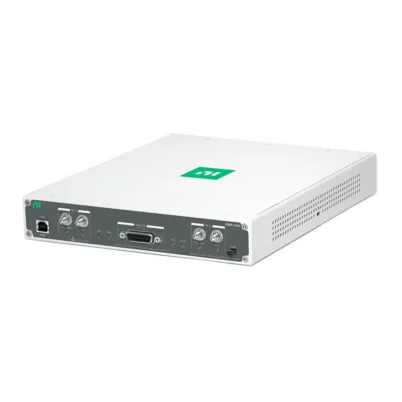
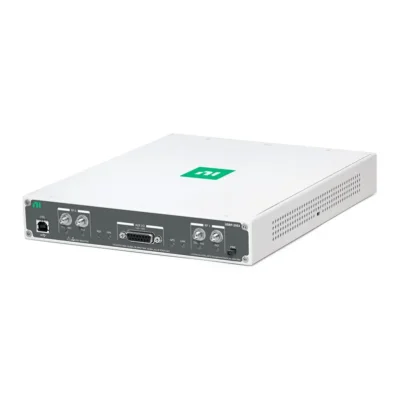
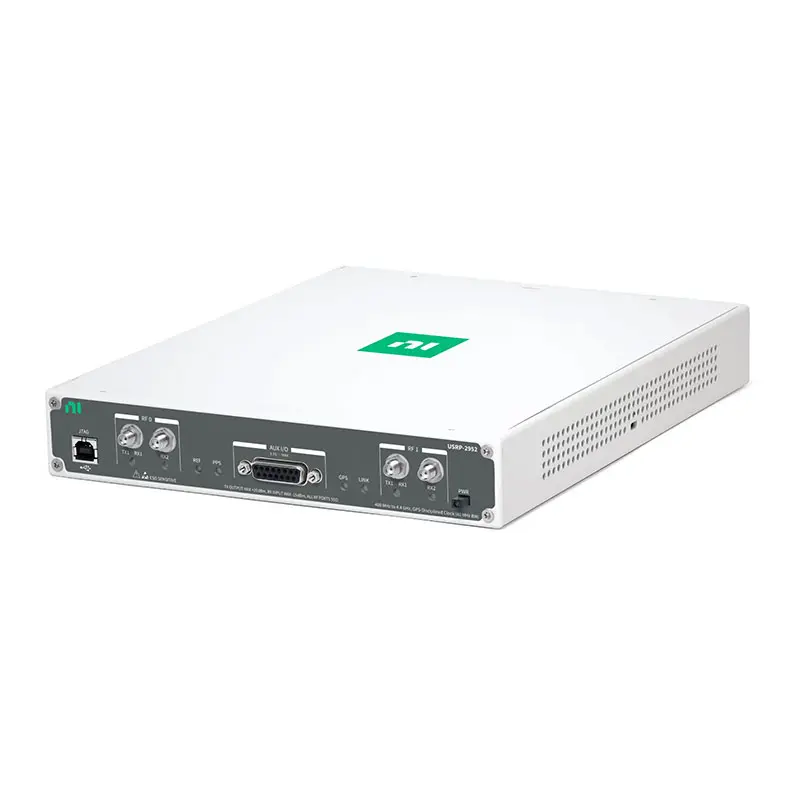
The NI USRP-2952 is a high-performance, GPS-disciplined software defined radio (SDR) designed for advanced wireless communications research, MIMO development, synchronized RF systems, spectrum sensing, beamforming, direction finding, radar experimentation, and FPGA-based signal processing.
Featuring continuous RF coverage from 400 MHz to 4.4 GHz, two transmit channels, two receive channels, 40 MHz or 120 MHz instantaneous bandwidth configurations, a user-programmable FPGA, and an integrated GPS-disciplined oscillator (GPSDO), the USRP-2952 provides a flexible platform for demanding synchronized wireless and RF research applications.
The combination of wideband RF capability, 2 TX / 2 RX architecture, FPGA processing, and precision GPS-referenced timing makes the USRP-2952 particularly useful for MIMO, distributed radio systems, coordinated RF measurements, cellular communications research, spectrum monitoring, and multi-device SDR systems.
Product Overview
The NI USRP-2952 belongs to the high-performance NI USRP RIO family and corresponds to an X310-class SDR architecture with SBX RF front ends and integrated GPS-disciplined timing.
Its 400 MHz to 4.4 GHz operating range covers numerous wireless and RF frequency bands, including cellular communications, ISM-band applications, 2.4 GHz wireless systems, telemetry, navigation-related research, radar experimentation, spectrum monitoring, and custom RF systems.
A major distinction between the USRP-2952 and the closely related USRP-2942 is the integrated GPS-disciplined oscillator. This provides improved frequency accuracy and synchronization capability for systems involving multiple radios, geographically distributed receivers, or experiments requiring a common time and frequency reference.
Key Features
400 MHz to 4.4 GHz RF Frequency Range
The USRP-2952 provides broad RF frequency coverage for both transmit and receive applications.
- 400 MHz to 4.4 GHz transmit frequency range
- 400 MHz to 4.4 GHz receive frequency range
- Frequency step below 1 kHz
- Software-programmable center frequency
- Multi-band RF experimentation
Advantage: The broad tuning range enables one SDR platform to support many cellular, ISM, telemetry, radar, and wireless communication research applications.
2 Transmit and 2 Receive Channels
The USRP-2952 provides two RF transmit channels and two RF receive channels for advanced multi-channel SDR applications.
- 2 RF transmit channels
- 2 RF receive channels
- 2×2 MIMO capability
- Multi-antenna experimentation
- Parallel RF acquisition
- Parallel waveform generation
Advantage: Multi-channel RF capability enables MIMO, spatial diversity, beamforming, direction finding, and other advanced wireless research applications.
40 MHz and 120 MHz Bandwidth Versions
The USRP-2952 is available in two primary instantaneous real-time bandwidth configurations.
- USRP-2952 40 MHz version
- USRP-2952 120 MHz version
- Wideband RF signal acquisition
- Wideband waveform generation
- High-throughput SDR processing
Advantage: Users can select the bandwidth configuration that best matches their signal bandwidth, processing, and system throughput requirements.
120 MS/s Maximum I/Q Sample Rate
The USRP-2952 supports high-speed I/Q sampling for demanding wideband RF applications.
- Maximum I/Q sample rate up to 120 MS/s
- Complex I/Q acquisition
- Complex waveform generation
- Wideband digital communications
- Real-time RF signal processing
Advantage: High I/Q sampling performance supports wideband communications, radar, spectrum sensing, and advanced digital signal-processing applications.
Integrated GPS-Disciplined Oscillator
One of the defining features of the USRP-2952 is its integrated GPS-disciplined oscillator for precision timing and frequency synchronization.
- Integrated GPSDO
- GPS-disciplined 10 MHz OCXO reference
- Improved frequency accuracy
- Common timing reference
- Distributed SDR synchronization
- Multi-device RF coordination
Advantage: GPS disciplining allows multiple SDR systems to maintain accurate timing and frequency references, making the USRP-2952 particularly valuable for synchronized and geographically distributed RF applications.
High-Performance RF Transmitter
The USRP-2952 provides two programmable RF transmit channels covering the full 400 MHz to 4.4 GHz frequency range.
- 2 transmit channels
- 400 MHz to 4.4 GHz RF coverage
- 0 dB to 31.5 dB transmit gain range
- 0.5 dB transmit gain step
- 17 dBm to 20 dBm maximum output power
Advantage: Programmable RF transmission enables generation of custom wireless, communications, radar, and experimental RF waveforms.
High-Performance RF Receiver
The USRP-2952 provides two programmable receive channels for wideband RF signal acquisition.
- 2 receive channels
- 400 MHz to 4.4 GHz RF coverage
- 0 dB to 37.5 dB receive gain range
- 0.5 dB receive gain step
- -15 dBm maximum input power
- 5 dB to 7 dB specified noise figure
Advantage: Programmable receiver gain provides flexibility for capturing signals across different RF environments and experimental configurations.
14-Bit ADC Architecture
The receiver subsystem incorporates high-speed analog-to-digital conversion for wideband RF signal acquisition.
- 14-bit ADC resolution
- High-speed analog-to-digital conversion
- Dual-channel RF acquisition
- Complex baseband I/Q processing
- Wideband receiver applications
Advantage: The high-speed ADC architecture provides the digital signal representation required for advanced wideband receiver applications.
16-Bit DAC Architecture
The transmitter subsystem uses high-speed digital-to-analog conversion for programmable RF waveform generation.
- 16-bit DAC resolution
- 80 dB DAC spurious-free dynamic range
- Complex I/Q waveform generation
- Digital modulation
- Wideband RF generation
Advantage: High-resolution DAC resources support flexible generation of sophisticated digitally modulated RF waveforms.
User-Programmable FPGA
The USRP-2952 incorporates a user-programmable FPGA architecture for implementing custom real-time signal-processing functions directly within the SDR hardware.
- FPGA-based DSP
- Real-time filtering
- Digital upconversion
- Digital downconversion
- FFT processing
- Custom triggering
- Signal detection
- Low-latency processing
Advantage: FPGA processing enables deterministic and latency-sensitive algorithms to execute close to the RF front end instead of relying entirely on host processing.
High-Speed Host Connectivity
The USRP-2952 supports high-speed host connectivity for transferring I/Q data between the SDR hardware and the processing system.
- Gigabit Ethernet connectivity
- PCI Express / MXI Express x4 support
- High-throughput I/Q streaming
- Flexible host integration
- PC-based SDR development
Advantage: Multiple connectivity options allow engineers to optimize the system for bandwidth, installation flexibility, and host-processing requirements.
Multi-Device Synchronization
The combination of GPSDO and external timing resources makes the USRP-2952 suitable for synchronized multi-radio systems.
- Common frequency reference
- Common timing reference
- GPS-based synchronization
- Distributed receiver systems
- Coordinated RF acquisition
- Coordinated waveform generation
Advantage: Synchronization capabilities are particularly useful for distributed RF sensing, direction finding, beamforming, and coordinated communication experiments.
Software Defined Radio Architecture
The USRP-2952 allows many traditional radio functions to be implemented through software and FPGA logic.
- Programmable modulation
- Programmable demodulation
- Digital filtering
- Synchronization algorithms
- Channel coding
- Custom wireless protocols
- Real-time FPGA processing
Advantage: The same RF hardware can be reconfigured for multiple research applications without redesigning the complete radio system.
Technical Specifications
| Parameter | Description |
|---|---|
| Product Type | GPS-Disciplined Reconfigurable Software Defined Radio |
| Model | NI USRP-2952 |
| Equivalent Architecture | X310 + SBX + GPSDO |
| RF Channels | 2 TX / 2 RX |
| Transmit Frequency Range | 400 MHz to 4.4 GHz |
| Receive Frequency Range | 400 MHz to 4.4 GHz |
| Frequency Step | <1 kHz |
| Bandwidth Versions | 40 MHz / 120 MHz |
| Maximum I/Q Sample Rate | 120 MS/s |
| Transmit Channels | 2 |
| Receive Channels | 2 |
| Transmit Gain Range | 0 dB to 31.5 dB |
| Transmit Gain Step | 0.5 dB |
| Maximum RF Output Power | 50 mW to 100 mW / 17 dBm to 20 dBm |
| Receive Gain Range | 0 dB to 37.5 dB |
| Receive Gain Step | 0.5 dB |
| Maximum RF Input Power | -15 dBm |
| Receiver Noise Figure | 5 dB to 7 dB |
| ADC Resolution | 14-bit |
| DAC Resolution | 16-bit |
| DAC SFDR | 80 dB |
| Timing Architecture | Integrated GPS-Disciplined Oscillator (GPSDO) |
| Reference Clock | GPS-Disciplined 10 MHz OCXO |
| FPGA | User-Programmable FPGA Architecture |
| Host Connectivity | Gigabit Ethernet / PCI Express or MXI Express x4 |
| Primary Applications | MIMO, Synchronized SDR, Wireless Research, Beamforming, Direction Finding and Spectrum Sensing |
Software Ecosystem
The NI USRP-2952 integrates with compatible NI software environments for RF configuration, I/Q streaming, FPGA programming, communications development, and advanced SDR research.
- NI-USRP: Provides software interfaces for configuring frequency, gain, sample rate, RF acquisition, waveform generation, and I/Q streaming.
- LabVIEW: Enables graphical development of wireless communication, RF measurement, modulation, demodulation, spectrum analysis, and signal-processing applications.
- LabVIEW FPGA: Enables custom real-time signal-processing algorithms to be implemented directly on compatible FPGA resources.
- Custom SDR Applications: Engineers can develop application-specific MIMO, beamforming, direction-finding, spectrum-sensing, radar, and wireless communication systems.
Industries
- Wireless Communications
- Telecommunications Research
- Aerospace and Defense Research
- RF Engineering
- Radar Research
- Electronic Warfare Research
- Wireless Product Development
- Universities and Education
- Scientific Research
Applications
2×2 MIMO Wireless Communications
The two transmit and two receive channels make the USRP-2952 suitable for multi-antenna wireless communication research.
- 2×2 MIMO
- Spatial multiplexing
- Transmit diversity
- Receive diversity
- Multi-antenna algorithm development
Synchronized SDR Systems
The integrated GPSDO makes the USRP-2952 particularly useful for RF systems requiring accurate timing and frequency synchronization.
- Multi-radio synchronization
- Distributed SDR systems
- Coordinated RF experiments
- Time-referenced signal acquisition
- Frequency-synchronized communications
Beamforming Research
Multiple RF channels and synchronization resources can support experimental beamforming and antenna-array applications.
- Digital beamforming
- Antenna-array experiments
- Spatial signal processing
- Multi-channel phase processing
- Coordinated RF transmission
Direction Finding
The USRP-2952 can be used as part of experimental multi-channel and multi-radio direction-finding systems.
- Direction-of-arrival estimation
- Phase-based localization
- Distributed receiver systems
- RF source localization
- Spatial spectrum analysis
Cellular Communications Research
The 400 MHz to 4.4 GHz tuning range covers many frequency bands relevant to experimental cellular communication systems.
- Cellular waveform research
- Physical-layer development
- MIMO experiments
- Channel characterization
- Receiver algorithm testing
2.4 GHz Wireless Research
The USRP-2952 covers the widely used 2.4 GHz ISM frequency band.
- 2.4 GHz wireless experiments
- WLAN research
- ISM-band communication systems
- Interference analysis
- Custom wireless protocols
Spectrum Sensing
The wideband receiver and FPGA architecture make the USRP-2952 suitable for spectrum-sensing and cognitive-radio research.
- Wideband spectrum sensing
- Signal detection
- Interference monitoring
- Dynamic spectrum access research
- Cognitive radio experimentation
Radar Research
Wide bandwidth, multiple RF channels, synchronization resources, and programmable FPGA processing can support experimental radar applications.
- Radar waveform generation
- Radar signal acquisition
- FMCW radar research
- Pulse processing
- Real-time radar DSP
Distributed RF Systems
GPS-referenced timing makes the USRP-2952 useful for geographically distributed SDR experiments.
- Distributed spectrum monitoring
- Remote RF sensing
- Coordinated receiver networks
- Time-correlated RF acquisition
- Distributed communications research
FPGA-Based Signal Processing
The onboard programmable FPGA enables time-critical signal-processing functions to execute directly inside the SDR hardware.
- Real-time filtering
- FFT processing
- Channelization
- Signal detection
- Custom triggering
- Data reduction
- Low-latency RF processing
Comparison with Similar USRP Devices
| Model | Main Difference | Best Application |
|---|---|---|
| NI USRP-2952 | 400 MHz to 4.4 GHz, 2 TX / 2 RX high-performance SDR with 40 MHz or 120 MHz bandwidth and integrated GPSDO. | Synchronized MIMO and wideband RF research |
| NI USRP-2942 | Similar 400 MHz to 4.4 GHz and 2 TX / 2 RX architecture without the integrated GPS-disciplined oscillator of the USRP-2952. | General MIMO and wideband SDR research |
| NI USRP-2950 | GPS-disciplined 2 TX / 2 RX SDR covering the lower 50 MHz to 2.2 GHz frequency range. | Synchronized lower-frequency SDR research |
| NI USRP-2953 | GPS-disciplined 2 TX / 2 RX SDR covering 1.2 GHz to 6 GHz for applications requiring higher maximum RF frequency. | Synchronized high-frequency wireless research |
Recommended Related Products
| NI USRP-2942 | 400 MHz to 4.4 GHz, 2 TX / 2 RX SDR for applications that do not require integrated GPS-disciplined timing. |
| NI USRP-2950 | GPS-disciplined SDR covering 50 MHz to 2.2 GHz for synchronized applications requiring lower-frequency operation. |
| NI USRP-2953 | GPS-disciplined 2 TX / 2 RX SDR covering 1.2 GHz to 6 GHz for synchronized applications requiring operation above 4.4 GHz. |
| NI USRP-2932 | 400 MHz to 4.4 GHz GPS-disciplined SDR for applications requiring lower channel count and narrower real-time bandwidth. |
Why Choose USRP-2952?
- 400 MHz to 4.4 GHz continuous RF coverage
- 2 transmit and 2 receive RF channels
- Suitable for 2×2 MIMO applications
- 40 MHz and 120 MHz bandwidth versions
- Maximum I/Q sample rate up to 120 MS/s
- Integrated GPS-disciplined oscillator
- GPS-disciplined 10 MHz OCXO reference
- 14-bit receiver ADC architecture
- 16-bit transmitter DAC architecture
- User-programmable FPGA resources
- Gigabit Ethernet connectivity
- PCI Express / MXI Express x4 connectivity
- Suitable for synchronized multi-radio systems
- Suitable for beamforming and direction finding
- Suitable for spectrum sensing and cognitive radio research
Frequently Asked Questions
What is the NI USRP-2952?
The NI USRP-2952 is a GPS-disciplined reconfigurable software-defined radio covering 400 MHz to 4.4 GHz. It provides two transmit and two receive channels, wideband RF operation, programmable FPGA resources, and integrated precision timing for advanced wireless and RF research.
What frequency range does the USRP-2952 support?
The USRP-2952 supports both RF transmission and reception from 400 MHz to 4.4 GHz.
How many RF channels does the USRP-2952 have?
The USRP-2952 provides two transmit channels and two receive channels, making it suitable for 2×2 MIMO and other multi-channel RF applications.
What bandwidth does the USRP-2952 support?
The USRP-2952 family is available in 40 MHz and 120 MHz maximum instantaneous real-time bandwidth versions. The exact bandwidth should therefore be verified from the specific part number before ordering.
What is the maximum I/Q sample rate of the USRP-2952?
The USRP-2952 supports a maximum I/Q sample rate of up to 120 MS/s according to NI specifications.
Does the USRP-2952 have GPSDO?
Yes. The USRP-2952 incorporates a GPS-disciplined 10 MHz oven-controlled crystal oscillator reference clock. This provides improved frequency accuracy and synchronization capability for multi-radio and distributed RF systems.
Can the USRP-2952 be used for MIMO?
Yes. Its 2 TX / 2 RX RF architecture makes the USRP-2952 suitable for 2×2 MIMO, spatial multiplexing, diversity, multi-antenna communications, and related wireless research.
What is the difference between USRP-2942 and USRP-2952?
Both models provide 400 MHz to 4.4 GHz RF coverage, 2 TX / 2 RX operation, and 40 MHz or 120 MHz bandwidth configurations. The major difference is that the USRP-2952 includes an integrated GPS-disciplined oscillator, making it more suitable for applications requiring accurate timing, frequency references, and synchronization between multiple SDR devices.
What is the difference between USRP-2950 and USRP-2952?
Both are GPS-disciplined 2 TX / 2 RX SDR platforms. The main difference is RF frequency coverage: the USRP-2950 covers 50 MHz to 2.2 GHz, while the USRP-2952 covers 400 MHz to 4.4 GHz.
What is the difference between USRP-2952 and USRP-2953?
Both provide 2 TX / 2 RX operation, GPS-disciplined timing, and similar high-performance SDR architectures. The main difference is frequency coverage: the USRP-2952 operates from 400 MHz to 4.4 GHz, while the USRP-2953 covers 1.2 GHz to 6 GHz. Choose the USRP-2953 when operation above 4.4 GHz is required.
Can the USRP-2952 be used for beamforming?
Yes. The multi-channel architecture and synchronization capabilities make the USRP-2952 suitable for experimental beamforming and antenna-array research. Larger arrays can be created using multiple synchronized SDR devices with an appropriate system architecture.
Can the USRP-2952 be used for direction finding?
Yes. Its multiple receive channels, programmable FPGA, and synchronization capabilities can support direction-of-arrival, phase-comparison, localization, and distributed receiver research when the system is properly synchronized and calibrated.
Can the USRP-2952 be used for spectrum sensing?
Yes. NI specifically identifies spectrum sensing and cognitive-radio research among the applications for the USRP-2952. Its wideband RF receiver, FPGA resources, and high-speed I/Q processing make it suitable for developing custom spectrum-monitoring and signal-detection systems.
Can the USRP-2952 be used as a spectrum analyzer?
The USRP-2952 can acquire wideband complex I/Q data for software-based spectrum analysis, spectrum sensing, signal detection, and interference monitoring. However, it should not automatically be considered a replacement for a calibrated spectrum analyzer when traceable amplitude accuracy or regulatory compliance measurements are required.
What host interfaces does the USRP-2952 support?
The USRP-2952 supports Gigabit Ethernet and PCI Express / MXI Express x4 connectivity in compatible system configurations, providing flexibility for both network-based operation and higher-throughput host communication.
Is the USRP-2952 still available from NI?
The USRP-2952 has been discontinued by NI and is listed as no longer available from the manufacturer. Availability may therefore depend on existing inventory, surplus stock, or secondary-market units. For new system designs, the currently recommended replacement should be evaluated according to the required frequency range, bandwidth, synchronization, FPGA, and software requirements.
Conclusion
The NI USRP-2952 software defined radio is a high-performance GPS-disciplined 2 TX / 2 RX SDR platform designed for synchronized MIMO communications, wireless research, spectrum sensing, beamforming, direction finding, distributed RF systems, radar experimentation, and FPGA-based signal processing. With continuous 400 MHz to 4.4 GHz RF coverage, 40 MHz or 120 MHz bandwidth configurations, up to 120 MS/s I/Q sampling, programmable FPGA resources, and an integrated GPS-disciplined OCXO reference, the USRP-2952 provides a powerful platform for advanced synchronized wireless and RF research.