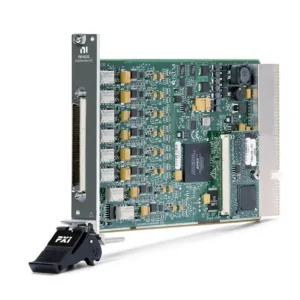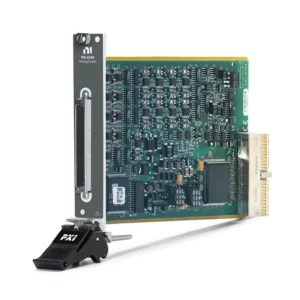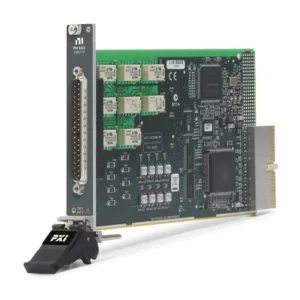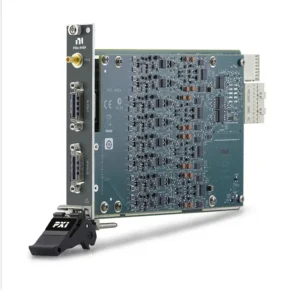





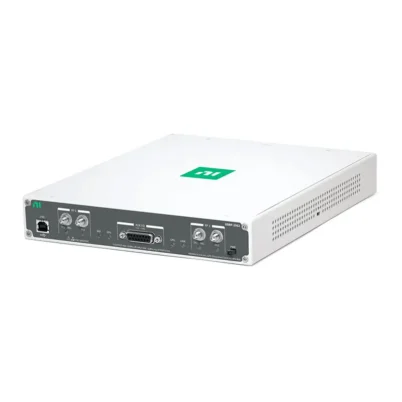
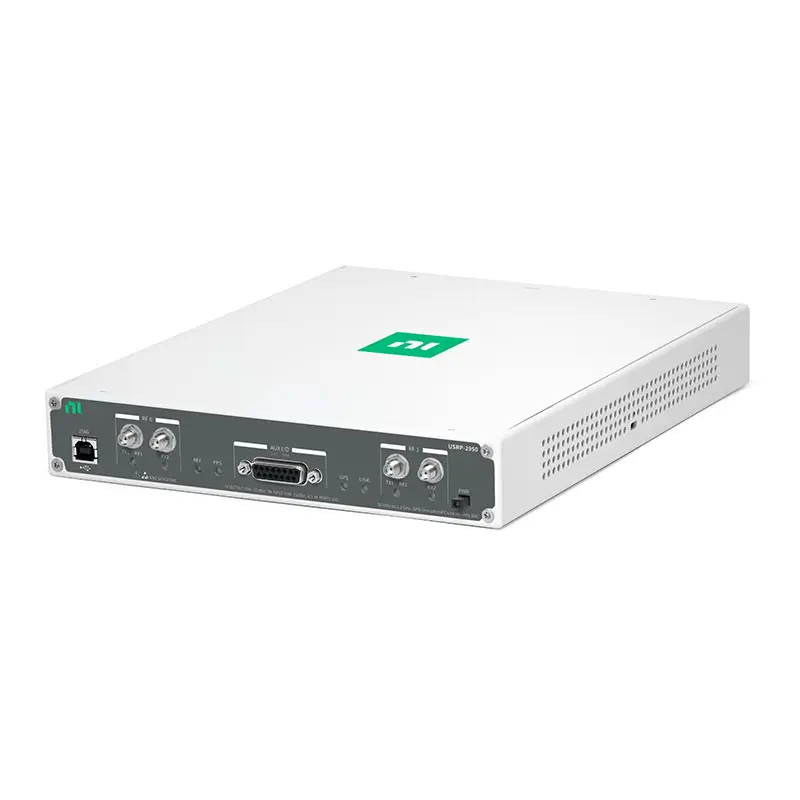
Product Introduction
The NI USRP-2950 is a high-performance software defined radio (SDR) device designed for wireless communications research, RF prototyping, signal processing, spectrum analysis, and advanced communications development. It combines a flexible RF transceiver with FPGA-based processing to provide a programmable platform for developing and evaluating wireless systems.
Featuring a broad RF frequency range from 50 MHz to 2.2 GHz, two transmit and two receive channels for 2×2 MIMO applications, and high-speed host connectivity, the USRP-2950 is suitable for research laboratories, universities, telecommunications development, aerospace systems, and advanced RF test applications.
Product Overview
The NI USRP-2950 belongs to the NI USRP software defined radio family and provides engineers with a flexible RF platform that can be configured through software rather than relying on fixed-function RF hardware.
Its wide tuning range enables development and testing across numerous wireless frequency bands. The dual-transmit and dual-receive architecture also supports MIMO, beamforming, channel sounding, and other multi-channel wireless research applications.
By combining RF transceiver hardware, FPGA processing, and software-based development tools, the USRP-2950 provides a reusable platform for communications research, algorithm development, RF experimentation, and rapid prototyping.
Key Features
50 MHz to 2.2 GHz Frequency Coverage
The NI USRP-2950 provides broad RF frequency coverage for a variety of wireless communication and research applications.
- 50 MHz to 2.2 GHz RF frequency range
- Software-configurable center frequency
- RF transmit and receive capability
- Multiple wireless band support
- Flexible spectrum experimentation
Advantage: Allows researchers to use a single SDR platform across multiple RF bands and communication applications.
2×2 MIMO RF Architecture
The USRP-2950 provides two transmit and two receive channels, enabling development of multi-channel wireless systems.
- 2 transmit channels
- 2 receive channels
- 2×2 MIMO capability
- Multi-channel RF experimentation
- Advanced wireless research
Advantage: Supports MIMO algorithms, spatial processing, diversity techniques, and multi-antenna communication research.
Software Defined Radio Architecture
The USRP-2950 allows RF system behavior to be configured and controlled through software.
- Software-defined RF operation
- Programmable wireless protocols
- Custom waveform development
- Flexible modulation and demodulation
- Rapid communication system prototyping
Advantage: Engineers can modify communication algorithms and waveforms without redesigning the complete RF hardware platform.
FPGA-Based Signal Processing
The NI USRP-2950 incorporates FPGA resources for high-speed and deterministic digital signal processing.
- FPGA-based processing
- Real-time signal processing
- Low-latency RF applications
- Hardware-accelerated algorithms
- Custom digital signal processing
Advantage: Enables computationally intensive signal-processing operations to be implemented close to the RF hardware.
High-Speed Host Connectivity
The USRP-2950 provides high-speed communication between the SDR hardware and host processing system.
- High-speed data streaming
- Host-based signal processing
- Real-time RF data transfer
- Flexible system architecture
- Research and laboratory integration
Advantage: Supports high-throughput RF experiments and continuous transfer of complex waveform data.
GPS-Disciplined Timing
The USRP-2950 incorporates timing and synchronization capabilities suitable for distributed and synchronized RF applications.
- Precision timing capability
- Frequency synchronization
- Multi-device synchronization support
- Distributed RF experimentation
- Coherent measurement applications
Advantage: Provides the timing infrastructure required for sophisticated multi-radio and synchronized wireless experiments.
Wireless Research Platform
The flexible hardware architecture of the USRP-2950 makes it suitable for developing and evaluating experimental wireless technologies.
- Wireless protocol research
- Communication algorithm development
- RF waveform experimentation
- Spectrum research
- Academic communications laboratories
Advantage: Provides researchers with a reusable hardware platform for moving algorithms from simulation to real RF signals.
NI Software Integration
The USRP-2950 integrates with NI software environments for RF configuration, signal processing, visualization, and communications research.
- NI-USRP driver support
- LabVIEW integration
- RF application development
- Custom signal processing
- Automated measurement applications
Advantage: Provides a complete hardware and software environment for developing sophisticated SDR applications.
Technical Specifications
| Parameter | Description |
|---|---|
| Product Type | Software Defined Radio Device |
| RF Frequency Range | 50 MHz to 2.2 GHz |
| RF Architecture | 2×2 MIMO |
| Transmit Channels | 2 |
| Receive Channels | 2 |
| Operation | RF Transmit and Receive |
| Processing | FPGA-Based Digital Signal Processing |
| Timing | Precision Timing and Synchronization Capability |
| Software | NI-USRP and LabVIEW |
| Primary Applications | Wireless Research, RF Prototyping and Communications Development |
Software Ecosystem
The NI USRP-2950 can be integrated with NI software environments to develop complete software defined radio and wireless communications applications.
- NI-USRP: Provides hardware configuration, RF control, streaming, and communication with the USRP device.
- LabVIEW: Enables graphical development of RF generation, acquisition, signal processing, visualization, and communications applications.
- LabVIEW Communications: Supports rapid development and prototyping of wireless communication algorithms and systems.
- FPGA Processing: Enables high-speed digital signal processing and custom real-time RF functionality.
- Custom Development Environments: The USRP platform can be incorporated into specialized research and communication system workflows.
Industries
- Wireless Communications
- Telecommunications
- Aerospace and Defense
- Academic Research
- RF Engineering
- Signal Processing Research
- Electronic Validation
- Wireless Education
Applications
Wireless Communications Research
The USRP-2950 provides a programmable RF platform for developing and evaluating wireless communication technologies.
- Communication algorithm development
- Custom waveform testing
- Protocol research
- Wireless system validation
MIMO Research
The 2×2 MIMO architecture enables researchers to investigate multi-antenna wireless communication techniques.
- MIMO algorithm development
- Spatial diversity research
- Multi-antenna communications
- Channel characterization
RF Prototyping
The USRP-2950 allows engineers to convert software-based communication algorithms into real RF experiments.
- Waveform prototyping
- RF transmitter development
- Receiver algorithm validation
- Communication system prototyping
Spectrum Monitoring
The wide tuning range of the USRP-2950 makes it useful for experimental spectrum monitoring and signal analysis.
- RF spectrum observation
- Signal detection
- Interference analysis
- Experimental spectrum research
Channel Sounding
The multi-channel RF architecture can be used in wireless propagation and channel characterization research.
- Wireless channel characterization
- Propagation measurements
- RF environment analysis
- Multi-channel experiments
Academic and Educational Research
The USRP-2950 provides a practical platform for teaching and researching software defined radio and digital communications.
- Wireless communications laboratories
- Digital signal processing education
- RF engineering research
- Graduate research projects
Comparison with Similar USRP Products
| Model | Main Difference | Best Application |
|---|---|---|
| NI USRP-2950 | 50 MHz to 2.2 GHz software defined radio with 2×2 MIMO capability. | Sub-2.2 GHz wireless research and MIMO prototyping |
| NI USRP-2952 | Wider-frequency-range USRP platform for RF applications extending into higher-frequency wireless bands. | Wideband wireless research |
| USRP-X300 | High-performance networked SDR platform designed for advanced software defined radio development. | High-performance SDR research |
| USRP-N310 | Networked SDR platform with multiple RF channels for advanced wireless communication systems. | Multi-channel and distributed SDR systems |
Recommended Related Products
| NI USRP-2952 | Software defined radio platform for applications requiring operation across a broader RF frequency range. |
| USRP-X300 | High-performance SDR platform for advanced wireless communications and RF research. |
| USRP-N310 | Multi-channel networked SDR for advanced wireless research, MIMO, and distributed RF systems. |
| USRP-N321 | High-performance networked SDR platform for synchronized and advanced wireless communication research. |
Why Choose USRP-2950?
- 50 MHz to 2.2 GHz RF frequency coverage
- 2 transmit and 2 receive channels
- 2×2 MIMO capability
- Software defined radio architecture
- FPGA-based signal processing
- Precision timing and synchronization capability
- NI-USRP and LabVIEW integration
- Ideal for wireless research and rapid RF prototyping
Frequently Asked Questions
What is the NI USRP-2950 used for?
The NI USRP-2950 is used for software defined radio development, wireless communications research, RF prototyping, MIMO experimentation, spectrum monitoring, channel characterization, and signal processing research.
What frequency range does the USRP-2950 support?
The NI USRP-2950 provides RF frequency coverage from 50 MHz to 2.2 GHz, making it suitable for a broad range of sub-2.2 GHz wireless research applications.
Does the USRP-2950 support MIMO?
Yes. The USRP-2950 provides two transmit and two receive RF channels and can be used for 2×2 MIMO wireless communication experiments.
Can the USRP-2950 transmit and receive RF signals?
Yes. The USRP-2950 is a transceiver-based SDR platform and supports both RF signal transmission and reception for wireless communication development.
Does the USRP-2950 include FPGA processing?
Yes. The USRP-2950 incorporates FPGA-based digital processing resources that support real-time signal processing and advanced SDR applications.
What is the difference between USRP-2950 and USRP-2952?
Both devices belong to the same generation of NI USRP software defined radios and provide multi-channel RF capability. One of the primary differences is RF frequency coverage. The USRP-2950 is optimized for applications from 50 MHz to 2.2 GHz, while the USRP-2952 provides coverage extending into higher-frequency wireless bands.
Is the USRP-2950 suitable for wireless research?
Yes. The combination of software-defined RF control, 2×2 MIMO capability, FPGA processing, and broad frequency coverage makes the USRP-2950 particularly suitable for communications laboratories, university research, wireless algorithm development, and RF prototyping.
Can multiple USRP-2950 devices be synchronized?
The USRP-2950 provides timing and synchronization capabilities that can be used when designing synchronized multi-radio experiments. The exact synchronization architecture depends on the number of devices, required phase coherence, timing accuracy, and software configuration.
Conclusion
The NI USRP-2950 software defined radio provides a flexible platform for wireless communications research, MIMO experimentation, RF prototyping, spectrum analysis, and advanced signal processing. With 50 MHz to 2.2 GHz frequency coverage, 2×2 MIMO capability, FPGA-based processing, synchronization features, and NI software integration, the USRP-2950 is well suited for research laboratories, telecommunications development, education, and sophisticated RF engineering applications.