





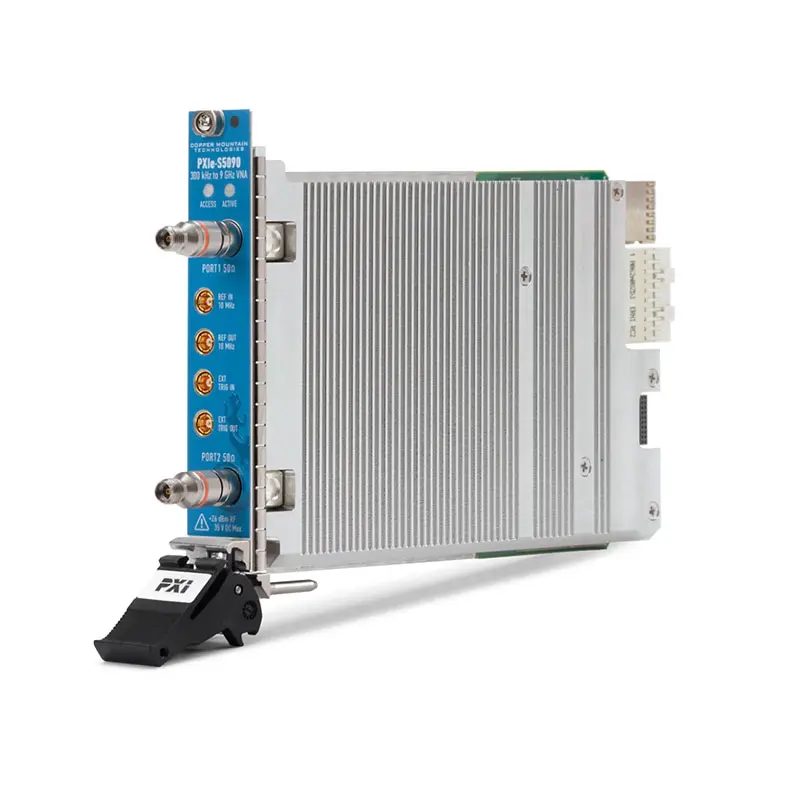
Product Introduction
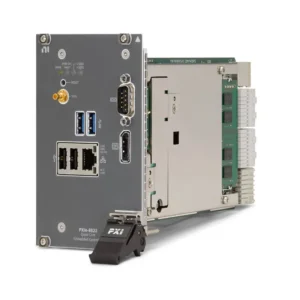
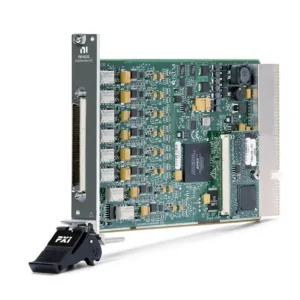
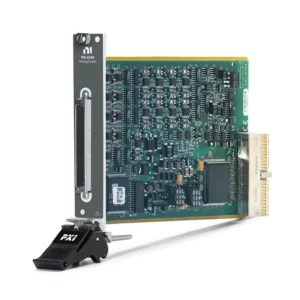
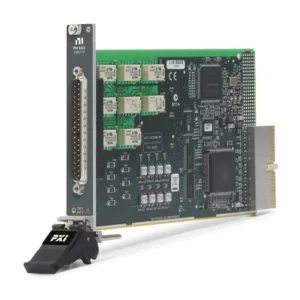
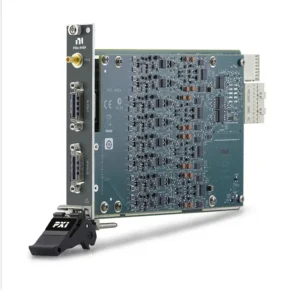
The NI PXIe-S5090 is a 2-port PXI Express Vector Network Analyzer (VNA) designed for RF component characterization, S-parameter measurement, automated design validation, and production test applications.
The PXIe-S5090 provides a wide 300 kHz to 9 GHz frequency range and a dynamic range of up to 138 dB, enabling accurate characterization of RF and microwave devices across a broad range of applications.
As a 2-port vector network analyzer, the PXIe-S5090 can measure amplitude, phase, and impedance and calculate the complete set of two-port S-parameters, including S11, S21, S12, and S22.
Its PXI Express architecture makes the PXIe-S5090 particularly suitable for automated RF test systems where VNA measurements must be combined with additional PXI instruments, automated switching, DUT control, and software-based test sequencing.
Product Overview
The National Instruments PXIe-S5090 is a modular Vector Network Analyzer developed for RF and microwave measurement applications requiring wide frequency coverage, high dynamic range, and automated measurement capability.
The instrument covers frequencies from 300 kHz to 9 GHz and provides two 50 Ω test ports with 3.5 mm female RF connectors.
Unlike scalar measurement instruments that primarily measure signal magnitude, a vector network analyzer measures both magnitude and phase. This allows the PXIe-S5090 to provide comprehensive characterization of RF devices such as filters, amplifiers, antennas, cables, attenuators, couplers, and other two-port networks.
Key Features
300 kHz to 9 GHz Frequency Range
The PXIe-S5090 provides a frequency range from 300 kHz to 9 GHz, allowing one instrument to characterize devices across a broad RF and microwave spectrum.
- 300 kHz minimum frequency
- 9 GHz maximum frequency
- Broad RF and microwave coverage
- Low-frequency network measurements
- GHz-range RF component characterization
- Automated broadband testing
Advantage: The wide frequency range allows engineers to characterize many different RF components without changing measurement platforms.
2-Port Vector Network Analyzer
The PXIe-S5090 provides two 50 Ω RF test ports for complete two-port network characterization.
The instrument can measure:
- S11 – Input reflection
- S21 – Forward transmission
- S12 – Reverse transmission
- S22 – Output reflection
These measurements provide detailed information about how an RF device reflects and transmits signals in both directions.
Complete S-Parameter Measurements
S-parameters are among the most important measurements for characterizing RF and microwave components.
| S-Parameter | Measurement | Typical Use |
|---|---|---|
| S11 | Input Reflection | Input Return Loss / VSWR |
| S21 | Forward Transmission | Gain / Insertion Loss |
| S12 | Reverse Transmission | Reverse Isolation |
| S22 | Output Reflection | Output Return Loss / VSWR |
The PXIe-S5090 can measure all four parameters required for full two-port RF network characterization.
Up to 138 dB Dynamic Range
The PXIe-S5090 provides a wide dynamic range reaching 138 dB over a significant portion of its operating frequency range.
Wide dynamic range is particularly important when measuring RF components with high rejection or attenuation.
- Filter stopband measurements
- High-isolation component testing
- Low-level transmission measurements
- High-rejection RF characterization
- Precision production testing
Wide Output Power Adjustment Range
The PXIe-S5090 provides adjustable RF output power, allowing engineers to optimize stimulus levels according to DUT requirements.
Depending on frequency, the instrument supports output levels extending from approximately -45 dBm to as high as +13 dBm.
| Frequency Range | Specified Output Power Range |
|---|---|
| 300 kHz to 6.5 GHz | -45 dBm to +13 dBm |
| 6.5 GHz to 8 GHz | -45 dBm to +10 dBm |
| 8 GHz to 9 GHz | -45 dBm to +5 dBm |
Advantage: Adjustable source power helps engineers characterize both sensitive devices and components requiring stronger RF stimulus.
1 Hz Frequency Resolution
The PXIe-S5090 provides 1 Hz frequency resolution, allowing precise definition of measurement frequencies and sweep points.
- 1 Hz frequency resolution
- Fine frequency sweeps
- Narrowband device characterization
- Detailed resonance measurements
- Precision RF analysis
Up to 500,001 Measurement Points
The PXIe-S5090 supports from 2 to 500,001 measurement points.
High point density allows engineers to characterize complex frequency responses with very fine frequency spacing.
This capability is particularly useful for:
- High-resolution filter characterization
- Resonance analysis
- Wideband frequency sweeps
- Detailed insertion-loss measurements
- Time-domain transformations
Fast Measurement Speed
The PXIe-S5090 is designed for fast automated measurements and provides a typical minimum measurement time of approximately 16 μs per point under applicable operating conditions.
Fast sweep performance is particularly valuable in production environments where RF measurements must be repeated across large numbers of devices.
1 Hz to 1 MHz Measurement Bandwidth
The PXIe-S5090 provides selectable measurement bandwidths from 1 Hz to 1 MHz.
Narrower bandwidths can reduce measurement noise and improve dynamic range, while wider bandwidths can increase measurement speed.
This allows engineers to balance:
- Measurement speed
- Noise performance
- Dynamic range
- Measurement repeatability
50 Ω RF Test Ports
Both PXIe-S5090 RF test ports use a 50 Ω impedance, matching the standard impedance used by most RF and microwave measurement systems.
- 2 RF test ports
- 50 Ω impedance
- 3.5 mm female connectors
- Suitable for RF and microwave DUTs
Automatic Precision Calibration
The PXIe-S5090 supports multiple precision calibration methods and automatic calibration capabilities.
VNA calibration compensates for systematic measurement errors introduced by the analyzer, cables, adapters, and test fixture.
Proper calibration improves:
- Directivity
- Source match
- Load match
- Reflection tracking
- Transmission tracking
Reference Plane Extension
The PXIe-S5090 supports reference plane extension, allowing the effective measurement reference plane to be shifted electrically.
This can help compensate for electrical delay introduced by cables, adapters, fixtures, and other elements between the analyzer and DUT.
Time-Domain Analysis
In addition to conventional frequency-domain measurements, the PXIe-S5090 supports time-domain analysis.
Frequency-domain measurement data can be mathematically transformed into the time domain to help locate impedance discontinuities and other physical characteristics.
Typical applications include:
- Cable fault location
- Connector discontinuity analysis
- Fixture characterization
- RF path troubleshooting
- Filter time-delay analysis
Time-Domain Gating
Time-domain gating can mathematically remove unwanted responses from selected portions of the measurement.
After unwanted responses are removed in the time domain, the measurement can be transformed back into the frequency domain.
This capability can help reduce the influence of:
- Adapters
- Connectors
- Test fixtures
- Unwanted reflections
- Specific discontinuities
Technical Specifications
| Parameter | Description |
|---|---|
| Product Type | PXI Express Vector Network Analyzer |
| Model | NI PXIe-S5090 |
| Part Number | 787251-01 |
| Bus Interface | PXI Express |
| Number of VNA Ports | 2 |
| Frequency Range | 300 kHz to 9 GHz |
| Frequency Resolution | 1 Hz |
| Frequency Accuracy | ±5 × 10⁻⁶ |
| Maximum Dynamic Range | 138 dB |
| Maximum Output Power | +13 dBm |
| Minimum Output Power | -45 dBm |
| Measurement Bandwidth | 1 Hz to 1 MHz |
| Measurement Points | 2 to 500,001 |
| Typical Minimum Measurement Time | 16 μs per Point |
| Test Port Impedance | 50 Ω |
| Test Port Connector | 3.5 mm Female |
| S-Parameters | S11, S21, S12, S22 |
| Time-Domain Analysis | Supported |
| Time-Domain Gating | Supported |
| Automatic Calibration | Supported |
| Reference Plane Extension | Supported |
| Primary Applications | RF Component Characterization, S-Parameter Measurement, Design Validation and Production Test |
What Is a Vector Network Analyzer?
A Vector Network Analyzer is an RF measurement instrument used to characterize how a device responds to RF signals over frequency.
Unlike a spectrum analyzer, which primarily measures the spectral content of signals, a VNA generates a controlled stimulus and measures both the magnitude and phase of reflected and transmitted signals.
This enables engineers to determine parameters including:
- Return loss
- Insertion loss
- Gain
- Isolation
- VSWR
- Impedance
- Phase
- Group delay
- S-parameters
Understanding S11
S11 describes how much of the RF signal applied to Port 1 is reflected back toward Port 1.
S11 measurements are commonly used to evaluate:
- Input return loss
- Input impedance matching
- VSWR
- Antenna matching
- Filter input matching
Understanding S21
S21 describes signal transmission from Port 1 to Port 2.
Depending on the DUT, S21 can be used to determine:
- Insertion loss
- Forward gain
- Filter transmission response
- Cable loss
- Amplifier gain
Understanding S12
S12 measures reverse transmission from Port 2 to Port 1.
It is particularly useful for evaluating:
- Reverse isolation
- Amplifier reverse transmission
- Directional device behavior
- Two-port network reciprocity
Understanding S22
S22 represents the reflection measured at Port 2.
Typical applications include:
- Output return loss
- Output impedance matching
- Output VSWR
- Amplifier output characterization
RF Filter Testing
RF filters are one of the most common devices characterized using the PXIe-S5090.
A complete filter measurement can evaluate:
- Insertion loss
- Passband response
- Stopband rejection
- Return loss
- Bandwidth
- Center frequency
- Phase response
- Group delay
The PXIe-S5090’s wide dynamic range is particularly useful for measuring the high attenuation levels present in filter stopbands.
Amplifier Characterization
The PXIe-S5090 can characterize compatible RF amplifiers using forward and reverse S-parameter measurements.
Typical measurements include:
- Forward gain
- Input return loss
- Output return loss
- Reverse isolation
- Phase response
- Frequency response
Antenna Measurements
The PXIe-S5090 can perform reflection measurements for compatible antenna systems.
Typical antenna measurements include:
- S11
- Return loss
- VSWR
- Resonant frequency
- Impedance
- Smith chart analysis
Cable and Connector Testing
The PXIe-S5090 can characterize RF cables, connectors, adapters, and transmission paths.
- Insertion loss
- Return loss
- VSWR
- Phase
- Group delay
- Impedance discontinuities
Time-domain analysis can provide additional insight into the physical location of reflections and discontinuities along a transmission path.
Smith Chart Measurements
The PXIe-S5090 software supports Smith chart display for visualizing complex reflection coefficients and impedance.
Smith charts are commonly used for:
- Impedance matching
- Antenna tuning
- RF circuit design
- Matching-network optimization
- Reflection analysis
Group Delay Measurements
Group delay describes the time delay experienced by different frequency components as they pass through a device.
It is particularly important when characterizing:
- RF filters
- Communication components
- Transmission networks
- Wideband RF devices
Automated Production Testing
The PXIe-S5090 is particularly suitable for automated RF production test systems.
A typical automated test sequence can operate as follows:
- Connect or switch the DUT into the RF test path.
- Configure the required VNA frequency sweep.
- Set source power and measurement bandwidth.
- Acquire S-parameter measurements.
- Calculate RF performance parameters.
- Compare measurements against test limits.
- Generate a pass/fail result.
- Store the measurement data.
Fast measurement speed and PXI integration can reduce overall test time in high-volume manufacturing environments.
Automated Design Validation
During RF product development, engineers often need to characterize devices across many frequencies, power levels, temperatures, and operating conditions.
The PXIe-S5090 can automate these measurement sequences and collect large quantities of RF characterization data.
- Frequency sweeps
- Power sweeps
- Temperature characterization
- Component comparison
- Design verification
- Regression testing
PXIe-S5090 in a PXI RF Test System
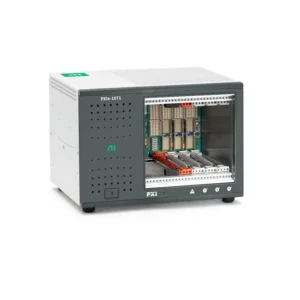
The PXIe-S5090 can operate as the vector network analysis instrument within a larger PXI RF test platform.
A complete system may include:
- PXI Express chassis
- PXI embedded or remote controller
- PXIe-S5090 Vector Network Analyzer
- PXI RF switch modules
- RF signal generators
- RF signal analyzers
- Programmable power supplies
- Digital I/O modules
- Automated DUT fixtures
The modular architecture allows VNA measurements to be integrated with DUT control, switching, power, and additional RF measurements.
PXIe-S5090 vs Benchtop VNA
| Feature | PXIe-S5090 | Traditional Benchtop VNA |
|---|---|---|
| Form Factor | PXI Express Module | Standalone Instrument |
| Frequency Range | 300 kHz to 9 GHz | Model Dependent |
| Number of Ports | 2 | Model Dependent |
| Automation | Designed for Automated Test | Supported, Model Dependent |
| PXI Integration | Native | External Interface Required |
| System Expansion | Modular | Requires Additional Instruments |
| Production Integration | Highly Suitable | Application Dependent |
| Best Application | Automated Modular RF Test | Interactive Bench Measurements |
PXIe-S5090 vs Spectrum Analyzer
| Feature | PXIe-S5090 VNA | Spectrum Analyzer |
|---|---|---|
| Primary Measurement | Network Response | Signal Spectrum |
| Generates Test Stimulus | Yes | Typically No |
| Measures Magnitude | Yes | Yes |
| Measures Phase | Yes | Application Dependent |
| S11 / S21 / S12 / S22 | Yes | No |
| Return Loss | Yes | Requires Additional Setup |
| Insertion Loss | Yes | Requires Additional Stimulus |
| Best Application | RF Component Characterization | RF Signal Analysis |
Calibration Considerations
Calibration is essential for accurate vector network analysis.
Before performing precision measurements, the measurement reference plane should be calibrated according to the required test configuration.
Calibration compensates for systematic errors associated with:
- VNA test ports
- RF cables
- Adapters
- Connectors
- Test fixtures
Calibration requirements should be considered when designing both laboratory and automated production test systems.
Software and Automation
The PXIe-S5090 is designed for software-controlled RF measurements and can be incorporated into automated measurement systems.
The VNA software provides multiple measurement and display capabilities including:
- Logarithmic magnitude
- Linear magnitude
- Phase
- Expanded phase
- Group delay
- SWR
- Real and imaginary components
- Smith chart
- Polar display
- Time-domain measurements
Automation capabilities are available for integration into custom RF test applications.
LabVIEW Integration
The PXIe-S5090 can be integrated into LabVIEW applications for automated RF measurements.
Engineers can use software control to:
- Configure frequency sweeps
- Set output power
- Configure measurement bandwidth
- Select S-parameters
- Trigger measurements
- Retrieve measurement data
- Perform automated analysis
- Generate pass/fail results
Industries
- Wireless Communications
- RF Component Manufacturing
- Semiconductor Test
- Aerospace and Defense
- Automotive Electronics
- Consumer Electronics
- Electronic Manufacturing
- Research and Development
- Production Test
- Automated Test Equipment
Applications
S-Parameter Measurement
The PXIe-S5090 provides complete two-port S-parameter measurements including S11, S21, S12, and S22 for comprehensive RF device characterization.
RF Filter Testing
Wide frequency coverage and high dynamic range make the PXIe-S5090 suitable for measuring insertion loss, return loss, passband response, and stopband rejection of RF filters.
Amplifier Characterization
The instrument can measure amplifier forward gain, reverse isolation, input return loss, output return loss, phase response, and frequency response.
Antenna Testing
Reflection measurements can be used to characterize antenna return loss, VSWR, impedance, resonance, and matching performance.
Cable and Connector Testing
The PXIe-S5090 can characterize insertion loss, return loss, phase, group delay, and impedance discontinuities in RF cables and interconnects.
Automated Production Test
Fast sweep capability, PXI integration, and software automation make the PXIe-S5090 suitable for high-volume RF manufacturing and production test applications.
Recommended Related Products
| NI PXIe-S5090 | 2-port, 300 kHz to 9 GHz PXI Express Vector Network Analyzer for S-parameter and RF component characterization. |
| NI PXIe-5668 | PXI RF signal analyzer suitable for spectrum analysis and RF signal measurements alongside vector network analysis. |
| NI PXI-5652 | RF signal generator suitable for generating RF stimulus in modular automated test systems. |
| NI PXIe-8267 | High-speed PXI Express storage module for test systems requiring high-throughput measurement data storage. |
Why Choose NI PXIe-S5090?
- 300 kHz to 9 GHz frequency range
- 2-port Vector Network Analyzer
- Complete S11, S21, S12, and S22 measurements
- Up to 138 dB dynamic range
- Up to +13 dBm output power
- Output power adjustable down to -45 dBm
- 1 Hz frequency resolution
- Up to 500,001 measurement points
- 1 Hz to 1 MHz measurement bandwidth
- 50 Ω RF test ports
- 3.5 mm female connectors
- Automatic precision calibration support
- Time-domain analysis
- Time-domain gating
- Designed for automated RF test
Frequently Asked Questions
What is the NI PXIe-S5090?
The NI PXIe-S5090 is a 2-port PXI Express Vector Network Analyzer designed for RF and microwave component characterization, S-parameter measurements, automated design validation, and production testing.
What is the part number of the PXIe-S5090?
The NI PXIe-S5090 part number is 787251-01.
What is the frequency range of the PXIe-S5090?
The PXIe-S5090 provides a frequency range from 300 kHz to 9 GHz.
How many ports does the PXIe-S5090 have?
The PXIe-S5090 is a 2-port Vector Network Analyzer with two 50 Ω RF test ports.
What S-parameters can the PXIe-S5090 measure?
The PXIe-S5090 can measure the complete set of two-port S-parameters: S11, S21, S12, and S22.
What is the dynamic range of the PXIe-S5090?
The PXIe-S5090 provides dynamic range up to 138 dB over a significant portion of its operating frequency range under specified measurement conditions.
What is the maximum output power of the PXIe-S5090?
The maximum specified output power is +13 dBm from 300 kHz to 6.5 GHz. Maximum output power decreases at higher frequencies, reaching +10 dBm from 6.5 GHz to 8 GHz and +5 dBm from 8 GHz to 9 GHz.
What is the frequency resolution of the PXIe-S5090?
The PXIe-S5090 provides 1 Hz frequency resolution.
How many measurement points does the PXIe-S5090 support?
The analyzer supports from 2 to 500,001 measurement points.
What connectors does the PXIe-S5090 use?
The PXIe-S5090 uses two 50 Ω 3.5 mm female RF test-port connectors.
Can the PXIe-S5090 measure VSWR?
Yes. The PXIe-S5090 can perform reflection measurements and display SWR/VSWR-related results for compatible RF devices such as antennas, filters, cables, and amplifiers.
Can the PXIe-S5090 measure insertion loss?
Yes. S21 transmission measurements can be used to determine insertion loss for passive RF components such as filters, cables, attenuators, and other two-port networks.
Can the PXIe-S5090 measure amplifier gain?
Yes. S21 can be used to characterize the forward gain of compatible RF amplifiers, provided the DUT signal levels remain within the analyzer’s operating limits.
Does the PXIe-S5090 support time-domain measurements?
Yes. The PXIe-S5090 provides time-domain analysis and time-domain gating capabilities for applications such as cable fault analysis, fixture characterization, and unwanted reflection removal.
Can the PXIe-S5090 be controlled with LabVIEW?
Yes. The PXIe-S5090 can be integrated into LabVIEW-based automated test applications. The required PXIe_S2 VNA software and associated drivers must be installed according to the supported hardware and software configuration.
What applications are suitable for the PXIe-S5090?
Typical applications include S-parameter measurements, RF filter testing, amplifier characterization, antenna measurements, cable and connector testing, impedance measurements, RF component design validation, automated production test, and research applications.
What should I check before purchasing a PXIe-S5090?
Before purchasing a PXIe-S5090, verify the required 300 kHz to 9 GHz frequency coverage, two-port configuration, dynamic range, output power requirements, DUT power levels, connector compatibility, calibration requirements, PXI Express chassis compatibility, RF cables and calibration accessories, and required software environment.
Conclusion
The NI PXIe-S5090 9 GHz 2-Port PXI Express Vector Network Analyzer provides 300 kHz to 9 GHz frequency coverage, complete S11/S21/S12/S22 measurements, up to 138 dB dynamic range, fine 1 Hz frequency resolution, and up to 500,001 measurement points. Its combination of RF measurement performance, time-domain analysis, calibration capabilities, and PXI Express integration makes it particularly suitable for RF filter testing, amplifier characterization, antenna measurements, cable and connector testing, automated design validation, and high-volume production test systems.