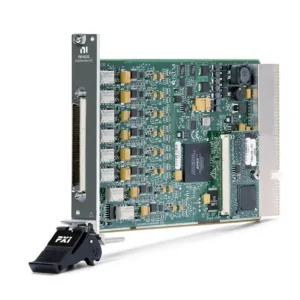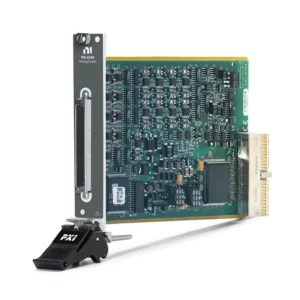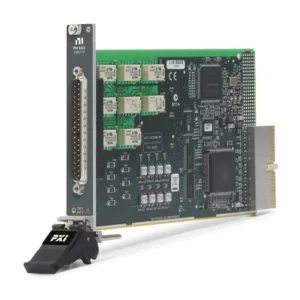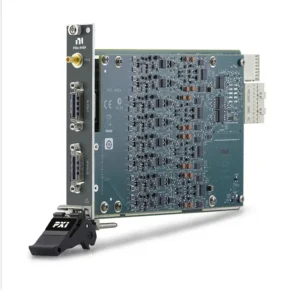




Product Introduction
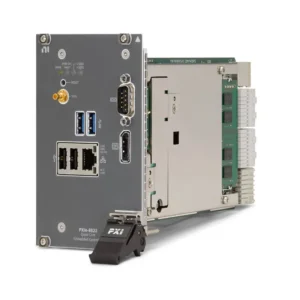
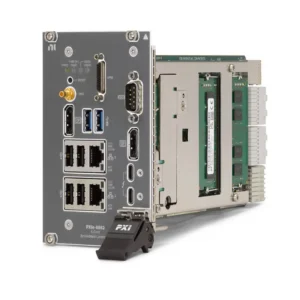
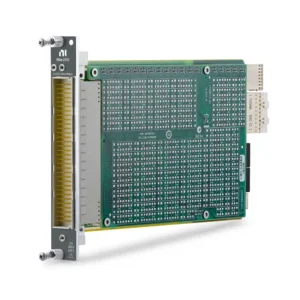
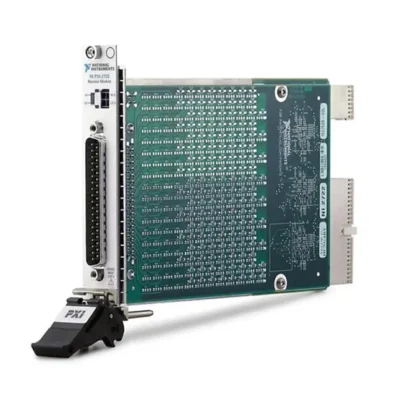
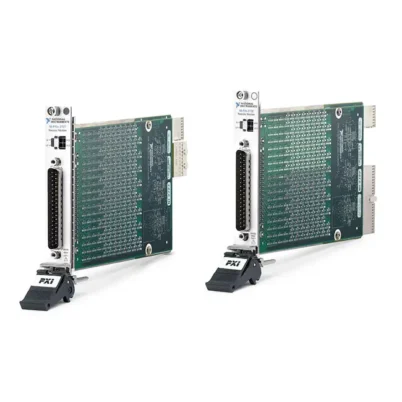
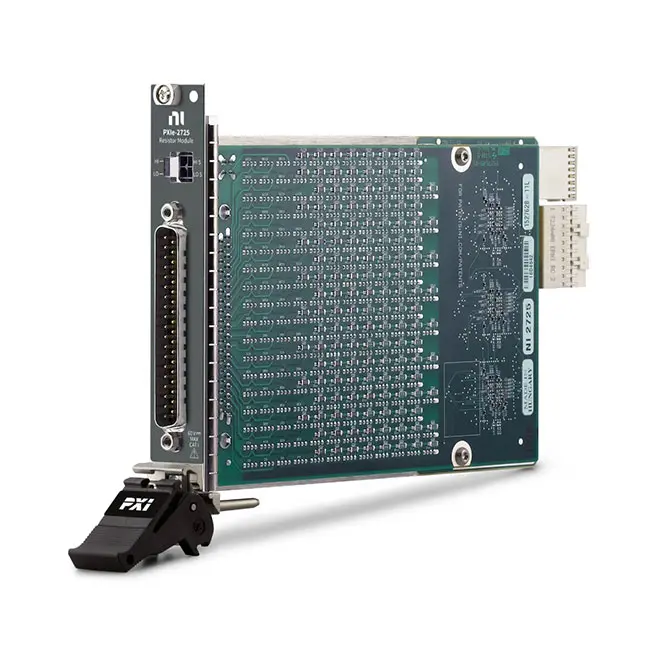
The NI PXIe-2725 is a PXI Express programmable resistor module designed for automated resistance simulation, sensor emulation, hardware-in-the-loop (HIL) testing, ECU validation, and electronic functional test applications.
The PXIe-2725 allows test systems to programmatically change resistance values without manually replacing physical resistors. This capability is particularly useful when simulating resistive sensors or testing electronic control units across multiple operating and fault conditions.
By integrating programmable resistance directly into a PXI Express system, engineers can automate resistance changes together with data acquisition, switching, stimulus generation, communication, and measurement instruments.
Product Overview
The National Instruments PXIe-2725 is designed primarily for applications requiring software-controlled resistance simulation.
Many sensors and electrical devices communicate physical conditions through changes in resistance. During controller development and validation, connecting every physical sensor may be inconvenient, expensive, or impractical.
A programmable resistor module allows the test system to emulate these resistance changes electronically. Test software can command different resistance values and evaluate how the device under test responds.
This makes the PXIe-2725 particularly useful for automotive electronics, aerospace systems, industrial controllers, sensor-interface validation, manufacturing test, and automated HIL systems.
Key Features
Programmable Resistance
The primary function of the PXIe-2725 is software-controlled resistance generation.
- Programmable resistance values
- Automated resistance changes
- Repeatable resistance simulation
- Software-controlled operation
- Automated test sequencing
Advantage: Engineers can automatically test a DUT across multiple resistance conditions without manually changing external resistors.
Resistive Sensor Simulation
The PXIe-2725 can be used to emulate compatible resistive sensors by reproducing the resistance values expected by a controller or measurement system.
- Resistive sensor simulation
- Controller input simulation
- Sensor-interface validation
- Automated sensor emulation
- Electronic control-system testing
Advantage: Sensor behavior can be simulated in a controlled laboratory environment without requiring the complete physical sensor system.
Automated Resistance Sweeps
Test software can program a sequence of resistance values to evaluate DUT behavior across an operating range.
- Automated resistance sweeps
- Multi-point testing
- Boundary-condition testing
- Calibration verification
- Response characterization
This approach is useful for characterizing how electronic controllers respond as simulated sensor resistance changes.
Fault Simulation
Programmable resistance can also support fault-insertion and abnormal-condition testing within compatible test architectures.
- Resistance fault simulation
- Out-of-range condition testing
- Sensor behavior validation
- Controller diagnostic testing
- Automated fault scenarios
Advantage: Automated fault scenarios allow engineers to evaluate whether a controller detects and responds correctly to abnormal sensor conditions.
Hardware-in-the-Loop Testing
The PXIe-2725 is well suited to HIL systems where a controller must operate as though it were connected to real sensors and equipment.
Instead of using physical sensors for every test condition, programmable resistance can reproduce selected electrical characteristics of compatible resistive sensors.
- HIL sensor simulation
- ECU input testing
- Controller validation
- Automated test scenarios
- Fault-condition simulation
ECU Validation
Electronic control units frequently interface with sensors whose electrical characteristics vary according to temperature, pressure, position, level, or other physical conditions.
Where the sensor interface is resistance based, the PXIe-2725 can form part of a test system that reproduces these resistance conditions for automated ECU validation.
- ECU functional testing
- Sensor-input validation
- Diagnostic testing
- Automated operating-point simulation
- Production ECU testing
Software-Controlled Operation
The PXIe-2725 allows resistance settings to be incorporated directly into automated test software.
- Programmatic resistance selection
- Automated test sequences
- Repeatable test conditions
- Remote operation
- Production-test integration
Advantage: Software control reduces manual intervention and improves repeatability across large test sequences.
PXI Express Integration
The PXIe-2725 integrates into the modular PXI Express platform and can operate alongside other PXI measurement and stimulus instruments.
- PXI Express platform
- Modular test-system architecture
- Automated instrument control
- Scalable system configuration
- Integrated test sequencing
Technical Specifications
| Parameter | Description |
|---|---|
| Product Type | PXI Express Programmable Resistor Module |
| Model | NI PXIe-2725 |
| Bus Interface | PXI Express |
| Primary Function | Programmable Resistance Simulation |
| Resistance Control | Software Programmable |
| Automated Resistance Sweeps | Supported |
| Sensor Simulation | Supported for Compatible Resistive Sensor Applications |
| HIL Integration | Supported |
| Automated Test Integration | Supported |
| Primary Applications | Sensor Simulation, ECU Validation, HIL Testing, Resistance Simulation and Automated Test |
What Is a Programmable Resistor Module?
A programmable resistor module is an electronic test instrument that allows resistance values to be selected under software control.
Instead of manually connecting different physical resistors to a DUT, engineers can command the module to present different resistance conditions automatically.
This is particularly useful when dozens, hundreds, or thousands of resistance combinations must be evaluated during automated validation.
How the PXIe-2725 Works
The PXIe-2725 acts as a programmable resistance source within an automated test system.
A simplified test sequence can operate as follows:
- Test software selects the required resistance condition.
- The PXIe-2725 configures the programmed resistance.
- The DUT detects the simulated electrical condition.
- Other PXI instruments measure the DUT response.
- The software records and evaluates the measurement results.
- The resistance is changed to the next test point.
- The sequence repeats automatically.
This architecture allows a large number of resistance conditions to be tested without manual component changes.
Sensor Simulation Applications
Many sensors can be represented electrically by changes in resistance. When the sensor characteristics are compatible with the programmable range and electrical ratings of the PXIe-2725, the module can reproduce selected sensor conditions.
Potential applications include simulation of resistance-based:
- Temperature sensing circuits
- Position sensing circuits
- Level sensing circuits
- Pressure-related sensor interfaces
- Industrial resistive sensors
- Automotive sensor interfaces
The exact suitability depends on the electrical behavior of the sensor being simulated and the resistance range, resolution, accuracy, voltage, current, and power requirements of the application.
Automotive ECU Testing
Automotive ECUs may monitor multiple resistive sensor interfaces. During development or manufacturing test, engineers need to verify how the ECU responds to different sensor conditions.
The PXIe-2725 can automate these resistance changes so the ECU can be tested across normal operating conditions and selected fault conditions.
- Sensor-input simulation
- ECU functional validation
- Diagnostic verification
- Operating-range testing
- Boundary-condition testing
- Automated production testing
Hardware-in-the-Loop Applications
In a HIL test system, the real controller is connected to simulated sensors, actuators, communication networks, and other virtualized system components.
The PXIe-2725 can provide programmable resistance as part of this simulated electrical environment.
It can be combined with PXI analog output, digital I/O, CAN, LIN, FlexRay, switching, fault-insertion, and measurement hardware to create comprehensive controller validation systems.
Automated Resistance Sweep Testing
One major advantage of programmable resistance is the ability to execute automatic resistance sweeps.
For example, test software can configure a series of resistance values representing different simulated operating points.
At every point, another PXI instrument can measure the DUT response and determine whether the result remains within the required tolerance.
- Automated characterization
- Transfer-function testing
- Threshold verification
- Calibration testing
- Response linearity testing
- Pass/fail evaluation
Programmable Resistor vs Fixed Resistors
| Feature | PXIe-2725 Programmable Resistance | Fixed Resistors |
|---|---|---|
| Resistance Selection | Software Controlled | Manual |
| Automated Testing | Supported | Requires Additional Switching |
| Resistance Sweeps | Automated | Manual / Complex |
| Repeatability | High | Operator Dependent |
| HIL Integration | Designed for Automated Systems | Limited |
| Test Throughput | High | Lower for Repetitive Tests |
| Best Application | Automated Sensor Simulation | Simple Static Test Conditions |
Programmable Resistance vs Analog Output
A programmable resistor and an analog output module perform fundamentally different functions.
| Feature | Programmable Resistor | Analog Output Module |
|---|---|---|
| Primary Output | Resistance | Voltage or Current |
| Sensor Simulation | Resistive Sensors | Voltage / Current Output Sensors |
| Control Method | Software Programmable | Software Programmable |
| Typical Application | Resistance-Based Sensor Emulation | Voltage or Current Stimulus |
The correct module should therefore be selected according to the electrical characteristics of the sensor or DUT interface being simulated.
PXIe-2725 in an Automated Test System
The PXIe-2725 can be combined with other PXI instruments to create a complete automated validation platform.
A typical system may contain:
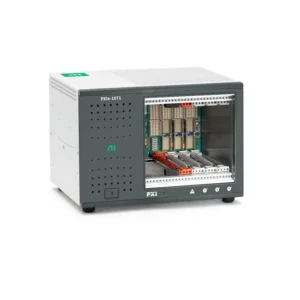
- PXI Express chassis
- PXI embedded or remote controller
- PXIe-2725 programmable resistor module
- PXI multifunction DAQ
- PXI digital multimeter
- PXI switch modules
- CAN / LIN communication interfaces
- Analog output modules
- Digital I/O modules
Test software can coordinate these instruments to reproduce input conditions, communicate with the DUT, measure outputs, inject faults, and automatically determine test results.
Industries
- Automotive Electronics
- Aerospace and Defense
- Industrial Automation
- Electronic Manufacturing
- Transportation Systems
- Hardware-in-the-Loop Testing
- Automated Test Equipment
- Research and Development
- Electronic Design Validation
Applications
ECU Functional Testing
The PXIe-2725 can simulate compatible resistance-based sensor conditions during ECU functional validation.
- ECU input testing
- Sensor interface validation
- Diagnostic testing
- Automated pass/fail testing
- Production validation
Sensor Simulation
Programmable resistance allows compatible resistive sensors to be electronically simulated without requiring the actual physical sensor for every test condition.
- Resistance sensor emulation
- Operating-point simulation
- Sensor response testing
- Controller validation
HIL Testing
The module can form part of a hardware-in-the-loop system that reproduces electrical conditions experienced by a real controller.
- Controller development
- Automated scenario testing
- Sensor emulation
- Fault-condition testing
- Regression testing
Manufacturing Test
The PXIe-2725 can automate resistance-based test conditions in production environments where the same validation sequence must be repeated across many units.
- End-of-line testing
- Production functional testing
- Quality-control testing
- Automated calibration verification
- High-volume validation
Electronic Design Validation
Engineering teams can use programmable resistance during prototype development and design verification.
- Prototype characterization
- Input circuit testing
- Threshold validation
- Design verification
- Automated regression testing
Recommended Related Products
| NI PXIe-2725 | Programmable resistance solution for sensor simulation, HIL, ECU validation, and automated resistance testing. |
| NI PXIe-4322 | Recommended for systems requiring isolated analog output generation alongside programmable sensor simulation. |
| NI PXIe-6612 | Counter/timer module suitable for frequency, encoder, pulse, and digital timing measurements within automated HIL and controller test systems. |
| NI PXI-8511 | Automotive communication interface that can complement sensor simulation hardware in ECU and vehicle-network test systems. |
| NI PXI-8513 | CAN communication interface suitable for automotive ECU validation and automated network testing applications. |
Why Choose NI PXIe-2725?
- PXI Express programmable resistor architecture
- Software-controlled resistance simulation
- Automated resistance changes
- Suitable for resistive sensor simulation
- Supports automated resistance sweeps
- Useful for ECU validation
- Suitable for HIL test systems
- Supports automated fault-condition testing
- Reduces manual resistor replacement
- Improves test repeatability
- Supports automated production testing
- Integrates with other PXI instruments
- Suitable for controller development
- Useful for electronic design validation
- Designed for scalable automated test systems
Frequently Asked Questions
What is the NI PXIe-2725?
The NI PXIe-2725 is a PXI Express programmable resistor module designed for automated resistance simulation, sensor emulation, ECU testing, hardware-in-the-loop testing, and electronic validation applications.
What is the primary function of the PXIe-2725?
The primary function of the PXIe-2725 is to provide software-controlled programmable resistance for automated test and simulation systems.
Can the PXIe-2725 simulate sensors?
Yes. The PXIe-2725 can simulate compatible resistance-based sensor interfaces by reproducing selected resistance values expected by the device under test.
Can the PXIe-2725 be used for automotive ECU testing?
Yes. ECU validation is an important application for programmable resistance hardware, particularly when an ECU interfaces with resistance-based sensors.
Can the PXIe-2725 be used for HIL testing?
Yes. The module can be incorporated into HIL systems where programmable resistance is required to emulate sensor or electrical conditions presented to a real controller.
Can the PXIe-2725 perform automated resistance sweeps?
Yes. Test software can program a sequence of resistance values, allowing DUT behavior to be characterized automatically across multiple operating points.
Can the PXIe-2725 replace every type of sensor?
No. The PXIe-2725 is intended for compatible resistance-based simulation applications. Voltage-output, current-output, frequency-output, digital, or communication-based sensors may require different PXI instrumentation.
Is the PXIe-2725 a data acquisition module?
No. The PXIe-2725 is primarily a programmable resistance module. Measurement applications generally require additional DAQ, DMM, digitizer, or other PXI measurement hardware.
What is the difference between a programmable resistor and a PXI analog output module?
A programmable resistor presents a controlled resistance to the DUT, while an analog output module generates a programmable voltage or current. The correct device depends on the electrical interface being simulated.
Can the PXIe-2725 be used for production testing?
Yes. Software-controlled resistance makes the PXIe-2725 suitable for repetitive manufacturing tests where multiple resistance conditions must be applied automatically.
Can the PXIe-2725 be combined with CAN or LIN interfaces?
Yes. In automotive and controller test systems, programmable resistance hardware can be combined with compatible CAN, LIN, digital I/O, analog I/O, switching, and measurement modules to build an integrated validation platform.
Why use programmable resistance instead of manually changing resistors?
Programmable resistance improves automation, repeatability, test throughput, and software control while reducing the need for manual component changes during repetitive validation procedures.
What applications are suitable for the PXIe-2725?
Typical applications include resistive sensor simulation, ECU functional testing, hardware-in-the-loop testing, controller validation, automated resistance sweeps, electronic design verification, manufacturing test, and automated test equipment.
What should I check before purchasing a PXIe-2725?
Before purchasing a PXIe-2725, verify the exact model and part number, required resistance range, resistance resolution, accuracy, channel count, maximum voltage, maximum current, power limitations, connector and cabling requirements, PXI Express chassis compatibility, and software requirements.
Conclusion
The NI PXIe-2725 Programmable Resistor Module provides software-controlled resistance simulation for automated test and validation systems. Its programmable architecture makes it particularly useful for resistive sensor emulation, ECU validation, hardware-in-the-loop testing, automated resistance sweeps, manufacturing test, and electronic design verification. When integrated with other PXI measurement, switching, communication, and stimulus modules, the PXIe-2725 can form an important part of a comprehensive automated controller and sensor-interface test system.