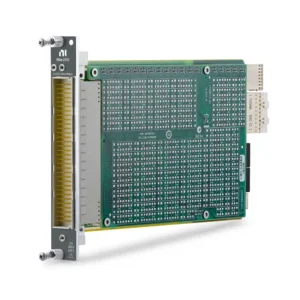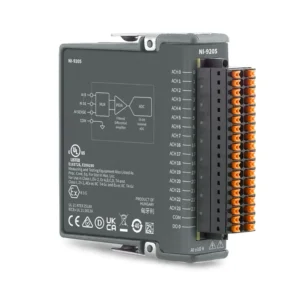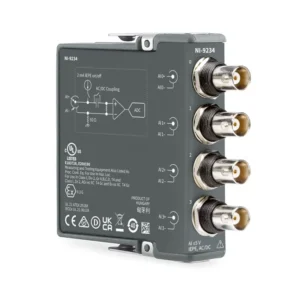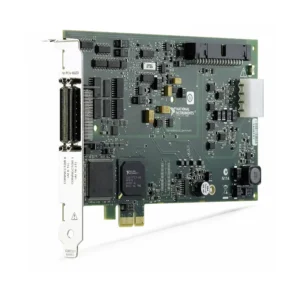




Product Introduction
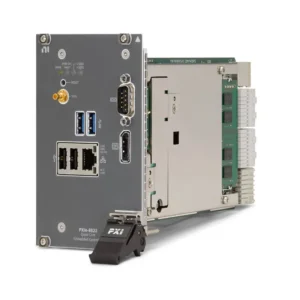
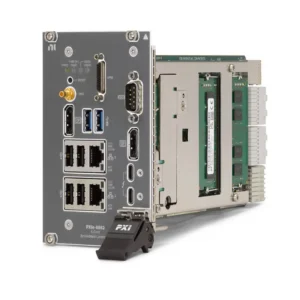
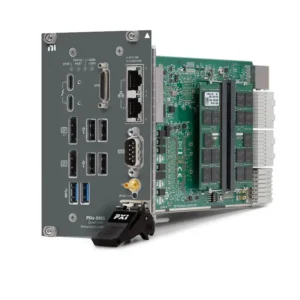
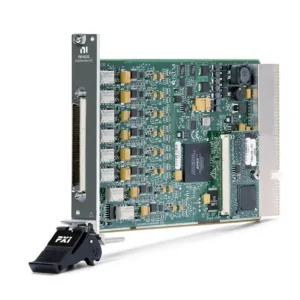
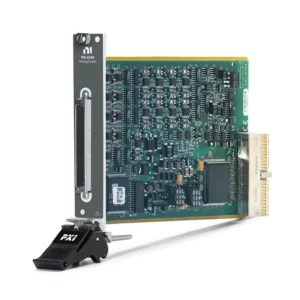
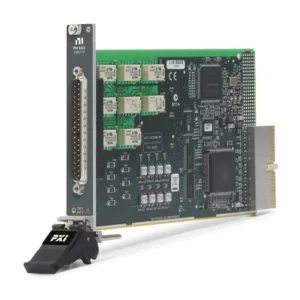
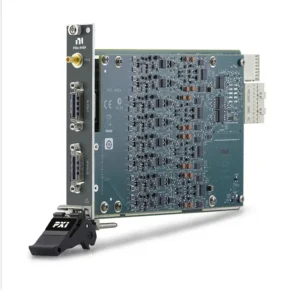
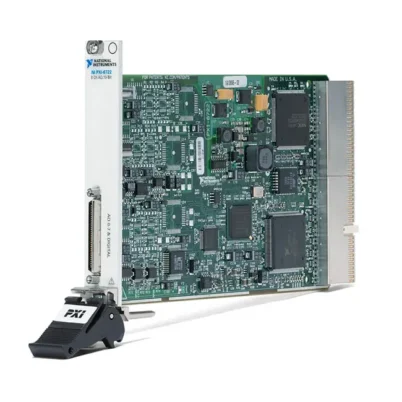
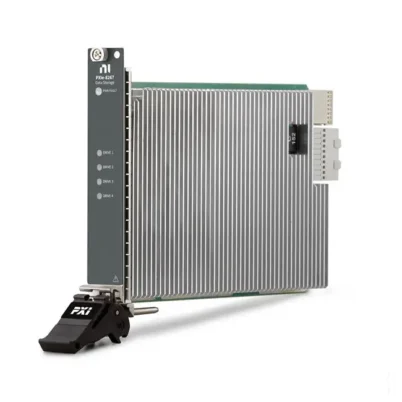
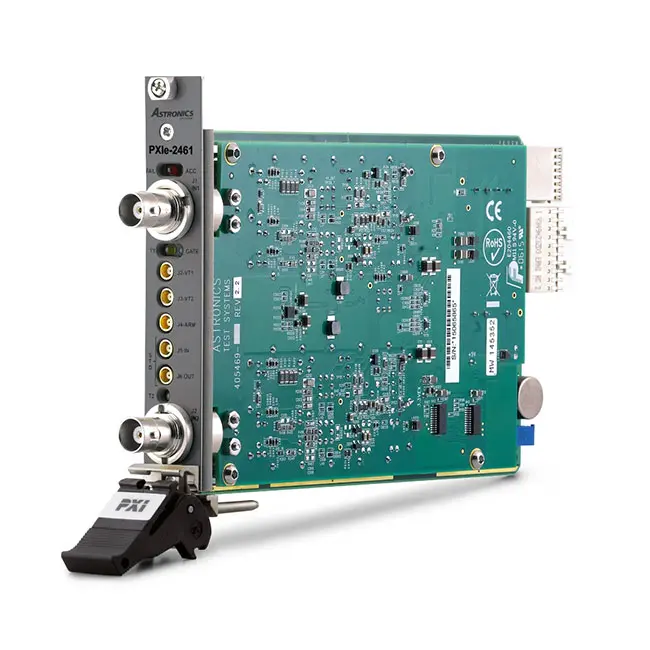
The NI PXIe-2461 is a PXI Express switch module designed for automated test, signal routing, electronic validation, manufacturing test, and modular measurement systems.
The PXIe-2461 provides a flexible switching architecture that allows multiple signals to be routed between devices under test (DUTs) and measurement instruments. By integrating switching directly into a PXI Express system, engineers can automate signal connections without manually reconnecting cables between individual test steps.
The module is particularly suitable for automated test systems that combine PXI instruments such as digital multimeters, data acquisition modules, oscilloscopes, source measurement units, power supplies, and other measurement hardware.
Product Overview
The National Instruments PXIe-2461 is designed to provide automated signal switching within PXI Express test systems.
In a typical automated test configuration, a single measurement instrument may need to measure multiple DUT signals. Instead of installing a separate instrument for every test point, a PXI switch can sequentially connect different signals to the same instrument.
This approach can reduce instrument count, simplify test-system wiring, improve repeatability, and enable fully automated test sequences.
Key Features
PXI Express Switching Architecture
The PXIe-2461 integrates signal switching into the modular PXI Express platform.
- PXI Express interface
- Automated signal routing
- Software-controlled switching
- Modular test-system integration
- Automated test sequencing
Advantage: Engineers can control signal routing directly from the same software environment used to control other PXI instruments.
Multiplexer Signal Routing
The PXIe-2461 can be used as part of a multiplexer-based measurement architecture where multiple DUT signals are sequentially connected to a common measurement instrument.
- Automated channel selection
- Multiple signal routing
- Instrument sharing
- DUT test-point selection
- Sequential measurements
Advantage: Multiplexing allows one measurement instrument to test multiple signal points, helping reduce overall system cost and instrument requirements.
2-Wire Switching
The PXIe-2461 provides a switching topology suitable for routing paired signal connections in automated measurement systems.
Two-wire switching is commonly used when both sides of a measurement signal need to be routed through the switching system rather than sharing a common return connection.
- Two-wire signal routing
- Paired signal switching
- Differential measurement routing
- Automated test-point selection
- Measurement instrument multiplexing
Automated Signal Routing
The PXIe-2461 eliminates the need to manually reconnect signals during repetitive test procedures.
- Software-controlled channel selection
- Repeatable switching sequences
- Automated DUT testing
- Reduced manual intervention
- Improved production-test efficiency
Advantage: Automated switching can significantly improve test throughput when the same measurements must be performed across multiple DUT connections.
Instrument Sharing
One of the primary benefits of incorporating the PXIe-2461 into a PXI system is the ability to share measurement instruments across multiple signals.
For example, a PXI digital multimeter can be connected through the switch to multiple DUT test points. Software can then select each channel sequentially and perform the required measurements.
- Digital multimeter multiplexing
- DAQ signal routing
- Source measurement routing
- Power measurement routing
- Automated test-point scanning
PXI System Integration
The PXIe-2461 can operate alongside other PXI and PXI Express instruments within a modular automated test system.
- PXI digital multimeters
- PXI data acquisition modules
- PXI oscilloscopes and digitizers
- PXI source measurement units
- PXI power supplies
- PXI digital instruments
Advantage: Switching and measurement instruments can be integrated into the same chassis to create compact and scalable automated test platforms.
Software-Controlled Switching
The PXIe-2461 can be controlled programmatically as part of an automated test sequence.
- Programmatic channel control
- Automated route configuration
- Repeatable test sequences
- Remote switching control
- Production-test automation
NI-SWITCH Software Support
The PXIe-2461 integrates with NI switch-control software for configuring channels and automated signal routes.
- NI-SWITCH driver support
- LabVIEW integration
- NI MAX configuration
- TestStand integration
- C/C++ application development
- .NET application development
Technical Specifications
| Parameter | Description |
|---|---|
| Product Type | PXI Express Multiplexer Switch Module |
| Model | NI PXIe-2461 |
| Bus Interface | PXI Express |
| Primary Function | Automated Signal Switching and Routing |
| Switch Configuration | Multiplexer |
| Signal Routing | 2-Wire |
| Software-Controlled Switching | Supported |
| Automated Channel Selection | Supported |
| PXI System Integration | Supported |
| Driver | NI-SWITCH |
| Primary Applications | Automated Test, Signal Routing, Manufacturing Test, Electronic Validation and Instrument Multiplexing |
What Is a PXI Multiplexer Switch?
A PXI multiplexer switch allows multiple input signals to be selectively connected to a smaller number of measurement instruments.
For example, an automated test system may need to measure voltage at many DUT test points using one digital multimeter. A multiplexer can sequentially connect each test point to the DMM under software control.
This architecture can significantly reduce the number of measurement instruments required while maintaining automated test capability.
How the PXIe-2461 Works
The PXIe-2461 acts as an automated routing layer between the DUT and the measurement instrumentation.
A typical test sequence can operate as follows:
- Select the required DUT signal channel.
- Close the corresponding switch route.
- Connect the DUT signal to the measurement instrument.
- Perform the measurement.
- Open the current route.
- Select the next DUT channel.
- Repeat the measurement sequence automatically.
This process can be controlled entirely through test software, eliminating repetitive manual cable changes.
Why Use Switching in an Automated Test System?
Switching hardware is an important component of many automated test systems because the number of DUT test points can be significantly larger than the number of available measurement instruments.
Instead of purchasing one measurement instrument for every test point, switching hardware allows instruments to be shared.
- Reduce measurement instrument count
- Lower overall test-system cost
- Automate repetitive measurements
- Improve test repeatability
- Reduce manual wiring changes
- Increase manufacturing throughput
2-Wire Switching Explained
In a two-wire switching architecture, two conductors associated with a signal are switched together.
This configuration is useful for differential measurements and other applications where both the high and low sides of the signal need to be routed between the DUT and measurement instrument.
Compared with single-wire switching, two-wire switching provides greater flexibility when signals cannot share a common return path.
PXIe-2461 with a Digital Multimeter
A common application for the PXIe-2461 is routing multiple DUT signals to a PXI digital multimeter.
The switch selects a DUT test point, connects it to the DMM, and allows the measurement to be performed. The system can then automatically advance to the next channel.
- DC voltage measurements
- Resistance measurements
- Continuity testing
- Component verification
- Automated test-point scanning
The actual measurement capability depends on the connected DMM, switch ratings, DUT configuration, and test-system wiring.
Automated Test Integration
The PXIe-2461 can be combined with multiple PXI instruments to build a complete automated test system.
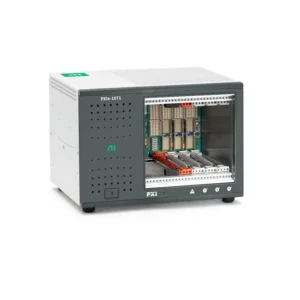
A typical configuration may include a PXI controller, PXI Express chassis, PXIe-2461 switching module, digital multimeter, DAQ module, source measurement unit, and other instruments.
Test software controls both the switch routing and measurement instruments, allowing complex test sequences to execute automatically.
Industries
- Electronic Manufacturing
- Automotive Electronics
- Aerospace and Defense
- Semiconductor Testing
- Industrial Electronics
- Research Laboratories
- Automated Test Equipment
- Product Development
- Manufacturing Validation
Applications
Automated Functional Testing
The PXIe-2461 can route multiple DUT signals to shared measurement instruments during automated functional testing.
- PCB functional testing
- Electronic module testing
- Automated pass/fail testing
- Production-line testing
- Test fixture integration
Manufacturing Test
Automated switching is particularly valuable in manufacturing environments where the same measurement sequence must be repeated across many products.
- Production testing
- End-of-line testing
- Quality-control testing
- High-volume electronic testing
- Automated inspection systems
Electronic Design Validation
The PXIe-2461 can automate signal routing during electronic design verification and characterization.
- Prototype validation
- PCB characterization
- Design verification
- Automated debugging
- Engineering test systems
Instrument Multiplexing
The module can allow one measurement instrument to access multiple DUT signals sequentially.
- DMM multiplexing
- DAQ routing
- Measurement channel expansion
- Automated signal selection
- Instrument sharing
Test Fixture Automation
The PXIe-2461 can form part of an automated test fixture where signal connections are changed programmatically according to each test step.
PXIe-2461 vs Manual Signal Routing
| Feature | PXIe-2461 Automated Switching | Manual Connections |
|---|---|---|
| Signal Selection | Software Controlled | Manual |
| Repeatability | High | Operator Dependent |
| Automated Testing | Supported | Limited |
| Instrument Sharing | Efficient | Requires Manual Reconnection |
| Production Throughput | Suitable for Automated Systems | Lower for Repetitive Testing |
| Best Application | Automated Test Systems | Simple Laboratory Measurements |
PXI Switching vs Data Acquisition
| Function | PXI Switch Module | PXI DAQ Module |
|---|---|---|
| Primary Purpose | Route Signals | Measure or Generate Signals |
| Signal Measurement | Requires External Instrument | Integrated Measurement Hardware |
| Channel Expansion | Primary Advantage | Limited to DAQ Channel Count |
| Instrument Sharing | Yes | Not Primary Function |
| Typical Application | Automated Signal Routing | Data Acquisition |
Recommended Related Products
| NI PXIe-2461 | PXI Express switching solution for automated signal routing and instrument multiplexing. |
| NI PXI-2522 | Related PXI multiplexer switch for automated signal routing and measurement channel expansion. |
| NI PXI-2570 | PXI multiplexer switch designed for automated test systems requiring configurable signal routing. |
Why Choose NI PXIe-2461?
- Designed for automated PXI signal switching
- PXI Express architecture
- Multiplexer signal routing
- 2-wire switching capability
- Software-controlled channel selection
- Automated test-point scanning
- Instrument sharing
- Reduced manual cable changes
- Improved test repeatability
- Suitable for production test automation
- Integrates with PXI measurement instruments
- NI-SWITCH software support
- LabVIEW integration
- TestStand integration
- Suitable for scalable automated test systems
Frequently Asked Questions
What is the NI PXIe-2461?
The NI PXIe-2461 is a PXI Express switch module designed for automated signal routing, multiplexing, electronic validation, manufacturing test, and modular automated test systems.
What is the primary function of the PXIe-2461?
The primary function of the PXIe-2461 is to automatically route electrical signals between a DUT and measurement or stimulus instruments under software control.
Is the PXIe-2461 a data acquisition module?
No. The PXIe-2461 is a switching module. It routes signals but does not replace a measurement instrument such as a DMM, digitizer, oscilloscope, or multifunction DAQ module.
What is a multiplexer switch?
A multiplexer allows multiple signals or DUT test points to share a smaller number of measurement instruments by selecting which signal is connected at a given time.
What does 2-wire switching mean?
Two-wire switching means that two conductors associated with a measurement signal can be routed together. This is useful for differential measurements and applications where both sides of the signal need to be switched.
Can the PXIe-2461 be used with a digital multimeter?
Yes. Multiplexing multiple DUT test points to a DMM is a common application for PXI switching hardware. The electrical ratings of the switch, DMM, DUT, cables, and terminal accessories must all be compatible with the intended measurement.
Can the PXIe-2461 automate production testing?
Yes. Software-controlled switching allows signal routes to be changed automatically as a test sequence progresses, making the module suitable for repetitive manufacturing and production test applications.
Can the PXIe-2461 reduce the number of instruments in a test system?
Yes. A multiplexer can allow multiple DUT signals to share one measurement instrument, potentially reducing the number of instruments required in a test system.
What software is used with the PXIe-2461?
The PXIe-2461 can be integrated into NI automated test environments using compatible switch-control software, LabVIEW, TestStand, NI MAX, and supported programming APIs.
Can the PXIe-2461 be synchronized with other PXI instruments?
The PXI Express platform allows switching operations to be coordinated with other measurement and stimulus instruments as part of an automated test sequence.
What applications are suitable for the PXIe-2461?
Typical applications include automated signal routing, electronic functional testing, PCB validation, production test, manufacturing test, instrument multiplexing, automated test-point scanning, and modular ATE systems.
What should I check before purchasing a PXIe-2461?
Before purchasing a PXIe-2461, verify the exact model and part number, switch topology, channel configuration, maximum voltage and current ratings, switching bandwidth, relay type, terminal block or cable requirements, PXI Express chassis compatibility, and software requirements.
Conclusion
The NI PXIe-2461 PXI Express Switch Module provides software-controlled signal routing for automated test and measurement systems. Its multiplexer architecture allows multiple DUT signals to share measurement instrumentation, helping reduce manual cable changes, improve test repeatability, increase production-test efficiency, and simplify modular PXI system design. The PXIe-2461 is particularly suitable for electronic validation, manufacturing test, automated functional testing, instrument multiplexing, and scalable PXI automated test systems.