



Product Introduction
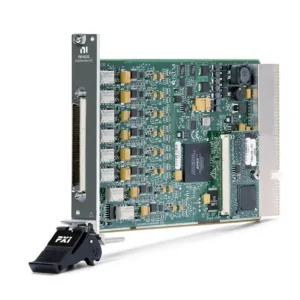
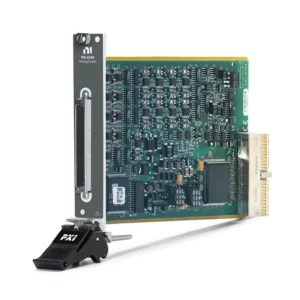
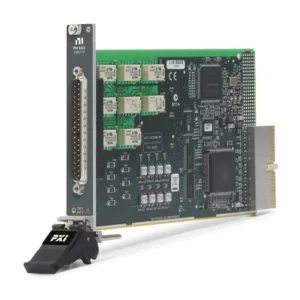
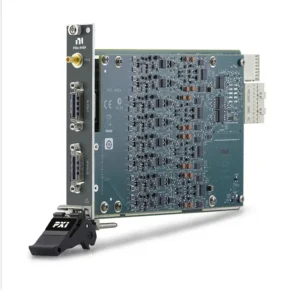
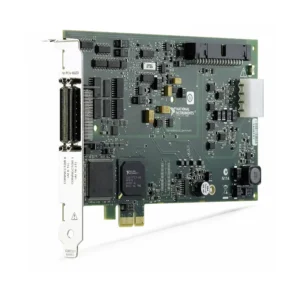
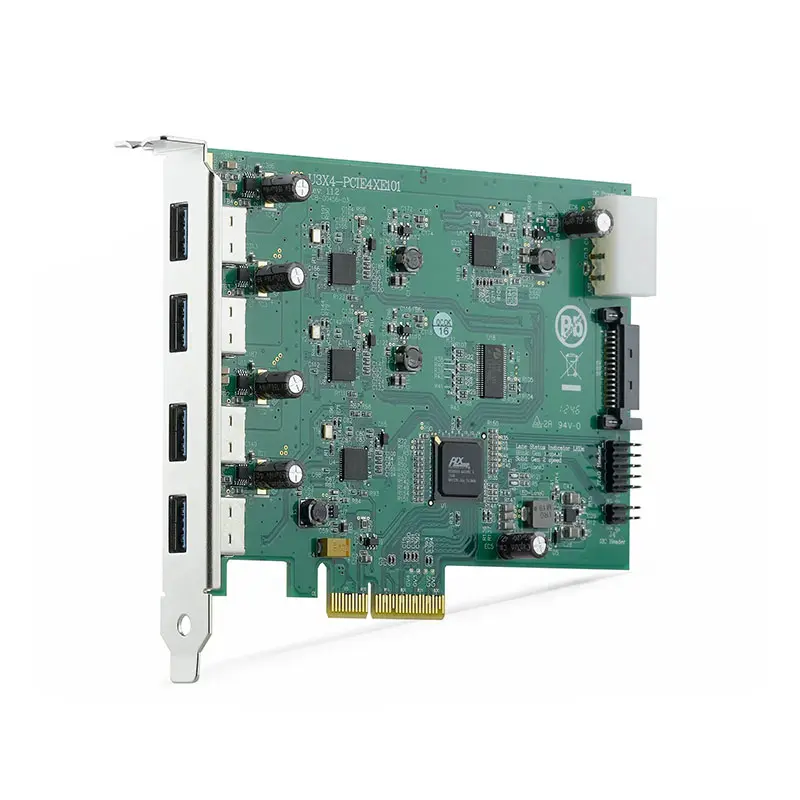
The NI PCIe-8244 is a 4-port USB3 Vision frame grabber device designed for high-speed machine vision and image acquisition applications. Installed directly in a compatible PCI Express host computer, the PCIe-8244 provides four USB 3.0 camera interfaces for connecting USB3 Vision cameras to automated inspection, measurement, and imaging systems.
USB3 Vision combines high data-transfer performance with standardized camera communication and plug-and-play functionality. The PCIe-8244 provides a dedicated PC-based interface for integrating multiple USB3 Vision cameras into industrial machine vision systems.
Typical applications include automated optical inspection, electronics manufacturing, semiconductor inspection, machine vision, production-line inspection, robotics, scientific imaging, quality control, and high-speed image acquisition.
Product Overview
The National Instruments PCIe-8244 is part of the NI machine vision and frame grabber product family. It provides four USB 3.0 ports specifically intended for USB3 Vision camera connectivity.
A typical PCIe-8244 system architecture is:
USB3 Vision Cameras → PCIe-8244 → PCI Express → Host Computer → Vision Acquisition and Analysis Software
With four camera ports on a single PCI Express device, the PCIe-8244 is particularly useful for multi-camera inspection systems where several views of a product or process must be acquired and analyzed by one industrial computer.
Key Features
4-Port USB3 Vision Interface
The PCIe-8244 provides four camera input ports for compatible USB3 Vision cameras.
Multiple camera ports make the device suitable for inspection systems requiring several imaging perspectives or simultaneous monitoring of multiple production processes.
USB3 Vision Camera Support
The PCIe-8244 is designed specifically for cameras compliant with the USB3 Vision standard.
USB3 Vision provides standardized camera discovery, configuration, image acquisition, and control functions, simplifying integration of compatible industrial cameras into machine vision systems.
High-Speed USB 3.0 Image Acquisition
USB 3.0 provides the bandwidth required for high-resolution and high-frame-rate machine vision cameras.
The PCIe-8244 is designed for applications where large volumes of image data must be transferred from cameras to the host computer for processing and analysis.
PCI Express Host Interface
The PCIe-8244 installs directly into a compatible PCI Express slot in a desktop, workstation, rackmount, or industrial computer.
NI documentation specifies a host computer with an available x4 or larger PCI Express slot for the PCIe-8244.
Multi-Camera Machine Vision
The four-port architecture makes the PCIe-8244 suitable for multi-camera machine vision applications.
A typical inspection architecture can be:
Camera 1 → Top Inspection
Camera 2 → Side Inspection
Camera 3 → Bottom Inspection
Camera 4 → Identification / Verification
The host computer can acquire and process images from the cameras according to the requirements of the vision application.
Plug-and-Play Camera Connectivity
USB3 Vision cameras provide standardized device discovery and configuration, helping simplify camera integration compared with proprietary camera interfaces.
This makes the PCIe-8244 useful for building flexible PC-based machine vision platforms.
Camera Bus Power
The PCIe-8244 supports bus-powered USB3 Vision camera connections, allowing compatible cameras to receive power through the USB interface.
Camera power requirements should always be checked against the PCIe-8244 specifications before designing a multi-camera system.
No User-Programmable FPGA
The PCIe-8244 does not include a user-programmable FPGA.
Image acquisition and processing are therefore primarily handled through the host computer and compatible NI vision software rather than custom FPGA processing on the PCIe-8244 itself.
Technical Specifications
| Parameter | Specification |
|---|---|
| Product Type | USB3 Vision Frame Grabber Device |
| Model | PCIe-8244 |
| Part Number | 782890-01 |
| Manufacturer | National Instruments |
| Camera Interface | USB3 Vision |
| Number of Camera Ports | 4 |
| USB Interface | USB 3.0 / SuperSpeed |
| Host Interface | PCI Express |
| Required PCIe Slot | x4 or Larger Compatible PCIe Slot |
| Bus Power | Yes |
| User-Programmable FPGA | No |
| TTL Inputs | 0 |
| Quadrature Encoder Inputs | 0 |
| Isolated Digital Inputs | 0 |
| Primary Function | USB3 Vision Camera Image Acquisition |
| Primary Applications | Machine Vision, Automated Inspection and Imaging |
| Product Status | Active |
How Does the PCIe-8244 Work?
The PCIe-8244 provides the hardware communication interface between USB3 Vision cameras and a PCI Express-based host computer.
A simplified signal path is:
USB3 Vision Camera → USB 3.0 → PCIe-8244 → PCI Express → Host Memory → Vision Software
Images captured by the camera are transferred through the PCIe-8244 to the host computer, where compatible vision software can display, process, analyze, inspect, and store the image data.
What Is USB3 Vision?
USB3 Vision is a machine vision camera interface standard based on USB 3.0 technology.
It combines the high data-transfer capability of USB 3.0 with standardized camera control and image acquisition functionality.
Key advantages can include:
- High-speed image transfer
- Standardized camera communication
- Plug-and-play operation
- Broad industrial camera availability
- Compact cabling
- Bus-powered camera capability
- Easy PC-based system integration
Four-Camera Image Acquisition
One of the most important features of the PCIe-8244 is its ability to connect up to four compatible USB3 Vision cameras.
This allows engineers to build systems that inspect a device or product from several directions.
For example:
Camera 1 → Front View
Camera 2 → Rear View
Camera 3 → Left / Right View
Camera 4 → Detail Inspection
Multi-camera architectures are widely used in automated optical inspection and manufacturing quality-control systems.
Automated Optical Inspection
The PCIe-8244 can be used in automated optical inspection (AOI) systems for manufacturing quality control.
Typical inspection tasks can include:
- Surface defect detection
- Component presence inspection
- Component orientation verification
- Assembly inspection
- Dimension measurement
- Label verification
- Barcode reading
- OCR and character inspection
- Connector inspection
Electronics Manufacturing
Machine vision is widely used in electronics manufacturing for automated inspection of components, assemblies, connectors, printed circuit boards, and finished products.
The four-camera architecture of the PCIe-8244 allows a single host computer to acquire images from multiple inspection positions.
Semiconductor Inspection
Semiconductor manufacturing and validation systems often require high-resolution imaging for inspecting devices, packages, wafers, connectors, and assemblies.
The PCIe-8244 can provide USB3 Vision camera connectivity for PC-based semiconductor inspection and measurement systems.
Production-Line Inspection
The PCIe-8244 can be incorporated into automated manufacturing lines where cameras inspect products as they move through production.
Typical applications include:
- Product presence detection
- Defect inspection
- Assembly verification
- Dimension inspection
- Identification and traceability
- Packaging inspection
- Quality-control verification
Robotics and Machine Vision
USB3 Vision cameras can provide visual information to robotic and automated systems.
The PCIe-8244 can acquire camera images for applications involving:
- Robot guidance
- Object detection
- Object positioning
- Pick-and-place systems
- Assembly verification
- Machine alignment
Scientific Imaging
The PCIe-8244 can also be used in scientific and laboratory imaging systems that employ compatible USB3 Vision cameras.
Applications can include experimental monitoring, object tracking, image-based measurement, laboratory automation, and research imaging.
High-Resolution Camera Applications
Higher-resolution cameras generate larger image files and require increased data-transfer bandwidth.
The USB 3.0 architecture of the PCIe-8244 makes it suitable for compatible high-resolution machine vision cameras where reliable image transfer to the host computer is required.
High-Frame-Rate Imaging
High-frame-rate cameras can generate significant continuous data streams.
The PCIe-8244 provides dedicated USB3 Vision connectivity for systems requiring rapid image acquisition.
Actual achievable camera performance depends on:
- Camera resolution
- Frame rate
- Pixel format
- Camera data rate
- Number of active cameras
- PCI Express system bandwidth
- Host computer performance
- Memory bandwidth
- Image-processing workload
PCIe-8244 vs PCIe-8242
The PCIe-8244 and PCIe-8242 are both NI USB3 Vision frame grabber devices. The primary difference is the number of available camera ports.
| Feature | PCIe-8244 | PCIe-8242 |
|---|---|---|
| Camera Interface | USB3 Vision | USB3 Vision |
| Camera Ports | 4 | 2 |
| Host Interface | PCI Express | PCI Express |
| Bus Power | Yes | Yes |
| User-Programmable FPGA | No | No |
| Best Application | Multi-Camera Systems | Two-Camera Systems |
For systems requiring up to four USB3 Vision cameras, the PCIe-8244 provides the higher camera-port count.
PCIe-8244 vs GigE Vision Frame Grabber
| Feature | PCIe-8244 | GigE Vision Interface |
|---|---|---|
| Camera Standard | USB3 Vision | GigE Vision |
| Connection | USB 3.0 | Gigabit Ethernet |
| Camera Ports | 4 | Device Dependent |
| Bus Power | Yes | PoE on Supported Hardware |
| Typical Strength | High-Speed Local Camera Connectivity | Longer Camera Cable Distances |
The appropriate interface should be selected according to camera type, cable distance, bandwidth, power requirements, and overall machine vision architecture.
PCIe-8244 vs Camera Link
USB3 Vision and Camera Link are different industrial camera interface standards.
| Feature | PCIe-8244 USB3 Vision | Camera Link Frame Grabber |
|---|---|---|
| Camera Interface | USB3 Vision | Camera Link |
| Connection Type | USB 3.0 | Camera Link Cable |
| Plug-and-Play | Strong Advantage | Configuration Dependent |
| Camera Power | USB Bus Power Supported | PoCL on Supported Hardware |
| Best Choice | USB3 Vision Cameras | Camera Link Cameras |
PCI Express Slot Requirements
NI documentation specifies that the PCIe-8244 requires a computer with an available x4 or larger PCI Express slot.
Compatible slot sizes can therefore include appropriately configured:
- PCIe x4
- PCIe x8
- PCIe x16
The host computer should also satisfy the operating system, driver, power, and system requirements for the PCIe-8244.
USB Cable Requirements
NI documentation recommends using SuperSpeed-certified USB 3.0 cables or cables supplied by NI with the PCIe-8244.
NI specifies that connected USB cable lengths should not exceed 3 m (10 ft) to maintain the specified EMC performance.
When selecting cables, verify:
- USB 3.0 SuperSpeed certification
- Camera connector type
- Cable length
- Industrial locking requirements
- Camera power requirements
- Application environment
Vision Acquisition Software
NI currently includes Vision Acquisition Software (VAS) with the PCIe-8244.
Vision Acquisition Software provides drivers and tools for acquiring images from supported machine vision cameras.
The PCIe-8244 uses the NI-IMAQdx architecture for compatible camera acquisition.
NI-IMAQdx
NI-IMAQdx provides driver-level support for acquiring images from compatible USB3 Vision cameras.
Typical functions include:
- Camera discovery
- Camera configuration
- Image acquisition
- Camera attribute control
- Buffer management
- Continuous acquisition
- Image transfer to host applications
Vision Development Module
The NI Vision Development Module can be used with PCIe-8244 image acquisition systems when advanced image analysis and machine vision algorithms are required.
Typical vision-processing functions can include:
- Pattern matching
- Edge detection
- Object detection
- Particle analysis
- Dimension measurement
- OCR
- Barcode reading
- Image filtering
- Defect inspection
LabVIEW Machine Vision Applications
The PCIe-8244 can be integrated into LabVIEW-based machine vision systems using compatible NI vision software.
A typical application workflow is:
Configure Camera → Acquire Image → Process Image → Measure / Inspect → Pass or Fail → Save Results
Vision Builder for Automated Inspection
The PCIe-8244 can also be used in compatible machine vision systems developed with NI vision software for automated inspection applications.
This type of architecture can simplify development of inspection sequences without requiring every vision function to be programmed from the beginning.
Multi-Camera System Design
When connecting multiple cameras to the PCIe-8244, system designers should calculate the total required image bandwidth.
Important parameters include:
- Number of cameras
- Camera resolution
- Frames per second
- Pixel depth
- Image format
- Continuous or triggered acquisition
- Host memory bandwidth
- PCI Express bandwidth
- Image-processing requirements
A four-port interface does not automatically guarantee that four cameras can simultaneously operate at their maximum possible resolution and frame rate. Total system bandwidth should be evaluated for the specific camera configuration.
Camera Power Considerations
USB3 Vision cameras may receive power through the USB connection. However, total power requirements can increase significantly when multiple cameras are connected.
Before building a four-camera system, verify the power requirements of each camera and the power capabilities of the PCIe-8244 and host computer.
PCIe-8244 System Architecture
A complete machine vision system can include:
USB3 Vision Cameras
↓
SuperSpeed USB 3.0 Cables
↓
NI PCIe-8244
↓
PCI Express Host Computer
↓
NI Vision Acquisition Software
↓
Vision Analysis / Inspection Application
How to Choose a Machine Vision Frame Grabber
Before selecting the PCIe-8244, evaluate:
- Camera interface standard
- USB3 Vision compatibility
- Number of cameras
- Camera resolution
- Required frame rate
- Total camera bandwidth
- USB cable length
- Camera power requirements
- Host PCI Express slot availability
- Computer processing performance
- Image-processing requirements
- Operating system compatibility
- NI-IMAQdx compatibility
- Vision software requirements
Industries
- Machine Vision
- Electronics Manufacturing
- Semiconductor Manufacturing
- Automotive Manufacturing
- Industrial Automation
- Robotics
- Automated Optical Inspection
- Scientific Research
- Production Quality Control
- Automated Test
Applications
Automated Optical Inspection
The PCIe-8244 can acquire images from multiple USB3 Vision cameras for automated defect detection and product quality inspection.
Multi-Camera Inspection
Four camera ports allow multiple views of a product, component, or manufacturing process to be acquired using a single PCI Express interface device.
Electronics Inspection
The PCIe-8244 can be used for PCB, connector, component, assembly, and finished-product inspection.
Semiconductor Inspection
High-speed USB3 Vision cameras can be integrated into semiconductor inspection and electronic device validation systems.
Robot Guidance
Camera images acquired through the PCIe-8244 can be analyzed for object positioning, identification, alignment, and robotic guidance applications.
Scientific Imaging
The PCIe-8244 provides multi-camera connectivity for compatible scientific and laboratory imaging systems.
Recommended Related Products
| PCIe-8244 | 4-port USB3 Vision frame grabber for multi-camera machine vision and high-speed image acquisition. |
| PCIe-8242 | 2-port USB3 Vision frame grabber for systems requiring fewer camera connections. |
| PCIe-8239 | GigE Vision frame grabber for machine vision applications requiring Ethernet-based camera connectivity. |
| PCIe-1433 | Camera Link image acquisition device for compatible high-performance Camera Link cameras. |
| NI Vision Acquisition Software | Camera acquisition software and drivers for supported NI machine vision hardware. |
| NI Vision Development Module | Vision-processing software for developing customized machine vision and automated inspection applications. |
Why Choose PCIe-8244?
- 4 USB3 Vision camera ports
- USB 3.0 SuperSpeed connectivity
- PCI Express host interface
- Support for multi-camera machine vision
- USB bus power support
- Standardized USB3 Vision camera interface
- Plug-and-play camera connectivity
- Suitable for high-resolution imaging
- Suitable for high-frame-rate acquisition
- NI Vision Acquisition Software included
- NI-IMAQdx support
- LabVIEW integration
- Suitable for automated optical inspection
- Suitable for semiconductor inspection
- Suitable for industrial machine vision
Frequently Asked Questions
What is the NI PCIe-8244?
The NI PCIe-8244 is a four-port USB3 Vision frame grabber device designed for connecting USB3 Vision cameras to PCI Express-based machine vision and image acquisition systems.
What is the part number of the PCIe-8244?
The NI ordering part number for the PCIe-8244 is 782890-01.
How many cameras can the PCIe-8244 connect?
The PCIe-8244 provides four USB3 Vision camera input ports.
What camera interface does the PCIe-8244 support?
The PCIe-8244 is designed for cameras using the USB3 Vision interface standard.
Is PCIe-8244 a USB 3.0 interface?
Yes. The PCIe-8244 provides USB 3.0 connectivity for compatible USB3 Vision cameras.
What PCI Express slot does the PCIe-8244 require?
NI installation documentation specifies a computer with an available PCIe x4 or larger slot.
Does PCIe-8244 provide power to cameras?
Yes. The PCIe-8244 supports USB bus power for compatible cameras. The power requirements of the complete multi-camera system should be verified before installation.
Does PCIe-8244 have an FPGA?
No. NI identifies the PCIe-8244 as a non-reconfigurable device, meaning it does not provide a user-programmable FPGA.
What is the difference between PCIe-8244 and PCIe-8242?
Both devices support USB3 Vision cameras. The primary difference is camera-port count: the PCIe-8244 provides four ports, while the PCIe-8242 provides two.
Can PCIe-8244 be used with GigE Vision cameras?
No. The PCIe-8244 is specifically designed for USB3 Vision cameras. A compatible GigE Vision interface should be selected for GigE Vision cameras.
Can PCIe-8244 be used with Camera Link cameras?
No. Camera Link uses a different physical and communication interface. A compatible NI Camera Link frame grabber is required for Camera Link cameras.
What software is included with PCIe-8244?
NI currently lists NI Vision Acquisition Software (VAS) with a perpetual license as an included item with the PCIe-8244.
Does PCIe-8244 work with NI-IMAQdx?
Yes. NI documentation specifies NI-IMAQdx support for PCIe-8244 USB3 Vision image acquisition.
Can PCIe-8244 be used with LabVIEW?
Yes. The PCIe-8244 can be integrated into LabVIEW machine vision applications using compatible NI Vision software.
What is the maximum USB cable length for PCIe-8244?
NI installation documentation specifies that connected USB cables should not exceed 3 m (10 ft) to maintain the specified EMC performance. SuperSpeed-certified USB 3.0 cables or NI-supplied cables are recommended.
Can four cameras operate simultaneously on PCIe-8244?
The PCIe-8244 provides four camera input ports. Actual simultaneous acquisition performance depends on each camera’s resolution, frame rate, pixel format, data rate, available system bandwidth, and host computer performance.
Is the PCIe-8244 discontinued?
No. NI currently lists 782890-01 PCIe-8244 as an Active product.
What should I check before purchasing a PCIe-8244?
Before purchasing the PCIe-8244, verify that the cameras support USB3 Vision, the number of cameras required, camera resolution and frame rate, aggregate image bandwidth, USB 3.0 cable requirements, camera power requirements, available PCIe x4 or larger slot, operating system compatibility, NI Vision Acquisition Software requirements, and image-processing software environment.
Conclusion
The NI PCIe-8244 USB3 Vision Frame Grabber provides four USB 3.0 camera ports for high-performance PC-based machine vision and image acquisition systems. With USB3 Vision support, PCI Express connectivity, multi-camera acquisition capability, USB bus power, and integration with NI Vision Acquisition Software, the PCIe-8244 is well suited for automated optical inspection, electronics manufacturing, semiconductor inspection, robotics, scientific imaging, production quality control, and other industrial machine vision applications.