




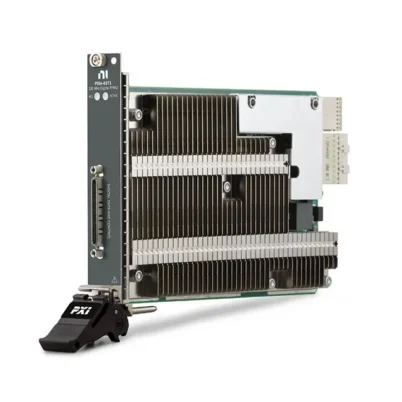

Product Introduction
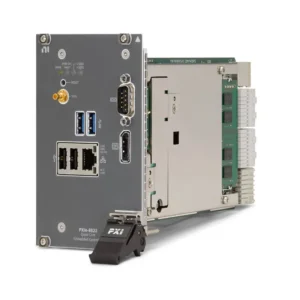
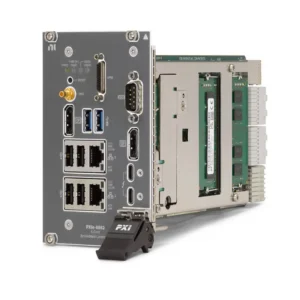
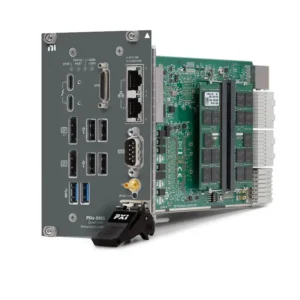
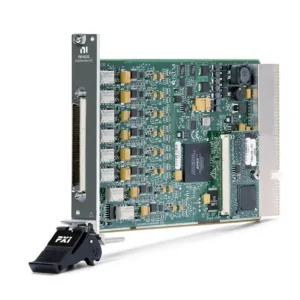
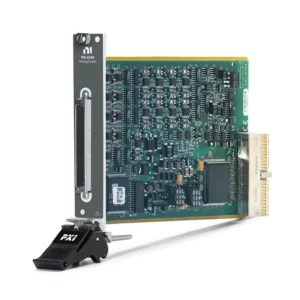
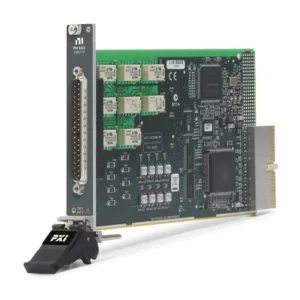
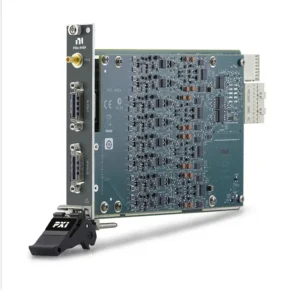
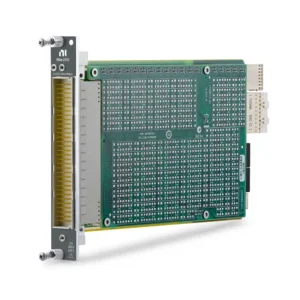
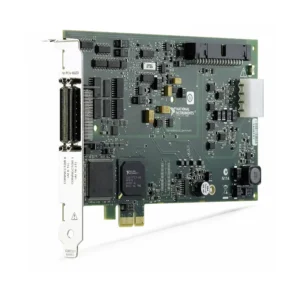
The NI PXIe-6943 is a high-performance PXI FlexRIO coprocessor module designed for applications requiring user-programmable FPGA processing, high-throughput data movement, deterministic execution, and custom real-time test functionality.
The PXIe-6943 combines the modular architecture of PXI Express with a powerful Xilinx FPGA, allowing engineers to implement application-specific signal processing, data manipulation, triggering, control, and measurement algorithms directly in programmable hardware.
Unlike conventional fixed-function PXI instruments, the PXIe-6943 provides an FPGA-based processing architecture that can be customized for specialized automated test, research, communications, aerospace, defense, semiconductor, and high-performance measurement applications.
Product Overview
The National Instruments PXIe-6943 belongs to the NI FlexRIO family of FPGA-based PXI hardware.
It is designed primarily as a FlexRIO coprocessor module, providing FPGA processing resources that can be integrated with other PXI instruments and high-throughput data sources.
Typical applications include:
- Real-time signal processing
- High-throughput data processing
- Custom FPGA algorithms
- Data streaming
- Low-latency control
- Hardware triggering
- Custom protocol processing
- Automated test systems
The programmable architecture gives engineers significantly more control over system behavior than conventional instruments with fixed onboard processing.
Key Features
User-Programmable FPGA
The key feature of the PXIe-6943 is its user-programmable FPGA.
FPGA processing allows algorithms to execute directly in hardware rather than relying entirely on a host CPU.
This architecture is useful for:
- Deterministic processing
- Parallel computation
- Low-latency signal processing
- Custom triggering
- High-speed data manipulation
- Real-time decision making
- Custom measurement functions
Xilinx Kintex UltraScale FPGA Architecture
The PXIe-6943 uses a high-performance Xilinx Kintex UltraScale FPGA architecture designed to provide substantial programmable logic and DSP processing resources.
These FPGA resources allow engineers to develop custom hardware-level functionality for demanding test and measurement applications.
Typical FPGA implementations may include:
- Digital filters
- FFT processing
- Custom waveform processing
- Pattern detection
- Trigger algorithms
- Data reduction
- Protocol processing
- Closed-loop control algorithms
High-Performance PXI Express Interface
The PXIe-6943 uses the PXI Express platform to provide high-bandwidth communication between the FPGA module and the host system.
High-throughput PXI Express connectivity is important for applications that require large quantities of measurement data to move between FPGA processing resources, system memory, storage devices, and other instruments.
FPGA-Based Parallel Processing
Unlike a conventional processor that generally executes software instructions sequentially, an FPGA can implement multiple processing operations in parallel.
This parallel architecture can be particularly valuable for:
- Multi-channel processing
- Real-time filtering
- High-speed data analysis
- Parallel trigger detection
- Protocol decoding
- Real-time measurement calculations
Deterministic Processing
FPGA-based algorithms can provide deterministic execution behavior with precisely controlled timing.
This makes the PXIe-6943 suitable for applications where processing latency and response timing must remain predictable.
Typical deterministic applications include:
- Hardware-in-the-loop testing
- Closed-loop control
- Hardware triggering
- Real-time signal analysis
- Automated fault detection
- Timing-critical measurement systems
Low-Latency Processing
Because data can be processed directly in FPGA hardware, the PXIe-6943 can reduce the need to transfer every intermediate data point to a host processor before making decisions.
This architecture can reduce system latency in applications requiring rapid responses to measurement events.
High-Throughput Data Streaming
The PXIe-6943 is suitable for systems that require continuous high-throughput data movement and processing.
Typical applications include:
- High-speed acquisition systems
- RF data processing
- Digital waveform processing
- Continuous data streaming
- Data logging systems
- Real-time data reduction
Real-Time Data Reduction
High-speed measurement systems can generate extremely large quantities of raw data.
The PXIe-6943 FPGA can perform processing before data is transferred to the host system.
For example, FPGA logic can perform:
- Filtering
- Decimation
- Threshold detection
- Peak detection
- FFT calculations
- Event detection
- Data compression or reduction
This can significantly reduce the amount of data that must be transferred, processed, or stored by the host computer.
Custom Triggering
The user-programmable FPGA allows engineers to create custom triggering logic based on application-specific conditions.
Trigger conditions can potentially be based on:
- Signal amplitude
- Digital patterns
- Timing relationships
- Calculated parameters
- Multiple simultaneous conditions
- External system events
PXI Timing and Synchronization
The PXIe-6943 can operate within the PXI timing and synchronization architecture, making it suitable for systems containing multiple synchronized measurement and stimulus modules.
Synchronization is particularly important in:
- Multi-instrument test systems
- High-channel-count acquisition
- RF testing
- Semiconductor testing
- Hardware-in-the-loop systems
- Automated validation platforms
Technical Specifications
| Parameter | Description |
|---|---|
| Product Type | PXI FlexRIO Coprocessor Module |
| Model | NI PXIe-6943 |
| Platform | PXI Express / FlexRIO |
| Processing Architecture | User-Programmable FPGA |
| FPGA Family | Xilinx Kintex UltraScale |
| Real-Time FPGA Processing | Supported |
| Parallel Processing | Supported |
| Deterministic Processing | Supported |
| Custom FPGA Algorithms | Supported |
| High-Throughput Data Streaming | Supported |
| Custom Triggering | Supported |
| PXI Timing and Synchronization | Supported |
| Software Environment | NI FlexRIO / LabVIEW FPGA |
| Primary Applications | Real-Time Processing, Data Streaming, Custom Instrumentation and Automated Test |
What Is a FlexRIO Coprocessor Module?
A FlexRIO coprocessor module provides programmable FPGA processing resources within a PXI system.
Instead of functioning primarily as a conventional measurement instrument with a predefined input or output function, a coprocessor can perform customized processing on data generated by other parts of the test system.
This makes the architecture useful when standard CPU-based processing cannot provide the required:
- Latency
- Determinism
- Parallel processing
- Data throughput
- Custom hardware behavior
What Is FPGA Processing?
An FPGA, or Field-Programmable Gate Array, is a programmable semiconductor device that allows engineers to implement custom digital hardware logic.
In a test and measurement system, FPGA processing can execute operations directly in hardware with high parallelism and deterministic timing.
This differs from conventional software running on a CPU, where instructions typically pass through a general-purpose operating environment.
FPGA vs CPU Processing
| Feature | FPGA Processing | CPU Processing |
|---|---|---|
| Architecture | Highly Parallel | General-Purpose Processor |
| Determinism | Very High | Operating-System Dependent |
| Latency | Very Low for Hardware Algorithms | Application Dependent |
| Custom Hardware Logic | Supported | Not Applicable |
| Algorithm Flexibility | Programmable | Programmable |
| Parallel Processing | Excellent | Processor Dependent |
| Development Complexity | Higher | Generally Lower |
| Best Application | Timing-Critical Processing | General Application Processing |
Real-Time Signal Processing
The PXIe-6943 can be used to implement real-time processing pipelines where measurement data is analyzed immediately as it moves through the system.
A typical architecture can be represented as:
Measurement Hardware → PXI Data Path → PXIe-6943 FPGA → Real-Time Processing → Host / Storage / Decision
Processing data before it reaches the host can improve response time and reduce CPU workload.
Digital Signal Processing
FPGA resources can be used to implement digital signal processing algorithms for high-speed measurement applications.
Typical DSP functions may include:
- FIR filtering
- IIR filtering
- FFT processing
- Frequency analysis
- Decimation
- Interpolation
- Digital mixing
- Signal detection
High-Speed Data Acquisition Processing
High-speed digitizers and other acquisition instruments can generate data rates that place substantial processing demands on a host CPU.
The PXIe-6943 can provide FPGA-based processing within a high-throughput PXI measurement system.
For example:
High-Speed Digitizer → PXIe-6943 → FPGA Processing → Reduced Data → Host Storage
Only processed or relevant measurement data may need to be transferred to the final storage or analysis system.
RF and Wireless Test
FPGA coprocessing can be useful in RF and wireless test systems that require high-throughput baseband or digital signal processing.
Potential applications include:
- Digital filtering
- FFT processing
- Signal detection
- Real-time spectral processing
- Custom modulation processing
- High-speed trigger generation
Semiconductor Testing
Semiconductor test systems often require deterministic timing, high data throughput, and specialized measurement algorithms.
The PXIe-6943 can provide custom FPGA processing within modular PXI semiconductor test platforms.
Potential applications include:
- Device validation
- High-speed characterization
- Production testing
- Custom pattern processing
- Real-time pass/fail decisions
- Automated measurement analysis
Hardware-in-the-Loop Testing
The deterministic behavior of FPGA hardware makes the PXIe-6943 suitable for hardware-in-the-loop applications.
HIL systems frequently require rapid processing between acquired inputs and generated outputs.
FPGA-based processing can help implement:
- High-speed control loops
- Sensor simulation
- Custom communication logic
- Fault detection
- Real-time response algorithms
- Hardware triggering
Aerospace and Defense Testing
Aerospace and defense systems frequently require specialized processing, deterministic timing, synchronized measurements, and high-throughput data handling.
The programmable architecture of the PXIe-6943 makes it suitable for custom test platforms where standard fixed-function instruments cannot provide all required processing functionality.
Custom Instrumentation
One of the most important advantages of FlexRIO is the ability to create application-specific instrumentation.
Instead of relying exclusively on predefined instrument functions, engineers can implement custom FPGA logic to perform specialized measurement and processing tasks.
This capability is particularly valuable for:
- Research applications
- Prototype test systems
- Specialized measurement algorithms
- Custom communication protocols
- Experimental instrumentation
- High-performance automated test
Data Reduction Applications
High-speed test systems can generate far more raw data than is practical to continuously store.
The PXIe-6943 can perform FPGA-based data reduction before information is transferred to storage.
For example, instead of storing every sample, FPGA logic can identify:
- Events exceeding a threshold
- Signal peaks
- Frequency-domain features
- Pattern matches
- Statistical measurements
- Fault conditions
Only relevant information can then be transferred for further analysis.
Custom Trigger and Event Detection
Traditional instruments often provide a predefined set of trigger functions.
A programmable FPGA provides greater flexibility by allowing application-specific trigger logic to be implemented directly in hardware.
This can be useful when an application needs to identify complex events that cannot be detected using standard edge, level, or window triggering.
PXIe-6943 in a Complete PXI System
The PXIe-6943 can operate as a processing component within a larger PXI automated test platform.
A complete system may include:
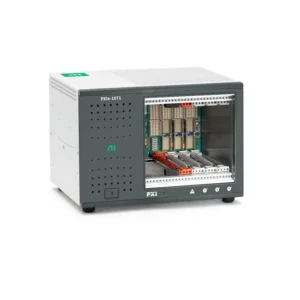
- PXI Express chassis
- PXI embedded or remote controller
- PXIe-6943 FlexRIO coprocessor
- High-speed digitizers
- RF signal analyzers
- RF signal generators
- Digital I/O modules
- Programmable power supplies
- PXI switching modules
- High-speed storage
This architecture allows measurement, generation, processing, triggering, synchronization, and data storage to be integrated into one modular platform.
PXIe-6943 vs Standard PXI Instrument
| Feature | PXIe-6943 | Standard PXI Instrument |
|---|---|---|
| Primary Function | FPGA Coprocessing | Specific Measurement or Generation |
| User-Programmable FPGA | Yes | Usually No |
| Custom Algorithms | Yes | Limited |
| Parallel Processing | FPGA Based | Instrument Dependent |
| Deterministic Processing | Supported | Instrument Dependent |
| Custom Trigger Logic | Highly Flexible | Predefined Functions |
| Application | Custom Processing | Defined Instrument Function |
LabVIEW FPGA Integration
The PXIe-6943 is designed for FPGA application development using the NI FlexRIO software environment and LabVIEW FPGA.
LabVIEW FPGA allows engineers to create FPGA applications using graphical programming tools.
Engineers can implement functions including:
- Custom DSP algorithms
- Trigger logic
- Real-time control
- Data routing
- Signal analysis
- Protocol processing
- Hardware synchronization
Software Considerations
Before deploying a PXIe-6943 system, engineers should verify compatibility between the module, PXI chassis, controller, NI FlexRIO driver, LabVIEW FPGA environment, FPGA compilation tools, and other PXI instruments.
Software compatibility is particularly important when integrating FlexRIO hardware into an existing or legacy PXI system.
Industries
- Aerospace and Defense
- Wireless Communications
- Semiconductor Test
- Automotive Electronics
- Industrial Research
- Electronic Validation
- Scientific Research
- Automated Test Equipment
- High-Performance Measurement
Applications
Real-Time Signal Processing
The PXIe-6943 can implement FPGA-based processing algorithms that operate deterministically on high-throughput measurement data.
High-Speed Data Processing
FPGA resources can process large data streams before information is transferred to the host processor or storage system.
Custom FPGA Algorithms
Engineers can implement application-specific signal processing, triggering, data manipulation, and control algorithms.
Data Streaming
The PXI Express architecture supports integration into systems requiring high-throughput data movement between measurement, processing, and storage hardware.
Hardware-in-the-Loop Testing
Deterministic FPGA processing can support low-latency control, event detection, and custom processing within HIL systems.
Automated Test Systems
The PXIe-6943 can provide custom processing functionality within automated validation and production test platforms.
Recommended Related Products
| NI PXIe-6943 | PXI FlexRIO coprocessor module for FPGA-based real-time processing, high-throughput data processing, and custom test applications. |
| NI PXIe-8267 | High-speed PXI Express storage solution for systems requiring continuous high-throughput measurement data recording. |
| NI PXIe-5668 | PXI RF signal analyzer suitable for high-performance RF measurement systems requiring advanced signal acquisition and analysis. |
| NI PXIe-6381 | Multifunction I/O module for analog acquisition, analog generation, digital I/O, and counter/timer applications. |
Why Choose NI PXIe-6943?
- PXI FlexRIO coprocessor architecture
- User-programmable FPGA
- Xilinx Kintex UltraScale FPGA technology
- Hardware-based parallel processing
- Deterministic processing
- Low-latency processing
- High-throughput data handling
- Real-time data reduction
- Custom DSP algorithms
- Custom triggering
- Application-specific FPGA functionality
- PXI Express integration
- PXI timing and synchronization
- LabVIEW FPGA development
- Suitable for advanced automated test systems
Frequently Asked Questions
What is the NI PXIe-6943?
The NI PXIe-6943 is a PXI FlexRIO coprocessor module designed to provide user-programmable FPGA processing within high-performance PXI test and measurement systems.
Is the PXIe-6943 a data acquisition module?
The PXIe-6943 is primarily a FlexRIO FPGA coprocessor rather than a conventional multifunction DAQ module. Its primary role is programmable hardware processing within compatible PXI systems.
Does the PXIe-6943 have a user-programmable FPGA?
Yes. The PXIe-6943 provides a user-programmable FPGA that can be used to implement custom processing, triggering, control, and data-handling functions.
What type of FPGA does the PXIe-6943 use?
The PXIe-6943 is based on a Xilinx Kintex UltraScale FPGA architecture.
What is a FlexRIO coprocessor?
A FlexRIO coprocessor provides FPGA processing resources that can be used to accelerate or customize data processing within a PXI test system. It is useful for applications requiring deterministic timing, high parallelism, custom algorithms, or low processing latency.
Can the PXIe-6943 perform real-time signal processing?
Yes. FPGA-based real-time processing is one of the primary applications for the PXIe-6943.
Can the PXIe-6943 be used for digital signal processing?
Yes. The programmable FPGA can be used to implement application-specific DSP algorithms such as filtering, FFT processing, signal detection, decimation, and other processing functions.
Can the PXIe-6943 reduce high-speed measurement data?
Yes. FPGA processing can be used to filter, analyze, detect events, or otherwise reduce measurement data before transferring selected results to the host system.
Can the PXIe-6943 be used for custom triggering?
Yes. Engineers can implement application-specific trigger and event-detection algorithms in the FPGA.
Does the PXIe-6943 support LabVIEW FPGA?
Yes. The PXIe-6943 is designed for use within the NI FlexRIO and LabVIEW FPGA development environment.
Can the PXIe-6943 be used in RF test systems?
Yes. FPGA coprocessing can be useful in RF test systems requiring real-time digital signal processing, custom triggering, high-throughput data manipulation, or other application-specific processing.
Can the PXIe-6943 be used for semiconductor testing?
Yes. Its deterministic FPGA processing and high-throughput architecture can be useful in specialized semiconductor characterization, validation, and automated test systems.
Can the PXIe-6943 be used for HIL testing?
Yes. FPGA-based deterministic processing makes the PXIe-6943 suitable for compatible hardware-in-the-loop applications requiring low-latency control and real-time processing.
What is the difference between the PXIe-6943 and a standard PXI instrument?
A standard PXI instrument normally provides a predefined measurement or signal-generation function. The PXIe-6943 instead provides programmable FPGA processing resources that engineers can customize for application-specific processing and control.
What should I check before purchasing a PXIe-6943?
Before purchasing a PXIe-6943, verify the required FPGA resources, PXI Express chassis compatibility, host controller configuration, required data throughput, synchronization requirements, NI FlexRIO and LabVIEW FPGA software compatibility, FPGA compilation environment, and compatibility with the other instruments in the intended PXI system.
Conclusion
The NI PXIe-6943 PXI FlexRIO Coprocessor Module provides user-programmable FPGA resources for deterministic real-time processing, high-throughput data handling, custom triggering, DSP, data reduction, and application-specific test functionality. Its combination of FPGA processing and PXI Express integration makes it suitable for demanding automated test, RF, semiconductor, aerospace, defense, research, HIL, and high-performance measurement systems.