





Product Introduction
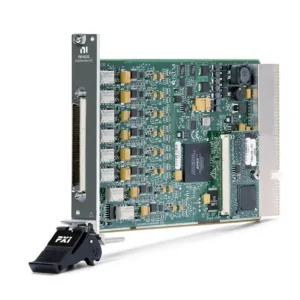
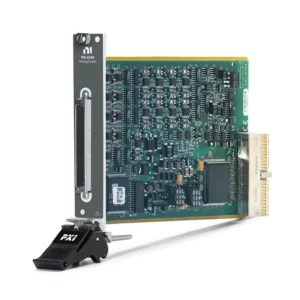
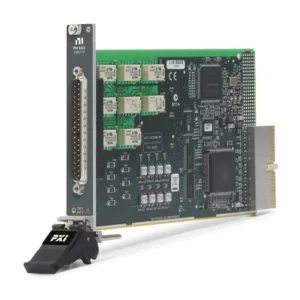
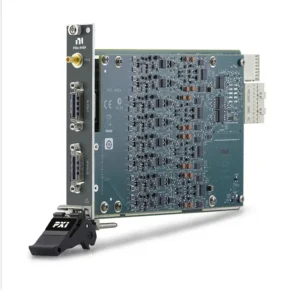
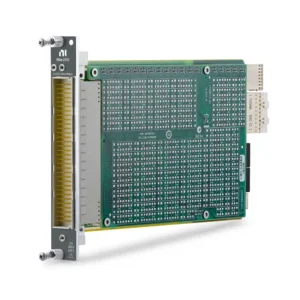
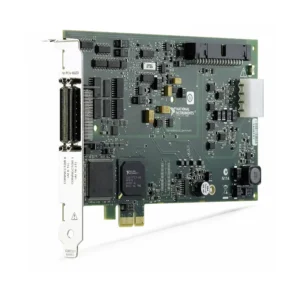
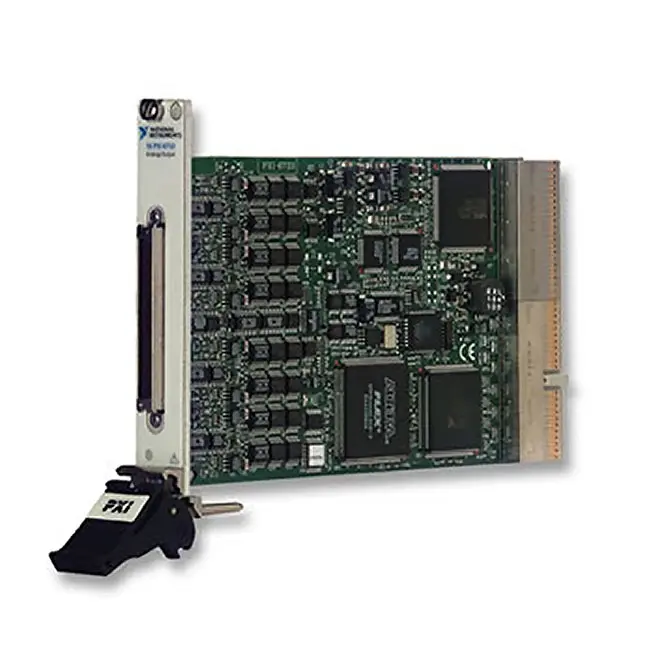
The NI PXI-6733 is a high-speed analog output module designed for automated test, stimulus generation, control, waveform generation, hardware-in-the-loop testing, and laboratory applications requiring multiple synchronized analog voltage outputs.
The PXI-6733 provides 8 analog output channels with 16-bit resolution and high-speed hardware-timed waveform generation. It also integrates 8 digital I/O lines and two 24-bit counter/timers, allowing analog generation, digital control, timing, and triggering functions to be combined within a single PXI module.
As part of the NI 673x high-speed analog output family, the PXI-6733 is particularly suitable for applications where multiple programmable voltage signals must be generated with deterministic hardware timing.
Product Overview
The National Instruments PXI-6733 is optimized primarily for analog signal generation rather than analog signal acquisition.
Its eight analog output channels provide programmable voltage generation for device stimulation, actuator control, sensor simulation, automated characterization, and test-system excitation.
Unlike conventional multifunction DAQ modules that typically provide only two or four analog outputs, the PXI-6733 provides eight dedicated analog output channels, making it particularly useful for systems requiring multiple independently programmable analog stimulus signals.
Key Features
8 Analog Output Channels
The PXI-6733 provides eight analog output channels for multichannel signal generation.
- 8 analog output channels
- 16-bit output resolution
- Hardware-timed generation
- Multichannel waveform generation
- Programmable voltage output
- Automated stimulus generation
Advantage: Eight analog outputs allow one PXI module to stimulate multiple DUT inputs or external devices without requiring several general-purpose DAQ modules.
16-Bit Analog Output Resolution
The PXI-6733 provides 16-bit digital-to-analog conversion for precise programmable voltage generation.
- 16-bit DAC resolution
- 65,536 theoretical output levels
- Precision voltage generation
- Dynamic waveform output
- Automated control signals
Advantage: 16-bit resolution provides fine output control for electronic validation, automated test, control, and laboratory applications.
High-Speed Analog Output
The PXI-6733 is designed for high-speed hardware-timed analog output generation, with update performance up to 1 MS/s depending on the output configuration.
- Up to 1 MS/s analog output update capability
- Hardware-timed waveform generation
- Buffered analog output
- Continuous signal generation
- Dynamic stimulus applications
Advantage: High update rates allow the PXI-6733 to generate dynamic waveforms rather than being limited to static DC voltage levels.
±10 V Analog Output Range
The PXI-6733 provides programmable bipolar voltage generation suitable for a wide range of test and control applications.
- ±10 V analog output range
- Bipolar voltage generation
- Programmable DC levels
- Dynamic waveform generation
- DUT stimulus generation
Advantage: The standard ±10 V range is compatible with many laboratory instruments, electronic circuits, actuators, control systems, and automated test interfaces.
Hardware-Timed Waveform Generation
One of the primary advantages of the PXI-6733 is its ability to generate analog waveforms using hardware timing.
- Sine wave generation
- Ramp generation
- Arbitrary waveform sequences
- Dynamic control signals
- Automated stimulus patterns
- Continuous waveform generation
Advantage: Hardware timing provides more deterministic signal generation than software-controlled voltage updates.
Multichannel Analog Generation
The eight analog outputs make the PXI-6733 suitable for applications requiring several coordinated analog stimulus signals.
Engineers can use the module to generate multiple voltage channels for DUT inputs, control systems, simulation interfaces, and automated test fixtures.
- Multichannel DUT stimulation
- Sensor simulation
- Control-system testing
- Automated waveform generation
- Parallel analog stimulus
8 Digital I/O Lines
In addition to analog generation, the PXI-6733 provides eight digital I/O lines for basic digital control and monitoring.
- 8 digital I/O lines
- Digital input
- Digital output
- Test fixture control
- Device status monitoring
- Automated sequencing
Advantage: Integrated digital I/O can be used to control external devices and coordinate analog stimulus generation with other test-system operations.
Two Counter/Timers
The PXI-6733 includes two general-purpose counter/timers for timing, counting, and pulse-generation applications.
- 2 counter/timers
- 24-bit counter resolution
- Frequency measurement
- Period measurement
- Event counting
- Pulse generation
- Timing applications
Advantage: Integrated counters provide additional timing functionality without requiring a separate PXI counter/timer module for many basic applications.
Hardware Triggering
The PXI-6733 supports hardware triggering for deterministic and event-driven signal generation.
- Digital triggering
- Start triggering
- Hardware event routing
- Triggered waveform generation
- Automated test synchronization
PXI Timing and Synchronization
The PXI-6733 can use PXI timing and trigger resources to coordinate analog outputs with other instruments in a modular PXI test system.
- PXI trigger bus integration
- Multi-instrument synchronization
- Shared hardware timing
- Deterministic test sequences
- Modular system integration
Advantage: PXI synchronization allows analog stimulus generation to be coordinated with data acquisition, switching, digital measurements, communication interfaces, and other instruments.
NI-DAQmx Software Support
The PXI-6733 is supported by NI-DAQmx for analog output generation, digital I/O, counter/timer operations, timing, and triggering.
- NI-DAQmx driver
- LabVIEW integration
- NI MAX configuration
- TestStand integration
- C/C++ APIs
- .NET application development
Technical Specifications
| Parameter | Description |
|---|---|
| Product Type | High-Speed PXI Analog Output Module |
| Model | NI PXI-6733 |
| Product Family | NI 673x High-Speed Analog Output |
| Bus Interface | PXI |
| Analog Output Channels | 8 |
| Analog Output Resolution | 16 Bit |
| Maximum Analog Output Update Rate | Up to 1 MS/s |
| Analog Output Range | ±10 V |
| Hardware-Timed Analog Output | Supported |
| Buffered Waveform Generation | Supported |
| Digital I/O | 8 Lines |
| Counter/Timers | 2 |
| Counter Resolution | 24 Bit |
| Hardware Triggering | Supported |
| PXI Synchronization | Supported |
| Driver | NI-DAQmx |
| Primary Applications | Waveform Generation, Automated Test, HIL, Control, DUT Stimulus and Sensor Simulation |
Analog Output Capabilities
The PXI-6733 is designed primarily for applications requiring multiple programmable analog voltage outputs.
Each output can be used to generate DC voltage levels or hardware-timed waveforms for automated test and control applications.
- Programmable DC voltage generation
- Dynamic waveform generation
- Device stimulation
- Control signal generation
- Sensor simulation
- Automated test excitation
Static vs Hardware-Timed Analog Output
| Output Method | Description | Typical Application |
|---|---|---|
| Static Output | Generates a programmable DC voltage level | Control and reference signals |
| Hardware-Timed Output | Generates voltage samples according to a hardware-controlled timing clock | Dynamic waveforms and automated stimulus |
Hardware-timed generation is particularly useful when signal timing must remain deterministic and independent of operating-system or software execution latency.
Waveform Generation Applications
The PXI-6733 can generate programmable analog waveforms for automated testing and laboratory experiments.
- Sine wave generation
- Ramp signals
- Step signals
- Custom waveform sequences
- Dynamic control signals
- Device excitation
Sensor Simulation
The PXI-6733 can generate programmable voltage signals that emulate the electrical output of compatible voltage-output sensors.
This capability is particularly useful when validating electronic controllers without connecting the complete physical sensor system.
- Voltage sensor simulation
- Controller input validation
- ECU functional testing
- Automated fault simulation
- Repeatable test stimulus
Automated Test Integration
The PXI-6733 can be combined with PXI data acquisition, switching, digital I/O, communication, and measurement instruments to build complete automated test systems.
For example, the PXI-6733 can generate analog stimulus signals while another PXI DAQ or digitizer module measures the DUT response.
Hardware triggers and PXI timing resources can coordinate these operations for repeatable automated testing.
Industries
- Electronic Manufacturing
- Automotive Testing
- Aerospace and Defense
- Industrial Automation
- Research Laboratories
- Hardware-in-the-Loop Testing
- Automated Test Equipment
- Product Development
- Electronic Design Validation
Applications
Automated Functional Testing
The PXI-6733 can generate programmable analog signals for automated functional test systems.
- PCB functional testing
- Electronic device validation
- Automated DUT stimulation
- Production testing
- Pass/fail test systems
Hardware-in-the-Loop Testing
The module can generate multiple analog voltage signals for controller and HIL validation applications.
- Sensor signal simulation
- ECU input stimulation
- Controller validation
- Dynamic test scenarios
- Automated test sequencing
Electronic Design Verification
Engineers can use the PXI-6733 to generate repeatable analog stimulus signals during prototype development and product validation.
- Prototype characterization
- Hardware debugging
- Electronic design verification
- DUT response testing
- Automated validation
Industrial Control
The PXI-6733 can generate programmable voltage signals for compatible industrial control and laboratory automation systems.
- Actuator control
- Programmable reference signals
- Control-system testing
- Laboratory automation
Research and Laboratory Testing
The module provides flexible multichannel analog generation for automated laboratory experiments.
- Experiment stimulus generation
- Programmable voltage control
- Waveform generation
- Automated research systems
PXI-6733 vs Multifunction DAQ
| Feature | PXI-6733 | Typical Multifunction DAQ |
|---|---|---|
| Primary Function | Analog Output Generation | Analog Input and Multifunction I/O |
| Analog Outputs | 8 | Typically 2 or 4 |
| Analog Inputs | None | Typically Included |
| Output Resolution | 16 Bit | Varies |
| Hardware-Timed Output | Supported | Model Dependent |
| Primary Advantage | Multichannel High-Speed AO | Combined Acquisition and Generation |
| Best Application | Stimulus and Waveform Generation | General-Purpose Measurement |
Comparison with Similar NI Analog Output Modules
| Model | Main Difference | Best Application |
|---|---|---|
| NI PXI-6733 | 8-channel, 16-bit high-speed analog output module with hardware-timed waveform generation. | Multichannel high-speed analog stimulus |
| NI PXI-6723 | Provides substantially more analog output channels for applications prioritizing output channel density. | High-channel-count analog output systems |
| NI PXI-6221 | General-purpose multifunction DAQ combining analog input, analog output, digital I/O, and counter/timer functionality. | General-purpose acquisition and generation |
| NI PXI-6259 | Higher-performance multifunction DAQ combining 32 analog inputs with four analog outputs and extensive digital I/O. | Mixed analog acquisition and generation |
Recommended Related Products
| NI PXI-6723 | Recommended when the application requires significantly more analog output channels for multichannel control or stimulus generation. |
| NI PXI-6221 | Suitable when analog input acquisition and analog output generation are both required from a general-purpose multifunction DAQ module. |
| NI PXI-6259 | Recommended for mixed-signal test systems requiring high-speed analog acquisition together with analog output functionality. |
Why Choose NI PXI-6733?
- 8 dedicated analog output channels
- 16-bit analog output resolution
- High-speed analog waveform generation
- Up to 1 MS/s update capability
- ±10 V programmable voltage output
- Hardware-timed analog generation
- Buffered waveform generation
- 8 digital I/O lines
- 2 general-purpose counter/timers
- Hardware triggering
- PXI timing and synchronization
- NI-DAQmx software support
- Suitable for DUT stimulus generation
- Ideal for sensor simulation
- Useful for automated and HIL testing
Frequently Asked Questions
What is the NI PXI-6733?
The NI PXI-6733 is a high-speed PXI analog output module designed for multichannel voltage generation, waveform generation, automated test, control, sensor simulation, and hardware-in-the-loop applications.
How many analog output channels does the PXI-6733 have?
The PXI-6733 provides 8 analog output channels.
What is the analog output resolution of the PXI-6733?
The PXI-6733 provides 16-bit analog output resolution.
What is the maximum analog output update rate of the PXI-6733?
The PXI-6733 provides high-speed hardware-timed analog output generation with update capability up to 1 MS/s, depending on the output configuration.
What is the output voltage range of the PXI-6733?
The PXI-6733 supports programmable bipolar analog voltage generation with a nominal ±10 V output range.
Does the PXI-6733 have analog inputs?
No. The PXI-6733 is primarily an analog output device and does not provide the general-purpose analog input subsystem found on multifunction DAQ modules such as the PXI-6221 or PXI-6259.
Can the PXI-6733 generate waveforms?
Yes. The PXI-6733 supports hardware-timed and buffered analog output generation for dynamic waveform and stimulus applications.
Can the PXI-6733 generate multiple analog signals?
Yes. The eight analog output channels allow multiple programmable voltage signals to be generated for multichannel stimulus, simulation, control, and automated test applications.
Does the PXI-6733 provide digital I/O?
Yes. The PXI-6733 provides eight digital I/O lines for basic device control, status monitoring, and test-system sequencing.
Does the PXI-6733 have counter/timers?
Yes. The module provides two general-purpose counter/timers that can be used for pulse generation, event counting, frequency measurement, period measurement, and other timing applications.
Can the PXI-6733 be used for sensor simulation?
Yes. Its programmable analog outputs can emulate compatible voltage-output sensors for controller, ECU, automated test, and HIL validation applications.
What is the difference between PXI-6733 and PXI-6723?
Both devices are designed primarily for analog output applications. The PXI-6733 focuses on high-speed multichannel analog generation with eight analog outputs, while the PXI-6723 is better suited to applications requiring a substantially larger number of analog output channels. The appropriate model depends on whether output speed or channel density is the primary requirement.
What is the difference between PXI-6733 and PXI-6259?
The PXI-6733 is a dedicated high-speed analog output module with eight analog outputs. The PXI-6259 is a multifunction DAQ module that combines analog inputs, four analog outputs, digital I/O, and counter/timer functions. Choose the PXI-6733 when multichannel analog generation is the primary requirement and the PXI-6259 when both acquisition and generation are needed.
What software supports the PXI-6733?
The PXI-6733 uses NI-DAQmx and can be integrated into compatible LabVIEW, NI MAX, TestStand, C/C++, and .NET measurement and automation applications.
What applications are suitable for the PXI-6733?
Typical applications include automated DUT stimulation, waveform generation, sensor simulation, HIL testing, ECU validation, electronic functional testing, industrial control, laboratory automation, and design verification.
What should I check before purchasing a PXI-6733?
Before purchasing a PXI-6733, verify the exact model and part number, PXI chassis compatibility, required number of analog outputs, voltage range, waveform update rate, connector and cabling requirements, triggering requirements, and NI-DAQmx software compatibility.
Conclusion
The NI PXI-6733 High-Speed Analog Output Module combines eight 16-bit analog output channels, high-speed hardware-timed waveform generation, ±10 V programmable outputs, eight digital I/O lines, counter/timer functionality, triggering, and PXI synchronization. Its dedicated analog generation architecture makes the PXI-6733 particularly suitable for automated test, DUT stimulation, sensor simulation, hardware-in-the-loop testing, electronic validation, control systems, and laboratory waveform generation.