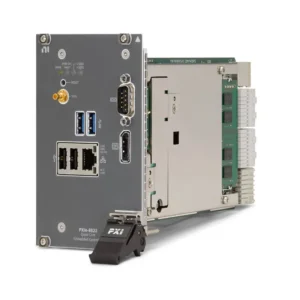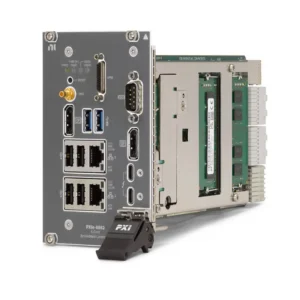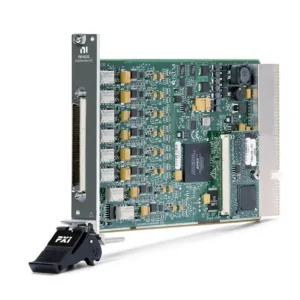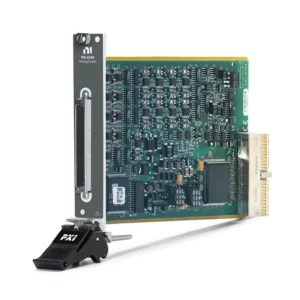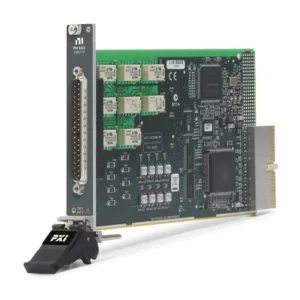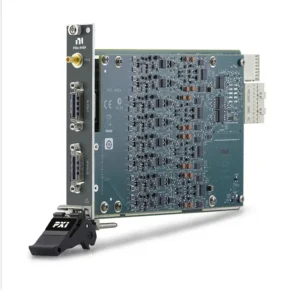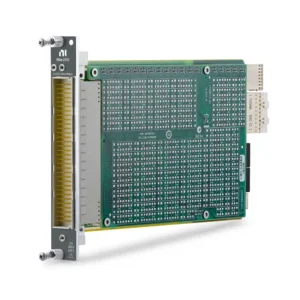




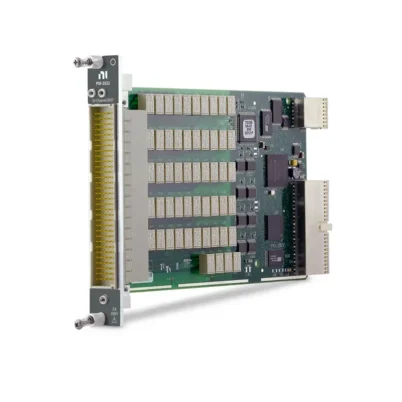
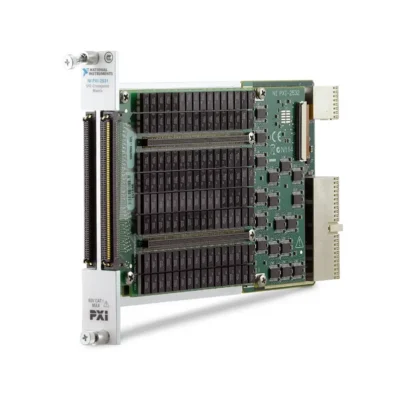
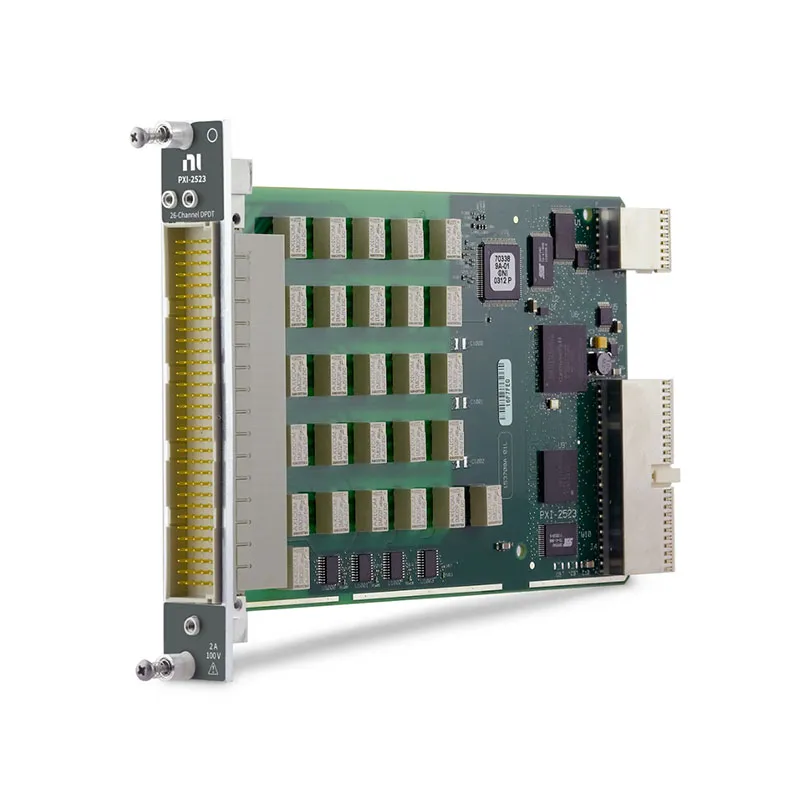
PXI-2523 26-Channel DPDT PXI Relay Module
The PXI-2523 is a general-purpose PXI relay module designed for automated test equipment, signal routing and electrical load control. It provides 26 independent double-pole double-throw (DPDT) armature relays in a single PXI module.
With a maximum switching voltage of 100 VDC, a maximum switching current of 2 A and a typical bandwidth of 36 MHz, the PXI-2523 can be used to switch control signals, instrumentation signals, heaters, lights, fans and other electrical loads. Its nonlatching electromechanical relays provide galvanic isolation and flexible software-controlled signal routing.
Key Features of the PXI-2523
- 26 independent DPDT relay channels
- 52 poles for flexible signal routing
- 2 A maximum DC switching current
- 100 V maximum DC switching voltage
- 36 MHz typical switch bandwidth
- Nonlatching electromechanical armature relays
- Low on-resistance and low thermal offsets
- Software-programmable relay control
- Onboard relay-count tracking
- PXI hybrid-slot compatible
- 160-pin DIN front-panel connector
- NI-SWITCH software support
- NI Switch Executive compatibility
- Suitable for ATE loads, heaters, lights and fans
PXI-2523 Technical Specifications
| Product Model | PXI-2523 |
|---|---|
| Part Number | 778572-23 |
| Product Type | General-purpose PXI relay module |
| Number of Relays | 26 |
| Relay Configuration | DPDT, double-pole double-throw |
| Number of Poles | 52 |
| Relay Type | Electromechanical armature relay |
| Relay Operation | Nonlatching |
| Maximum Switching Voltage | 100 VDC |
| Maximum Switching Current | 2 A DC |
| Typical Switch Bandwidth | 36 MHz |
| Scan Rate | 145 cycles/s |
| Bus Connection | PXI hybrid |
| Front-Panel Connector | 160-pin DIN connector |
| Relay Monitoring | Onboard relay-count tracking |
| Software Support | NI-SWITCH and NI Switch Executive |
| Module Format | 3U PXI module |
PXI-2523 Part Number and Accessories
| Item | Part Number | Description |
|---|---|---|
| PXI-2523 | 778572-23 | 26-channel, 2 A DPDT PXI relay module |
| 160-Pin DIN to 50-Pin D-Sub Cable | 782417-03 | 1 m switch cable for connection to compatible D-Sub terminal accessories |
| 160-Pin DIN to 160-Pin DIN Cable | 782417-02 | 1 m cable for DIN-to-DIN signal connections |
| 160-Pin DIN to Bare-Wire Cable | 782417-01 | 1 m cable for custom test fixtures and wiring |
| Relay Replacement Kit | 781089-10 | Replacement kit for servicing compatible relay modules |
| TBX-50B Terminal Block | 782866-01 | 50-pin terminal block for field wiring and signal access |
The PXI-2523 uses a 160-pin DIN front-panel connector. Select the cable and terminal accessory according to the required wiring method, connector arrangement and test-fixture design.
26-Channel DPDT Relay Architecture
The PXI-2523 contains 26 independent DPDT relays. Each relay has two poles and two throws, allowing two signal paths to be switched simultaneously between common and normally open or normally closed contacts.
DPDT architecture is useful when both sides of a signal or two related control lines must be routed together. Engineers can use the relays to switch power, control, stimulus and measurement connections in automated test systems.
Flexible Signal Routing
Each relay can be controlled independently through software. This allows the PXI-2523 to connect instruments, loads and devices under test without manually changing cables during a test sequence.
The module can be used to route signals between a source and multiple loads, select alternative measurement paths or control several electrical devices from a centralized PXI test system.
When several relay channels are operated at the same time, verify that the connected sources, loads and external wiring remain within the voltage, current and power limits of the complete system.
2 A Switching Capability
The PXI-2523 supports switching currents up to 2 A DC. This rating makes the module suitable for many low-power control and instrumentation applications, including heaters, lights, fans, relays and general-purpose electronic loads.
The actual permissible current depends on the load type, switching frequency, voltage, cable arrangement and contact condition. Inductive loads may generate transient voltage when opened, so external suppression components may be required.
100 VDC Switching Voltage
The PXI-2523 supports a maximum switching voltage of 100 VDC. Applications must remain within the specified voltage and current limits at the same time.
When switching hazardous or high-energy circuits, use appropriate insulation, fusing, grounding and test-fixture protection. The module should only be connected to signal circuits suitable for its safety category and electrical ratings.
36 MHz Typical Bandwidth
With a typical switch bandwidth of 36 MHz, the PXI-2523 can route DC, low-frequency and moderate-frequency signals in automated test and measurement applications.
Actual system bandwidth depends on the external cable, connector, fixture layout, source impedance, load impedance and number of closed relay paths. For high-frequency applications, keep signal paths short and use suitable shielding and termination.
Nonlatching Electromechanical Relays
The PXI-2523 uses nonlatching electromechanical armature relays. These relays provide physical electrical isolation between the switched contacts and do not require semiconductor biasing in the signal path.
Nonlatching relays return to their default state when the module is powered off. This behavior may be useful when the test system requires a predictable safe state after power removal.
Because the relays are mechanical devices, electrical life depends on the switched voltage, current, load type and switching frequency. Avoid exceeding the rated load during normal operation.
Low On-Resistance and Thermal Offset
The PXI-2523 is designed with low on-resistance and low thermal offsets for general-purpose signal switching. These characteristics help reduce voltage drop and measurement errors introduced by the relay path.
For precision measurements, the complete signal path must be considered. Cable resistance, connector resistance, terminal-block resistance, fixture wiring and temperature gradients can affect the final measurement result.
Relay-Count Tracking
Onboard relay-count tracking records relay operation activity. This feature helps maintenance teams identify heavily used channels and monitor switching activity during the service life of the module.
Relay-count information can support preventive maintenance, fixture redesign and workload distribution. Frequently used signal paths can be reassigned to other relays when the test architecture allows it.
Fast Automated Scanning
The PXI-2523 provides a scan rate of up to 145 cycles per second. This allows automated test software to open and close relays rapidly when changing connections between instruments, loads and devices under test.
Actual test throughput also depends on relay settling time, measurement aperture, instrument configuration, software execution and the stabilization time required by the device under test.
ATE Load Switching
The PXI-2523 is suitable for automated test equipment requiring programmable control of electrical loads. It can connect test sources to multiple loads or select different load paths during a production or laboratory test sequence.
Typical load-switching applications include selecting heaters, lamps, fans, actuators and control circuits. External protection should be used when the connected load produces significant inrush or inductive transients.
Heater, Light and Fan Control
The DPDT relay configuration allows the PXI-2523 to control a range of electrical devices. Test software can switch heaters, lights and fans on or off, select alternative devices or create different operating conditions for environmental and reliability tests.
When using the module with motors, solenoids or other inductive devices, install suitable flyback diodes, snubbers or transient-voltage protection according to the load design.
NI-SWITCH Software Support
The PXI-2523 is controlled through the NI-SWITCH instrument driver. NI-SWITCH provides functions for initializing the module, opening and closing relay paths, defining routes, creating scan lists and monitoring relay status.
The driver supports integration with LabVIEW, LabWindows/CVI and compatible programming environments. Engineers can use software-defined routes to simplify automated test applications.
NI Switch Executive Integration
NI Switch Executive allows users to define named routes and route groups instead of controlling every physical relay directly in application code. This can make test programs easier to develop, read and maintain.
For systems containing multiple switch modules, meaningful route names help engineers identify connections between instruments, loads and devices under test. Route definitions can also reduce wiring and software configuration errors.
PXI Hybrid-Slot Compatibility
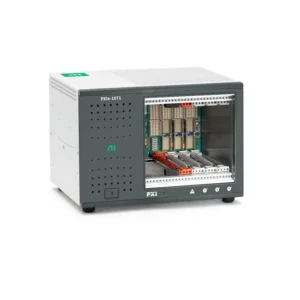
The PXI-2523 uses a PXI hybrid bus connection and can be installed in a compatible PXI chassis slot. It can operate with other PXI instruments such as digital multimeters, data acquisition modules, power supplies, digitizers and RF instruments.
Before installation, verify the chassis slot type, available cooling, controller compatibility and installed NI-SWITCH software version. The front-panel connector and cable clearance should also be checked when the chassis is densely populated.
Typical PXI-2523 Applications
- Automated test equipment
- Production functional testing
- Electronic device validation
- General-purpose signal routing
- Heater and lamp control
- Fan and actuator control
- Load switching
- Power-path selection
- Design verification testing
- Reliability and environmental testing
- Laboratory automation
- Test-fixture signal selection
Production Test Systems
In production test systems, the PXI-2523 can route test signals and electrical loads according to the product being tested. The same PXI instrument can be connected to multiple test points or fixture paths without requiring manual cable changes.
Relay-count tracking can help production engineers identify channels that receive unusually high switching activity and plan maintenance before a relay problem affects test availability.
Environmental and Reliability Testing
The PXI-2523 can control heaters, fans and lights during environmental test sequences. Software can change the operating state of the test chamber or device fixture based on temperature, time or measurement results.
When used in long-duration tests, provide adequate ventilation and verify that the load current, switching frequency and relay duty cycle remain within the applicable operating limits.
Instrument and Load Selection
The module can be combined with a PXIe-4080 digital multimeter for automated resistance, voltage and current measurements. A relay path can connect the measurement instrument to different test points or load circuits.
For larger PXI systems, the PXI-2523 can be used alongside NI PXI modules, programmable power supplies, data acquisition modules and digital instruments.
PXI-2523 Troubleshooting
The PXI-2523 is not detected in NI MAX
Confirm that the module is fully inserted into a compatible PXI hybrid slot. Check chassis power, controller communication and NI-SWITCH installation. If necessary, restart NI Measurement & Automation Explorer and rescan the system.
A relay does not change state
Verify that the correct relay channel is being addressed in the application. Check the route configuration, front-panel cable, terminal block and external fixture wiring. Make sure the connected circuit does not create an electrical conflict.
The signal path has excessive resistance
Inspect the cable, connector, terminal block and fixture wiring. The total resistance includes every component in the external signal path. Use relay diagnostics and resistance measurements to determine whether the problem is inside the module or in the external wiring.
The measurement changes after relay switching
Allow sufficient settling time after changing relay states. Check thermal gradients, grounding, shielding, cable movement and source impedance. For low-level measurements, keep high-current and low-level signal paths separated.
The scan rate is lower than expected
Review the software sequence, relay settling time, measurement aperture and device-under-test stabilization requirements. The specified scan rate does not include all measurement and software-processing time in a complete test sequence.
A load causes relay contact problems
Check whether the load is inductive, capacitive or subject to high inrush current. Confirm that the voltage and current remain within the relay rating, and add suitable external transient suppression or current limiting when necessary.
Relay-count information is not available
Confirm that the installed NI-SWITCH driver supports the PXI-2523 and that the module is recognized correctly in NI MAX. Check the relay-count tracking settings and verify communication with the module.
PXI-2523 Comparison with Similar Relay Modules
| Model | Relay Configuration | Best Suited For |
|---|---|---|
| PXI-2520 | 80 SPST relays | High-channel-count single-pole switching |
| PXI-2521 | 40 DPST relays | Switching two related signal paths with higher relay density |
| PXI-2522 | 40 SPDT relays | Single-pole changeover and general-purpose routing |
| PXI-2523 | 26 DPDT relays | Two-pole changeover and paired-signal switching |
| PXI-2564 | General-purpose relay module | Relay control through a 37-pin D-Sub interface |
PXI-2523 vs PXI-2522
The PXI-2523 provides 26 DPDT relays, while the PXI-2522 provides 40 SPDT relays. The PXI-2523 is preferred when two poles must be switched together, while the PXI-2522 provides a higher channel count for single-pole changeover applications.
Select the PXI-2523 for paired signal routing, polarity switching or applications where both conductors must change state together. Select the PXI-2522 when a larger number of independent single-pole switching channels is more important.
PXI-2523 vs PXI-2521
The PXI-2521 provides 40 DPST relays, while the PXI-2523 provides 26 DPDT relays. DPST relays are useful for on/off switching of two poles, whereas DPDT relays provide changeover functionality between two possible throw positions.
The PXI-2523 is a better choice when the application requires normally open and normally closed routing options. The PXI-2521 may be better suited to applications requiring a larger number of two-pole on/off channels.
Recommended Related Products
- PXI-2520 80-Channel SPST Relay Module
- PXI-2521 40-Channel DPST Relay Module
- PXI-2522 40-Channel SPDT Relay Module
- PXI-2564 General-Purpose Relay Module
- PXIe-4080 Digital Multimeter
- View More NI PXI and PXI Express Modules
Selecting the Right PXI Relay Module
Choose the PXI-2523 when the test system requires 26 independent DPDT relays, two-pole signal switching and software-programmable changeover control. Its 2 A current rating and 100 VDC switching capability support a wide range of general-purpose ATE and laboratory applications.
Select the PXI-2520 when channel density is the primary requirement. Choose the PXI-2521 for a larger number of DPST on/off channels, or the PXI-2522 when more SPDT channels are required.
Why Choose the PXI-2523?
- Provides 26 independent DPDT relay channels
- Switches two related signal paths simultaneously
- Supports up to 2 A DC switching current
- Supports up to 100 VDC switching voltage
- Offers 36 MHz typical bandwidth
- Provides software-programmable signal routing
- Includes onboard relay-count tracking
- Supports NI-SWITCH and NI Switch Executive
- Works with PXI hybrid-slot chassis
Frequently Asked Questions
What is the PXI-2523?
The PXI-2523 is a 26-channel DPDT PXI relay module for general-purpose signal routing, automated test equipment and electrical load control.
How many relays does the PXI-2523 provide?
The PXI-2523 provides 26 independent electromechanical DPDT relays, equivalent to 52 switched poles.
What is the maximum switching current?
The maximum DC switching current is 2 A, subject to the applicable voltage, load and operating conditions.
What is the maximum switching voltage?
The maximum DC switching voltage is 100 V.
What is the bandwidth of the PXI-2523?
The typical switch bandwidth is 36 MHz. Actual system performance depends on cables, fixtures, impedance and signal-routing configuration.
Does the PXI-2523 use latching relays?
No. The PXI-2523 uses nonlatching electromechanical armature relays.
Can the PXI-2523 switch heaters and fans?
Yes. It is designed for general-purpose switching applications such as ATE loads, heaters, lights and fans, provided the connected load remains within the specified relay ratings.
Does the PXI-2523 support relay-count tracking?
Yes. The module supports onboard relay-count tracking for monitoring relay operation and maintenance planning.
Which software controls the PXI-2523?
The PXI-2523 can be controlled with NI-SWITCH and integrated into named-route applications using NI Switch Executive.
What is the part number for the PXI-2523?
The standard NI part number for the PXI-2523 is 778572-23.
Request a Quote for the PXI-2523
Contact us for current availability, lead time and project pricing for the PXI-2523 26-Channel DPDT PXI Relay Module. We can also help identify compatible DIN cables, terminal blocks, relay replacement kits, PXI chassis and related NI switch modules for your automated test system.