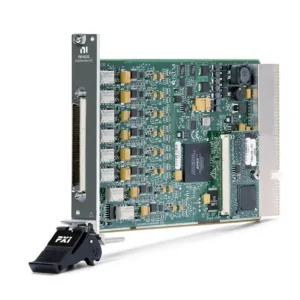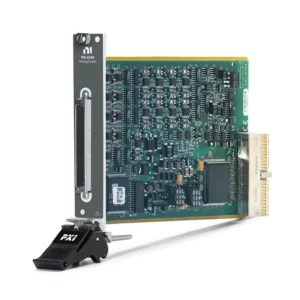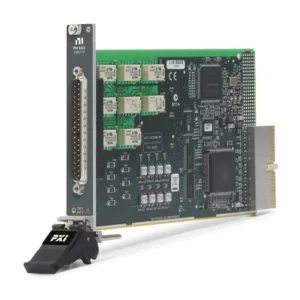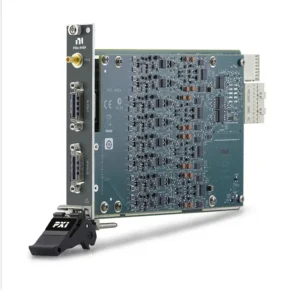





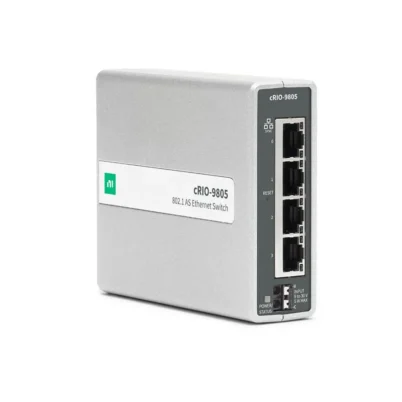

The NI cRIO-9803 is a rugged SSD expansion module designed for CompactRIO, industrial controllers, PXI controllers, and CompactRIO Single-Board Controllers. It provides a USB-to-SATA bridge for full-size mSATA solid-state drives (SSD), enabling high-speed data storage expansion for embedded industrial and measurement systems.
Unlike standard removable storage devices, the cRIO-9803 is engineered specifically for industrial embedded systems requiring rugged shock resistance, vibration tolerance, deterministic data logging, and reliable operation in harsh environments.
Typical applications include:
- High-speed industrial data logging
- Machine condition monitoring
- Long-term measurement storage
- Embedded test systems
- Industrial edge storage
- Distributed monitoring systems
- Real-time data recording
- Large waveform acquisition systems
Storage Architecture and SSD Support
The cRIO-9803 provides a bus-powered USB SATA bridge connected to a full-size mSATA SSD. It supports both NI-provided drives and customer-installed SSDs.
Supported configurations include:
| Part Number | Storage Type | Description |
|---|---|---|
| 785920-01 | 64 GB SLC SSD | High-endurance rugged storage |
| 786677-01 | 480 GB MLC SSD | High-capacity storage |
| 785921-01 | No SSD included | User-supplied mSATA SSD |
The module supports:
- mSATA full-size SSD
- SATA II drive interface
- Sequential read/write performance up to 150 MB/s
- USB 3.1 Gen1 SuperSpeed interface
- Maximum USB data rate of 5 Gb/s
The 64 GB SLC version is optimized for high endurance and harsh industrial environments, while the 480 GB MLC version is designed for applications requiring larger data storage capacity.
High-Endurance Industrial Storage
One of the main advantages of the cRIO-9803 is industrial-grade SSD endurance.
NI specifies endurance ratings including:
| Drive Type | Enterprise Workload Endurance |
|---|---|
| 64 GB SLC SSD | 733 TBW |
| 480 GB MLC SSD | 259 TBW |
For sequential workloads, endurance can reach:
- 6,209 TBW for the SLC model
- 1,417 TBW for the MLC model
This makes the cRIO-9803 highly suitable for:
- Continuous data logging
- Long-duration waveform recording
- Industrial monitoring
- High-frequency measurement systems
- Real-time acquisition storage
Compared with consumer USB SSD solutions, the cRIO-9803 is specifically optimized for rugged industrial embedded deployments.
USB 3.1 and CompactRIO Integration
The cRIO-9803 uses:
- USB Type-C interface
- USB 3.1 Gen1 SuperSpeed
- Integrated cable retention system
- Bus-powered architecture
The module can mechanically integrate with CompactRIO controllers using mounting accessories, helping create a compact embedded deployment.
Supported platforms include:
- CompactRIO controllers
- CompactRIO Single-Board Controllers
- Industrial Controllers
- PXI Controllers
This flexibility makes the cRIO-9803 useful for industrial edge systems that require additional storage without redesigning the embedded platform.
File System and Operating System Support
The cRIO-9803 supports:
- NI Linux Real-Time
- Windows operating systems
Supported file systems include:
- ext4
- FAT32
NI recommends ext4 for maximum reliability and larger storage devices.
The module automatically mounts within CompactRIO systems and can be accessed through Linux-style file paths for embedded data storage applications.
Rugged Industrial Design
The cRIO-9803 is designed for industrial environments and provides rugged environmental performance comparable to other CompactRIO modules.
Industrial specifications include:
- Operating temperature: -40 °C to 70 °C
- Storage temperature: -40 °C to 85 °C
- IP40 protection
- Shock resistance up to 50 g
- Random vibration rating of 5 g RMS
- Maximum altitude: 5,000 m
These specifications make the module suitable for:
- Factory automation
- Transportation systems
- Outdoor industrial equipment
- Remote monitoring stations
- Energy infrastructure
- Embedded test platforms
Application-Oriented Use Cases
High-Speed Industrial Data Logging
The cRIO-9803 is ideal for applications requiring long-duration recording of waveform, vibration, thermal, or sensor data directly on embedded CompactRIO systems.
Machine Condition Monitoring
Using vibration acquisition modules together with the cRIO-9803 allows long-term storage of machine condition data for predictive maintenance analysis.
Embedded Test Systems
The module can expand storage capacity for automated test systems requiring local waveform logging and high-speed measurement storage.
Edge Computing and Industrial IoT
The cRIO-9803 is suitable for industrial edge systems that need local buffering and temporary storage before uploading data to cloud or supervisory systems.
Comparison with Similar Models
| Model | Main Difference | Typical Use |
|---|---|---|
| cRIO-9803 | SSD storage expansion | High-speed local storage |
| cRIO-9805 | TSN Ethernet expansion | Industrial networking |
| cRIO-9049 | Embedded controller with FPGA | Real-time control |
| cRIO-9057 | Artix-7 CompactRIO controller | Distributed automation |
| PXIe SSD Systems | PXI-based storage systems | High-end test systems |
Compared with the cRIO-9805, the cRIO-9803 focuses on storage expansion rather than Ethernet networking.
Compared with internal CompactRIO storage, the cRIO-9803 provides significantly larger storage capacity and higher endurance for industrial data logging applications.
Conclusion
The NI cRIO-9803 is a rugged SSD expansion module designed for CompactRIO and industrial embedded systems requiring reliable high-speed storage expansion.
Its combination of:
- USB 3.1 SuperSpeed interface
- mSATA SSD support
- High-endurance industrial storage
- Rugged shock and vibration protection
- Compact embedded integration
- NI Linux Real-Time compatibility
makes it an ideal solution for industrial data logging, embedded monitoring, machine condition monitoring, and distributed acquisition systems.