




Product Introduction
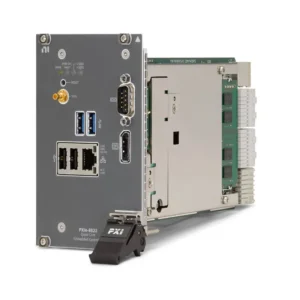
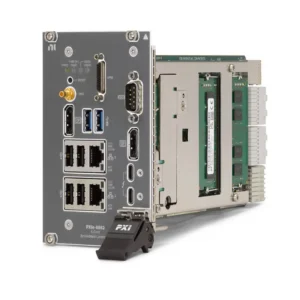
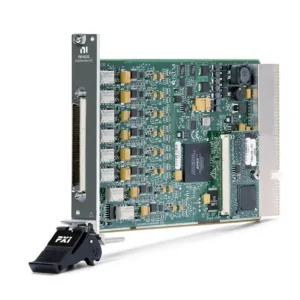
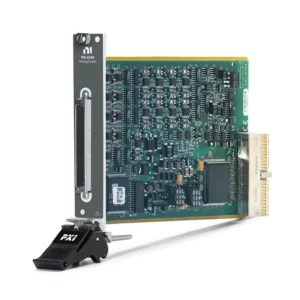
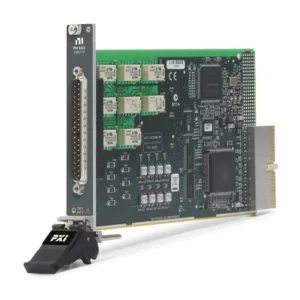
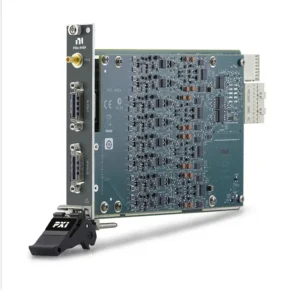
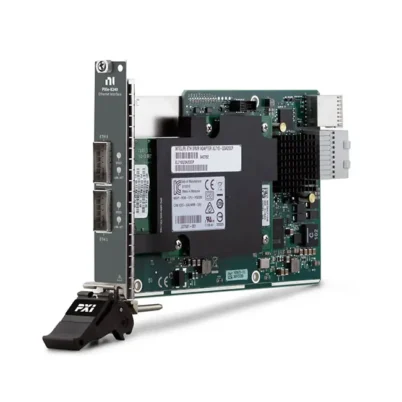
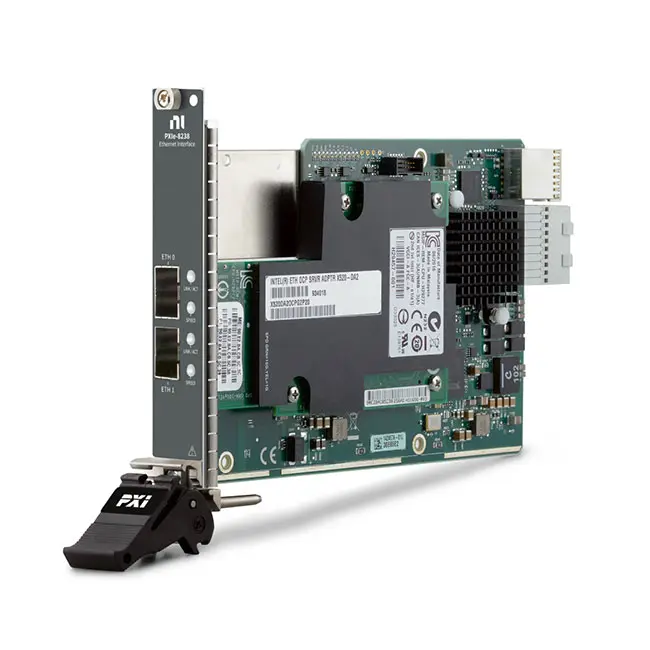
The NI PXIe-8238 is a PXI Express Gigabit Ethernet interface module designed to add high-performance Ethernet connectivity to PXI-based automated test and measurement systems.
The PXIe-8238 enables engineers to connect PXI systems with Ethernet-enabled instruments, devices, test equipment, network infrastructure, and distributed measurement systems. Its PXI Express architecture makes it suitable for automated test, industrial measurement, research, validation, and laboratory applications requiring dedicated Ethernet communication.
By integrating Ethernet connectivity directly into a PXI chassis, the PXIe-8238 provides a convenient solution for applications that require network communication alongside other PXI instruments such as data acquisition modules, digitizers, signal generators, switches, digital multimeters, and communication interfaces.
Product Overview
The National Instruments PXIe-8238 is designed to provide Gigabit Ethernet connectivity within a modular PXI Express system.
Ethernet is widely used for instrument control, distributed measurement, industrial communication, data transfer, and network-based test equipment. Adding a dedicated Ethernet interface to a PXI platform allows engineers to integrate network-connected devices directly into automated test applications.
Typical PXIe-8238 applications include:
- Ethernet instrument control
- Network-connected measurement systems
- Distributed automated testing
- Industrial Ethernet communication
- Laboratory instrument integration
- Remote device communication
- Automated validation systems
- Network-based data transfer
Key Features
Gigabit Ethernet Connectivity
The PXIe-8238 provides Gigabit Ethernet connectivity for PXI Express systems.
Gigabit Ethernet provides substantially greater bandwidth than traditional 10 Mb/s and 100 Mb/s Ethernet interfaces, making it suitable for applications that need to transfer measurement data or communicate with multiple network-enabled devices.
Typical applications include:
- Instrument communication
- Measurement data transfer
- Network-based device control
- Distributed test systems
- Laboratory automation
- Industrial communication
PXI Express Interface
The PXIe-8238 is designed for the PXI Express platform, allowing Ethernet communication hardware to be installed directly into a compatible PXI Express chassis.
PXI Express combines PCI Express data-transfer technology with PXI timing, synchronization, modularity, and instrumentation capabilities.
This architecture allows the Ethernet interface to operate alongside other PXI Express instrumentation in a compact automated test system.
Dedicated Network Interface
Using a dedicated PXIe-8238 Ethernet interface allows engineers to separate test-system network traffic from other network connections available on the PXI controller.
A dedicated network interface can be useful for:
- Instrument networks
- Device-under-test communication
- Private test networks
- Distributed measurement systems
- Industrial equipment networks
- Network segmentation
Ethernet Instrument Control
Many modern test instruments provide Ethernet interfaces for remote control and data transfer.
The PXIe-8238 can provide the physical network connection required to integrate compatible Ethernet instruments into a PXI automated test system.
Typical equipment may include:
- Oscilloscopes
- Power supplies
- Signal generators
- Network analyzers
- Spectrum analyzers
- Environmental chambers
- Industrial controllers
- Custom Ethernet devices
Distributed Test System Connectivity
Ethernet provides a practical communication architecture for test equipment distributed across different physical locations.
The PXIe-8238 can be used to connect a central PXI system with compatible remote instruments, measurement devices, controllers, and other Ethernet-enabled equipment.
A simplified architecture can be represented as:
PXI System → PXIe-8238 → Ethernet Network → Remote Instrument / DUT / Test Equipment
Network-Based Data Transfer
Gigabit Ethernet connectivity allows measurement data, commands, configuration information, and test results to be exchanged between the PXI system and compatible network devices.
This capability is useful in applications requiring:
- Remote measurement acquisition
- Data logging
- Automated test control
- Test result transfer
- Distributed instrumentation
- Device configuration
PXI System Integration
One of the major advantages of the PXIe-8238 is its ability to integrate network communication directly into a modular PXI platform.
A PXI system can combine the PXIe-8238 with:
- Data acquisition modules
- Digitizers
- Digital multimeters
- Signal generators
- Programmable power supplies
- PXI switching modules
- Digital I/O modules
- CAN and automotive interfaces
- RF instruments
Technical Specifications
| Parameter | Description |
|---|---|
| Product Type | PXI Express Gigabit Ethernet Interface Module |
| Model | NI PXIe-8238 |
| Platform | PXI Express |
| Interface Type | Ethernet |
| Ethernet Class | Gigabit Ethernet |
| Network Application | Instrument Control and Data Communication |
| PXI Integration | Supported |
| Remote Device Communication | Supported |
| Distributed Test Applications | Supported |
| Network-Based Instrument Control | Supported |
| Primary Applications | Automated Test, Instrument Control, Distributed Measurement and Network Communication |
What Is a PXI Ethernet Interface Module?
A PXI Ethernet interface module adds network connectivity to a modular PXI test system.
Instead of relying exclusively on the network interfaces integrated into a PXI controller, engineers can install dedicated network hardware for specific test applications.
This can be useful when a test system requires:
- Additional Ethernet interfaces
- A dedicated instrument network
- Network separation
- Communication with Ethernet-enabled DUTs
- Distributed measurement hardware
- Industrial Ethernet devices
Why Use Dedicated Ethernet in a PXI System?
PXI controllers commonly provide integrated network interfaces, but some automated test applications require additional or dedicated Ethernet connectivity.
For example, an engineer may use one network interface for the corporate or laboratory network while using the PXIe-8238 for communication with test instruments and DUTs.
A typical architecture can be represented as:
Corporate Network → PXI Controller
Dedicated Test Network → PXIe-8238 → DUT / Instruments
This separation can simplify network configuration and help isolate test traffic from general network traffic.
Ethernet Instrument Control
Ethernet has become one of the most widely used interfaces for controlling modern electronic test equipment.
The PXIe-8238 can connect the PXI system to compatible LAN-enabled instruments for automated control and measurement.
A typical system may operate as:
Test Software → PXI Controller → PXIe-8238 → Ethernet → External Instrument
The test application can then send commands, configure the instrument, initiate measurements, and retrieve measurement results.
Connecting Ethernet-Enabled DUTs
Many modern devices under test include Ethernet interfaces.
The PXIe-8238 can provide a dedicated Ethernet connection between a PXI automated test system and a compatible DUT.
Typical DUT applications can include:
- Embedded controllers
- Industrial computers
- Network appliances
- Electronic control units
- Communication equipment
- IoT devices
- Custom electronic systems
Automated Test Applications
Automated test systems often combine multiple communication and measurement technologies.
The PXIe-8238 can provide Ethernet communication while other PXI modules perform electrical measurements, signal generation, switching, or digital control.
For example:
DUT Ethernet → PXIe-8238
DUT Analog Signals → PXI DAQ / Digitizer
DUT Power → PXI Power Supply
DUT Switching → PXI Switch Module
This allows communication and electrical validation to be integrated into a single automated test platform.
Production Test Systems
Production test stations can use the PXIe-8238 to communicate with Ethernet-enabled products during manufacturing.
Typical functions include:
- DUT configuration
- Firmware communication
- Network interface verification
- Device status monitoring
- Test command transmission
- Test result acquisition
- Automated pass/fail testing
Laboratory Automation
Research and development laboratories frequently contain multiple network-enabled instruments.
The PXIe-8238 can help integrate these instruments with a centralized PXI measurement platform.
This enables automated software to coordinate measurements across both PXI instruments and external Ethernet-connected equipment.
Distributed Measurement Systems
Ethernet is particularly useful when measurement equipment cannot be located directly beside the PXI chassis.
A distributed measurement architecture can connect remote instruments or devices through standard network infrastructure.
For example:
PXI Test System → PXIe-8238 → Ethernet Infrastructure → Remote Measurement Equipment
This architecture can be useful in large laboratories, industrial facilities, validation environments, and distributed test installations.
Private Test Networks
A dedicated PXIe-8238 interface can be used to create a private Ethernet network specifically for automated testing.
Private test networks can provide advantages when engineers need to:
- Assign fixed IP addresses to instruments
- Isolate DUT traffic
- Separate test equipment from corporate networks
- Control network configuration
- Reduce interference from unrelated network traffic
Industrial Test Applications
Industrial equipment increasingly uses Ethernet for configuration, monitoring, communication, and data transfer.
The PXIe-8238 can provide network connectivity between a PXI measurement system and compatible industrial equipment.
Typical applications may include:
- Industrial controller testing
- Machine communication
- Production equipment validation
- Remote device monitoring
- Automated manufacturing test
- Industrial research systems
Network-Based Data Logging
Gigabit Ethernet can be used to transfer test and measurement data between a PXI system and network-connected storage, computers, or measurement devices.
The PXIe-8238 can therefore be incorporated into distributed data acquisition and logging architectures where Ethernet communication is required.
PXIe-8238 vs Controller Ethernet Port
| Feature | PXIe-8238 | Controller Ethernet Port |
|---|---|---|
| Location | Dedicated PXI Express Module | Integrated into PXI Controller |
| Primary Function | Additional / Dedicated Ethernet Connectivity | General System Networking |
| Dedicated Test Network | Yes | Possible, but Uses Controller Port |
| Network Segmentation | Convenient | Controller Dependent |
| PXI Slot Required | Yes | No |
| Best Application | Additional Instrument or DUT Networks | General Network Connectivity |
The PXIe-8238 is particularly useful when the integrated Ethernet interfaces on the PXI controller are insufficient or when a dedicated network connection is required for the test system.
PXIe-8238 in a Complete PXI System
The PXIe-8238 can serve as the network communication interface within a complete PXI automated test system.
A typical system may include:
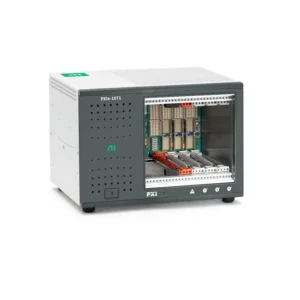
- PXI Express chassis
- PXI embedded or remote controller
- PXIe-8238 Ethernet interface
- PXI data acquisition modules
- PXI digitizers
- PXI digital I/O modules
- PXI switching modules
- Programmable power supplies
- RF instruments
- Timing and synchronization modules
This modular architecture allows Ethernet communication to operate alongside measurement, generation, switching, timing, and control functions.
Software Integration
Ethernet-connected test equipment can be controlled using software appropriate to the target instrument or device.
Depending on the application, engineers may use:
- LabVIEW
- TestStand
- Instrument drivers
- VISA-based communication
- TCP/IP communication
- UDP communication
- Device-specific APIs
- Custom network protocols
The exact software architecture depends on the Ethernet device and the communication protocol required by the application.
Industries
- Automated Test Equipment
- Electronic Manufacturing
- Aerospace and Defense
- Automotive Electronics
- Industrial Automation
- Telecommunications
- Semiconductor Test
- Research and Development
- Laboratory Measurement
Applications
Ethernet Instrument Control
The PXIe-8238 can connect PXI systems to compatible Ethernet-enabled laboratory and production test instruments.
DUT Communication
A dedicated Ethernet interface can provide network communication with compatible Ethernet-enabled devices under test.
Distributed Test Systems
Ethernet connectivity enables PXI systems to communicate with instruments and measurement equipment located elsewhere on the network.
Automated Production Testing
The PXIe-8238 can provide Ethernet communication for automated manufacturing systems that configure, communicate with, and validate network-enabled products.
Laboratory Automation
Network-connected laboratory instruments can be integrated with PXI hardware under centralized automated test software.
Dedicated Instrument Networks
The module can provide a separate Ethernet connection for test equipment when engineers want to isolate instrument traffic from other network connections.
Recommended Related Products
| NI PXIe-8238 | PXI Express Gigabit Ethernet interface module for Ethernet instrument control, DUT communication, and distributed test applications. |
| NI PXIe-8623 | PXI Express interface module for automotive and high-performance Ethernet-based test applications. |
| NI PXIe-8267 | PXI Express storage solution for applications requiring high-throughput measurement data recording. |
Why Choose NI PXIe-8238?
- PXI Express Ethernet interface
- Gigabit Ethernet connectivity
- Dedicated network interface for PXI systems
- Suitable for Ethernet instrument control
- Suitable for DUT communication
- Supports distributed test architectures
- Suitable for network-based measurement systems
- Useful for dedicated instrument networks
- Integrates with modular PXI test systems
- Suitable for automated production testing
- Suitable for laboratory automation
- Suitable for industrial test systems
Frequently Asked Questions
What is the NI PXIe-8238?
The NI PXIe-8238 is a PXI Express Gigabit Ethernet interface module designed to provide additional Ethernet connectivity for PXI-based test and measurement systems.
What is the PXIe-8238 used for?
The PXIe-8238 is used to connect PXI systems with compatible Ethernet-enabled instruments, devices under test, industrial equipment, network infrastructure, and distributed measurement systems.
Does the PXIe-8238 support Gigabit Ethernet?
Yes. The PXIe-8238 is designed to provide Gigabit Ethernet connectivity within a PXI Express system.
Is the PXIe-8238 a PXI Express module?
Yes. The PXIe-8238 is designed for installation in a compatible PXI Express system.
Can the PXIe-8238 control Ethernet instruments?
Yes. It can provide the Ethernet network interface required for communicating with compatible LAN-enabled test instruments. The actual instrument control protocol depends on the connected equipment and software.
Can the PXIe-8238 communicate with an Ethernet-enabled DUT?
Yes. A common application is to use a dedicated Ethernet interface for communication with network-enabled devices under test.
Why use the PXIe-8238 if my PXI controller already has Ethernet?
The PXIe-8238 can provide an additional dedicated network interface. This is useful when the controller’s existing network ports are already in use or when the test system requires a separate instrument, DUT, or private test network.
Can the PXIe-8238 be used for a private test network?
Yes. A dedicated Ethernet interface can be used to separate DUT and instrument traffic from corporate or general laboratory network traffic.
Can the PXIe-8238 be used in automated production testing?
Yes. It can provide Ethernet communication with compatible network-enabled DUTs and test equipment in automated production and validation systems.
Can the PXIe-8238 be used for distributed measurements?
Yes. Ethernet connectivity allows the PXI system to communicate with compatible instruments and devices distributed across a network.
Can I use TCP/IP or UDP with the PXIe-8238?
The Ethernet interface can be used as part of applications that communicate using standard network protocols such as TCP/IP or UDP, provided that the connected device and software support the required protocol.
Can I use NI-VISA with Ethernet instruments connected through the PXIe-8238?
Compatible Ethernet instruments can be controlled through NI-VISA when they support an appropriate VISA-compatible LAN communication method. Instrument and software compatibility should be verified for the specific application.
What is the difference between PXIe-8238 and an Ethernet port built into a PXI controller?
The controller’s Ethernet port provides integrated network connectivity, while the PXIe-8238 provides an additional dedicated Ethernet interface installed as a PXI Express module. This can be useful for adding network capacity or creating separate test networks.
What applications are suitable for the PXIe-8238?
Typical applications include Ethernet instrument control, DUT communication, distributed measurement, production testing, laboratory automation, network-based data transfer, industrial test systems, and dedicated instrument networks.
What should I check before purchasing a PXIe-8238?
Before purchasing a PXIe-8238, verify the exact hardware part number and revision, Ethernet port requirements, network speed requirements, PXI Express chassis compatibility, operating system and driver support, controller configuration, required communication protocols, and compatibility with the target Ethernet instruments or DUTs.
Conclusion
The NI PXIe-8238 PXI Express Gigabit Ethernet Interface Module provides dedicated Ethernet connectivity for modular PXI test and measurement systems. It can be used to connect PXI platforms with Ethernet-enabled instruments, devices under test, industrial equipment, and distributed measurement systems. For automated test, production validation, laboratory automation, and network-based instrumentation applications, the PXIe-8238 provides a practical way to add a dedicated Ethernet interface directly to a PXI Express system.