




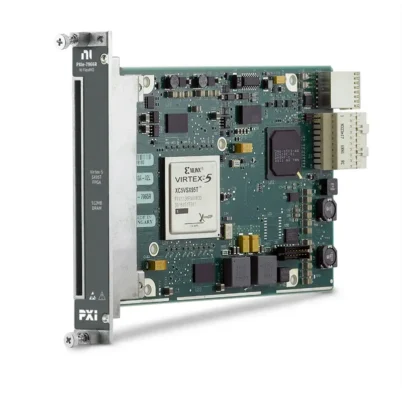
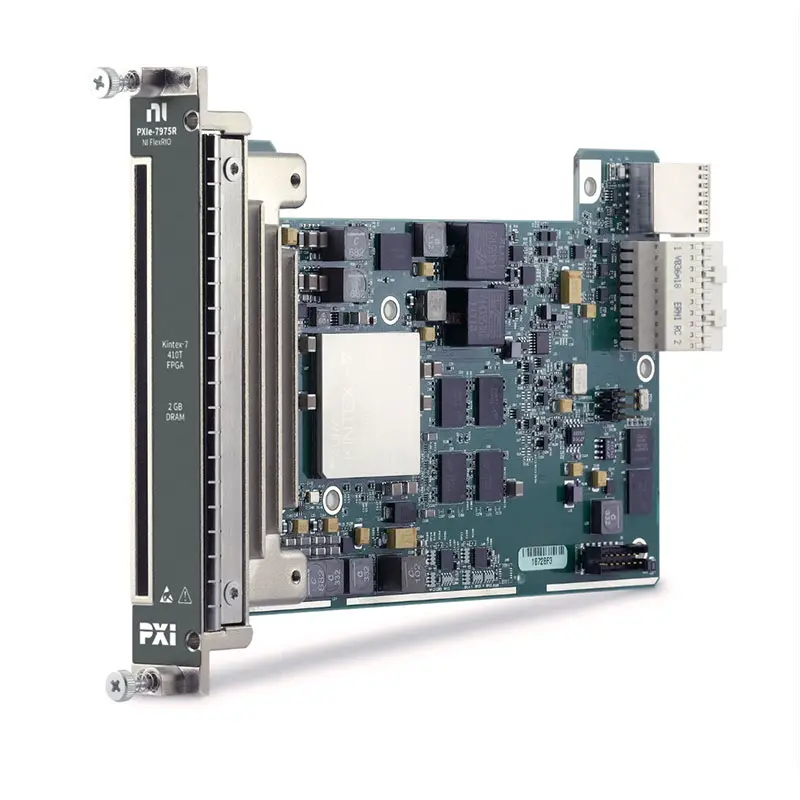
Product Introduction
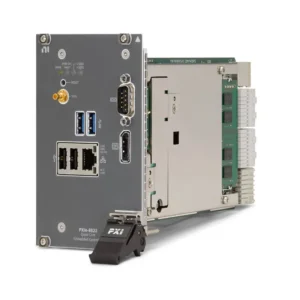
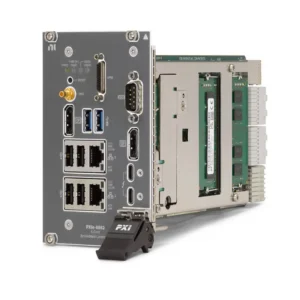
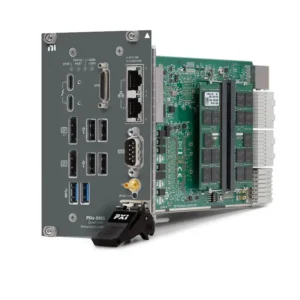
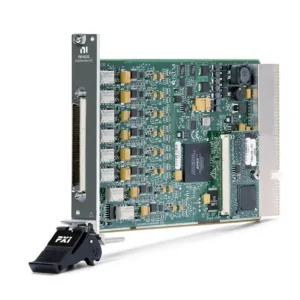
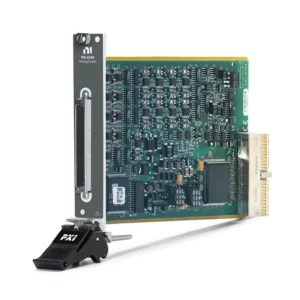
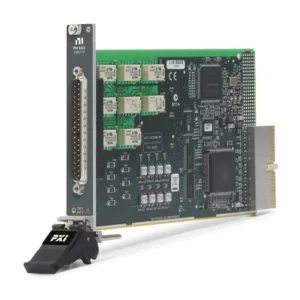
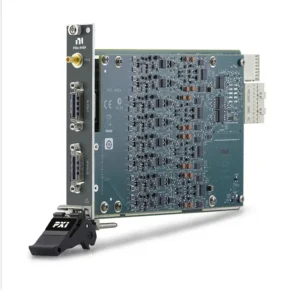
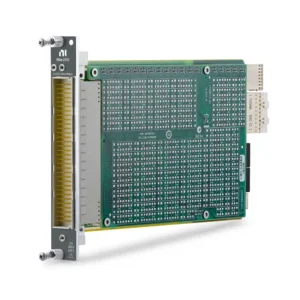
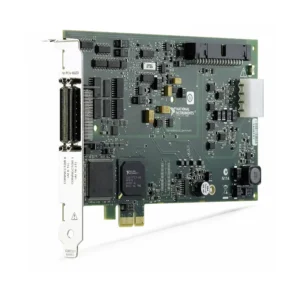
The NI PXIe-7975R is a high-performance PXI Express FlexRIO FPGA module designed for custom high-speed data acquisition, signal processing, digital protocol implementation, machine vision, RF processing, and automated test applications.
The PXIe-7975R combines a powerful Xilinx Kintex-7 410T FPGA with 2 GB of onboard DRAM and a high-speed PXI Express interface. Unlike a conventional fixed-function measurement instrument, the FPGA can be programmed to implement application-specific processing, triggering, timing, control, and data-transfer functions directly in hardware.
When paired with a compatible NI FlexRIO Adapter Module, the PXIe-7975R can form a customizable measurement or generation instrument for applications requiring specialized analog, digital, RF, or vision I/O.
Product Overview
The National Instruments PXIe-7975R belongs to the NI FlexRIO family of reconfigurable FPGA instruments.
Its architecture separates the programmable processing hardware from the physical I/O interface:
FlexRIO Adapter Module → PXIe-7975R FPGA → PXI Express → Host Controller
The adapter module provides application-specific I/O, while the PXIe-7975R provides FPGA processing, memory, timing, triggering, and high-speed data movement.
This architecture allows engineers to create customized instruments without designing a complete FPGA hardware platform from the ground up.
Key Features
Xilinx Kintex-7 410T FPGA
The PXIe-7975R is based on the Xilinx Kintex-7 410T FPGA.
The FPGA provides substantial programmable logic resources for implementing custom real-time algorithms directly in hardware.
Typical FPGA functions can include:
- Digital filtering
- FFT processing
- Custom triggering
- High-speed protocol processing
- Digital signal processing
- Image processing
- Data reduction
- Real-time decision making
- Custom timing and synchronization
63,550 FPGA Slices
The Kintex-7 410T FPGA in the PXIe-7975R provides 63,550 FPGA slices.
These configurable logic resources can be used to implement custom processing pipelines, control logic, protocol engines, triggering systems, and parallel signal-processing functions.
1,540 DSP Slices
The PXIe-7975R provides 1,540 DSP slices.
Dedicated DSP resources are particularly useful for mathematically intensive FPGA operations such as:
- Digital filters
- Fast Fourier transforms
- Multiply-accumulate operations
- Modulation and demodulation
- Signal correction
- Real-time waveform processing
28,620 kbit Block RAM
The FPGA includes approximately 28,620 kbit of Block RAM (BRAM).
BRAM provides low-latency memory located directly inside the FPGA fabric and can be used for:
- FIFO buffers
- Lookup tables
- Temporary waveform storage
- Processing buffers
- Filter coefficients
- FPGA state information
2 GB Onboard DRAM
The PXIe-7975R provides 2 GB of onboard DRAM for applications requiring substantially larger data buffers than FPGA Block RAM can provide.
This memory can be useful for:
- Large waveform buffers
- High-speed acquisition buffering
- Waveform generation
- Image buffering
- Temporary high-throughput data storage
- Custom FPGA processing pipelines
High-Speed DRAM Architecture
The PXIe-7975R uses a single 2 GB DRAM bank with high-bandwidth access from the FPGA.
The onboard memory architecture is designed for applications requiring rapid movement of large data sets between FPGA processing logic and external memory.
PCI Express Gen2 x4 Interface
The PXIe-7975R communicates with the PXI Express system through a PCI Express Gen2 x4 backplane interface.
This high-speed interface supports rapid transfer of acquired or processed data between the FPGA module and the PXI host system.
Up to 1.5 GB/s Peer-to-Peer Streaming
The PXIe-7975R supports high-speed PXI peer-to-peer data streaming with throughput up to approximately 1.5 GB/s under supported configurations.
Peer-to-peer streaming allows compatible PXI modules to transfer data directly between devices without routing every data block through the host processor.
A typical architecture can be:
PXI Acquisition Module → PXIe-7975R FPGA Processing → PXI Output Module
This can reduce host CPU involvement and latency in high-throughput automated test systems.
Real-Time FPGA Processing
One of the primary advantages of the PXIe-7975R is the ability to process incoming data directly in FPGA hardware.
Instead of transferring all raw data to the host processor first, FPGA logic can perform operations such as:
- Filtering
- Decimation
- Threshold detection
- Trigger generation
- Data compression
- FFT calculations
- Protocol decoding
- Image processing
Only the required results or reduced data set may then need to be transferred to the host.
Deterministic Hardware Timing
FPGA logic executes directly in hardware, providing deterministic timing for compatible real-time operations.
This makes the PXIe-7975R suitable for applications where software-controlled timing alone cannot provide the required latency or repeatability.
Custom Triggering
The FPGA can implement application-specific triggering algorithms.
Instead of relying only on standard edge or level triggers, engineers can create trigger conditions based on:
- Multiple signals
- Digital patterns
- Calculated waveform values
- Protocol conditions
- Timing relationships
- Signal-processing results
FlexRIO Adapter Module Interface
The PXIe-7975R is designed to operate with compatible NI FlexRIO Adapter Modules.
Adapter modules can provide different types of I/O including:
- High-speed analog input
- High-speed analog output
- Digital I/O
- RF input and output
- Camera Link interfaces
- Custom application-specific I/O
The exact I/O specifications of a PXIe-7975R system therefore depend on the selected FlexRIO Adapter Module.
Technical Specifications
| Parameter | Specification |
|---|---|
| Product Type | FlexRIO FPGA Module for PXI Express |
| Model | NI PXIe-7975R |
| Part Number | 782955-01 |
| Platform | PXI Express |
| FPGA | Xilinx Kintex-7 410T |
| FPGA Slices | 63,550 |
| DSP Slices | 1,540 |
| Block RAM | 28,620 kbit |
| Onboard DRAM | 2 GB |
| DRAM Banks | 1 |
| DRAM Bandwidth | Up to Approximately 10.5 GB/s |
| PXI Backplane Interface | PCI Express Gen2 x4 |
| Peer-to-Peer Streaming | Up to Approximately 1.5 GB/s |
| Reconfigurable FPGA | Yes |
| FlexRIO Adapter Module Support | Yes |
| Custom Hardware Processing | Supported |
| Hardware Timing | Supported |
| Custom Triggering | Supported |
| Primary Applications | High-Speed I/O, FPGA Signal Processing, Machine Vision, RF Processing and Automated Test |
What Is FlexRIO?
NI FlexRIO is a modular FPGA-based instrumentation architecture designed for applications requiring customizable high-speed I/O and real-time hardware processing.
A traditional measurement instrument generally provides fixed hardware functionality.
FlexRIO instead combines:
Programmable FPGA + Application-Specific I/O
This allows engineers to customize how data is acquired, processed, triggered, generated, and transferred.
How Does the PXIe-7975R Work?
A typical PXIe-7975R system consists of three major components:
- A compatible FlexRIO Adapter Module provides physical I/O.
- The PXIe-7975R FPGA performs real-time processing and control.
- The PXI Express system transfers data between the FPGA and host software.
A simplified architecture is:
External Signal → FlexRIO Adapter Module → Kintex-7 FPGA → DRAM / FPGA Processing → PXI Express → Host Software
FPGA Processing vs CPU Processing
| Feature | FPGA Processing | CPU Processing |
|---|---|---|
| Execution | Hardware Parallelism | Software Instructions |
| Timing | Deterministic | Operating-System Dependent |
| Parallel Processing | Very High | Core Dependent |
| Custom Hardware Logic | Yes | No |
| Algorithm Flexibility | Reconfigurable | Highly Flexible Software |
| Best Application | Low-Latency Real-Time Processing | Complex High-Level Processing |
High-Speed Data Acquisition
When paired with a compatible digitizer adapter module, the PXIe-7975R can be used to create a custom high-speed data acquisition instrument.
A typical processing chain is:
Analog Signal → ADC Adapter Module → PXIe-7975R FPGA → Digital Processing → DRAM / Host
The FPGA can process incoming samples immediately as they are acquired.
High-Speed Waveform Generation
With a compatible waveform-generation adapter module, the PXIe-7975R can implement customized signal-generation functions.
FPGA logic can control:
- Waveform sequencing
- Trigger response
- Digital modulation
- Real-time waveform modification
- Custom generation timing
Digital Signal Processing
The 1,540 DSP slices of the Kintex-7 410T FPGA make the PXIe-7975R particularly useful for high-throughput digital signal processing.
Possible FPGA algorithms include:
- FIR filtering
- IIR filtering
- FFT processing
- Digital downconversion
- Digital upconversion
- Correlation
- Peak detection
- Signal averaging
- Decimation
RF Signal Processing
When combined with a compatible RF FlexRIO Adapter Module, the PXIe-7975R can perform real-time FPGA processing for RF and wireless test applications.
Potential applications include:
- Digital downconversion
- Digital upconversion
- Custom modulation processing
- Spectrum processing
- Channelization
- Real-time RF triggering
- Custom wireless protocol research
Machine Vision Applications
The PXIe-7975R can be combined with compatible Camera Link and vision-oriented FlexRIO Adapter Modules for high-performance image acquisition and FPGA-based image processing.
FPGA processing can perform operations such as:
- Pixel processing
- Thresholding
- Image filtering
- Feature extraction
- Data reduction
- Custom camera triggering
Camera Link Applications
The PXIe-7975R is compatible with the NI 1483 Camera Link Adapter Module for supported machine-vision architectures.
A typical system can be:
Camera → NI 1483 → PXIe-7975R → FPGA Image Processing → Host System
This architecture can provide deterministic image-processing pipelines directly in FPGA hardware.
Custom Digital Protocols
The programmable FPGA architecture allows engineers to implement custom digital communication protocols that may not be available in conventional fixed-function instruments.
FPGA logic can implement:
- Custom framing
- Bit-level timing
- Protocol state machines
- Encoding and decoding
- Error detection
- Hardware response logic
Real-Time Data Reduction
High-speed measurement systems can generate extremely large volumes of raw data.
The PXIe-7975R can process this data directly in FPGA hardware before transferring it to the host.
For example:
Raw Data → FPGA Filter → Event Detection → Relevant Data Only → Host
This can significantly reduce host data-transfer and storage requirements.
Peer-to-Peer Streaming
PXI peer-to-peer streaming allows compatible modules to exchange data directly across the PXI Express backplane.
A typical application can be:
Digitizer → PXIe-7975R → FPGA Processing → Waveform Generator
This architecture is useful for low-latency closed-loop test and custom signal-processing systems.
2 GB DRAM for Large Data Sets
The 2 GB onboard DRAM provides significantly more storage capacity than FPGA Block RAM.
It can be used when algorithms require:
- Large waveform records
- Frame buffering
- Long acquisition sequences
- Large lookup tables
- Waveform playback buffers
- Intermediate processing data
PXIe-7975R vs PXIe-7972R
The PXIe-7975R provides substantially more FPGA processing resources than the PXIe-7972R.
| Feature | PXIe-7975R | PXIe-7972R |
|---|---|---|
| FPGA | Kintex-7 410T | Kintex-7 325T |
| FPGA Slices | 63,550 | 50,950 |
| DSP Slices | 1,540 | 840 |
| Block RAM | 28,620 kbit | 16,020 kbit |
| DRAM | 2 GB | 2 GB |
| Primary Advantage | More FPGA Processing Resources | Lower FPGA Resource Requirements |
PXIe-7975R vs PXIe-7976R
The PXIe-7975R and PXIe-7976R use the same Kintex-7 410T FPGA and provide the same core FPGA resource count, but they differ significantly in PXI Express data-transfer capability.
| Feature | PXIe-7975R | PXIe-7976R |
|---|---|---|
| FPGA | Kintex-7 410T | Kintex-7 410T |
| FPGA Slices | 63,550 | 63,550 |
| DSP Slices | 1,540 | 1,540 |
| Block RAM | 28,620 kbit | 28,620 kbit |
| DRAM | 2 GB | 2 GB |
| PXI Express Interface | PCIe Gen2 x4 | PCIe Gen2 x8 |
| Peer-to-Peer Streaming | Up to Approximately 1.5 GB/s | Up to Approximately 3.2 GB/s |
| Primary Difference | Standard High-Speed Transfer | Higher PXI Data Throughput |
For applications where FPGA processing resources are sufficient but host or peer-to-peer bandwidth requirements are below the higher throughput provided by the PXIe-7976R, the PXIe-7975R can be an appropriate choice.
PXIe-7975R vs Traditional Digitizer
| Feature | PXIe-7975R FlexRIO | Traditional Digitizer |
|---|---|---|
| I/O | Adapter Module Dependent | Fixed |
| FPGA | User Programmable | Usually Fixed Function |
| Real-Time Processing | Customizable | Instrument Dependent |
| Custom Triggering | Highly Flexible | Preset Trigger Types |
| Application | Custom High-Speed Instrumentation | Standard Waveform Acquisition |
Compatible FlexRIO Adapter Modules
The PXIe-7975R supports a range of compatible NI FlexRIO Adapter Modules.
Depending on software version and adapter compatibility, these can include modules for:
- High-speed digitization
- Analog waveform generation
- High-speed digital I/O
- RF measurement and generation
- Camera Link image acquisition
Adapter compatibility should always be verified for the specific FlexRIO Adapter Module and software version before purchasing a complete system.
PXIe-7975R with NI 1483
The NI 1483 Camera Link Adapter Module can be combined with the PXIe-7975R for compatible Camera Link machine-vision applications.
This configuration provides Camera Link acquisition together with programmable FPGA processing.
A typical architecture is:
Camera Link Camera → NI 1483 → PXIe-7975R → FPGA Vision Processing → PXI Host
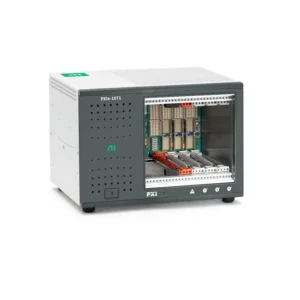
PXIe-7975R in a Complete PXI System
The PXIe-7975R can operate as the reconfigurable processing engine within a complete PXI system.
A typical system may include:
- PXI Chassis
- PXI Controller
- PXIe-7975R FlexRIO FPGA Module
- Compatible FlexRIO Adapter Module
- PXI Modules
- Oscilloscopes and digitizers
- Waveform generators
- RF instruments
- Switching modules
- Timing and synchronization hardware
This modular architecture allows FPGA processing to be integrated with conventional PXI measurement instruments.
Software and FPGA Development
The PXIe-7975R is designed for FPGA-based development using compatible NI software and FlexRIO support tools.
Engineers can create FPGA logic for:
- Custom acquisition
- Custom generation
- Hardware triggering
- Digital signal processing
- Protocol implementation
- Data streaming
- Real-time control
- Image processing
Software and FPGA development environment compatibility should be verified according to the specific application and installed software version.
PXI Chassis Considerations
Because the PXIe-7975R uses a PCI Express Gen2 x4 interface, the selected PXI Express chassis should provide an appropriate compatible peripheral slot and sufficient backplane bandwidth.
System designers should consider:
- PXI Express slot compatibility
- Backplane bandwidth
- Peer-to-peer routing requirements
- Cooling capacity
- Other installed PXI modules
- Controller performance
PXIe-7975R Selection Considerations
Before selecting the PXIe-7975R, engineers should evaluate:
- Required FPGA resources
- DSP processing requirements
- BRAM requirements
- External DRAM requirements
- Host data-transfer bandwidth
- Peer-to-peer streaming requirements
- Required FlexRIO Adapter Module
- Analog or digital I/O requirements
- FPGA development requirements
- PXI Express chassis compatibility
- Software compatibility
Industries
- Automated Test Equipment
- Semiconductor Test
- RF and Wireless Test
- Aerospace and Defense
- Machine Vision
- Electronic Manufacturing
- Communication Systems
- Scientific Research
- High-Energy Physics
- Research and Development
Applications
Custom High-Speed Data Acquisition
The PXIe-7975R can combine compatible high-speed I/O with custom FPGA processing for specialized acquisition applications.
Digital Signal Processing
The Kintex-7 410T FPGA and 1,540 DSP slices support parallel hardware implementations of filtering, FFT, correlation, modulation, and other signal-processing algorithms.
Machine Vision
Compatible Camera Link adapter modules allow the PXIe-7975R to perform high-throughput image acquisition and FPGA-based image processing.
RF and Wireless Processing
Compatible RF adapter modules can transform the PXIe-7975R into a customizable RF processing platform for research and automated test.
Custom Digital Protocols
Programmable FPGA logic allows specialized digital protocols, timing engines, and hardware state machines to be implemented directly on the module.
Low-Latency Automated Test
Deterministic FPGA processing and PXI integration make the PXIe-7975R suitable for applications requiring low-latency measurement, processing, and decision making.
Recommended Related Products
| NI PXIe-7975R | Kintex-7 410T FlexRIO FPGA module with 2 GB DRAM and PCI Express Gen2 x4 connectivity. |
| NI PXIe-7976R | Kintex-7 410T FlexRIO FPGA module with PCI Express Gen2 x8 connectivity for applications requiring higher PXI data throughput. |
| NI PXIe-7972R | Kintex-7 325T FlexRIO FPGA module with 2 GB DRAM for applications requiring fewer FPGA processing resources. |
| NI PXI Modules | PXI instrumentation for FPGA processing, waveform acquisition, RF testing, switching, source measurement, and automated test. |
Why Choose NI PXIe-7975R?
- Xilinx Kintex-7 410T FPGA
- 63,550 FPGA slices
- 1,540 DSP slices
- 28,620 kbit Block RAM
- 2 GB onboard DRAM
- High-bandwidth FPGA memory architecture
- PCI Express Gen2 x4 backplane interface
- Up to approximately 1.5 GB/s peer-to-peer streaming
- Reconfigurable hardware processing
- Deterministic hardware timing
- Custom triggering capability
- Compatible FlexRIO Adapter Module architecture
- Suitable for high-speed signal processing
- Suitable for machine vision
- Suitable for RF and wireless research
- Suitable for custom automated test systems
Frequently Asked Questions
What is the NI PXIe-7975R?
The NI PXIe-7975R is a PXI Express FlexRIO FPGA module based on a Xilinx Kintex-7 410T FPGA. It provides programmable FPGA processing, 2 GB onboard DRAM, and connectivity for compatible FlexRIO Adapter Modules.
What FPGA does the PXIe-7975R use?
The PXIe-7975R uses a Xilinx Kintex-7 410T FPGA.
How many FPGA slices does the PXIe-7975R have?
The PXIe-7975R provides 63,550 FPGA slices.
How many DSP slices does the PXIe-7975R have?
The Kintex-7 410T FPGA provides 1,540 DSP slices.
How much Block RAM does the PXIe-7975R have?
The PXIe-7975R provides approximately 28,620 kbit of FPGA Block RAM.
How much DRAM does the PXIe-7975R have?
The module provides 2 GB of onboard DRAM.
What is the PXI interface of the PXIe-7975R?
The PXIe-7975R uses a PCI Express Gen2 x4 PXI backplane interface.
What is the peer-to-peer bandwidth of the PXIe-7975R?
NI specifies peer-to-peer streaming capability up to approximately 1.5 GB/s for the PXIe-7975R under supported system configurations.
Does the PXIe-7975R have analog inputs?
The PXIe-7975R itself is primarily an FPGA processing module. Analog or digital I/O capabilities depend on the compatible FlexRIO Adapter Module connected to it.
Does the PXIe-7975R require a FlexRIO Adapter Module?
For applications requiring external analog, digital, RF, or vision I/O, the PXIe-7975R is paired with an appropriate compatible FlexRIO Adapter Module.
Can the PXIe-7975R perform real-time signal processing?
Yes. Custom algorithms can execute directly in the Kintex-7 FPGA, enabling deterministic and highly parallel real-time processing.
Can the PXIe-7975R be used for machine vision?
Yes. The PXIe-7975R is compatible with supported vision adapter modules such as the NI 1483 for Camera Link acquisition and FPGA-based image processing.
Can the PXIe-7975R be used for RF applications?
Yes. When paired with compatible RF FlexRIO Adapter Modules, the PXIe-7975R can implement custom FPGA-based RF and wireless processing applications.
What is the difference between PXIe-7975R and PXIe-7972R?
The PXIe-7975R uses the larger Kintex-7 410T FPGA with 63,550 FPGA slices and 1,540 DSP slices, while the PXIe-7972R uses the Kintex-7 325T with 50,950 slices and 840 DSP slices. Both provide 2 GB DRAM.
What is the difference between PXIe-7975R and PXIe-7976R?
Both modules use the Kintex-7 410T FPGA and provide 2 GB DRAM. The major difference is PXI Express connectivity: the PXIe-7975R uses PCIe Gen2 x4 and supports approximately 1.5 GB/s peer-to-peer streaming, while the PXIe-7976R uses PCIe Gen2 x8 and can provide substantially higher data throughput.
What is the part number of the PXIe-7975R?
The NI ordering part number for the PXIe-7975R is 782955-01.
What should I check before purchasing a PXIe-7975R?
Before purchasing the PXIe-7975R, verify the required FPGA resources, DSP requirements, onboard memory, PXI data-transfer bandwidth, compatible FlexRIO Adapter Module, I/O requirements, FPGA software environment, PXI Express chassis compatibility, and exact ordering part number.
Conclusion
The NI PXIe-7975R FlexRIO FPGA Module combines a Xilinx Kintex-7 410T FPGA, 63,550 FPGA slices, 1,540 DSP slices, 28,620 kbit of Block RAM, 2 GB onboard DRAM, and PCI Express Gen2 x4 connectivity in a PXI Express platform. Its reconfigurable FPGA architecture makes it particularly suitable for custom high-speed data acquisition, digital signal processing, machine vision, RF processing, custom protocols, low-latency control, and advanced automated test systems.