




Product Introduction
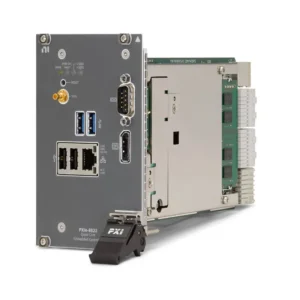
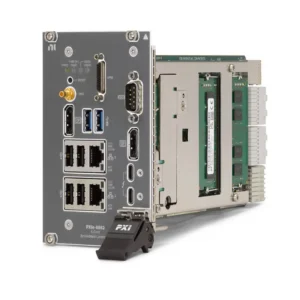
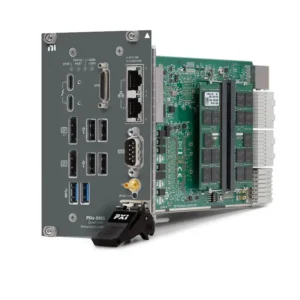
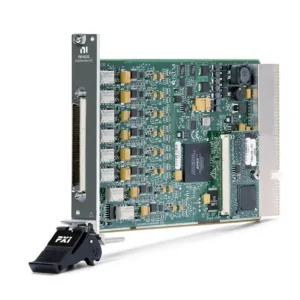
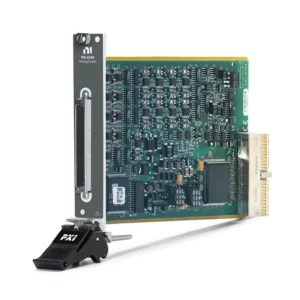
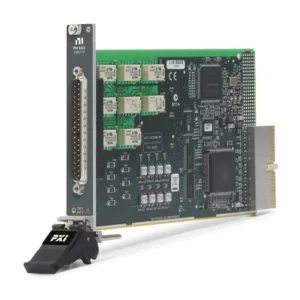
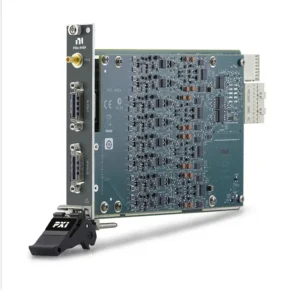
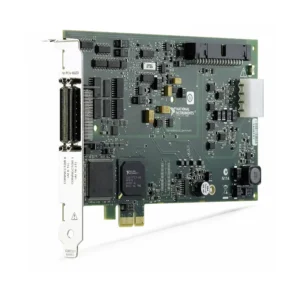
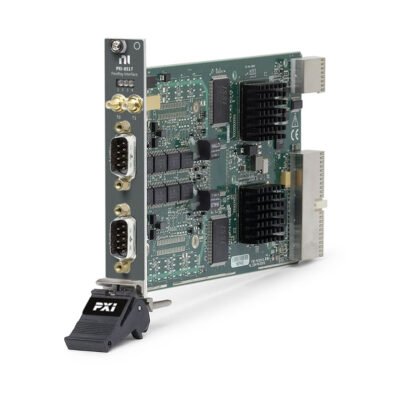
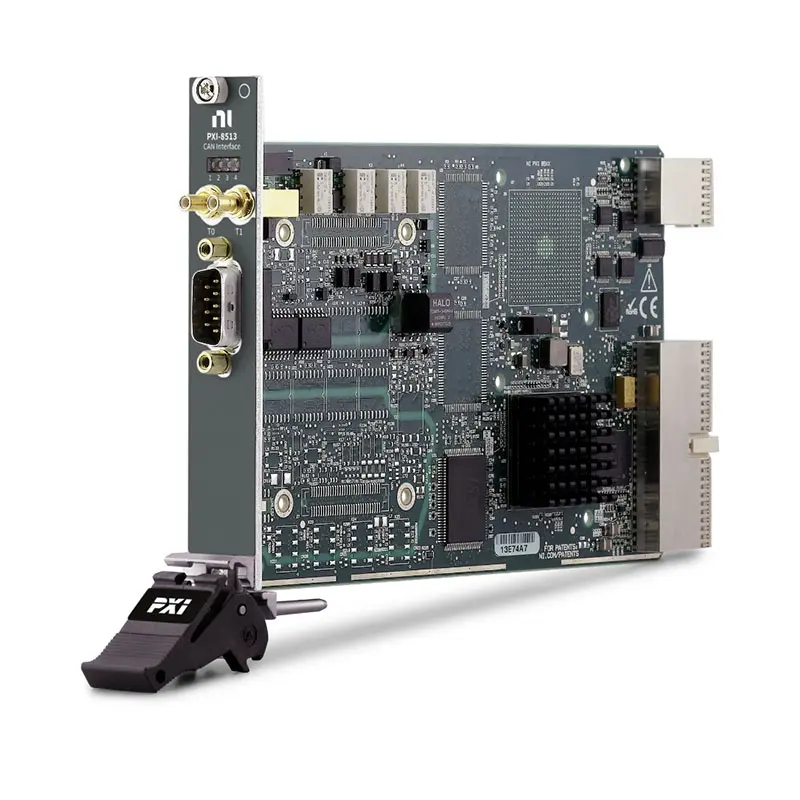
The NI PXI-8513 is a software-selectable PXI CAN interface module designed for automotive testing, ECU validation, hardware-in-the-loop (HIL) simulation, vehicle network monitoring, rapid control prototyping, and automated test applications. It is available in both one-port and two-port configurations for flexible CAN network interfacing.
The PXI-8513 supports multiple CAN physical layers, including High-Speed CAN, CAN FD, Low-Speed/Fault-Tolerant CAN, and Single-Wire CAN. With NI-XNET driver integration and onboard data processing, the module provides a high-performance solution for communicating with automotive and embedded CAN networks from PXI test systems.
Product Overview
The NI PXI-8513 belongs to the NI-XNET vehicle communication interface family and is designed for applications requiring flexible access to different CAN physical layers from a single PXI module.
A key advantage of the PXI-8513 is its software-selectable transceiver architecture. Engineers can configure the interface for different CAN physical layers without replacing the complete communication module, making it useful for automotive laboratories and validation systems that work with multiple vehicle network architectures.
The PXI-8513 also incorporates an onboard processor and NI-XNET device-driven DMA technology for efficient movement of CAN frames and signals between the hardware and host application. This architecture is particularly useful for demanding applications involving hundreds of CAN frames, real-time network manipulation, HIL testing, and automated ECU validation.
Key Features
1-Port and 2-Port Configurations
The PXI-8513 is available in one-port and two-port versions to accommodate different vehicle network requirements.
- 1-port PXI-8513 configuration
- 2-port PXI-8513 configuration
- Independent CAN network connections
- Flexible test system configuration
- Multi-network ECU testing
Advantage: Users can select the appropriate configuration according to the number of CAN networks required by the test system.
Software-Selectable CAN Physical Layer
The PXI-8513 provides software-selectable CAN transceiver functionality for working with different automotive network physical layers.
- High-Speed CAN
- CAN Flexible Data Rate (CAN FD)
- Low-Speed/Fault-Tolerant CAN
- Single-Wire CAN
- External CAN transceiver support
Advantage: A single module can support multiple CAN network configurations, reducing the need to maintain separate interface hardware for different vehicle buses.
High-Speed CAN Support
The PXI-8513 supports conventional High-Speed CAN communication for automotive and embedded network applications.
- High-Speed CAN physical layer
- Up to 1 Mbit/s classical CAN baud rate
- Automotive ECU communication
- CAN frame transmission and reception
- Vehicle network monitoring
Advantage: Supports one of the most widely deployed communication buses used in automotive electronics and embedded control systems.
CAN FD Capability
The PXI-8513 supports CAN Flexible Data Rate for modern automotive networks requiring increased payload capacity and higher data-phase performance.
- CAN FD communication support
- Flexible data-rate operation
- Modern ECU validation
- Higher-performance CAN networks
- Automotive electronics development
Advantage: Allows the PXI-8513 to be used with both traditional CAN networks and newer CAN FD applications.
Low-Speed/Fault-Tolerant CAN
The PXI-8513 supports Low-Speed/Fault-Tolerant CAN for automotive networks designed to continue operating under certain wiring fault conditions.
- Low-Speed CAN support
- Fault-tolerant CAN communication
- Up to 125 kbit/s baud rate
- Body electronics testing
- Automotive subsystem communication
Advantage: Supports validation of vehicle subsystems that use fault-tolerant CAN network architectures.
Single-Wire CAN Support
The software-selectable interface also supports Single-Wire CAN applications.
- Single-Wire CAN physical layer
- Software-selectable operation
- Automotive network testing
- Legacy vehicle communication
- Vehicle subsystem validation
Advantage: Extends the range of vehicle networks that can be tested using one PXI communication platform.
External CAN Transceiver Support
The PXI-8513 can operate with compatible external CAN transceivers when specialized physical-layer requirements cannot be met by the onboard transceivers.
- External transceiver interface
- Custom CAN physical layers
- Specialized network development
- Research applications
- Custom automotive interfaces
Advantage: Provides additional flexibility for specialized or custom CAN network applications.
NI-XNET High-Performance Architecture
The PXI-8513 is designed for use with the NI-XNET driver, which provides a high-performance API for automotive network communication.
- NI-XNET driver support
- Frame-based communication
- Signal-based communication
- High-throughput network processing
- Automated CAN testing
Advantage: Provides a consistent software interface for developing sophisticated vehicle network test applications.
Device-Driven DMA Engine
The NI-XNET architecture uses device-driven DMA to transfer CAN frames and signals between the PXI-8513 and host application efficiently.
- DMA-based data transfer
- Reduced host CPU overhead
- High CAN frame throughput
- Real-time communication applications
- Efficient multi-frame processing
Advantage: Helps maintain predictable performance in applications involving large numbers of continuously transmitted and received CAN messages.
Hardware Timing and Triggering
The PXI-8513 provides hardware timing and trigger resources for integration with other PXI instruments.
- 7 trigger lines
- 1 clock line
- 2 front-panel synchronization connections
- TTL-compatible synchronization
- External timing and triggering support
Advantage: Enables CAN communication events to be coordinated with data acquisition, signal generation, fault insertion, and other PXI measurements.
PXI Hybrid Compatibility
The PXI-8513 uses a PXI Hybrid bus connection for integration into compatible PXI modular instrumentation systems.
- PXI Hybrid interface
- Modular test system integration
- PXI chassis compatibility
- Multi-instrument test architectures
- Scalable automotive validation platforms
Advantage: Allows vehicle network communication to operate alongside other PXI measurement and test instruments in a unified system.
Technical Specifications
| Parameter | Description |
|---|---|
| Product Type | Software-Selectable PXI CAN Interface Module |
| Available CAN Ports | 1 Port or 2 Ports |
| 1-Port Part Number | 780688-01 |
| 2-Port Part Number | 780688-02 |
| CAN Physical Layers | High-Speed CAN, CAN FD, Low-Speed/Fault-Tolerant CAN, Single-Wire CAN |
| External Transceiver | Supported |
| High-Speed CAN Baud Rate | 40 kbit/s to 1 Mbit/s for Classical CAN |
| Low-Speed/Fault-Tolerant CAN | 40 kbit/s to 125 kbit/s |
| Single-Wire CAN | 33.3 kbit/s to 83.3 kbit/s |
| Driver | NI-XNET |
| Bus Connection | PXI Hybrid |
| External Timing and Triggering | Supported |
| Trigger Lines | 7 Input/Output |
| Clock Lines | 1 Input/Output |
| Front Panel Sync Connections | 2 Input/Output |
| Operating Temperature | 0 °C to 55 °C |
| Primary Applications | ECU Testing, HIL Simulation, CAN Monitoring and Automotive Validation |
Software Ecosystem
The NI PXI-8513 integrates with NI software tools for vehicle communication, automated testing, diagnostics, and HIL system development.
- NI-XNET: Provides APIs for reading and writing CAN frames and signals while supporting high-throughput vehicle network applications.
- LabVIEW: Enables development of custom CAN monitoring, ECU testing, data logging, visualization, and automated test applications.
- NI VeriStand: Can be used in HIL and real-time validation systems requiring vehicle network communication.
- TestStand: Enables CAN communication and diagnostic operations to be integrated into automated validation and production test sequences.
- Automotive Diagnostic Command Set: Can be used in appropriate systems for implementing diagnostic functions such as UDS and OBD workflows.
Industries
- Automotive and EV Testing
- Aerospace and Defense
- Heavy Vehicle Testing
- Industrial Automation
- Embedded Systems Development
- ECU Manufacturing
- Automotive Electronics
- Research and Development
Applications
ECU Testing and Validation
The PXI-8513 can communicate with electronic control units through CAN networks during development and validation.
- ECU functional testing
- CAN message verification
- Diagnostic communication
- ECU network simulation
- Production validation
Hardware-in-the-Loop Testing
The high-performance NI-XNET architecture makes the PXI-8513 suitable for HIL systems requiring deterministic vehicle network communication.
- ECU HIL testing
- Vehicle network simulation
- Real-time CAN communication
- Fault response validation
- Embedded controller testing
CAN Bus Monitoring
The PXI-8513 can monitor CAN traffic for development, troubleshooting, validation, and network analysis.
- CAN frame monitoring
- Signal monitoring
- Bus traffic recording
- Network troubleshooting
- Vehicle data logging
CAN FD Development
The PXI-8513 supports CAN FD applications for modern automotive electronic architectures.
- CAN FD ECU communication
- Automotive network development
- CAN FD frame testing
- Vehicle network validation
- Electronic subsystem testing
Rapid Control Prototyping
The PXI-8513 can be incorporated into control development platforms requiring communication with CAN-based devices.
- Prototype controller testing
- Real-time CAN communication
- Control algorithm validation
- Vehicle subsystem prototyping
Automotive Diagnostic Testing
Combined with compatible software, the PXI-8513 can form part of automated diagnostic and ECU programming systems.
- UDS diagnostic testing
- OBD applications
- Diagnostic trouble code testing
- ECU parameter access
- Automated diagnostic sequences
Comparison with Similar CAN Interface Products
| Model | Main Difference | Best Application |
|---|---|---|
| NI PXI-8513 | 1- or 2-port software-selectable CAN interface supporting multiple CAN physical layers and CAN FD. | Flexible automotive CAN and HIL testing |
| NI PXI-8512 | PXI CAN interface designed primarily for High-Speed CAN communication. | Standard High-Speed CAN applications |
| NI PCI-8513 | PCI implementation of the software-selectable NI-XNET CAN interface architecture. | Desktop PC-based CAN testing |
| NI PXIe-8510 | PXI Express vehicle interface designed for modern modular automotive communication systems. | Newer PXI Express vehicle network platforms |
Recommended Related Products
| NI PXI-8512 | NI-XNET CAN interface for systems focused primarily on High-Speed CAN communication. |
| NI PCI-8513 | PCI-based software-selectable CAN interface for desktop automated test and vehicle communication systems. |
| NI PXIe-8510 | PXI Express vehicle communication interface for modern automotive and HIL test architectures. |
| NI PXI-6683 | PXI timing and synchronization module for test systems requiring coordinated timing between CAN communication and measurement hardware. |
Why Choose PXI-8513?
- Available with 1 or 2 CAN ports
- Software-selectable CAN physical layers
- High-Speed CAN support
- CAN FD support
- Low-Speed/Fault-Tolerant CAN support
- Single-Wire CAN support
- External CAN transceiver capability
- NI-XNET high-performance driver architecture
- Device-driven DMA for efficient data transfer
- External timing and triggering support
- Ideal for ECU testing and HIL simulation
- Designed for PXI automotive validation systems
Frequently Asked Questions
What is the NI PXI-8513?
The NI PXI-8513 is a software-selectable PXI CAN interface used to connect PXI test systems with CAN-based automotive and embedded networks. It is available with one or two CAN ports.
Does the PXI-8513 support CAN FD?
Yes. The PXI-8513 supports CAN Flexible Data Rate in addition to conventional High-Speed CAN communication.
How many CAN ports does the PXI-8513 have?
The PXI-8513 is available in both one-port and two-port configurations. Part number 780688-01 is the one-port version, while 780688-02 is the two-port version.
Which CAN physical layers does the PXI-8513 support?
The PXI-8513 supports software-selectable High-Speed CAN, CAN FD, Low-Speed/Fault-Tolerant CAN, and Single-Wire CAN. It can also be used with an external CAN transceiver for specialized physical-layer applications.
What software does the PXI-8513 use?
The PXI-8513 is designed for use with the NI-XNET driver. NI-XNET provides frame-based and signal-based APIs for CAN communication and integrates with NI development and automated test software.
Is the PXI-8513 suitable for HIL testing?
Yes. Hardware-in-the-loop simulation is one of the major applications for the PXI-8513. Its NI-XNET architecture is designed for high-performance manipulation of large numbers of CAN frames and signals in real-time test systems.
What is the difference between PXI-8513 and PXI-8512?
The PXI-8512 is primarily intended for High-Speed CAN applications, while the PXI-8513 provides software-selectable physical-layer capability. The PXI-8513 is therefore more flexible when a test system must support High-Speed CAN, CAN FD, Low-Speed/Fault-Tolerant CAN, Single-Wire CAN, or specialized external transceivers.
Can the PXI-8513 be used for ECU diagnostic testing?
Yes. When combined with appropriate NI software and diagnostic tools, the PXI-8513 can be incorporated into ECU diagnostic, validation, production test, UDS, OBD, and other CAN-based automotive test systems.
Does the PXI-8513 support hardware synchronization?
Yes. The PXI-8513 provides external timing and triggering capability, including trigger, clock, and synchronization resources that can be used to coordinate CAN communication with other PXI instruments.
Conclusion
The NI PXI-8513 software-selectable CAN interface module provides a flexible vehicle network communication solution for ECU validation, HIL simulation, CAN monitoring, rapid control prototyping, automotive diagnostics, and automated testing. With one- and two-port configurations, High-Speed CAN, CAN FD, Low-Speed/Fault-Tolerant CAN, Single-Wire CAN, external transceiver support, NI-XNET integration, and PXI timing capabilities, the PXI-8513 is well suited for demanding automotive and embedded network test systems.