



Product Introduction
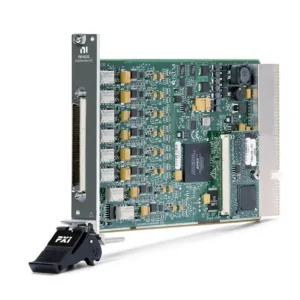
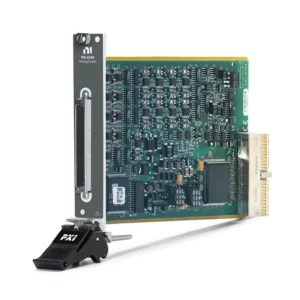
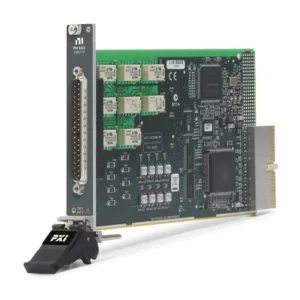
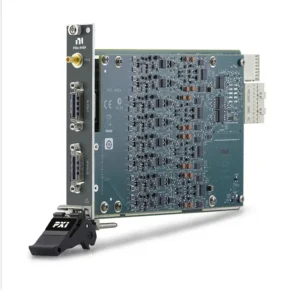
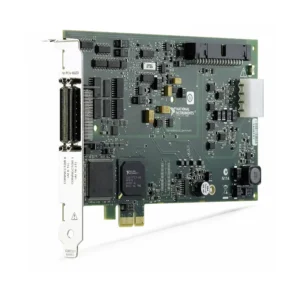
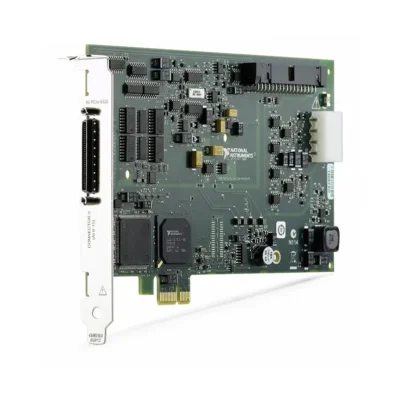
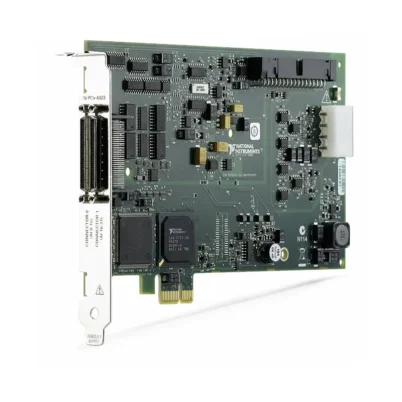
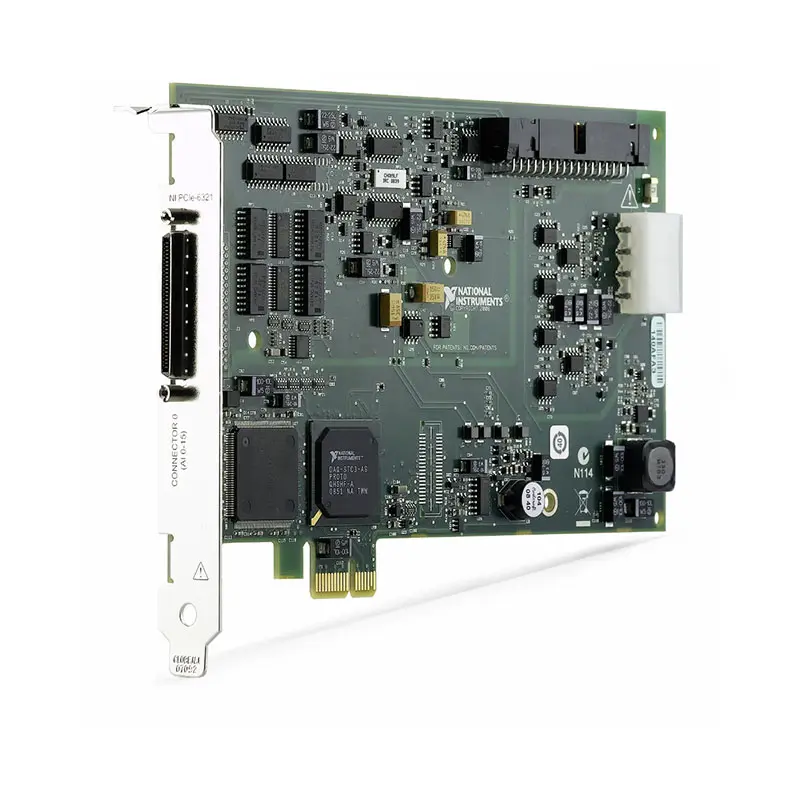
The NI PCIe-6321 is an X Series multifunction data acquisition device designed for automated test equipment, laboratory measurement, industrial monitoring, machine control, and engineering research. It combines analog input, analog output, digital I/O, counter/timer functions, advanced triggering, and PCI Express communication in one compact internal DAQ board.
The PCIe-6321 provides 16 single-ended or eight differential analog input channels with 16-bit resolution and an aggregate sampling rate of up to 250 kS/s. It also includes two hardware-timed analog outputs, 24 programmable digital I/O lines, and four independent 32-bit counter/timers.
Product Overview
The PCIe-6321 belongs to the National Instruments X Series multifunction DAQ family. Its NI-STC3 timing and synchronization architecture provides independent timing engines, retriggerable measurement tasks, flexible signal routing, and precise coordination between analog, digital, and counter subsystems.
The device uses an x1 PCI Express interface and can be installed in compatible x1, x4, x8, or x16 PCI Express slots. Eight dedicated DMA channels support simultaneous data movement for analog input, analog output, digital input, digital output, and all four counter/timer subsystems.
With NI-DAQmx driver support, the PCIe-6321 integrates with LabVIEW, TestStand, NI MAX, FlexLogger, Python, C/C++, C#, .NET, and LabWindows/CVI development environments.
Key Features
16-Bit Analog Input Acquisition
The PCIe-6321 provides flexible voltage acquisition for sensors, instruments, and electronic devices.
- 16 single-ended analog input channels
- 8 differential analog input channels
- 16-bit ADC resolution
- 250 kS/s maximum aggregate sample rate
- DC input coupling
- No minimum sampling rate
Advantage: The configurable input architecture supports multichannel voltage acquisition, sensor monitoring, laboratory experiments, and automated electrical testing.
Programmable Analog Input Ranges
Multiple bipolar input ranges allow the device to measure signals with different amplitudes.
- ±0.2 V input range
- ±1 V input range
- ±5 V input range
- ±10 V input range
- 100 dB common-mode rejection from DC to 60 Hz
- 700 kHz small-signal bandwidth
Advantage: Programmable ranges provide flexibility for low-level conditioned signals and standard voltage measurements.
Two Hardware-Timed Analog Outputs
The PCIe-6321 includes two analog output channels for waveform generation, control, and device simulation.
- 2 analog output channels
- 16-bit DAC resolution
- Up to 900 kS/s with one channel
- Up to 840 kS/s per channel with two channels
- ±10 V output range
- ±5 mA current drive
Advantage: Engineers can generate control voltages, test stimulus signals, reference waveforms, and simulated sensor outputs while simultaneously acquiring measurements.
24 Programmable Digital I/O Lines
The device provides flexible digital resources for fixture control, status monitoring, and timing signal routing.
- 24 total digital I/O lines
- Individually programmable input or output direction
- 8 hardware-timed Port 0 lines
- 16 PFI and static digital lines
- Digital waveform acquisition and generation
- Programmable digital filtering
Advantage: Digital I/O can interface with external logic, relays, production fixtures, indicators, switches, and automated equipment.
Hardware-Timed Digital Waveforms
Port 0 supports correlated digital acquisition and generation for synchronized digital applications.
- Up to 8-bit digital waveform width
- Up to 1 MHz digital sample clock
- 2,047-sample digital output FIFO
- 255-sample digital input FIFO
- DMA data transfer support
- Start, reference, pause, and sample-clock triggering
Advantage: Hardware-timed digital operation provides more repeatable timing than software-controlled digital updates.
Four 32-Bit Counter/Timers
Four independent counters support position, frequency, pulse, and event measurements.
- 4 independent counter/timers
- 32-bit counter resolution
- Edge and event counting
- Frequency and period measurement
- Pulse-width and two-edge separation measurement
- X1, X2, and X4 quadrature encoder support
- Pulse and pulse-train generation
Advantage: The integrated counters support motion, encoder, PWM, rotational speed, timing, and event-monitoring applications without separate counter hardware.
NI-STC3 Timing and Synchronization
The NI-STC3 timing architecture coordinates analog, digital, and counter operations with precise hardware timing.
- 100 MHz master timebase
- 10 ns timing resolution
- Independent timing engines
- Retriggerable measurement tasks
- Reference and pause triggering
- RTSI and PFI signal routing
Advantage: Advanced hardware timing improves measurement repeatability and simplifies synchronization with external instruments and additional NI DAQ devices.
High-Throughput PCI Express Interface
The PCIe-6321 communicates with the host computer through a PCI Express connection.
- x1 PCI Express form factor
- PCI Express 1.1 compliance
- Compatible with x1, x4, x8, and x16 slots
- 8 DMA channels
- Low-latency data transfer
- Half-length board design
Advantage: PCI Express bandwidth supports simultaneous multifunction acquisition, generation, digital, and counter operations.
Technical Specifications
| Parameter | Description |
|---|---|
| Product Type | PCI Express Multifunction DAQ Device |
| DAQ Family | NI X Series |
| Part Number | 781044-01 |
| Bus Interface | x1 PCI Express, PCI Express 1.1 Compliant |
| Compatible PCIe Slots | x1, x4, x8, and x16 |
| Analog Input Channels | 16 Single-Ended or 8 Differential |
| Analog Input Resolution | 16 Bits |
| Maximum Analog Input Rate | 250 kS/s Aggregate |
| Analog Input Ranges | ±0.2 V, ±1 V, ±5 V, and ±10 V |
| Analog Input Coupling | DC |
| Analog Input Bandwidth | 700 kHz, Small Signal, −3 dB |
| Analog Input FIFO | 4,095 Samples |
| Analog Output Channels | 2 |
| Analog Output Resolution | 16 Bits |
| Maximum Analog Output Rate | 900 kS/s for One Channel; 840 kS/s per Channel for Two Channels |
| Analog Output Range | ±10 V |
| Analog Output Current Drive | ±5 mA |
| Analog Output FIFO | 8,191 Samples Shared |
| Digital I/O Channels | 24 Bidirectional Lines |
| Hardware-Timed Digital Lines | 8 Lines on Port 0 |
| Maximum Digital Waveform Rate | Up to 1 MHz |
| Counter/Timers | 4 |
| Counter Resolution | 32 Bits |
| Counter Internal Timebases | 100 MHz, 20 MHz, and 100 kHz |
| Maximum External Counter Clock | 25 MHz |
| Frequency Generator | 1 Channel |
| DMA Channels | 8 |
| Timing Technology | NI-STC3 |
| I/O Connector | 68-Pin VHDCI |
| Calibration Interval | 2 Years |
| Recommended Warm-Up Time | 15 Minutes |
| Operating Temperature | 0 °C to 50 °C |
| Storage Temperature | −40 °C to 70 °C |
| Board Dimensions | 9.9 cm × 16.8 cm |
| Weight | 104 g |
| Driver | NI-DAQmx |
Software Ecosystem
The PCIe-6321 integrates with the National Instruments software ecosystem for configuration, acquisition, control, automation, and data analysis.
- NI-DAQmx: Provides device configuration, acquisition, waveform generation, digital I/O, counter functions, signal routing, and programming APIs.
- LabVIEW: Supports graphical development of automated measurement, control, monitoring, and data logging applications.
- NI MAX: Enables device detection, channel testing, self-calibration, diagnostics, and hardware configuration.
- TestStand: Supports automated test sequencing, production validation, reporting, and test-system deployment.
- FlexLogger: Provides configuration-based data acquisition, visualization, alarms, calculations, and logging.
- DIAdem: Supports measurement data management, visualization, analysis, and automated reporting.
- Text-Based APIs: NI-DAQmx supports compatible Python, C/C++, C#, .NET, and LabWindows/CVI applications.
Industries
- Industrial Automation
- Automated Test Equipment
- Electronics Manufacturing
- Automotive Testing
- Aerospace and Defense
- Energy and Power Systems
- Research and Development
- Academic Laboratories
Applications
Automated Functional Testing
The multifunction architecture supports electrical measurement, device stimulation, fixture control, and timing within one test system.
- Electronic product validation
- Production testing
- Quality assurance
- Test-fixture automation
Sensor and Voltage Acquisition
The configurable analog input channels can acquire voltage signals from sensors and conditioned transducers.
- Voltage monitoring
- Pressure sensor acquisition
- Position measurement
- Process data logging
Waveform Generation and Control
The two analog outputs can generate hardware-timed stimulus and control signals.
- Sensor simulation
- Reference voltage generation
- Closed-loop experiments
- Electronic device stimulation
Digital Fixture Control
The programmable digital lines can control and monitor external test equipment and fixtures.
- Relay and indicator control
- Device status monitoring
- Trigger distribution
- Digital pattern generation
Encoder and Motion Measurement
Four hardware counters support position, speed, frequency, and pulse applications.
- Quadrature encoder acquisition
- Rotational speed measurement
- Event counting
- Pulse-width measurement
- PWM generation
Comparison with Similar Products
| Model | Main Difference | Best Application |
|---|---|---|
|
NI PCIe-6321 | Provides 16 analog inputs, two analog outputs, 24 digital I/O lines, and four counters with a 250 kS/s analog input rate. | Balanced multifunction measurement and control |
|
NI PCIe-6320 | Related X Series device intended for applications that do not require the same analog output configuration. | Analog acquisition and digital control |
|
NI PCIe-6323 | Provides a higher analog input channel count, additional analog outputs, and increased overall multifunction capability. | Higher-channel-count automated testing |
|
NI PCIe-6361 | Higher-performance X Series device with increased analog input sampling speed. | High-speed measurement and control |
|
NI USB-6212 | External USB multifunction DAQ device designed for portable and laptop-based measurement systems. | Portable data acquisition |
Recommended Related Products
|
NI SCB-68A | Shielded connector block for protected analog, digital, and counter signal wiring. |
|
NI SHC68-68-EPM | Shielded 68-pin cable for connecting the PCIe-6321 to compatible terminal accessories. |
|
NI BNC-2110 | Shielded BNC connector block for convenient laboratory signal connections. |
|
NI BNC-2120 | BNC connector accessory with signal connection and function-generator resources for laboratory experiments. |
|
NI CB-68LP | Low-cost connector block for custom wiring, prototypes, and automated test fixtures. |
Why Choose PCIe-6321?
- 16 single-ended or eight differential analog input channels
- 16-bit analog acquisition at up to 250 kS/s
- Two hardware-timed 16-bit analog outputs
- 24 individually configurable digital I/O lines
- Eight hardware-timed digital waveform lines
- Four independent 32-bit counter/timers
- NI-STC3 timing and synchronization technology
- Eight dedicated DMA channels
- x1 PCI Express interface with broad slot compatibility
- Full support for NI-DAQmx, LabVIEW, TestStand, and Python
Frequently Asked Questions
What is the maximum analog input sampling rate of the PCIe-6321?
The PCIe-6321 provides a maximum aggregate analog input sampling rate of 250 kS/s. The rate is shared across all enabled analog input channels.
Can the PCIe-6321 generate analog waveforms?
Yes. It includes two 16-bit analog output channels. One channel can update at up to 900 kS/s, while both channels can operate at up to 840 kS/s per channel.
Does the PCIe-6321 support hardware-timed digital I/O?
Yes. The eight lines on Port 0 support hardware-timed waveform acquisition and generation at rates up to 1 MHz, depending on system and bus activity. The remaining digital and PFI lines support static I/O and timing-signal routing.
Conclusion
The NI PCIe-6321 X Series multifunction DAQ device combines analog acquisition, waveform generation, digital control, counter/timer functions, PCI Express throughput, and advanced NI-STC3 synchronization in one internal measurement board. Its balanced I/O configuration makes it an effective solution for automated testing, laboratory research, sensor acquisition, industrial monitoring, waveform generation, encoder measurement, and machine-control applications.