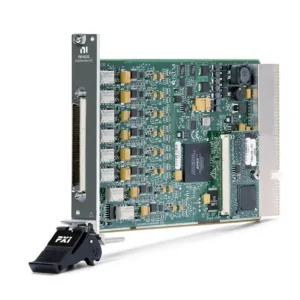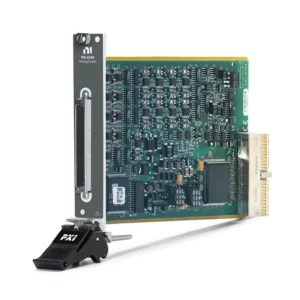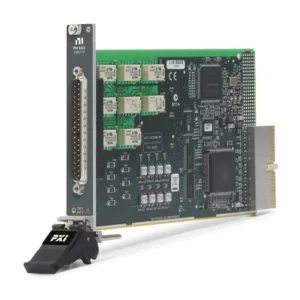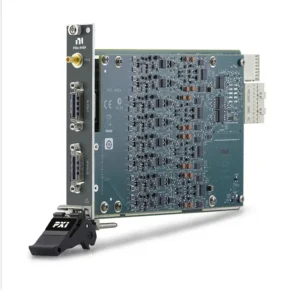




Product Introduction
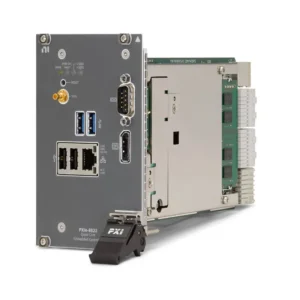
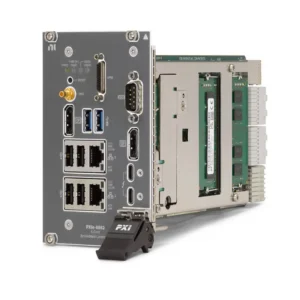
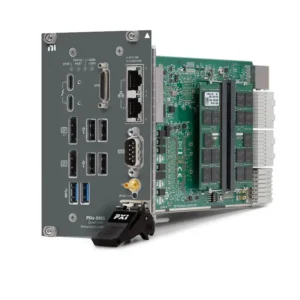
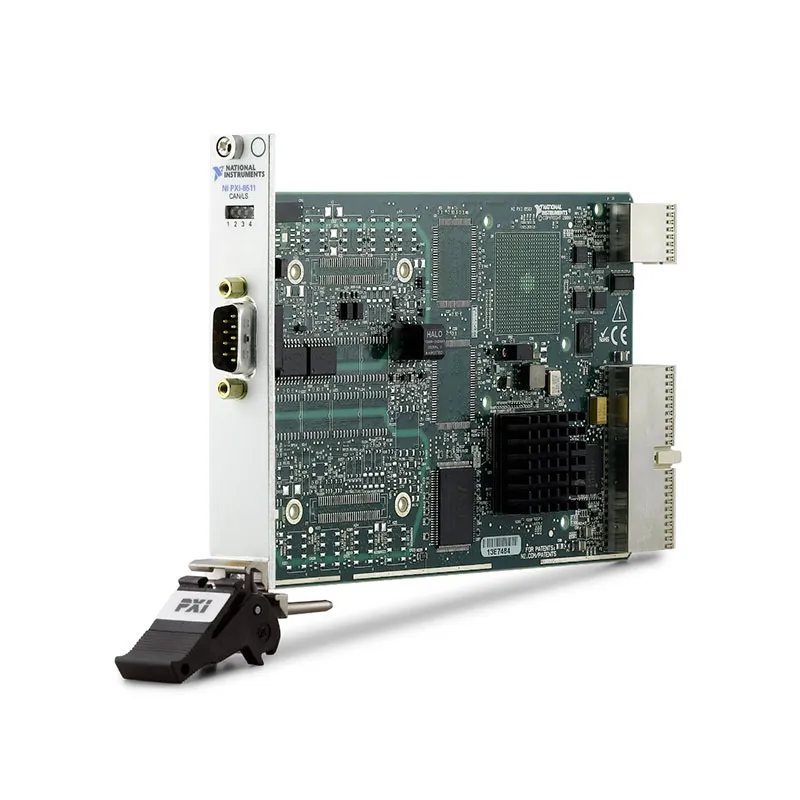
The NI PXI-8511 is a low-speed/fault-tolerant CAN interface module designed for automotive testing, ECU validation, hardware-in-the-loop (HIL) simulation, vehicle network monitoring, embedded system development, and automated test applications. It is available in both one-port and two-port configurations for flexible CAN network integration.
Supporting Low-Speed/Fault-Tolerant CAN communication from 40 kbit/s to 125 kbit/s, NI-XNET software integration, hardware timing and triggering, and electrical isolation, the PXI-8511 provides a reliable communication interface for automotive networks where fault tolerance and robust operation are important.
Product Overview
The NI PXI-8511 belongs to the NI-XNET CAN interface family and is specifically designed for Low-Speed/Fault-Tolerant CAN networks.
Unlike High-Speed CAN interfaces such as the PXI-8512, the PXI-8511 is optimized for fault-tolerant CAN applications. Low-Speed/Fault-Tolerant CAN is commonly used in vehicle body electronics and other embedded systems where network communication may need to continue operating under certain wiring fault conditions.
The PXI-8511 is available with either one or two CAN ports, allowing engineers to select the appropriate configuration according to the number of independent networks required by the test system.
Combined with NI-XNET, LabVIEW, VeriStand, and TestStand, the PXI-8511 can be integrated into automated automotive validation systems, HIL platforms, CAN monitoring applications, diagnostic systems, and ECU development environments.
Key Features
Low-Speed/Fault-Tolerant CAN Interface
The PXI-8511 is designed specifically for Low-Speed/Fault-Tolerant CAN physical-layer communication.
- Low-Speed CAN communication
- Fault-tolerant CAN physical layer
- Automotive network interfacing
- ECU communication
- Embedded CAN system testing
Advantage: Provides dedicated hardware for automotive and embedded networks that use fault-tolerant CAN rather than conventional High-Speed CAN.
1-Port and 2-Port Configurations
The PXI-8511 is available in configurations with either one or two CAN interfaces.
- 1-port configuration
- 2-port configuration
- Independent CAN networks
- Flexible system architecture
- Multi-network ECU testing
Advantage: Engineers can select a single-port configuration for basic applications or a dual-port version when two CAN networks must be accessed simultaneously.
40 kbit/s to 125 kbit/s Baud Rate
The PXI-8511 supports CAN communication rates across the standard operating range for its low-speed/fault-tolerant physical layer.
- Minimum baud rate: 40 kbit/s
- Maximum baud rate: 125 kbit/s
- Software-configurable communication rate
- Vehicle network communication
- Automated CAN testing
Advantage: Supports the communication speeds commonly required by Low-Speed/Fault-Tolerant CAN networks.
Fault-Tolerant Network Operation
Low-Speed/Fault-Tolerant CAN is designed for systems where network operation can continue under certain physical-layer fault conditions.
- Fault-tolerant CAN communication
- Automotive body network testing
- Network robustness validation
- Wiring fault test applications
- ECU fault-response testing
Advantage: Makes the PXI-8511 particularly suitable for validation of CAN networks where communication robustness is a key requirement.
NI-XNET Architecture
The PXI-8511 is supported by NI-XNET, NI’s vehicle network communication driver and API.
- NI-XNET driver support
- Frame-based CAN communication
- Signal-based CAN communication
- CAN database integration
- High-performance data transfer
Advantage: NI-XNET provides a standardized software environment for developing CAN monitoring, simulation, data logging, and automated test applications.
CAN Frame Transmission and Reception
The PXI-8511 can transmit and receive CAN messages under software control.
- CAN frame transmission
- CAN frame reception
- CAN signal communication
- Network traffic monitoring
- Automated message generation
Advantage: Supports both active ECU communication and passive vehicle network measurement applications.
Hardware Timing and Triggering
The PXI-8511 provides dedicated synchronization resources for integration with other PXI measurement instruments.
- 7 trigger input/output lines
- 1 clock input/output line
- TTL-compatible I/O
- Hardware synchronization
- Coordinated CAN and measurement events
Advantage: CAN communication can be synchronized with DAQ, digitizers, signal generators, fault insertion hardware, and other PXI instruments.
Electrical Isolation
The PXI-8511 provides electrical isolation designed to reduce ground-loop problems in vehicle and test-system installations.
- Port-to-port isolation
- Port-to-earth isolation
- 500 Vrms dielectric withstand test
- 60 VDC continuous isolation rating
- Reduced ground-loop problems
Advantage: Isolation improves system robustness when CAN devices and PXI instrumentation operate at different ground potentials.
DB-9 CAN Connectivity
The PXI-8511 uses standard CAN-oriented DB-9 connectivity for integration with vehicle and embedded networks.
- DB-9 CAN interface
- CAN_H connection
- CAN_L connection
- CAN reference ground
- External transceiver supply connection
Advantage: Uses a familiar physical interface for connecting CAN cabling, breakout accessories, and automotive test fixtures.
External Transceiver Power
The CAN interface pinout includes an external supply connection used by the low-speed/fault-tolerant transceiver architecture.
- External VSUP connection
- 9 V to 30 V external supply
- CAN transceiver power
- Vehicle electrical system integration
- Automotive test fixture support
Advantage: Supports operation of the fault-tolerant CAN transceiver within automotive and embedded test environments.
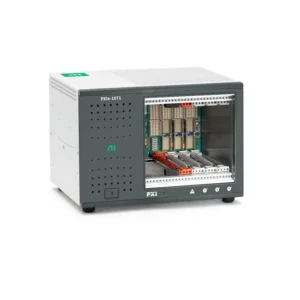
PXI Modular System Integration
The PXI-8511 integrates into modular PXI test platforms alongside other vehicle communication and measurement instruments.
- PXI modular architecture
- CAN communication integration
- DAQ system integration
- Fault insertion integration
- Automated HIL system development
Advantage: Enables CAN communication to be combined with analog, digital, timing, switching, and measurement functions within one PXI test platform.
Technical Specifications
| Parameter | Description |
|---|---|
| Product Type | PXI Low-Speed/Fault-Tolerant CAN Interface Module |
| Available Ports | 1 Port or 2 Ports |
| CAN Physical Layer | Low-Speed/Fault-Tolerant CAN |
| Minimum Baud Rate | 40 kbit/s |
| Maximum Baud Rate | 125 kbit/s |
| CAN Transceiver | NXP TJA1054A or TJA1055T Depending on Hardware Revision |
| CAN Bus Line Voltage | -27 VDC to +40 VDC |
| Trigger Lines | 7 Input/Output |
| Clock Lines | 1 Input/Output |
| Synchronization I/O | TTL Compatible |
| Trigger Response | Rising Edge |
| Port-to-Port Continuous Isolation | 60 VDC, Measurement Category I |
| Port-to-Earth Continuous Isolation | 60 VDC, Measurement Category I |
| Isolation Withstand | 500 Vrms, 5 Second Dielectric Test |
| Operating Temperature | 0 °C to 55 °C |
| Storage Temperature | -20 °C to 70 °C |
| Maximum Altitude | 2000 m |
| 1-Port Weight | 98 g |
| 2-Port Weight | 102 g |
| Driver | NI-XNET |
| Primary Applications | ECU Testing, HIL Simulation, Fault-Tolerant CAN Monitoring and Automotive Validation |
Software Ecosystem
The NI PXI-8511 integrates with NI vehicle network and automated test software for CAN communication, monitoring, simulation, diagnostics, and validation.
- NI-XNET: Provides the primary driver and programming APIs for CAN frame and signal communication.
- LabVIEW: Enables development of CAN monitoring, data logging, ECU communication, visualization, and automated test applications.
- NI VeriStand: Supports integration of CAN communication into real-time validation and hardware-in-the-loop test systems.
- TestStand: Allows CAN communication functions to be incorporated into automated production and validation test sequences.
- NI-XNET Bus Monitor: Provides tools for observing CAN network traffic, frames, signals, and communication errors during development and troubleshooting.
Industries
- Automotive and EV Testing
- Automotive Electronics
- ECU Development
- Aerospace and Defense
- Heavy Vehicle Testing
- Embedded Systems
- Industrial Automation
- Research and Development
Applications
ECU Testing and Validation
The PXI-8511 can communicate with ECUs connected to low-speed/fault-tolerant CAN networks during development and automated validation.
- ECU functional testing
- CAN message verification
- Signal validation
- Network communication testing
- Production ECU testing
Hardware-in-the-Loop Testing
The PXI-8511 can be integrated into HIL systems requiring low-speed CAN communication between a real-time simulator and an electronic controller.
- ECU HIL testing
- Vehicle network simulation
- Real-time CAN communication
- Controller response validation
- Fault-condition testing
Automotive Body Electronics Testing
Low-Speed/Fault-Tolerant CAN is commonly associated with vehicle systems where robust network operation is important.
- Body control module testing
- Door control systems
- Lighting electronics
- Comfort system validation
- Vehicle subsystem communication
CAN Bus Monitoring
The PXI-8511 can monitor CAN communication during development, debugging, validation, and long-duration testing.
- CAN frame monitoring
- Signal monitoring
- Network data logging
- Communication troubleshooting
- Vehicle bus analysis
Fault-Tolerance Validation
The low-speed/fault-tolerant physical layer makes the PXI-8511 useful for investigating ECU and network behavior under applicable wiring fault conditions.
- Network fault testing
- ECU fault-response validation
- CAN wiring diagnostics
- Communication robustness testing
- Automotive qualification testing
Automated Production Testing
The PXI-8511 can be incorporated into end-of-line and production test systems for CAN-enabled electronic assemblies.
- CAN communication verification
- ECU production testing
- Automated message exchange
- Functional pass/fail testing
- Manufacturing validation
Vehicle Network Data Logging
The PXI-8511 and NI-XNET can be used to acquire and record low-speed CAN network traffic during vehicle or subsystem testing.
- CAN frame logging
- Signal data recording
- Long-duration network monitoring
- Vehicle test data acquisition
- Fault investigation
Comparison with Similar CAN Interface Modules
| Model | Main Difference | Best Application |
|---|---|---|
| NI PXI-8511 | 1- or 2-port interface specifically designed for Low-Speed/Fault-Tolerant CAN communication from 40 to 125 kbit/s. | Low-Speed/Fault-Tolerant automotive CAN systems |
| NI PXI-8512 | High-Speed CAN interface designed for conventional High-Speed CAN and supported CAN FD applications. | High-Speed CAN and CAN FD testing |
| NI PXI-8513 | Software-selectable CAN interface capable of supporting multiple physical layers including High-Speed, Low-Speed/Fault-Tolerant, and Single-Wire CAN. | Flexible multi-standard CAN testing |
| NI-9861 | C Series Low-Speed/Fault-Tolerant CAN interface for CompactRIO and compatible C Series systems. | CompactRIO-based fault-tolerant CAN applications |
Recommended Related Products
| NI PXI-8512 | High-Speed CAN interface for automotive systems requiring conventional High-Speed CAN or supported CAN FD communication. |
| NI PXI-8513 | Software-selectable CAN interface for test systems that must support several CAN physical-layer technologies. |
| NI-9861 | C Series Low-Speed/Fault-Tolerant CAN module for CompactRIO-based automotive and embedded applications. |
| NI PXI-6683 | PXI timing and synchronization module for systems requiring coordinated CAN communication and precision measurement timing. |
Why Choose PXI-8511?
- Dedicated Low-Speed/Fault-Tolerant CAN interface
- Available with 1 or 2 CAN ports
- 40 kbit/s to 125 kbit/s communication rates
- Designed for fault-tolerant vehicle networks
- NI-XNET driver support
- CAN frame and signal communication
- 7 hardware trigger lines
- 1 hardware clock line
- Port isolation for reduced ground-loop problems
- PXI modular system integration
- Suitable for ECU and HIL testing
- Ideal for automotive body electronics validation
Frequently Asked Questions
What is the NI PXI-8511?
The NI PXI-8511 is a PXI CAN interface module specifically designed for Low-Speed/Fault-Tolerant CAN networks. It is available with one or two CAN ports and is supported by NI-XNET.
How many CAN ports does the PXI-8511 have?
The PXI-8511 is available in both one-port and two-port configurations. The appropriate version depends on how many independent CAN networks must be connected to the PXI test system.
What type of CAN does the PXI-8511 support?
The PXI-8511 supports Low-Speed/Fault-Tolerant CAN. It is not the same physical-layer interface as a conventional High-Speed CAN module.
What baud rates does the PXI-8511 support?
The PXI-8511 supports CAN baud rates from 40 kbit/s to 125 kbit/s.
Does the PXI-8511 support CAN FD?
No. The PXI-8511 is designed for Low-Speed/Fault-Tolerant Classical CAN applications. If CAN FD communication is required, a compatible High-Speed/FD interface such as the PXI-8512 or a suitable software-selectable interface should be considered.
What is the difference between PXI-8511 and PXI-8512?
The PXI-8511 is designed for Low-Speed/Fault-Tolerant CAN with communication rates up to 125 kbit/s. The PXI-8512 is designed for High-Speed CAN and supported CAN FD applications. The correct module should therefore be selected according to the physical layer used by the CAN network.
What is the difference between PXI-8511 and PXI-8513?
The PXI-8511 is dedicated to Low-Speed/Fault-Tolerant CAN. The PXI-8513 provides software-selectable CAN physical layers and can support a wider range of CAN network types. The PXI-8511 is appropriate when only fault-tolerant CAN is required, while the PXI-8513 provides greater flexibility for multi-standard test systems.
Does the PXI-8511 use NI-XNET?
Yes. The PXI-8511 is supported by NI-XNET, which provides APIs for transmitting and receiving CAN frames and signals and integrating CAN communication into automated test applications.
Can the PXI-8511 be used for HIL testing?
Yes. The PXI-8511 can be integrated into hardware-in-the-loop systems where the device under test communicates through a Low-Speed/Fault-Tolerant CAN network.
Does the PXI-8511 provide hardware triggering?
Yes. The PXI-8511 provides seven trigger input/output lines and one clock input/output line with TTL-compatible signaling, allowing CAN communication to be synchronized with other test-system events.
Is the PXI-8511 electrically isolated?
Yes. The PXI-8511 provides port-to-port and port-to-earth isolation intended to help prevent ground loops. The specified continuous isolation rating is 60 VDC, with a 500 Vrms dielectric withstand test.
What applications are best suited for the PXI-8511?
Typical applications include automotive body electronics testing, ECU validation, HIL simulation, Low-Speed/Fault-Tolerant CAN monitoring, automated production testing, network data logging, and CAN fault-response validation.
Conclusion
The NI PXI-8511 Low-Speed/Fault-Tolerant CAN interface module provides a dedicated vehicle communication solution for automotive ECU testing, HIL simulation, CAN monitoring, production validation, and embedded network development. With one- and two-port configurations, 40 kbit/s to 125 kbit/s communication, NI-XNET integration, hardware timing and triggering, electrical isolation, and PXI system compatibility, the PXI-8511 is particularly well suited for test systems using Low-Speed/Fault-Tolerant CAN networks.