



Product Introduction
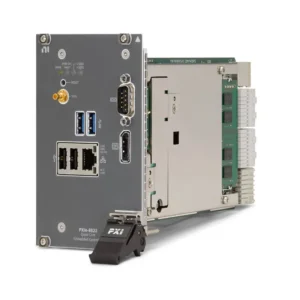
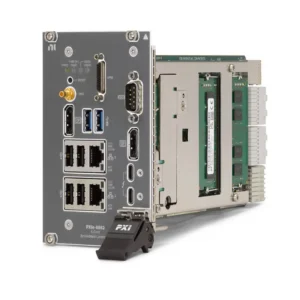
The NI‑7931R, commonly searched as NI‑7931, is a stand-alone Controller for FlexRIO that combines an embedded real-time controller, a user-programmable Kintex‑7 FPGA and support for interchangeable FlexRIO adapter modules.
The NI‑7931R features a Xilinx Kintex‑7 XC7K325T FPGA, 2 GB of FPGA-accessible DRAM and a 32-bit NI Linux Real-Time controller. It allows engineers to perform deterministic signal processing, custom triggering, protocol implementation and high-speed data movement without requiring a separate PXI chassis or embedded PXI controller.
When paired with a compatible FlexRIO adapter module, the NI‑7931R can be configured for high-speed digitization, waveform generation, digital I/O, IF and RF processing, custom communication interfaces, semiconductor testing, electronic validation and embedded measurement applications.
Product Overview
The National Instruments NI‑7931R belongs to the NI‑793xR Controller for FlexRIO family.
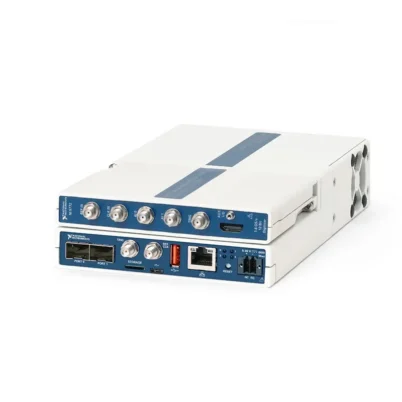
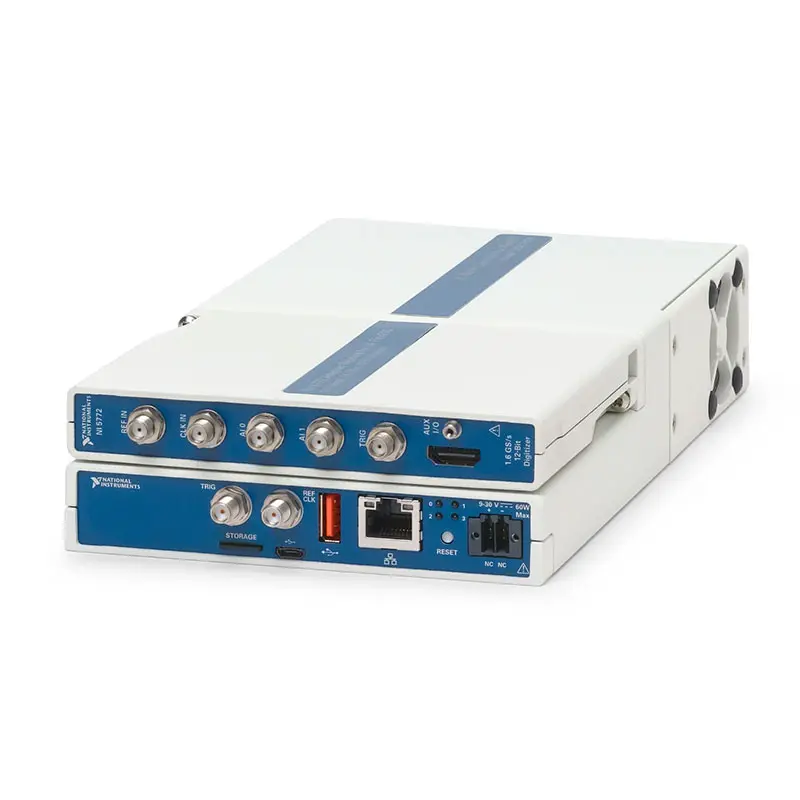
Unlike a conventional PXI FlexRIO FPGA module, the NI‑7931R is a stand-alone device with its own real-time processor, network interface, storage connections, FPGA and adapter module connector.
A typical system architecture is:
Sensor or DUT ↔ FlexRIO Adapter Module ↔ NI‑7931R FPGA ↔ Real-Time Controller ↔ Ethernet Host
The FlexRIO adapter module provides the application-specific analog, digital or RF interface. The Kintex‑7 FPGA performs deterministic processing, while the embedded real-time controller manages sequencing, communication, data logging and system-level control.
Key Features
Stand-Alone Controller for FlexRIO
The NI‑7931R integrates the main components required for an embedded FlexRIO measurement or control system into a stand-alone enclosure.
The controller combines:
- Embedded real-time processor
- NI Linux Real-Time operating system
- User-programmable Kintex‑7 FPGA
- 2 GB of FPGA-accessible DRAM
- FlexRIO adapter module connector
- 1 Gigabit Ethernet
- USB host and USB device ports
- MicroSD storage interface
- External trigger and reference clock connections
This architecture reduces the need for a separate PXI chassis and controller when the application requires one FlexRIO adapter module and a compact stand-alone deployment.
Kintex‑7 XC7K325T FPGA
The NI‑7931R includes a Xilinx Kintex‑7 XC7K325T FPGA for user-programmable, hardware-level processing.
The FPGA provides:
- 50,950 FPGA slices
- 840 DSP slices
- 16,020 kbit of block RAM
- Deterministic parallel processing
- Custom timing and triggering
- Application-specific protocol implementation
- High-throughput signal processing
- Direct communication with the installed adapter module
The FPGA design determines much of the instrument behavior, allowing the NI‑7931R to perform functions that may not be available in conventional fixed-function instruments.
Embedded NI Linux Real-Time Controller
The NI‑7931R includes an embedded controller running 32-bit NI Linux Real-Time.
The real-time processor can manage:
- Application sequencing
- Network communication
- System configuration
- Data logging
- File management
- FPGA communication
- Error handling
- Watchdog functions
- Communication with a remote host computer
The real-time controller and FPGA operate together: the FPGA handles time-critical hardware functions, while the processor handles system-level tasks and communication.
2 GB FPGA-Accessible DRAM
The NI‑7931R provides 2 GB of onboard DRAM that can be accessed by the FPGA.
This memory can support applications requiring:
- Large waveform buffering
- Pretrigger and post-trigger acquisition
- High-speed data capture
- Digital pattern storage
- Signal generation buffers
- Temporary data storage
- Data reordering
- FPGA-based record processing
FPGA-accessible DRAM is particularly useful when the adapter module produces or consumes data faster than the real-time controller or network can continuously transfer it.
High-Speed FPGA-to-Host Data Transfer
The internal architecture supports FPGA-to-host data transfer rates of up to 200 MB/s in a single direction and up to 150 MB/s during bidirectional operation.
Actual application throughput can depend on the FPGA design, DMA configuration, real-time processing load, data structure and selected adapter module.
1 Gigabit Ethernet Interface
The NI‑7931R includes a 1 Gigabit Ethernet interface for network configuration, deployment, monitoring and communication with a host computer.
Ethernet connectivity allows the controller to be installed near the DUT or measurement point while the operator interface and supervisory application run on a remote computer.
USB Host and USB Device Ports
The front panel includes both USB host and USB device connections.
The USB host port can support compatible external devices and storage media, while the USB device connection can be used during device configuration and service operations according to the supported NI workflow.
The documented real-time processor-to-USB external storage transfer rate is up to 60 MB/s under the specified test conditions.
MicroSD Storage Support
The NI‑7931R includes a microSD interface for compatible external storage.
MicroSD storage can be used for application files, data logging, configuration files and other supported real-time controller storage requirements.
Documented transfer rates are up to 12 MB/s for reading and 9 MB/s for writing under the specified conditions.
External Trigger Input
The front-panel trigger connection allows an external event to participate in FPGA-based triggering and synchronization.
The trigger can be incorporated into a custom FPGA application for functions such as:
- Starting an acquisition
- Starting waveform generation
- Capturing an event
- Synchronizing with external equipment
- Controlling a deterministic test sequence
External Reference Clock Input
The REF IN connection allows the NI‑7931R clocking architecture to use a supported external reference.
This is useful when the FlexRIO system must operate from a common timing source or coordinate its FPGA processing with other measurement and test equipment.
Flexible FPGA Clocking Architecture
The NI‑7931R includes dedicated clocking resources for FPGA and adapter module applications.
Available clock resources include:
- 10 MHz reference clock
- 40 MHz onboard clock
- 100 MHz clock
- 200 MHz clock
- DRAM clock
- Adapter module synchronization clock resources
The appropriate clock depends on the selected adapter module, FPGA design, required sample rate and timing architecture.
Technical Specifications
| Parameter | Specification |
|---|---|
| Product Type | Stand-Alone Controller for FlexRIO |
| Model | NI‑7931R / NI‑7931 |
| Manufacturer | National Instruments |
| Platform | NI FlexRIO |
| Form Factor | Stand-Alone Embedded Controller |
| FPGA | Xilinx Kintex‑7 XC7K325T |
| FPGA Slices | 50,950 |
| FPGA DSP Slices | 840 |
| FPGA Block RAM | 16,020 kbit |
| Onboard FPGA DRAM | 2 GB |
| Real-Time Operating System | NI Linux Real-Time, 32-Bit |
| FPGA-to-Host Transfer Rate | Up to 200 MB/s, Single Direction |
| Bidirectional FPGA-to-Host Transfer Rate | Up to 150 MB/s |
| Network Interface | 1 Gigabit Ethernet |
| USB Interfaces | USB Host and USB Device Ports |
| External Storage | USB Storage and MicroSD |
| USB External Storage Transfer Rate | Up to 60 MB/s |
| MicroSD Transfer Rate | Up to 12 MB/s Read and 9 MB/s Write |
| External Trigger | TRIG Front-Panel Connection |
| Reference Clock Input | REF IN Front-Panel Connection |
| Default FPGA Clock | 40 MHz Onboard Clock |
| Additional FPGA Clock Resources | 10 MHz Reference, 100 MHz, 200 MHz and DRAM Clock |
| FlexRIO Adapter Connection | One FlexRIO Adapter Module Connector |
| Calibration Requirement | Controller Hardware Does Not Require Calibration |
| Primary Applications | Embedded Measurement, FPGA Processing, Custom Instrumentation and Real-Time Test |
How Does the NI‑7931R Work?
The NI‑7931R combines three main processing layers:
- The FlexRIO adapter module provides the application-specific analog, digital, RF or communication interface.
- The Kintex‑7 FPGA performs deterministic data acquisition, generation, triggering and signal processing.
- The NI Linux Real-Time controller manages system control, network communication, data logging and host interaction.
A simplified data path is:
Signal or DUT → FlexRIO Adapter Module → Kintex‑7 FPGA → DMA → Real-Time Application → Ethernet or Storage
For signal generation, the data path can operate in the opposite direction:
Real-Time Application or FPGA Memory → FPGA Processing → FlexRIO Adapter Module → DUT
This distributed architecture assigns time-critical functions to the FPGA and higher-level system functions to the real-time processor.
NI‑7931R Is a Controller for FlexRIO
The NI‑7931R is not a complete measurement instrument by itself because it does not include application-specific analog or digital I/O.
A complete measurement system normally requires:
- NI‑7931R Controller for FlexRIO
- Compatible FlexRIO adapter module
- Appropriate adapter module cables and accessories
- External DC power supply
- Ethernet connection or supported USB configuration connection
- Compatible NI FlexRIO software
- LabVIEW Real-Time and LabVIEW FPGA development environment when required
- Application-specific FPGA and real-time software
Unlike PXI-based FlexRIO FPGA modules, the NI‑7931R does not require a PXI or PXIe chassis for stand-alone operation.
Stand-Alone FlexRIO Architecture
The stand-alone architecture allows the NI‑7931R to operate near the sensor, DUT or test fixture without a PXI chassis.
A typical remote deployment is:
Remote Host ↔ Ethernet ↔ NI‑7931R Real-Time Controller ↔ FPGA ↔ FlexRIO Adapter Module ↔ DUT
This architecture is useful when:
- The measurement hardware must be installed near the DUT
- A PXI chassis would be too large for the deployment
- Real-time processing must continue without continuous host control
- Network-based monitoring is required
- The system uses one FlexRIO adapter module
- Deterministic FPGA processing is required at the measurement point
Real-Time Processor and FPGA Integration
The embedded real-time processor and FPGA communicate through DMA channels, interrupts, controls and indicators.
The FPGA can continuously acquire or generate data while the real-time application performs:
- Test sequencing
- Configuration management
- Network communication
- Data logging
- File transfer
- Error recovery
- System health monitoring
- Operator interface communication
Keeping deterministic operations in FPGA hardware helps prevent operating-system scheduling from affecting time-critical signal processing.
FPGA-Based Signal Processing
The Kintex‑7 FPGA can process multiple operations in parallel with deterministic timing.
Potential FPGA functions include:
- Digital filtering
- Fast Fourier transforms
- Decimation and interpolation
- Digital downconversion
- Digital upconversion
- Pattern recognition
- Custom triggering
- Protocol processing
- Closed-loop control
- Real-time data reduction
- Channelization
- Waveform generation
The available FPGA resources and achievable clock rate depend on the complexity of the compiled FPGA design.
FPGA-Accessible DRAM Applications
The 2 GB onboard DRAM provides a large buffer directly accessible from FPGA logic.
It can be used for:
- High-speed waveform capture
- Long digital pattern playback
- Triggered record acquisition
- Pretrigger history storage
- Arbitrary waveform buffering
- Intermediate signal-processing storage
- Packet buffering
- Data-rate matching between FPGA and host
Using onboard DRAM can help prevent temporary differences between adapter module data rates and host transfer rates from immediately interrupting an acquisition.
FlexRIO Adapter Module Integration
The function of the NI‑7931R depends heavily on the installed FlexRIO adapter module.
Compatible adapter module categories can include:
- High-speed digitizer adapters
- Oscilloscope adapter modules
- Digital I/O adapter modules
- Signal generator adapter modules
- IF and RF adapter modules
- Camera Link interfaces
- Custom FlexRIO adapter modules
The adapter module supplies the physical I/O, signal conditioning, converter architecture and connector interface. The NI‑7931R supplies the FPGA, real-time processor, memory and system communication.
Always verify the exact NI adapter module compatibility and required FlexRIO driver version before purchasing.
Custom FlexRIO Adapter Modules
For specialized applications, engineers can develop custom adapter modules using supported FlexRIO module development resources.
A custom adapter can provide application-specific:
- Analog front ends
- Digital interfaces
- Signal conditioning
- Communication transceivers
- Power and control interfaces
- Sensor connections
Custom adapter development requires careful attention to the FlexRIO connector specification, electrical limits, power requirements, FPGA interface and supported development tools.
Clocking and Synchronization
The NI‑7931R provides dedicated FPGA clocking hardware for flexible timing configurations.
The 40 MHz onboard clock is the default FPGA clock, while additional 100 MHz, 200 MHz, reference and DRAM clock resources support application-specific processing.
The REF IN connection allows the system to use a supported external reference for synchronization with other instruments or test equipment.
Clock selection should consider:
- Adapter module sample rate
- FPGA processing requirements
- External instrument synchronization
- Clock stability
- Trigger timing
- Data-converter requirements
- FPGA timing closure
Custom FPGA Triggering
Trigger logic can be implemented directly in the Kintex‑7 FPGA.
Possible trigger functions include:
- Analog threshold trigger when supported by the adapter
- Digital edge trigger
- Pattern trigger
- Protocol-specific trigger
- Multi-stage trigger
- Frequency-domain trigger
- Sequence trigger
- Timing-qualified event trigger
- External front-panel trigger
The exact trigger capability depends on the installed adapter module and FPGA design.
Network-Based Measurement and Control
The 1 Gigabit Ethernet interface allows the NI‑7931R to communicate with a remote development or supervisory computer.
Network-based applications can include:
- Remote configuration
- Application deployment
- System monitoring
- Measurement result transfer
- Distributed test control
- Remote data logging
- Device health monitoring
The FPGA and real-time application can continue performing deployed functions independently of the host interface, depending on how the application is designed.
Data Logging and External Storage
The embedded real-time controller can log processed data and test results to supported storage devices.
Storage options include:
- Internal nonvolatile storage
- Compatible USB external storage
- Compatible microSD media
- Network-based storage through the real-time application
The required storage method should be selected according to data rate, recording duration, environmental requirements and serviceability.
Embedded Measurement Applications
The stand-alone form factor makes the NI‑7931R suitable for embedded measurement systems that require FPGA processing close to the signal source.
Potential applications include:
- Remote sensor processing
- Embedded data acquisition
- Condition monitoring
- Machine monitoring
- Prototype control systems
- Distributed measurement
- Field-deployed testing
- Custom research instrumentation
Hardware-in-the-Loop Testing
The FPGA and real-time processor architecture can support hardware-in-the-loop applications requiring deterministic signal generation, acquisition and response processing.
Depending on the selected adapter module, the NI‑7931R can:
- Generate simulated sensor or digital signals
- Acquire DUT outputs
- Execute FPGA-based response models
- Implement fault insertion logic
- Perform deterministic pass/fail decisions
- Communicate results to a host test application
Semiconductor and Electronic Validation
When combined with an appropriate digital or analog adapter module, the NI‑7931R can be used for semiconductor and electronic design validation.
Potential functions include:
- Custom digital protocol testing
- FPGA and ASIC interface validation
- High-speed waveform acquisition
- Device stimulus generation
- Real-time pattern analysis
- Electronic subsystem testing
- Prototype characterization
Research and Custom Instrumentation
The NI‑7931R is useful when researchers need an instrument whose behavior can be defined through FPGA and real-time software.
Instead of being limited to a fixed measurement architecture, engineers can combine an adapter module with custom FPGA logic to build application-specific acquisition, generation, processing and control systems.
System Integration Considerations
Before selecting the NI‑7931R, verify the complete application requirements.
- Required analog, digital, RF or communication interface
- Compatible FlexRIO adapter module
- Required FPGA resources
- Required DSP resources
- Required FPGA memory capacity
- Continuous and burst data rates
- Real-time processing requirements
- Ethernet transfer requirements
- Storage capacity and speed
- External clock and trigger requirements
- Power supply requirements
- Mechanical mounting and cooling
- NI FlexRIO software compatibility
- LabVIEW Real-Time compatibility
- LabVIEW FPGA compatibility
Power and Cooling Considerations
The NI‑7931R requires a suitable external DC power source and adequate airflow or mounting conditions.
Before installation:
- Verify the required input voltage and power capacity
- Use the specified power connector and wiring method
- Allow adequate clearance for cooling
- Do not block ventilation openings
- Consider the power consumption of the installed adapter module
- Follow the mounting orientation and environmental limits in the NI documentation
Troubleshooting NI‑7931R Systems
If an NI‑7931R system does not operate correctly, check the controller, FPGA, adapter module, software and network configuration.
- Verify the external DC power supply and wiring.
- Check the Power and Status LEDs.
- Confirm the Ethernet cable and network settings.
- Verify that the controller is detected in NI Measurement & Automation Explorer.
- Confirm that compatible NI FlexRIO software is installed.
- Verify the LabVIEW Real-Time and LabVIEW FPGA versions.
- Check that the adapter module is fully installed.
- Confirm adapter module compatibility with the NI‑7931R.
- Verify the FPGA bitfile and adapter module CLIP configuration.
- Check DMA channels, interrupts, controls and indicators.
- Verify external clock and trigger configuration.
- Check USB or microSD storage compatibility.
- Review application error logs and watchdog behavior.
How to Choose a Controller for FlexRIO
Before purchasing a Controller for FlexRIO, determine:
- Required FPGA size
- Required number of DSP slices
- Required FPGA block RAM
- Required onboard DRAM
- Required adapter module
- Need for high-speed serial SFP+ interfaces
- Required network architecture
- Real-time processing requirements
- External storage requirements
- Clocking and synchronization requirements
- Mechanical and environmental requirements
- Software and driver compatibility
Industries
- Semiconductor Test
- Electronic Design Validation
- Aerospace and Defense
- Telecommunications
- Industrial Automation
- Automated Test Equipment
- Electronics Manufacturing
- Scientific Research
- Embedded Systems
- Research and Development
Applications
Embedded Data Acquisition
The NI‑7931R can acquire and process data close to the signal source when paired with a compatible digitizer or measurement adapter module.
Custom Digital Instrumentation
A compatible digital adapter module and FPGA design can create custom protocol, pattern-generation and digital acquisition systems.
Real-Time Signal Processing
The Kintex‑7 FPGA can perform deterministic filtering, triggering, transforms and data reduction before transferring information to the real-time controller.
Hardware-in-the-Loop Testing
The combined FPGA and real-time architecture can support deterministic simulation, stimulus generation and DUT response processing.
Remote Measurement Systems
Gigabit Ethernet connectivity allows the NI‑7931R to be deployed near a DUT and controlled from a remote host.
Custom Protocol Development
User-programmable FPGA resources allow engineers to implement timing, framing, decoding and application-specific communication logic.
NI‑7931R vs NI‑7932R
| Feature | NI‑7931R | NI‑7932R |
|---|---|---|
| Form Factor | Stand-Alone | Stand-Alone |
| FPGA | Kintex‑7 XC7K325T | Kintex‑7 XC7K325T |
| FPGA Slices | 50,950 | 50,950 |
| DSP Slices | 840 | 840 |
| FPGA DRAM | 2 GB | 2 GB |
| High-Speed Serial SFP+ Ports | No | Yes |
| Best For | Standard Stand-Alone FlexRIO Applications | Applications Requiring High-Speed Serial Communication |
The NI‑7931R and NI‑7932R provide similar FPGA and memory resources. The NI‑7932R is the more appropriate choice when the application requires integrated high-speed serial SFP+ connectivity.
NI‑7931R vs NI‑7935R
| Feature | NI‑7931R | NI‑7935R |
|---|---|---|
| Form Factor | Stand-Alone | Stand-Alone |
| FPGA | Kintex‑7 XC7K325T | Kintex‑7 XC7K410T |
| FPGA Slices | 50,950 | 63,550 |
| DSP Slices | 840 | 1,540 |
| FPGA Block RAM | 16,020 kbit | 28,620 kbit |
| FPGA DRAM | 2 GB | 2 GB |
| High-Speed Serial SFP+ Ports | No | Yes |
| Best For | Moderate FPGA Processing Requirements | More Complex FPGA and High-Speed Serial Applications |
The NI‑7935R provides a larger FPGA, more DSP resources, more block RAM and high-speed serial interfaces. The NI‑7931R can be a more practical choice when the application does not require those additional resources.
NI‑7931R vs PXIe FlexRIO FPGA Modules
| Feature | NI‑7931R | PXIe FlexRIO FPGA Module |
|---|---|---|
| Form Factor | Stand-Alone | PXI Express Module |
| Real-Time Controller | Integrated | Separate Controller Required |
| PXI/PXIe Chassis | Not Required | Required |
| Host Connection | Gigabit Ethernet | PXI Express Backplane |
| Multi-Instrument Expansion | Limited | Strong |
| Typical Deployment | Embedded or Remote Stand-Alone System | Modular Laboratory or Automated Test System |
Choose the NI‑7931R for compact, stand-alone or remote FlexRIO deployment. Choose a PXIe FlexRIO FPGA module when the system requires multiple synchronized PXI instruments, higher backplane integration or extensive modular expansion.
Software and Driver Requirements
Developing an NI‑7931R application normally requires compatible NI software for the real-time controller, FPGA and installed adapter module.
The software environment may include:
- NI FlexRIO driver
- LabVIEW
- LabVIEW Real-Time Module
- LabVIEW FPGA Module
- Adapter module support files
- Component-Level Intellectual Property resources
- Application-specific FPGA examples or instrument design libraries
Software compatibility must be checked across the controller, adapter module, operating system and development environment. Older NI‑7931R systems may require an earlier supported FlexRIO software version.
Recommended Related Products
| NI‑7932R | Stand-alone Controller for FlexRIO with a Kintex‑7 K325T FPGA, 2 GB DRAM and high-speed serial connectivity. |
| NI‑7935R | Higher-performance Controller for FlexRIO with a larger Kintex‑7 K410T FPGA and additional DSP resources. |
| NI‑6581B | 100 MHz, 54-channel single-ended digital I/O adapter module for compatible FlexRIO systems. |
| NI‑6583 | High-speed digital I/O adapter module for custom FPGA-based digital test applications. |
| NI‑5733 | High-speed digitizer adapter module for FlexRIO acquisition and signal-processing systems. |
| NI‑5734 | High-speed FlexRIO digitizer adapter for demanding waveform acquisition applications. |
| NI PXI and FlexRIO Modules | Programmable and modular instruments for automated test, acquisition and electronic validation. |
Why Choose NI‑7931R?
- Stand-alone Controller for FlexRIO architecture
- Embedded NI Linux Real-Time controller
- Kintex‑7 XC7K325T FPGA
- 50,950 FPGA slices
- 840 DSP slices
- 16,020 kbit of FPGA block RAM
- 2 GB of FPGA-accessible DRAM
- Up to 200 MB/s single-direction FPGA-to-host transfer
- 1 Gigabit Ethernet interface
- USB host and USB device connectivity
- MicroSD storage support
- External trigger input
- External reference clock input
- Programmable FPGA clocking architecture
- Support for compatible FlexRIO adapter modules
- No PXI chassis required for stand-alone operation
- Suitable for remote and embedded deployment
- Suitable for deterministic real-time processing
- Suitable for custom measurement and control systems
Frequently Asked Questions
What is the NI‑7931R?
The NI‑7931R is a stand-alone Controller for FlexRIO that combines an embedded NI Linux Real-Time controller, a Kintex‑7 XC7K325T FPGA, 2 GB of FPGA-accessible DRAM and support for compatible FlexRIO adapter modules.
Is NI‑7931 the same as NI‑7931R?
Yes. NI‑7931 is commonly used as a shortened model reference, while NI‑7931R is the full product designation used in NI technical documentation.
Which FPGA does the NI‑7931R use?
The NI‑7931R uses a Xilinx Kintex‑7 XC7K325T FPGA with 50,950 slices, 840 DSP slices and 16,020 kbit of block RAM.
How much FPGA-accessible DRAM does the NI‑7931R provide?
The controller provides 2 GB of onboard DRAM accessible from the FPGA.
Which operating system does the NI‑7931R use?
The embedded controller runs a 32-bit version of NI Linux Real-Time.
Does the NI‑7931R require a PXI chassis?
No. It is a stand-alone Controller for FlexRIO and does not require a PXI or PXIe chassis for normal operation.
Does the NI‑7931R include measurement I/O?
The controller does not provide application-specific analog or digital measurement I/O by itself. It requires a compatible FlexRIO adapter module.
Can the NI‑7931R operate without a host computer?
A deployed real-time and FPGA application can operate independently of continuous host control. A host computer is still typically required for initial configuration, development, deployment and supervisory functions.
How does the NI‑7931R connect to a host computer?
The primary network connection is 1 Gigabit Ethernet. The controller also provides a USB device interface for supported configuration and service workflows.
What is the maximum FPGA-to-host transfer rate?
The documented transfer rate is up to 200 MB/s in a single direction and up to 150 MB/s during bidirectional operation.
Does the NI‑7931R support external storage?
Yes. It supports compatible USB external storage and microSD media for real-time application storage and data logging.
Does the NI‑7931R support external triggering?
Yes. It includes a front-panel TRIG connection that can be incorporated into the FPGA application.
Does the NI‑7931R support an external reference clock?
Yes. The REF IN connection can provide a supported external timing reference to the FPGA clocking architecture.
Can the NI‑7931R be used with NI‑6581B?
The NI‑6581B belongs to the FlexRIO adapter module family supported by Controllers for FlexRIO. The exact controller, adapter module and FlexRIO driver combination should still be checked before system deployment.
What is the difference between NI‑7931R and NI‑7932R?
Both use a Kintex‑7 XC7K325T FPGA and provide 2 GB of FPGA DRAM. The NI‑7932R adds high-speed serial SFP+ connectivity for applications requiring serial transceiver interfaces.
What is the difference between NI‑7931R and NI‑7935R?
The NI‑7935R uses a larger Kintex‑7 XC7K410T FPGA and provides more FPGA slices, DSP slices and block RAM. It also supports high-speed serial connectivity. The NI‑7931R is suitable when the additional resources are not required.
Does the NI‑7931R require calibration?
The NI‑7931R controller hardware does not require calibration. However, the installed FlexRIO adapter module may have its own calibration requirements.
What should I check before purchasing the NI‑7931R?
Verify the required FPGA resources, compatible FlexRIO adapter module, real-time processing requirements, network bandwidth, storage requirements, clock and trigger connections, external power supply, software versions and required cables or accessories.
Conclusion
The NI‑7931R Controller for FlexRIO combines a 32-bit NI Linux Real-Time controller, a Kintex‑7 XC7K325T FPGA, 2 GB of FPGA-accessible DRAM, Gigabit Ethernet and support for interchangeable FlexRIO adapter modules. Its stand-alone architecture makes it suitable for embedded data acquisition, custom digital instrumentation, FPGA signal processing, hardware-in-the-loop testing, semiconductor validation, remote measurement and research systems that do not require a full PXI chassis.