



Product Introduction
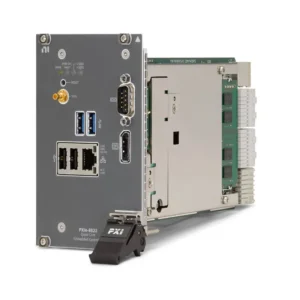
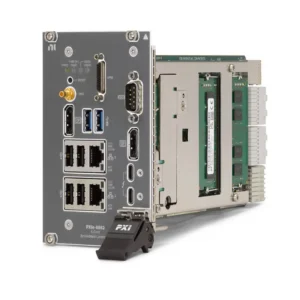
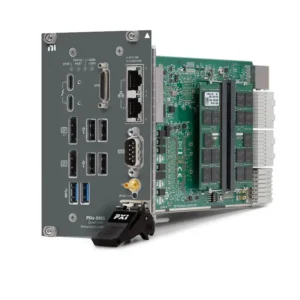
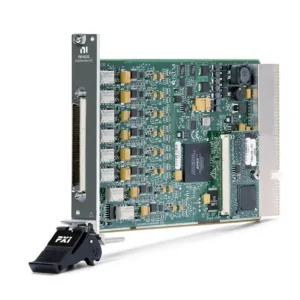
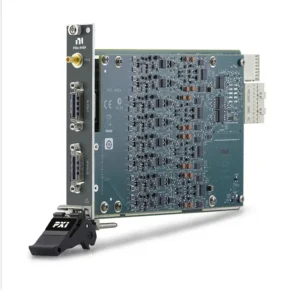
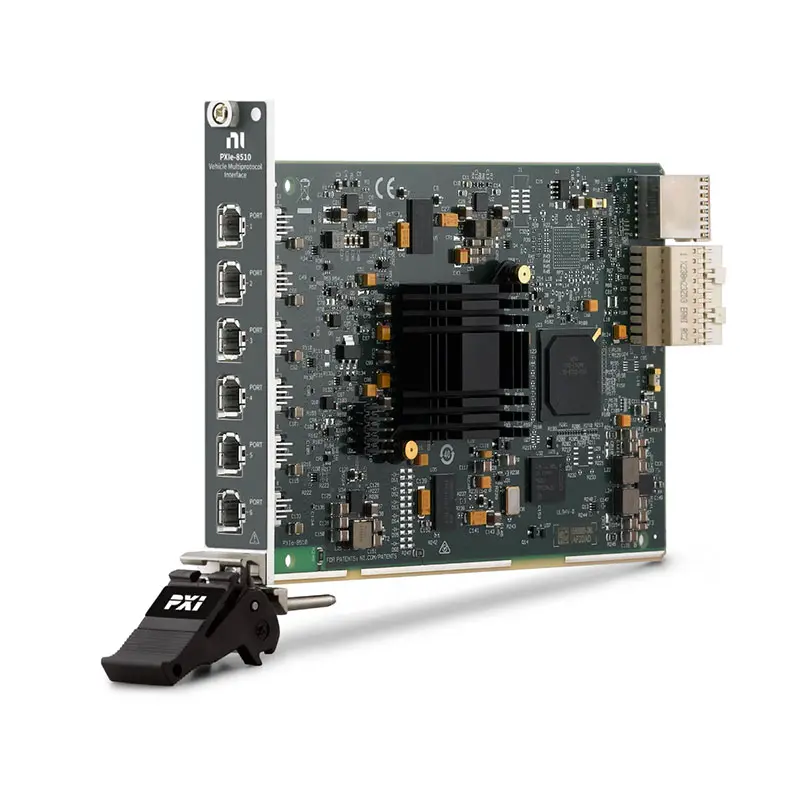
The NI PXIe-8510 is a high-performance PXI Express CAN interface module designed for automotive electronics, industrial automation, embedded communication, and hardware-in-the-loop (HIL) testing. It provides one independent CAN/CAN FD communication port with hardware timing, bus monitoring, and deterministic data transfer through the NI-XNET platform.
The PXIe-8510 supports Classical CAN and CAN FD protocols, making it suitable for ECU validation, CAN network simulation, production testing, and long-duration communication monitoring. Combined with the PXI Express platform, it enables scalable and synchronized automotive communication systems.
Product Overview
The PXIe-8510 belongs to the NI-XNET automotive communication family and delivers hardware-accelerated CAN communication independent of host processor loading. Frame scheduling, timestamping, cyclic transmission, filtering, and buffering are managed by onboard hardware to ensure reliable bus performance.
Its single CAN interface supports High-Speed CAN (ISO 11898-2), Low-Speed/Fault-Tolerant CAN (ISO 11898-3), and CAN FD communication. The module integrates seamlessly with LabVIEW, VeriStand, TestStand, FlexLogger, NI-XNET Driver, C/C++, Python, and .NET applications.
Key Features
Single Independent CAN Port
The PXIe-8510 provides one fully independent CAN communication interface.
- 1 CAN/CAN FD port
- Independent communication channel
- Hardware message buffering
- Bus monitoring
- Deterministic communication
Advantage: Enables reliable communication with automotive ECUs, industrial controllers, and embedded devices.
Classical CAN and CAN FD Support
The interface supports both traditional CAN and high-speed CAN FD communication.
- Classical CAN 2.0A/B
- CAN FD support
- ISO CAN FD compatibility
- Flexible data payloads
- Higher communication throughput
Advantage: Supports both legacy CAN networks and modern CAN FD vehicle architectures.
High-Speed Hardware Timing
Dedicated onboard hardware manages communication independently of the operating system.
- Hardware timestamping
- Frame scheduling
- Deterministic transmission
- Hardware buffering
- Low CPU utilization
Advantage: Improves communication accuracy while minimizing processor overhead.
Advanced Bus Monitoring
The PXIe-8510 continuously monitors CAN network activity.
- Bus traffic monitoring
- Error frame detection
- Timestamped frame capture
- Bus utilization analysis
- Diagnostic monitoring
Advantage: Simplifies troubleshooting, validation, and network performance analysis.
NI-XNET Hardware Acceleration
The module utilizes the NI-XNET architecture for deterministic communication.
- Hardware protocol engine
- Large onboard frame memory
- Database-driven communication
- Low communication latency
- Reliable real-time performance
Advantage: Delivers consistent communication performance even during high bus utilization.
PXI Express Integration
Designed specifically for PXI Express automated test systems.
- PXI Express interface
- Single-slot module
- System synchronization
- Multi-module scalability
- Shared timing resources
Advantage: Easily integrates with DAQ, oscilloscopes, RF instruments, switch modules, and HIL platforms.
Technical Specifications
| Parameter | Description |
|---|---|
| Product Type | PXI Express CAN Interface Module |
| Communication Ports | 1 |
| Supported Protocols | CAN 2.0A, CAN 2.0B, CAN FD |
| CAN Standards | ISO 11898-2, ISO 11898-3 |
| Maximum Classical CAN Speed | 1 Mb/s |
| Maximum CAN FD Data Rate | Up to 8 Mb/s |
| Bus Interface | PXI Express |
| Communication Engine | NI-XNET Hardware |
| Timestamp Resolution | Hardware Timestamping |
| Connector Type | DB-9 CAN Connector |
| Termination | Software/External Depending on Configuration |
| Driver | NI-XNET |
| Programming Support | LabVIEW, VeriStand, TestStand, Python, C/C++, C#, .NET |
Software Ecosystem
The PXIe-8510 integrates with the National Instruments automotive communication software platform.
- NI-XNET Driver – CAN database management, communication scheduling, hardware configuration, and diagnostics.
- LabVIEW – Graphical CAN application development and automation.
- VeriStand – Real-time HIL simulation and ECU testing.
- TestStand – Automated production and validation test sequencing.
- NI MAX – Hardware discovery and configuration.
- Python, C/C++, C#, .NET – Full NI-XNET programming support.
Industries
- Automotive Electronics
- Electric Vehicle Development
- Industrial Automation
- Transportation Systems
- Aerospace and Defense
- Research Laboratories
- Embedded Systems Development
- Hardware-in-the-Loop Testing
Applications
ECU Validation
Perform communication verification and diagnostic testing of automotive electronic control units.
- ECU communication testing
- Protocol verification
- Functional validation
- Regression testing
CAN FD Development
Validate next-generation CAN FD communication networks.
- CAN FD validation
- Bus performance analysis
- High-speed communication testing
- Protocol debugging
Hardware-in-the-Loop Systems
Integrate CAN communication into HIL simulation platforms.
- Real-time simulation
- Vehicle network emulation
- System integration
- Controller verification
Production Testing
Use automated CAN communication during manufacturing validation.
- End-of-line testing
- Production verification
- Diagnostic communication
- Quality inspection
Comparison with Similar Products
| Model | Main Difference | Best Application |
|---|---|---|
| NI PXIe-8510 | Single-port CAN/CAN FD interface for general automotive communication. | CAN and CAN FD testing |
| NI PXI-8512 | Dual-port CAN interface based on the PXI platform. | Multi-network CAN applications |
| NI PXI-8516/2 | Dual-port CAN FD interface supporting higher network density. | Advanced CAN FD development |
| NI PXIe-8522 | Automotive Ethernet interface instead of CAN communication. | Automotive Ethernet validation |
Recommended Related Products
| NI PXIe-8880 | High-performance embedded PXI Express controller for automotive test systems. |
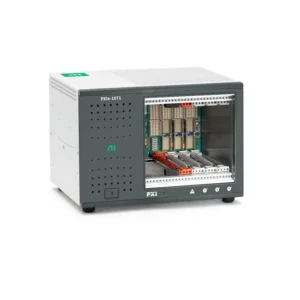
| NI PXIe-1085 | 18-slot PXI Express chassis for large modular validation systems. |
| NI PXIe-1095 | High-performance PXIe chassis with advanced cooling and synchronization. |
| NI PXI-8516/2 | Dual-port CAN FD communication module for higher channel density. |
| NI PXIe-8522 | PXI Express Automotive Ethernet interface for next-generation vehicle networks. |
Why Choose PXIe-8510?
- Single CAN/CAN FD communication port
- Supports Classical CAN and CAN FD
- Hardware timestamping and buffering
- NI-XNET deterministic communication engine
- Low CPU utilization
- High-speed PXI Express architecture
- Excellent compatibility with LabVIEW and VeriStand
- Ideal for ECU, HIL, and automotive validation
Frequently Asked Questions
Does the PXIe-8510 support CAN FD?
Yes. The PXIe-8510 supports both Classical CAN (CAN 2.0A/B) and CAN FD, making it suitable for modern automotive communication networks.
Which software is required to use the PXIe-8510?
The module uses the NI-XNET driver and is supported by LabVIEW, VeriStand, TestStand, NI MAX, Python, C/C++, C#, and .NET development environments.
Can multiple PXIe-8510 modules be installed in one chassis?
Yes. Multiple PXIe-8510 modules can be installed within the same PXI Express chassis to expand the number of CAN channels for large-scale automotive communication and validation systems.
Conclusion
The NI PXIe-8510 combines deterministic NI-XNET communication, CAN FD support, hardware timestamping, and PXI Express scalability in a compact modular interface. It is an excellent solution for automotive ECU validation, CAN network simulation, production testing, industrial communication, and hardware-in-the-loop applications requiring reliable and high-performance CAN communication.