



Product Introduction
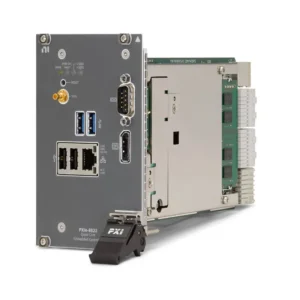
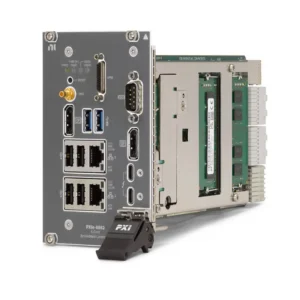
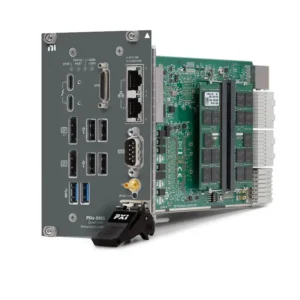
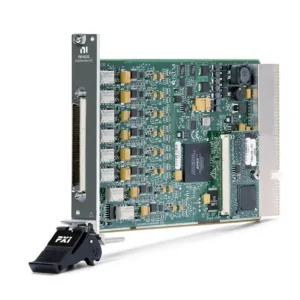
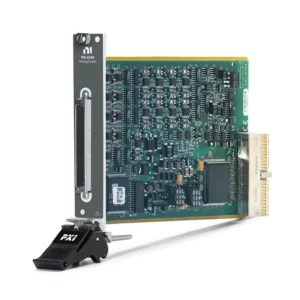
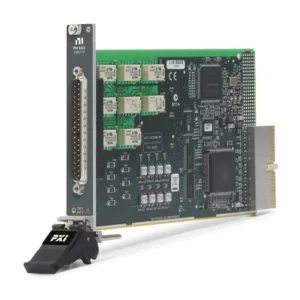
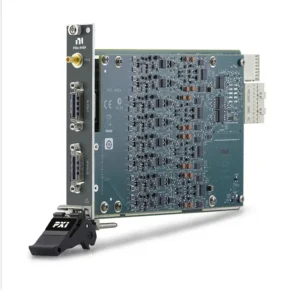
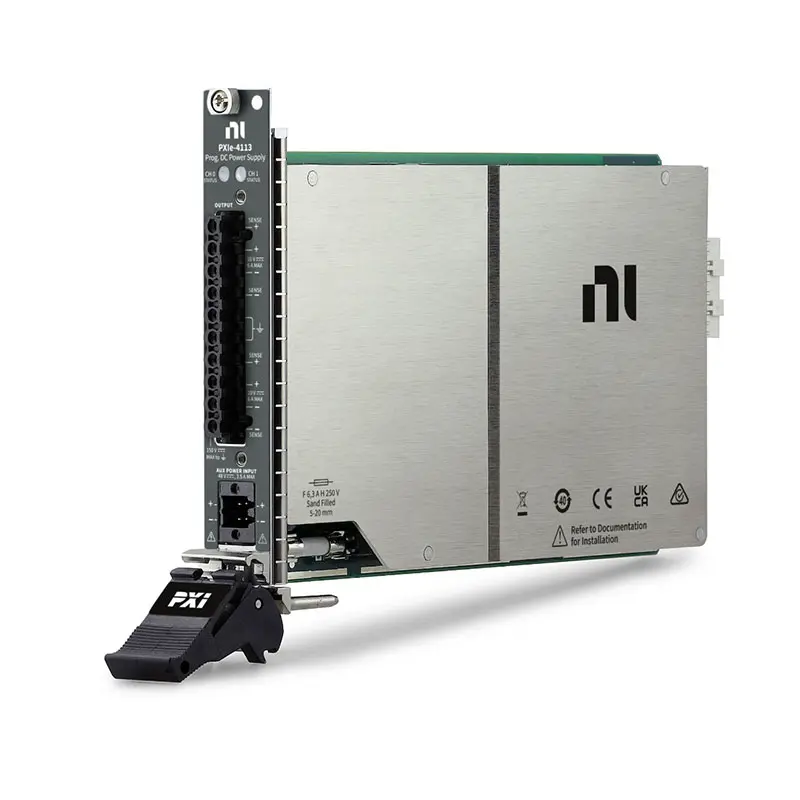
The NI PXIe-4113 is a 2-channel PXI Express programmable DC power supply designed for automated test, electronic device validation, production testing, semiconductor applications, and research systems. It provides programmable voltage and current sourcing within a compact PXI modular architecture.
The PXIe-4113 provides two programmable DC output channels with up to 10 V output voltage, 6 A output current, and 60 W maximum output power. Its combination of relatively high current capability and software-controlled operation makes it suitable for powering electronic devices and subsystems during automated test sequences.
As part of a PXI Express system, the PXIe-4113 can be integrated with oscilloscopes, digital multimeters, source measurement units, waveform generators, switches, digital I/O modules, and other PXI instruments to create complete automated stimulus-and-measurement platforms.
Product Overview
The National Instruments PXIe-4113 is designed for applications that require programmable DC power directly within a PXI automated test system.
Rather than using a separate benchtop power supply, engineers can install the PXIe-4113 in a compatible PXI Express chassis and control its output through the same software environment used for other PXI instruments.
Typical applications include:
- Automated functional test
- Electronic device validation
- Production test
- PCB and assembly testing
- Semiconductor test
- Power sequencing
- Device characterization
- Automotive electronics testing
- Aerospace and defense testing
- Research and laboratory automation
Key Features
Two Programmable DC Output Channels
The PXIe-4113 provides two independently programmable DC power supply channels.
Multiple output channels are useful when a device under test requires more than one supply rail.
For example:
Channel 0 → DUT Supply Rail 1
Channel 1 → DUT Supply Rail 2
Software control allows the channels to be configured as part of an automated power-up, measurement, and shutdown sequence.
Up to 10 V Output
The PXIe-4113 provides programmable DC output voltage up to 10 V.
This voltage range is suitable for many low-voltage electronic devices, circuit boards, embedded systems, digital circuits, and semiconductor test applications.
Typical DUT supply requirements may include:
- 1.2 V rails
- 1.8 V rails
- 2.5 V rails
- 3.3 V rails
- 5 V rails
- Other compatible low-voltage DC rails
Up to 6 A Output Current
The PXIe-4113 provides current capability up to 6 A, making it suitable for DUTs that require substantially more current than many precision source measurement instruments can provide.
Higher current capability is particularly useful for:
- Embedded computing hardware
- Electronic control units
- Communication devices
- PCB assemblies
- Digital electronics
- Semiconductor devices
- High-current low-voltage circuits
60 W Maximum Output Power
The PXIe-4113 provides up to 60 W of programmable DC output power.
Its 10 V, 6 A operating capability makes the module particularly appropriate for low-voltage, relatively high-current DUT power applications.
Actual allowable voltage and current combinations must remain within the instrument’s specified operating and power limits.
Programmable Voltage and Current
Both voltage and current parameters can be configured programmatically, allowing engineers to automate DUT power conditions.
A typical automated sequence can include:
- Configure voltage level.
- Configure current limit.
- Enable the output.
- Allow the DUT to initialize.
- Perform electrical measurements.
- Change the DUT operating condition if required.
- Complete the test sequence.
- Disable the power output.
Current Limiting
Programmable current limiting helps protect both the DUT and the test system from unexpected current consumption.
For example, an engineer can configure the required output voltage together with a maximum allowable current.
If DUT current consumption reaches the programmed limit, the power supply can transition into the applicable current-regulation behavior rather than continuing to increase current without control.
Software-Controlled Power Supply
The PXIe-4113 is designed for software-defined automated test systems.
Software control allows power-supply settings to be changed automatically according to the test sequence, DUT configuration, product variant, or test condition.
This provides an important advantage over manually configured standalone supplies in high-volume or repeatable automated testing.
PXI Express Integration
The PXIe-4113 operates within the PXI Express platform and can be integrated with other measurement and stimulus modules.
This allows engineers to build systems where DUT power, waveform acquisition, voltage measurement, switching, digital control, and RF testing are coordinated within one automated platform.
Technical Specifications
| Parameter | Description |
|---|---|
| Product Type | PXI Programmable Power Supply |
| Model | NI PXIe-4113 |
| Platform | PXI Express |
| Number of Output Channels | 2 |
| Maximum Output Voltage | 10 V |
| Maximum Output Current | 6 A |
| Maximum Output Power | 60 W |
| Output Type | Programmable DC |
| Voltage Programming | Supported |
| Current Programming | Supported |
| Current Limiting | Supported |
| Software Control | Supported |
| Primary Application | Automated DUT Power and Electronic Test |
What Is a PXI Programmable Power Supply?
A PXI programmable power supply is a modular DC source installed within a PXI or PXI Express chassis.
Its primary purpose is to provide software-controlled electrical power to a device under test.
A typical architecture is:
PXI Controller → PXIe-4113 → DUT → Measurement Instruments
The controller configures the required power-supply settings while other PXI modules measure the DUT response.
Why Use a PXI Power Supply?
A PXI power supply can simplify automated test systems by integrating DUT power directly into the modular instrumentation platform.
This provides several potential advantages:
- Software-controlled voltage and current
- Automated power sequencing
- Centralized instrument control
- Reduced benchtop equipment
- Repeatable test conditions
- Integration with PXI triggering and automation
- Compact test-system architecture
Low-Voltage High-Current Applications
The combination of 10 V maximum voltage and 6 A maximum current makes the PXIe-4113 particularly useful for low-voltage DUTs with relatively high current requirements.
Modern electronic systems often operate at low supply voltages while requiring substantial current.
Typical examples include:
- Processors and computing devices
- FPGAs
- Embedded controllers
- Communication hardware
- Digital circuit boards
- Automotive electronic modules
Automated DUT Power Control
The PXIe-4113 can be incorporated into automated sequences where DUT power conditions must be precisely controlled by software.
For example:
Configure Supply → Enable DUT Power → Wait for Startup → Perform Measurements → Disable DUT Power
This sequence can be repeated automatically for every device in a production test environment.
Power Sequencing
Many electronic devices require supply rails to be enabled and disabled in a specific order.
With two programmable channels, the PXIe-4113 can participate in automated power-sequencing applications.
A simplified sequence may be:
Channel 0 ON → Delay → Channel 1 ON → DUT Test → Channel 1 OFF → Channel 0 OFF
The exact sequence and timing should be configured according to DUT requirements.
Voltage Margin Testing
Programmable voltage control allows engineers to test DUT operation at different supply voltages.
Instead of testing only at the nominal voltage, an automated system can evaluate performance at multiple operating points.
For example:
Minimum Supply Voltage → Nominal Voltage → Maximum Supply Voltage
This type of voltage-margin testing can help identify design limitations and verify DUT operation across specified supply tolerances.
Current Consumption Testing
Power consumption and current draw are important parameters in many electronic validation applications.
The PXIe-4113 can be used as the programmable power source while compatible measurement capabilities in the test system evaluate DUT electrical behavior.
Typical test conditions can include:
- Standby operation
- Startup
- Normal operation
- Maximum processing load
- Communication activity
- Sleep mode
- Fault conditions
PCB Functional Testing
The PXIe-4113 is suitable for providing programmable DC power during automated PCB and electronic assembly functional testing.
A typical test sequence may include:
- Connect the DUT through the test fixture.
- Configure the PXIe-4113 voltage and current limit.
- Apply DUT power.
- Verify startup current.
- Perform voltage and waveform measurements.
- Exercise DUT functions.
- Determine pass/fail status.
- Disable DUT power.
Production Test Applications
Production test systems require repeatable and automated test conditions.
The PXIe-4113 can provide programmable DUT power without requiring operators to manually configure an external power supply for every test cycle.
This makes it suitable for:
- End-of-line testing
- PCB functional test
- Electronic module validation
- Manufacturing quality control
- Automated pass/fail testing
Electronic Design Validation
During design validation, engineers may need to evaluate a DUT under different supply conditions.
The PXIe-4113 can automatically change power settings while measurement instruments record the DUT response.
Typical validation tests include:
- Voltage margin testing
- Startup behavior
- Shutdown behavior
- Current consumption
- Power sequencing
- Functional verification
- Fault-condition testing
Semiconductor Test Applications
The PXIe-4113 can provide DUT or subsystem power within semiconductor validation and automated test systems where its voltage, current, power, and accuracy specifications meet application requirements.
It can operate alongside other semiconductor test instruments such as:
- Source measurement units
- Digital pattern instruments
- Oscilloscopes
- Waveform generators
- RF instruments
- PXI switching modules
Automotive Electronics Testing
Automotive electronic modules frequently require automated power and functional testing during design validation and manufacturing.
For compatible low-voltage circuits, the PXIe-4113 can provide programmable power during:
- Electronic module testing
- Sensor interface validation
- Communication module testing
- PCB functional testing
- Power sequencing tests
Applications requiring higher automotive supply voltages should use a power supply with an appropriate output-voltage range.
PXIe-4113 with a PXI Oscilloscope
A PXIe-4113 and PXI oscilloscope can be combined for automated power-up and transient testing.
A typical architecture is:
PXIe-4113 → DUT → PXI Oscilloscope
The power supply energizes the DUT while the oscilloscope captures startup, switching, or transient waveforms.
PXIe-4113 with a Digital Multimeter
A PXI digital multimeter can complement the PXIe-4113 when high-accuracy voltage, resistance, or current measurements are required elsewhere in the DUT.
A typical system may use:
PXIe-4113 → DUT Power
PXI DMM → Precision DUT Measurement
PXIe-4113 with PXI Switching
PXI switching hardware can route power or measurement signals between multiple DUT connections in an automated system.
A simplified architecture is:
PXIe-4113 → Switching System → DUT Test Points
Switch selection must account for the required voltage, current, power, contact resistance, and switching topology.
PXIe-4113 with an SMU
A programmable power supply and an SMU perform related but different functions.
The PXIe-4113 is appropriate when the primary requirement is to provide programmable DUT power with relatively high current capability.
A precision SMU is generally more appropriate when the application requires highly sensitive current or voltage sourcing and measurement for parametric characterization.
PXIe-4113 vs Precision SMU
| Feature | PXIe-4113 | Precision SMU |
|---|---|---|
| Primary Function | Programmable DUT Power | Precision Source and Measurement |
| Maximum Current | Up to 6 A | Model Dependent |
| Output Power | Up to 60 W | Model Dependent |
| Low-Level Measurement | Not Primary Function | Major Strength |
| Typical Application | Powering Electronic DUTs | Parametric Characterization |
PXIe-4113 vs Benchtop Power Supply
| Feature | PXIe-4113 | Benchtop Power Supply |
|---|---|---|
| Architecture | PXI Express Module | Standalone Instrument |
| Software Automation | Designed for Automation | Model Dependent |
| PXI Integration | Native | External Interface Required |
| Chassis Required | Yes | No |
| Automated Power Sequencing | Supported Through Software | Model Dependent |
| Best Application | Integrated Automated Test | Standalone Laboratory Use |
PXIe-4113 in a Complete PXI System
The PXIe-4113 can function as the DUT power source within a complete PXI system.
A typical automated platform may include:
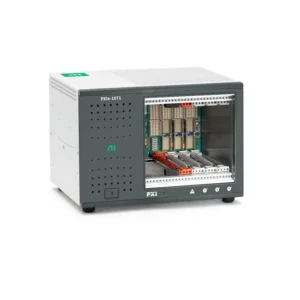
- PXI Chassis
- PXI Controller
- PXIe-4113 programmable power supply
- PXI Modules
- PXI oscilloscopes
- PXI digital multimeters
- PXI switching modules
- PXI digital I/O modules
- PXI source measurement units
This architecture allows DUT power, stimulus, switching, and measurement functions to operate within one software-controlled platform.
Software and Driver Support
The PXIe-4113 is designed for programmatic control in automated test applications.
Software can be used to configure parameters such as:
- Output voltage
- Current limit
- Output enable and disable state
- Channel configuration
- Automated power sequences
- DUT test conditions
This allows power-supply operation to be incorporated directly into automated test software.
Power Supply Selection Considerations
Selecting a programmable power supply requires more than checking maximum voltage and current ratings.
Before selecting the PXIe-4113, engineers should verify:
- Required DUT voltage
- Maximum DUT current
- Required output power
- Number of supply rails
- Voltage accuracy requirements
- Current accuracy requirements
- Transient response requirements
- Output noise requirements
- Remote sense requirements
- Power sequencing requirements
- PXI chassis compatibility
- Available chassis power and cooling
Voltage, Current and Power Relationship
When selecting the PXIe-4113, it is important to understand that maximum voltage, maximum current, and maximum output power cannot necessarily be treated as independent specifications under every operating condition.
Electrical power is calculated using:
Power (W) = Voltage (V) × Current (A)
For example:
10 V × 6 A = 60 W
The required operating point should always be checked against the instrument’s specified output characteristics and safe operating area.
Industries
- Automated Test Equipment
- Electronic Manufacturing
- Semiconductor Test
- Automotive Electronics
- Aerospace and Defense
- Communication Equipment
- Consumer Electronics
- Research and Development
- Production Validation
Applications
Automated DUT Power
The PXIe-4113 provides software-controlled DC power for devices under test in automated PXI measurement systems.
PCB Functional Test
Two programmable channels can supply compatible PCB power rails while other PXI instruments verify electrical and functional performance.
Power Sequencing
Software-controlled outputs can be incorporated into automated startup and shutdown sequences for compatible multi-rail devices.
Voltage Margin Testing
Programmable voltage levels allow DUT performance to be evaluated at nominal, minimum, and maximum supply conditions.
Production Test
The PXIe-4113 can provide repeatable programmable DUT power as part of high-volume electronic manufacturing test systems.
Electronic Design Validation
Engineers can automatically vary supply conditions while measuring DUT behavior using other synchronized PXI instrumentation.
Recommended Related Products
| NI PXIe-4113 | Two-channel, 60 W PXI programmable power supply providing up to 10 V and 6 A for automated DUT power applications. |
| NI PXIe-4112 | PXI programmable power supply for applications requiring a different combination of output voltage, current, and power. |
| NI PXIe-4190 | Precision LCR meter and SMU for applications requiring impedance, C-V, I-V, and semiconductor parametric measurements. |
| NI PXI Modules | PXI and PXI Express modules for programmable power, source measurement, waveform acquisition, switching, data acquisition, and automated test. |
Why Choose NI PXIe-4113?
- Two programmable DC output channels
- Up to 10 V output voltage
- Up to 6 A output current
- Up to 60 W output power
- Software-controlled voltage and current
- Programmable current limiting
- Suitable for low-voltage high-current DUTs
- Suitable for automated power sequencing
- Suitable for voltage margin testing
- PXI Express modular architecture
- Integration with other PXI instruments
- Suitable for production testing
- Suitable for electronic design validation
- Suitable for automated functional test
Frequently Asked Questions
What is the NI PXIe-4113?
The NI PXIe-4113 is a two-channel PXI Express programmable DC power supply designed to provide software-controlled DUT power in automated test and measurement systems.
How many channels does the PXIe-4113 have?
The PXIe-4113 provides two programmable DC output channels.
What is the maximum output voltage of the PXIe-4113?
The PXIe-4113 provides output voltage capability up to 10 V.
What is the maximum output current of the PXIe-4113?
The PXIe-4113 provides output current capability up to 6 A.
What is the maximum output power of the PXIe-4113?
The PXIe-4113 provides up to 60 W of output power.
Can the PXIe-4113 power a 5 V DUT?
Yes, provided the DUT voltage, current, power, wiring, and other requirements remain within the PXIe-4113 specifications. Its programmable output range includes common low-voltage supply levels such as 5 V.
Can the PXIe-4113 supply 6 A?
The PXIe-4113 provides current capability up to 6 A within its specified output operating limits. The required combination of voltage and current should be verified against the instrument’s output characteristics.
Can the PXIe-4113 provide 10 V at 6 A?
10 V × 6 A equals 60 W, which corresponds to the module’s maximum power rating. Exact operating conditions and applicable channel specifications should be verified against the hardware documentation before configuring the DUT.
Is the PXIe-4113 an SMU?
The PXIe-4113 is primarily a programmable DC power supply. An SMU is designed for precision sourcing and measurement, particularly when highly sensitive current or voltage measurements are required.
What is the difference between a PXI power supply and an SMU?
A programmable power supply is generally optimized for supplying stable DUT power, while an SMU combines precision sourcing with high-sensitivity voltage and current measurement capabilities. The appropriate instrument depends on the test requirements.
Can the PXIe-4113 be used for power sequencing?
Yes. Its software-controlled outputs can be incorporated into automated power-up and shutdown sequences for compatible devices.
Can the PXIe-4113 be used for voltage margin testing?
Yes. Programmable voltage control allows engineers to automatically evaluate DUT behavior at different supply-voltage conditions.
Can the PXIe-4113 be used for production testing?
Yes. Its software-controlled architecture and PXI integration make it suitable for automated PCB, electronic assembly, device, and production test systems.
Can the PXIe-4113 be combined with an oscilloscope?
Yes. A PXI oscilloscope can measure DUT startup and transient waveforms while the PXIe-4113 provides programmable DUT power.
Can the PXIe-4113 be combined with a PXI DMM?
Yes. A PXI digital multimeter can provide additional precision voltage, current, or resistance measurements while the PXIe-4113 supplies DUT power.
Can the PXIe-4113 replace a benchtop power supply?
For applications within its electrical specifications, the PXIe-4113 can replace or reduce the need for an external programmable supply while providing tighter integration with PXI automated test software.
What applications are suitable for the PXIe-4113?
Typical applications include automated functional test, PCB testing, electronic design validation, production test, semiconductor test, power sequencing, voltage margin testing, and programmable DUT power.
What should I check before purchasing a PXIe-4113?
Before purchasing a PXIe-4113, verify the required number of channels, DUT voltage, maximum current, total output power, accuracy, transient response, output noise, sensing requirements, cabling, PXI Express chassis compatibility, chassis power and cooling capacity, software compatibility, and the exact ordering part number.
Conclusion
The NI PXIe-4113 2-Channel PXI Programmable Power Supply provides up to 10 V, 6 A, and 60 W of programmable DC power for automated test applications. Its two-channel architecture, programmable voltage and current control, current limiting, and PXI Express integration make it well suited for PCB functional testing, electronic design validation, production testing, power sequencing, voltage margin testing, and other applications requiring software-controlled low-voltage, high-current DUT power.