



Product Introduction
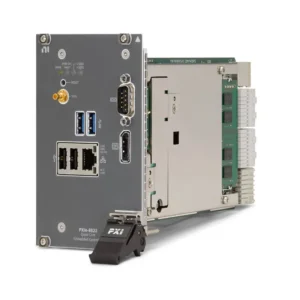
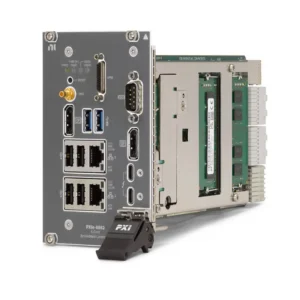
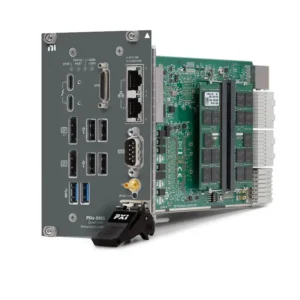
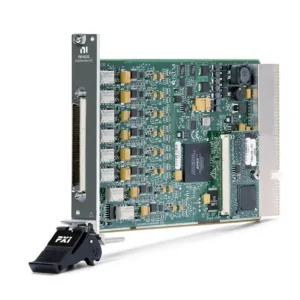
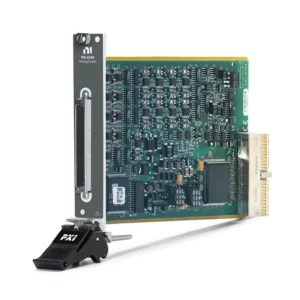
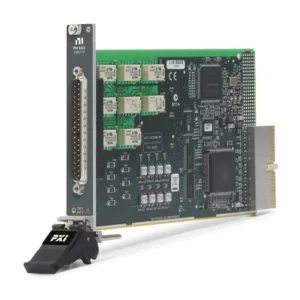
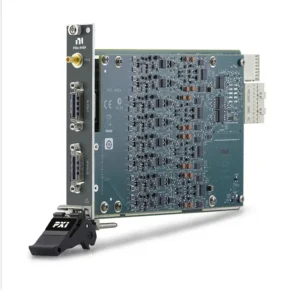
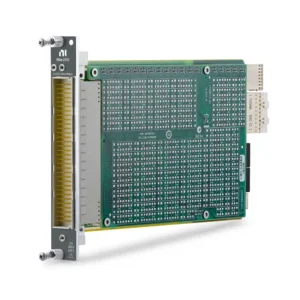
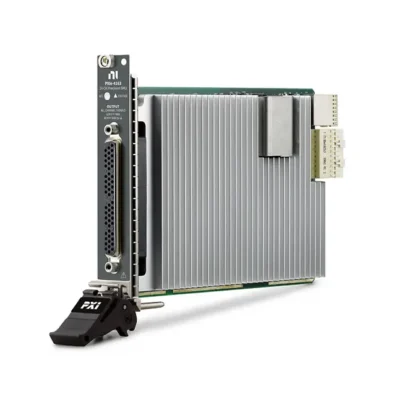
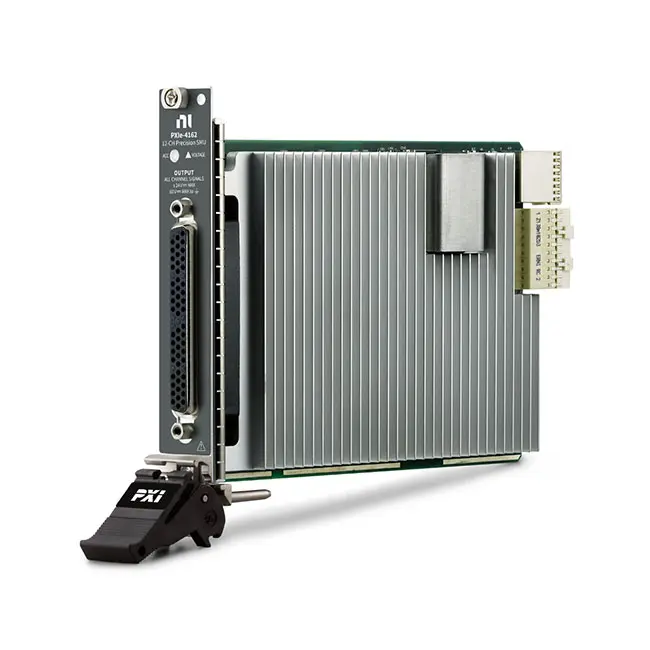
The NI PXIe-4162 is a high-density, 12-channel PXI Express Source Measure Unit (SMU) designed for precision DC sourcing and measurement in semiconductor test, electronic device characterization, production test, and automated validation systems.
The PXIe-4162 integrates 12 independently programmable SMU channels into a compact PXI Express module. Each channel combines voltage and current sourcing with precision voltage and current measurement, allowing engineers to build high-channel-count parametric test systems without requiring a separate instrument for every DUT terminal.
With 4-quadrant operation and bipolar voltage capability up to approximately ±24 V, the PXIe-4162 is particularly well suited for semiconductor characterization, multi-site device testing, I-V measurements, IC validation, sensor testing, and other applications requiring many synchronized source-measure channels.
Product Overview
The National Instruments PXIe-4162 belongs to NI’s high-density PXI Source Measure Unit family.
Its primary advantage is channel density. Instead of installing many single-channel SMUs, engineers can obtain 12 programmable source-measure channels from one PXI module.
This architecture can significantly increase test-system density for applications such as:
- Semiconductor characterization
- Multi-site semiconductor test
- IC validation
- Wafer-level test
- Electronic component characterization
- Sensor testing
- Power-management IC testing
- Automated I-V measurements
- Production parametric test
- Research and development
Key Features
12 Independent SMU Channels
The PXIe-4162 provides 12 source-measure channels in a high-density PXI Express architecture.
Each channel can be used to provide programmable electrical stimulus and measure the resulting DUT response.
A simplified architecture can be represented as:
Channel 0 → DUT Terminal 1
Channel 1 → DUT Terminal 2
Channel 2 → DUT Terminal 3
…
Channel 11 → DUT Terminal 12
This high channel density is particularly valuable when testing integrated circuits and other devices containing multiple electrical terminals.
High-Density PXI SMU Architecture
Traditional semiconductor characterization systems may require numerous standalone source-measure instruments.
The PXIe-4162 integrates twelve channels into the PXI platform, helping reduce:
- Rack space
- Instrument count
- External communication cabling
- System complexity
- Test-system footprint
At the same time, the modular architecture allows additional PXI instruments to be installed in the same system.
4-Quadrant Operation
The PXIe-4162 provides 4-quadrant source-measure operation, allowing compatible channels to source or sink current under positive and negative voltage conditions.
| Quadrant | Voltage | Current | Operation |
|---|---|---|---|
| I | Positive | Positive | Source Power |
| II | Positive | Negative | Sink Power |
| III | Negative | Negative | Source Power |
| IV | Negative | Positive | Sink Power |
Four-quadrant operation provides substantially greater flexibility than a conventional unidirectional DC power supply.
Up to Approximately ±24 V
The PXIe-4162 provides bipolar voltage operation extending to approximately ±24 V, depending on the selected operating mode and range.
Bipolar capability allows compatible DUTs to be tested under both positive and negative bias conditions.
This is useful for:
- Semiconductor I-V characterization
- Analog IC validation
- Sensor testing
- Diode characterization
- Transistor testing
- Multi-terminal device characterization
Precision Voltage Sourcing
Each PXIe-4162 channel can provide programmable voltage stimulus to a DUT while measuring the corresponding current.
A typical test configuration is:
Program Voltage → Apply to DUT → Measure Current
This configuration is commonly used for automated I-V sweeps and semiconductor characterization.
Precision Current Sourcing
The PXIe-4162 can also source programmed current while measuring DUT voltage.
A typical configuration is:
Program Current → Apply to DUT → Measure Voltage
Current-source operation can be useful for testing LEDs, diodes, sensors, resistive devices, and other electronic components.
Simultaneous Source and Measurement
Each SMU channel combines source and measurement functionality.
Depending on the test configuration, a channel can:
- Source voltage and measure current
- Source current and measure voltage
- Apply positive bias
- Apply negative bias
- Sink current
- Monitor DUT electrical behavior
This integrated functionality simplifies automated parametric test architectures.
Source and Sink Capability
Four-quadrant operation allows the PXIe-4162 to function as both an electrical source and a sink within its specified operating envelope.
Source operation delivers electrical energy to the DUT, while sink operation absorbs energy from the DUT.
This capability is important for devices that can both consume and generate current under different operating conditions.
Programmable Compliance
Programmable compliance limits help protect sensitive devices during automated characterization.
For example:
Source Voltage → Set Current Compliance → Measure DUT Current
When sourcing current:
Source Current → Set Voltage Compliance → Measure DUT Voltage
Compliance limits are particularly important when testing semiconductor devices that can be damaged by excessive voltage or current.
Designed for Multi-Site Testing
The 12-channel architecture makes the PXIe-4162 particularly attractive for multi-site semiconductor and production test.
Instead of testing one device at a time, multiple SMU channels can be allocated across several DUT sites.
For example:
Channels 0–2 → DUT Site 1
Channels 3–5 → DUT Site 2
Channels 6–8 → DUT Site 3
Channels 9–11 → DUT Site 4
The actual channel allocation depends on the electrical requirements of each DUT.
Technical Specifications
| Parameter | Description |
|---|---|
| Product Type | High-Density PXI Source Measure Unit |
| Model | NI PXIe-4162 |
| Platform | PXI Express |
| Number of SMU Channels | 12 |
| Operation | 4-Quadrant |
| Voltage Capability | Up to Approximately ±24 V |
| Voltage Source | Supported |
| Current Source | Supported |
| Voltage Measurement | Supported |
| Current Measurement | Supported |
| Source Operation | Supported |
| Sink Operation | Supported |
| Programmable Compliance | Supported |
| Primary Advantage | 12-Channel High-Density SMU Architecture |
| Primary Applications | Semiconductor Test, Multi-Site Test, I-V Characterization and Electronic Validation |
What Is a High-Density SMU?
A high-density Source Measure Unit combines multiple independent SMU channels within a single modular instrument.
Each channel provides electrical source and measurement functionality.
A conventional system might require:
SMU 1 + SMU 2 + SMU 3 + SMU 4 + Multiple Additional Instruments
A high-density architecture such as the PXIe-4162 provides:
One PXIe-4162 → 12 SMU Channels
This can substantially increase channel density within automated test systems.
What Is an SMU?
An SMU, or Source Measure Unit, combines programmable voltage and current sourcing with precision voltage and current measurement.
A typical SMU can perform several instrument functions:
- Voltage source
- Current source
- Voltmeter
- Ammeter
- Electronic load
This combination makes SMUs particularly useful for semiconductor and electronic component characterization.
PXIe-4162 for I-V Characterization
Automated I-V characterization is one of the primary applications of the PXIe-4162.
A voltage sweep can be represented as:
V1 → Measure I1
V2 → Measure I2
V3 → Measure I3
V4 → Measure I4
… → Generate I-V Curve
Because the module contains 12 channels, multiple device terminals or multiple DUTs can be characterized within the same PXI system.
Automated Voltage Sweeps
Each applicable channel can be programmed through a sequence of voltage levels while measuring the resulting current.
A typical automated procedure includes:
- Configure the voltage range.
- Configure current compliance.
- Program the first voltage point.
- Measure DUT current.
- Increment the source voltage.
- Repeat the measurement.
- Continue across the required range.
- Analyze the resulting I-V data.
Automated Current Sweeps
The PXIe-4162 can also source current and measure voltage across a programmed sweep.
This is useful for devices where current is the preferred controlled stimulus.
A simplified sequence is:
I1 → Measure V1
I2 → Measure V2
I3 → Measure V3
I4 → Measure V4
Semiconductor Test Applications
The high channel density of the PXIe-4162 makes it especially suitable for semiconductor characterization and production test.
Typical devices can include:
- Integrated circuits
- Analog ICs
- Power-management ICs
- Diodes
- LEDs
- Transistors
- MOSFETs
- Sensors
- MEMS devices
- Electronic components
Multi-Terminal Device Characterization
Many semiconductor devices require independent electrical stimulus on several terminals.
For example, a multi-terminal device might require:
SMU Channel 1 → Supply Terminal
SMU Channel 2 → Bias Terminal
SMU Channel 3 → Input Terminal
SMU Channel 4 → Output Measurement
The 12-channel PXIe-4162 architecture allows several such source-measure connections to be implemented using one PXI module.
Multi-Site Semiconductor Testing
Multi-site testing increases test throughput by testing several devices in parallel.
The 12 SMU channels can be divided between multiple DUT sites when the application allows.
For example, if each DUT requires three source-measure channels:
12 SMU Channels ÷ 3 Channels per DUT = Up to 4 DUT Sites
Actual multi-site capability depends on the complete test requirements, switching architecture, DUT characteristics, software, and other instrumentation.
Power Management IC Testing
Power-management ICs frequently contain several power rails, enable signals, bias terminals, and monitoring points.
The PXIe-4162 can provide multiple programmable DC source-measure channels within a compact system.
Typical PMIC measurements may include:
- Input current
- Quiescent current
- Bias current
- Voltage regulation
- Power-state current
- Shutdown current
- Device leakage
- Parametric characterization
IC Validation
During integrated-circuit validation, engineers may need to apply different electrical conditions to many DUT pins.
The PXIe-4162 can provide multiple independently programmable DC channels for these tests.
Its PXI architecture also allows the SMU to operate alongside digital pattern instruments, oscilloscopes, waveform generators, RF modules, and switching hardware.
Wafer-Level Testing
The PXIe-4162 can be incorporated into compatible wafer-level characterization and test systems.
A typical system may include:
- PXIe-4162 SMU
- Probe station
- Probe card or probes
- PXI switching hardware
- PXI controller
- Automated characterization software
The suitability of the complete configuration depends on required measurement sensitivity, leakage performance, cabling, guarding, switching, and DUT characteristics.
Diode Testing
The PXIe-4162 can provide programmed voltage or current while measuring the electrical response of compatible diodes.
Typical measurements include:
- Forward voltage
- Forward current
- Reverse-bias behavior
- Leakage current
- I-V characteristics
LED Testing
For LED electrical characterization, an SMU channel can source current while measuring forward voltage.
A typical configuration is:
PXIe-4162 Channel → Source Current → LED → Measure Forward Voltage
Multiple channels can be used to test several compatible LEDs or multiple device terminals.
Sensor Characterization
The PXIe-4162 can provide programmable excitation and electrical measurement for compatible sensors.
Applications may include:
- Resistive sensors
- Semiconductor sensors
- MEMS devices
- Analog sensors
- Prototype sensor characterization
Parallel Device Testing
High-density SMUs are particularly useful when test throughput is important.
Instead of performing every electrical test sequentially with one SMU channel, multiple PXIe-4162 channels can be allocated to parallel measurement tasks where supported by the DUT and test architecture.
This can reduce total test time in production and characterization systems.
PXIe-4162 vs Single-Channel SMU
| Feature | PXIe-4162 | Single-Channel SMU |
|---|---|---|
| SMU Channels | 12 | 1 |
| Channel Density | Very High | Low |
| Multi-Site Test | Excellent | Requires Multiple Instruments |
| Multi-Terminal Devices | Excellent | Requires Additional SMUs |
| System Footprint | Compact | Larger for 12 Channels |
| Best Application | High-Density Parametric Test | Single-Device Characterization |
PXIe-4162 vs PXIe-4151
The PXIe-4162 and PXIe-4151 are both PXI Source Measure Units, but they target different test-system requirements.
| Feature | PXIe-4162 | PXIe-4151 |
|---|---|---|
| Primary Architecture | High-Density SMU | Single-Channel SMU |
| SMU Channels | 12 | 1 |
| Primary Advantage | Channel Density | Higher Power per Channel |
| Multi-Site Testing | Excellent | Requires Multiple Modules |
| Multi-Terminal IC Testing | Excellent | Additional Channels Required |
| Best Application | High-Density Semiconductor Test | Higher-Power Single-Channel Characterization |
PXIe-4162 vs Programmable Power Supply
| Feature | PXIe-4162 | Programmable Power Supply |
|---|---|---|
| Instrument Type | Source Measure Unit | DC Power Supply |
| Primary Purpose | Precision Source and Measurement | Supply DUT Power |
| Voltage Measurement | Precision Measurement | Model Dependent |
| Current Measurement | Precision Measurement | Generally More Limited |
| 4-Quadrant Operation | Yes | Usually No |
| I-V Characterization | Primary Application | Not Primary Application |
| High Channel Density | 12 SMU Channels | Model Dependent |
PXIe-4162 with PXI Switching
PXI switching can further increase the number of DUT connections accessible from the PXIe-4162.
A simplified architecture is:
PXIe-4162 → PXI Switch → Multiple DUTs / Test Points
Switch selection is particularly important for precision SMU applications.
Engineers should evaluate:
- Maximum voltage
- Maximum current
- Contact resistance
- Leakage current
- Thermal EMF
- Isolation
- Switching topology
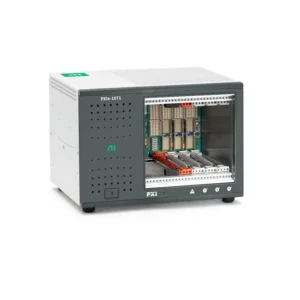
PXIe-4162 in a Complete PXI System
The PXIe-4162 can serve as the high-density DC parametric measurement instrument within a complete PXI system.
A typical semiconductor or automated test platform may include:
- PXI Chassis
- PXI Controller
- PXIe-4162 high-density SMU
- PXI Modules
- PXI digital pattern instruments
- PXI oscilloscopes and digitizers
- PXI switching modules
- PXI programmable power supplies
- RF measurement instruments
This modular architecture allows parametric, functional, digital, waveform, and RF testing to be integrated into one automated platform.
Software-Controlled Testing
The PXIe-4162 is designed for automated software control.
Test applications can program parameters such as:
- Source voltage
- Source current
- Current compliance
- Voltage compliance
- Measurement range
- Source sequences
- Voltage sweeps
- Current sweeps
- Channel configuration
- Measurement timing
The ability to program multiple channels makes the module particularly useful for automated semiconductor characterization.
SMU Selection Considerations
High channel count alone does not determine whether the PXIe-4162 is the correct SMU for an application.
Before selecting the module, engineers should verify:
- Required number of SMU channels
- Required source voltage
- Required source current
- Source and sink power requirements
- Current measurement sensitivity
- Voltage measurement accuracy
- Current measurement accuracy
- Required measurement speed
- Compliance requirements
- Multi-site test requirements
- DUT connection architecture
- Switching requirements
- PXI chassis compatibility
- Software and driver compatibility
High-Density Test System Design
The primary design advantage of the PXIe-4162 is the ability to increase the number of programmable DC channels without proportionally increasing chassis space.
For semiconductor and IC test applications, this can provide:
- Higher channel density
- More DUT terminals per system
- More parallel test sites
- Reduced system footprint
- Greater test-system scalability
- Improved instrument utilization
Industries
- Semiconductor Test
- Integrated Circuit Validation
- Electronic Manufacturing
- Automated Test Equipment
- Consumer Electronics
- Automotive Electronics
- Power Electronics
- Research and Development
- Sensor and MEMS Development
Applications
Semiconductor Characterization
Twelve programmable source-measure channels provide a high-density platform for electrical characterization of semiconductor devices.
Multi-Site Semiconductor Test
The PXIe-4162 can allocate independent SMU channels across multiple DUT sites to increase test throughput where the application supports parallel testing.
I-V Characterization
Programmable voltage and current sweeps allow engineers to generate automated current-voltage characteristics for compatible devices.
IC Validation
Multiple independent channels can provide programmable bias and measurement for integrated circuits containing several electrical terminals.
Power Management IC Test
High channel density is useful for PMICs requiring multiple supply, bias, monitoring, and electrical characterization connections.
Wafer-Level Test
The PXIe-4162 can be integrated with compatible probe, switching, and automation systems for wafer-level parametric characterization.
Automated Production Test
Software-controlled source and measurement functionality can be incorporated into repeatable high-volume electronic and semiconductor production test systems.
Recommended Related Products
| NI PXIe-4162 | 12-channel high-density PXI Source Measure Unit for semiconductor characterization, multi-site test, and automated DC parametric measurement. |
| NI PXIe-4151 | Single-channel PXI Source Measure Unit for applications requiring precision four-quadrant sourcing and higher per-channel power capability. |
| NI PXIe-4113 | PXI programmable DC power supply for applications focused primarily on supplying DUT power. |
| NI PXIe-4190 | PXI LCR meter and SMU for impedance, capacitance-voltage, current-voltage, and semiconductor parametric measurements. |
| NI PXI Modules | PXI instrumentation for source measurement, programmable power, semiconductor test, switching, waveform acquisition, and automated measurement. |
Why Choose NI PXIe-4162?
- 12 independent SMU channels
- High-density PXI Source Measure Unit architecture
- 4-quadrant operation
- Bipolar voltage sourcing
- Up to approximately ±24 V capability
- Voltage sourcing and measurement
- Current sourcing and measurement
- Source and sink capability
- Programmable compliance limits
- Automated voltage and current sweeps
- Suitable for I-V characterization
- Designed for semiconductor testing
- Suitable for multi-site testing
- Suitable for multi-terminal IC characterization
- PXI Express modular architecture
Frequently Asked Questions
What is the NI PXIe-4162?
The NI PXIe-4162 is a high-density PXI Express Source Measure Unit providing 12 programmable SMU channels for precision DC sourcing and measurement.
How many SMU channels does the PXIe-4162 have?
The PXIe-4162 provides 12 independent source-measure channels.
Is the PXIe-4162 an SMU?
Yes. The PXIe-4162 is a multi-channel Source Measure Unit designed for precision voltage/current sourcing and measurement.
Does the PXIe-4162 support four-quadrant operation?
Yes. Its SMU architecture supports four-quadrant source and sink operation within the specified electrical operating limits.
What is the voltage capability of the PXIe-4162?
The PXIe-4162 provides bipolar voltage operation extending to approximately ±24 V. Exact voltage capability depends on the selected range and operating conditions.
Can the PXIe-4162 source voltage and measure current?
Yes. Each SMU channel can be configured to apply voltage while measuring the resulting DUT current.
Can the PXIe-4162 source current and measure voltage?
Yes. The module can also source programmed current while measuring DUT voltage.
Can the PXIe-4162 sink current?
Yes. Four-quadrant operation provides source and sink capability within the instrument’s specified operating envelope.
Can the PXIe-4162 perform I-V sweeps?
Yes. Programmable source levels and precision measurement capability make the PXIe-4162 suitable for automated voltage and current sweeps used in I-V characterization.
Is the PXIe-4162 suitable for semiconductor testing?
Yes. Semiconductor characterization and high-density parametric testing are key applications for the PXIe-4162.
Can the PXIe-4162 be used for multi-site testing?
Yes. Its 12-channel architecture can be divided among multiple DUT sites where the electrical requirements and test architecture permit parallel testing.
Can the PXIe-4162 test multiple DUTs at the same time?
Yes, depending on the number of channels required per DUT and the overall test configuration. For example, if each DUT requires three SMU channels, twelve channels can theoretically be allocated across four DUT sites.
Can the PXIe-4162 be used for IC testing?
Yes. Its high channel density is particularly useful for integrated circuits that require several independently programmable bias and measurement connections.
Can the PXIe-4162 be used for wafer-level testing?
Yes. The module can be incorporated into compatible wafer-level characterization systems using appropriate probe stations, cabling, switching, fixtures, and software.
What is the difference between PXIe-4162 and PXIe-4151?
The PXIe-4162 emphasizes high channel density with 12 SMU channels, while the PXIe-4151 is a single-channel SMU intended for applications where different per-channel voltage, current, power, or measurement capabilities are required.
Is the PXIe-4162 a programmable power supply?
No. The PXIe-4162 is primarily a precision Source Measure Unit. Although it can source electrical power within its specifications, it is designed for combined precision sourcing and measurement rather than simply providing DUT power.
Can the PXIe-4162 be used with PXI switches?
Yes. Compatible PXI switching modules can route SMU channels to additional DUT connections. For precision applications, switch leakage, contact resistance, thermal EMF, isolation, voltage, and current ratings should be evaluated carefully.
What applications are suitable for the PXIe-4162?
Typical applications include semiconductor characterization, multi-site testing, I-V measurements, IC validation, PMIC testing, wafer-level characterization, sensor testing, electronic component testing, and automated production parametric test.
What should I check before purchasing a PXIe-4162?
Before purchasing a PXIe-4162, verify the required number of channels, voltage and current ranges, source and sink operating limits, measurement accuracy, current sensitivity, compliance requirements, measurement speed, DUT connection architecture, switching requirements, PXI Express chassis compatibility, software support, and the exact NI ordering part number.
Conclusion
The NI PXIe-4162 12-Channel PXI Source Measure Unit provides a high-density platform for precision DC sourcing and measurement. With 12 independently programmable SMU channels, four-quadrant operation, bipolar voltage capability, programmable compliance, and automated source-measure functionality, the PXIe-4162 is particularly well suited for semiconductor characterization, multi-site test, I-V measurement, integrated-circuit validation, PMIC testing, wafer-level characterization, and high-throughput automated parametric test systems.