




Product Introduction
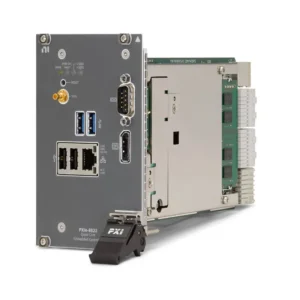
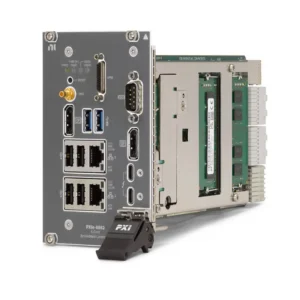
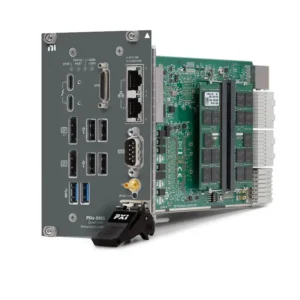
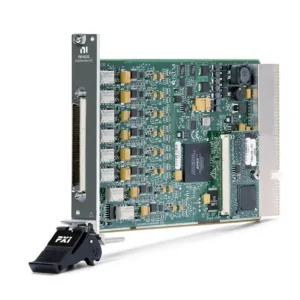
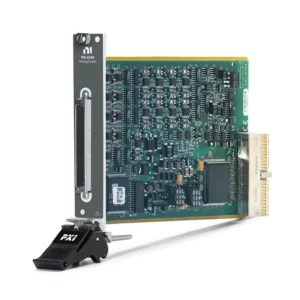
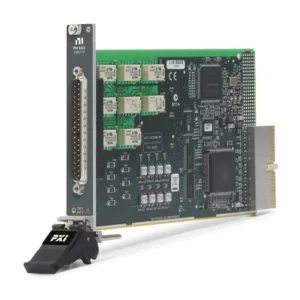
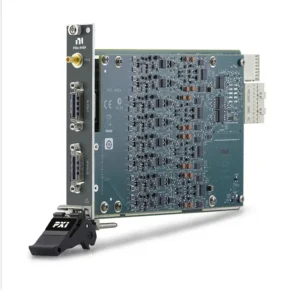
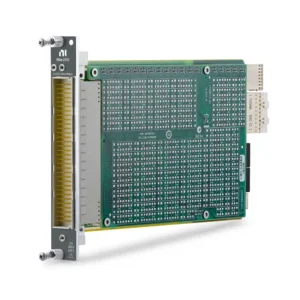
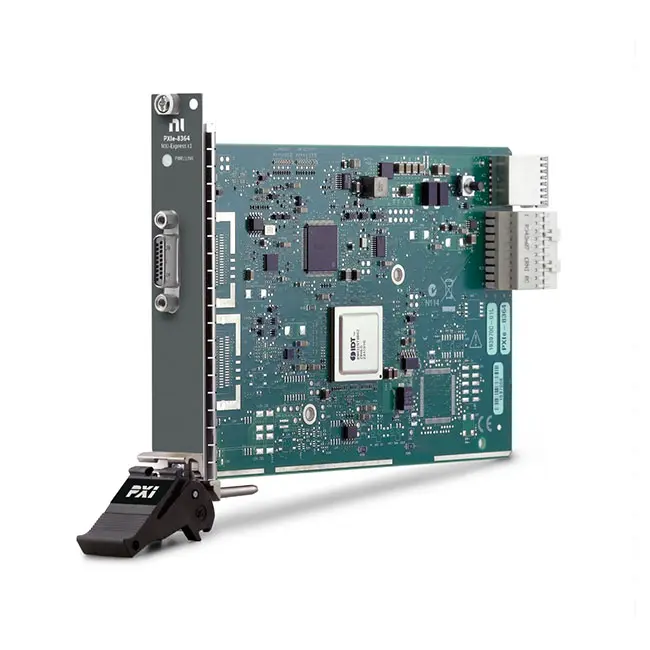
The NI PXIe-8364 is a PXI Express remote control module designed for creating high-performance multi-chassis PXI Express systems. It provides four MXI-Express connectivity ports, allowing engineers to expand a PXI system across multiple chassis while maintaining transparent PCI Express communication between the host system and installed PXI Express devices.
The PXIe-8364 is particularly useful in large automated test, data acquisition, RF measurement, semiconductor test, electronic validation, and research systems where a single PXI chassis does not provide enough slots for all required instrumentation.
By using MXI-Express technology, the PXIe-8364 allows additional PXI Express chassis to appear to the host computer as part of the same PCI Express system, simplifying software configuration and multi-chassis system integration.
Product Overview
The National Instruments PXIe-8364 belongs to the NI PXI remote control and MXI-Express product family.
Unlike a measurement module, the PXIe-8364 does not acquire analog or digital signals. Its primary purpose is to provide high-speed PCI Express connectivity between PXI Express chassis.
A typical architecture can be represented as:
Host / Primary PXI System → PXIe-8364 → MXI-Express Cables → Additional PXI Express Chassis
This architecture allows engineers to build larger PXI systems without requiring each chassis to operate as an independent test system.
Key Features
Four-Port MXI-Express Connectivity
The PXIe-8364 provides four MXI-Express ports for connecting compatible PXI Express chassis and remote-control hardware.
The multi-port architecture is particularly valuable for large systems because several expansion chassis can be connected through a centralized remote-control architecture.
Typical applications include:
- Multi-chassis PXI systems
- Large automated test platforms
- High-channel-count data acquisition
- RF and wireless test systems
- Semiconductor test systems
- Electronic validation
- Aerospace and defense testing
PXI Express Remote Control
The PXIe-8364 provides remote-control connectivity based on the PCI Express architecture used by PXI Express.
This allows compatible PXI Express chassis and modules to communicate with the controlling system through a high-speed hardware connection.
From the software perspective, compatible devices in the expansion chassis can operate as PCI Express resources available to the host system.
Multi-Chassis PXI Expansion
One of the primary applications of the PXIe-8364 is expanding the number of available PXI slots beyond the capacity of a single chassis.
For example:
Primary PXI Chassis
↓
PXIe-8364
↓ ↓ ↓ ↓
Expansion Chassis 1 | Expansion Chassis 2 | Expansion Chassis 3 | Expansion Chassis 4
The exact supported topology depends on the selected chassis, remote-control modules, cables, host architecture, and overall system configuration.
Transparent PCI Express Communication
MXI-Express technology extends the host PCI Express bus through a cable connection.
This architecture differs from conventional Ethernet-based remote control because it provides a direct PCI Express connection rather than controlling the remote chassis through a standard network protocol.
This provides important advantages for automated test systems requiring:
- Low communication latency
- High data throughput
- Direct device access
- Large multi-chassis systems
- High-speed data streaming
High-Speed Data Transfer
PXI Express instruments can generate large quantities of measurement data. The PXIe-8364 is designed to provide high-speed system connectivity suitable for demanding PXI Express applications.
This is particularly important when expansion chassis contain instruments such as:
- High-speed digitizers
- Oscilloscopes
- RF instruments
- High-speed data acquisition modules
- FPGA modules
- Digital waveform instruments
- High-speed storage modules
Designed for Large PXI Systems
A standard PXI chassis provides a finite number of peripheral slots. Large automated test systems can exceed this capacity.
The PXIe-8364 provides a practical method for increasing available chassis capacity while retaining a common host architecture.
This makes it particularly useful for systems containing many different measurement and control instruments.
Single-System Software Architecture
A major advantage of MXI-Express expansion is that compatible devices installed in expansion chassis can be accessed by the controlling computer through the PCI Express hierarchy.
This helps engineers develop one integrated test application rather than treating every chassis as a completely separate computer-controlled measurement system.
Technical Specifications
| Parameter | Description |
|---|---|
| Product Type | PXI Express Remote Control Module |
| Model | NI PXIe-8364 |
| Platform | PXI Express |
| Primary Interface | MXI-Express |
| Number of MXI-Express Ports | 4 |
| Primary Function | Multi-Chassis PXI Express Expansion |
| Communication Architecture | PCI Express Extension |
| Remote Control | Supported |
| Multi-Chassis Operation | Supported |
| PXI Express System Expansion | Supported |
| Primary Applications | Automated Test, Data Acquisition, RF Test, Semiconductor Test and Electronic Validation |
What Is a PXI Remote Control Module?
A PXI remote control module provides a hardware connection between a PXI chassis and another computer or PXI system.
Depending on the remote-control architecture, the controlling computer may be:
- A desktop PC
- A workstation
- An industrial computer
- Another PXI chassis
The PXIe-8364 is designed primarily for MXI-Express-based PXI Express system expansion.
What Is MXI-Express?
MXI-Express is a high-speed remote-control technology used to extend PCI Express connectivity between a host system and compatible PXI Express hardware.
The technology allows a PXI chassis to be physically separated from the host while maintaining PCI Express communication.
A typical MXI-Express architecture consists of:
- Host or primary system interface
- MXI-Express cable
- PXI Express remote-control interface
- PXI Express chassis
- PXI measurement modules
PXIe-8364 Multi-Chassis Architecture
The four-port architecture is one of the most important characteristics of the PXIe-8364.
Instead of providing only a single expansion connection, the module can participate in architectures where multiple chassis are connected to the controlling PXI system.
A simplified configuration can be represented as:
PXI Host System
↓
PXIe-8364
├── MXI Link 1 → Expansion Chassis
├── MXI Link 2 → Expansion Chassis
├── MXI Link 3 → Expansion Chassis
└── MXI Link 4 → Expansion Chassis
Why Use Multiple PXI Chassis?
Large automated test systems can require dozens of PXI instruments. A single chassis may not provide enough peripheral slots for the complete system.
Multiple chassis may be required when a system contains combinations of:
- Oscilloscopes and digitizers
- RF signal generators
- RF signal analyzers
- Digital multimeters
- Source measurement units
- Programmable power supplies
- PXI switches
- Digital I/O modules
- FPGA modules
- Data acquisition modules
The PXIe-8364 helps integrate these additional chassis into a larger PXI architecture.
PXIe-8364 for High-Channel-Count Data Acquisition
High-channel-count data acquisition systems can require more modules than one PXI chassis can accommodate.
Using multi-chassis expansion, engineers can distribute DAQ modules across several PXI Express chassis while maintaining centralized system control.
Applications may include:
- Structural testing
- Acoustic measurements
- Vibration testing
- Temperature monitoring
- Pressure measurements
- Automotive testing
- Aerospace testing
PXIe-8364 for RF Test Systems
Large RF and wireless test systems can contain numerous PXI instruments, including RF signal generators, vector signal transceivers, analyzers, switches, and timing modules.
A multi-chassis architecture can provide additional slots for these instruments while allowing the system to remain under centralized control.
This can be useful for:
- Wireless device validation
- RF component testing
- Multi-channel RF systems
- Antenna testing
- Communications research
- Production RF test
PXIe-8364 for Semiconductor Test
Semiconductor validation and production test platforms frequently require a large number of measurement and switching channels.
A multi-chassis PXI architecture can provide additional capacity for:
- Source measurement units
- Digital pattern instruments
- Oscilloscopes
- Waveform generators
- Programmable power supplies
- RF instrumentation
- Switching systems
The PXIe-8364 can be used as part of the connectivity architecture linking these PXI Express resources.
PXIe-8364 for Automated Test Equipment
Automated test equipment often grows over time as additional measurement requirements are introduced.
A system that initially fits within one PXI chassis may eventually require more slots.
Using a remote-control and expansion architecture can allow engineers to increase system capacity without completely redesigning the original test platform.
PXIe-8364 vs Embedded PXI Controller
The PXIe-8364 should not be confused with an embedded PXI controller.
| Feature | PXIe-8364 | Embedded PXI Controller |
|---|---|---|
| Primary Function | Remote Control / Chassis Expansion | System Computing and Control |
| Processor | Not Used as Main System CPU | Integrated CPU |
| Operating System | Controlled Through Host System | Runs Operating System Locally |
| MXI-Express Connectivity | Primary Function | Model Dependent |
| Multi-Chassis Expansion | Yes | Requires Additional Hardware |
| Best Application | PXI System Expansion | Standalone PXI System Control |
PXIe-8364 vs Standard Ethernet Remote Control
MXI-Express and Ethernet are fundamentally different communication architectures.
| Feature | MXI-Express with PXIe-8364 | Ethernet Remote Control |
|---|---|---|
| Underlying Architecture | PCI Express Extension | Network Communication |
| Device Access | PCI Express-Based | Network Protocol-Based |
| Typical Latency | Low | Network Dependent |
| High-Speed Streaming | Suitable | Network Dependent |
| PXI Chassis Expansion | Primary Application | Different Architecture |
PXIe-8364 vs Single-Port MXI-Express Module
The primary advantage of the PXIe-8364 over a single-port remote-control interface is its four-port architecture.
| Feature | PXIe-8364 | Single-Port MXI Module |
|---|---|---|
| MXI Ports | 4 | 1 |
| Multi-Chassis Expansion | Optimized | More Limited |
| System Scalability | High | Lower |
| Primary Application | Large PXI Systems | Single Remote Chassis Connection |
PXIe-8364 vs PXIe-8360
Both the PXIe-8364 and PXIe-8360 belong to the MXI-Express remote-control family, but they target different system architectures.
| Feature | PXIe-8364 | PXIe-8360 |
|---|---|---|
| Product Family | MXI-Express | MXI-Express |
| Primary Role | Multi-Chassis Expansion | Remote Control |
| MXI Ports | 4 | Fewer Ports |
| Best Application | Large Multi-Chassis Systems | Standard Remote Chassis Connectivity |
The correct module should be selected according to the required host interface, chassis topology, cable type, bandwidth, and number of expansion connections.
PXIe-8364 in a Complete PXI System
The PXIe-8364 can form part of the infrastructure connecting multiple chassis within a complete PXI system.
A typical system may include:
- PXI Chassis
- PXI Controller
- PXIe-8364 remote control module
- MXI-Express cables
- Compatible remote-control modules
- PXI Modules
The exact hardware combination depends on whether the system uses a PC controller, embedded PXI controller, primary PXI chassis, or other compatible MXI-Express architecture.
Multi-Chassis Automated Test Architecture
A large automated test platform can distribute different instrument functions between several chassis.
For example:
Chassis 1 → Oscilloscopes and Digitizers
Chassis 2 → RF Instruments
Chassis 3 → Switching and Digital I/O
Chassis 4 → Power Supplies and SMUs
The PXIe-8364 can form part of the interconnection architecture that allows these chassis to operate as one integrated test platform.
System Expansion Considerations
Building a multi-chassis PXI Express system requires more than selecting the PXIe-8364 alone.
Engineers should verify:
- Host controller compatibility
- Primary chassis compatibility
- Expansion chassis compatibility
- Remote-control module compatibility
- MXI-Express cable compatibility
- PCI Express topology
- Required system bandwidth
- Number of PXI modules
- Operating system support
- Driver support
- BIOS and system enumeration requirements
MXI-Express Cable Selection
The correct MXI-Express cable is essential when configuring a PXIe-8364 system.
MXI-Express products from different generations can use different connectors, link widths, and communication architectures. A cable should therefore not be selected solely based on physical appearance.
Before purchasing a cable, verify:
- PXIe-8364 connector type
- Remote module model
- MXI-Express generation
- Required cable length
- Supported system topology
PXI Chassis Compatibility
The PXIe-8364 requires an appropriate PXI Express chassis and compatible slot.
Before installation, verify the chassis user manual and slot configuration to ensure the selected slot supports the module.
The complete system should also provide sufficient power and cooling for the PXIe-8364 and all installed measurement modules.
Software Considerations
Because MXI-Express extends PCI Express connectivity, compatible PXI devices installed in expansion chassis are generally accessed through their normal NI or third-party device drivers.
For example, a system may use:
- NI-DAQmx
- NI-SCOPE
- NI-DMM
- NI-SWITCH
- NI-RFSA
- NI-RFSG
- NI-VISA
- Device-specific drivers
The exact driver requirements depend on the modules installed in the connected chassis.
System Enumeration
When a compatible MXI-Express system starts, the host computer enumerates the PCI Express devices connected through the MXI link.
Correct system startup and enumeration depend on:
- Compatible hardware
- Correct cable connections
- Supported topology
- Host BIOS configuration
- Operating system support
- Appropriate device drivers
PXIe-8364 Troubleshooting
If a PXIe-8364-based expansion system is not detected correctly, troubleshooting should begin with the complete hardware chain rather than the module alone.
Check:
- PXI chassis power
- PXIe-8364 installation
- MXI-Express cable connections
- Remote module installation
- Link indicators
- Host controller configuration
- PXI device enumeration
- Operating system recognition
- Device drivers
System power sequencing can also be important in some multi-chassis configurations.
Industries
- Automated Test Equipment
- Semiconductor Test
- Aerospace and Defense
- Automotive Electronics
- RF and Wireless Test
- Electronic Manufacturing
- Research Laboratories
- High-Channel-Count Data Acquisition
- Electronic Design Validation
Applications
Multi-Chassis PXI Systems
The PXIe-8364 provides four MXI-Express connectivity ports for building scalable PXI Express systems across multiple chassis.
Automated Test Equipment
Large automated test platforms can use additional PXI chassis when the required number of instruments exceeds the capacity of one chassis.
High-Channel-Count Data Acquisition
DAQ modules can be distributed across multiple chassis to create larger measurement systems with centralized host control.
RF and Wireless Test
Multi-chassis expansion provides additional capacity for RF generators, analyzers, vector signal transceivers, switching hardware, and timing modules.
Semiconductor Test
Large semiconductor test systems can distribute SMUs, digital instruments, RF modules, switching hardware, and waveform instruments across multiple PXI chassis.
Electronic Validation
The PXIe-8364 can support complex validation systems containing large numbers of PXI measurement and control modules.
Recommended Related Products
| NI PXIe-8364 | Four-port PXI Express MXI-Express remote-control module designed for scalable multi-chassis PXI systems. |
| NI PXIe-8360 | MXI-Express remote-control hardware for compatible PXI Express chassis connectivity. |
| NI PXIe-8238 | PXI Express Ethernet interface module for applications requiring dedicated network connectivity rather than MXI-Express chassis expansion. |
| NI PXI Chassis | PXI and PXI Express chassis for modular automated test and measurement systems. |
| NI PXI Controllers | Embedded and remote-control solutions for managing PXI automated test systems. |
Why Choose NI PXIe-8364?
- Four-port MXI-Express architecture
- Designed for multi-chassis PXI Express expansion
- PCI Express-based connectivity
- High-speed system communication
- Suitable for high-data-throughput applications
- Supports scalable PXI system architectures
- Suitable for large automated test systems
- Suitable for high-channel-count DAQ systems
- Suitable for RF and wireless test
- Suitable for semiconductor test
- Integrates with compatible PXI Express chassis
- Centralized control of multi-chassis systems
Frequently Asked Questions
What is the NI PXIe-8364?
The NI PXIe-8364 is a four-port PXI Express remote-control module based on MXI-Express technology. It is primarily designed for connecting and expanding compatible multi-chassis PXI Express systems.
What is the PXIe-8364 used for?
The PXIe-8364 is used primarily for PXI Express chassis expansion. It allows additional compatible PXI Express chassis to be connected to a host or primary PXI system through MXI-Express links.
How many MXI-Express ports does the PXIe-8364 have?
The PXIe-8364 provides four MXI-Express ports, making it particularly suitable for multi-chassis system architectures.
Is the PXIe-8364 a PXI controller?
It is a PXI remote-control and expansion module rather than a conventional embedded controller. It does not replace the primary host computer or embedded PXI controller that runs the operating system and test application.
What is MXI-Express?
MXI-Express is a remote-control technology that extends PCI Express connectivity through a cable between compatible host and PXI Express hardware.
Can the PXIe-8364 connect multiple PXI chassis?
Yes. Multi-chassis expansion is one of the primary applications of the PXIe-8364. Its four-port architecture is designed for scalable PXI Express systems.
Is MXI-Express the same as Ethernet?
No. MXI-Express extends PCI Express connectivity, while Ethernet uses network communication protocols. They are different architectures and are used for different system-control requirements.
Can the PXIe-8364 be used for high-speed data acquisition?
Yes. The PXIe-8364 can form part of a multi-chassis architecture containing high-speed DAQ and other PXI Express measurement modules. Actual system throughput depends on the complete PCI Express topology, modules, chassis, controller, and software configuration.
Can the PXIe-8364 be used for RF test systems?
Yes. It can be used to expand compatible PXI Express systems containing RF signal generators, analyzers, vector signal transceivers, switching modules, and other RF test hardware.
Can the PXIe-8364 be used for semiconductor testing?
Yes. Multi-chassis PXI architectures are useful for semiconductor validation and test systems requiring large numbers of SMUs, digital instruments, waveform instruments, switches, and RF modules.
Does the PXIe-8364 require an MXI-Express cable?
Yes. Compatible MXI-Express cabling and corresponding remote-control hardware are required to establish the system connection. The exact cable should be selected according to the complete hardware configuration.
Can I use any MXI-Express cable with the PXIe-8364?
No. MXI-Express products can differ by generation, connector, link architecture, and bandwidth. Cable compatibility should be verified using the exact PXIe-8364 and corresponding remote-module models.
Does the PXIe-8364 acquire measurement signals?
No. The PXIe-8364 is system connectivity hardware. Measurement functions are provided by other PXI modules such as oscilloscopes, digitizers, DAQ devices, DMMs, RF instruments, and SMUs.
What is the difference between the PXIe-8364 and an embedded PXI controller?
An embedded controller contains the processor and normally runs the operating system and test application. The PXIe-8364 is used for MXI-Express connectivity and multi-chassis expansion and is not the main system CPU.
What should I check before purchasing a PXIe-8364?
Before purchasing a PXIe-8364, verify the primary PXI chassis, expansion chassis, host controller, corresponding MXI-Express modules, cable type and length, required PCI Express bandwidth, number of expansion chassis, operating system support, device drivers, and complete system topology.
Why is exact system configuration important when buying a PXIe-8364?
The PXIe-8364 is only one component of an MXI-Express system. Compatibility depends on the other remote-control modules, chassis, cables, controller, PCI Express topology, and software environment. For replacement applications, matching the existing hardware configuration is particularly important.
Conclusion
The NI PXIe-8364 4-Port PXI Express Remote Control Module is designed for scalable multi-chassis PXI Express systems. Its four-port MXI-Express architecture allows engineers to expand large automated test, high-channel-count data acquisition, RF measurement, semiconductor test, and electronic validation platforms beyond the capacity of a single chassis. By extending PCI Express connectivity between compatible PXI hardware, the PXIe-8364 provides a high-performance solution for centralized control of complex multi-chassis test systems.