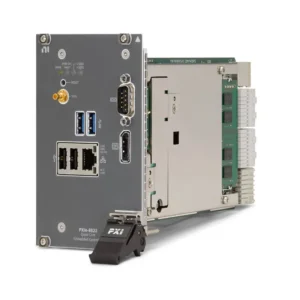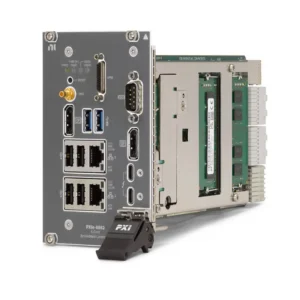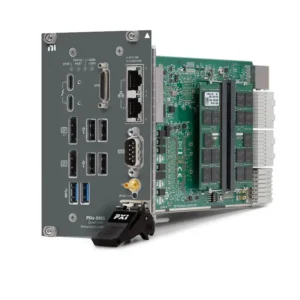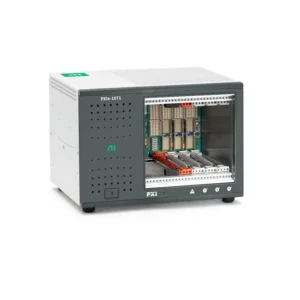




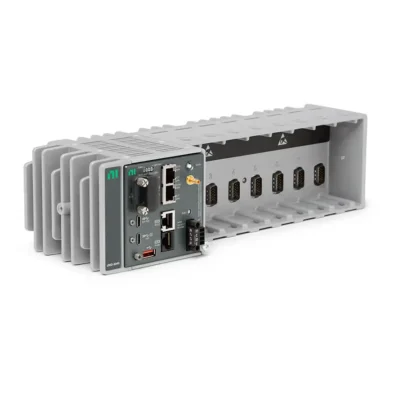
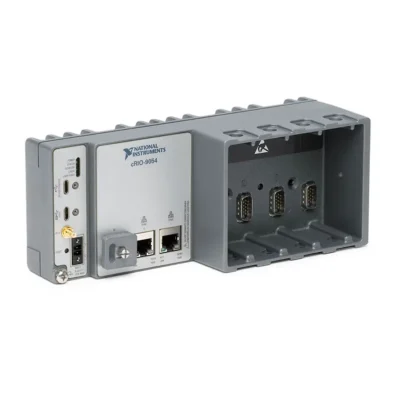
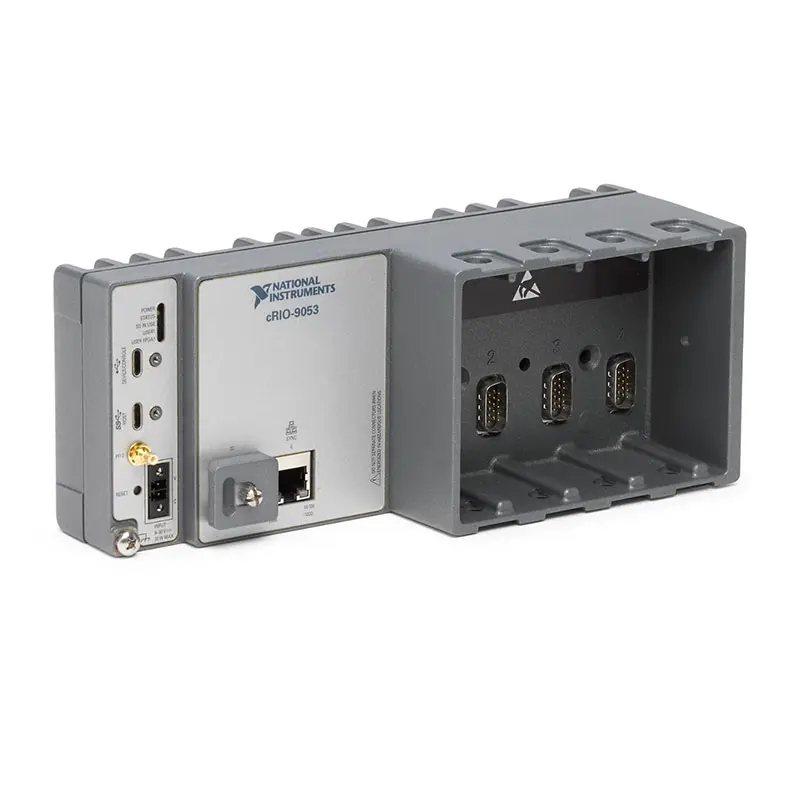
The NI cRIO-9053 is a next-generation 4-slot CompactRIO embedded controller designed for deterministic industrial control, FPGA-intensive processing, distributed monitoring, and industrial edge applications. It combines an Intel Atom quad-core processor, a high-performance Xilinx Kintex UltraScale FPGA, and TSN (Time-Sensitive Networking) capability into a compact industrial control platform optimized for advanced embedded systems.
Compared with previous Kintex-7 CompactRIO systems, the cRIO-9053 delivers significantly improved FPGA resources, memory bandwidth, DSP performance, and synchronization capability. This makes it highly suitable for advanced real-time processing, high-speed signal analysis, synchronized automation, and custom FPGA-based industrial applications.
Typical applications include:
- Industrial automation
- Robotics and motion systems
- Semiconductor equipment
- Automotive HIL simulation
- Industrial edge computing
- Machine condition monitoring
- Smart manufacturing
- Power and energy systems
Processor and FPGA Architecture
The cRIO-9053 is built around:
- Intel Atom E3940 quad-core processor
- 1.6 GHz CPU frequency
- 4 GB DDR4 RAM
- 16 GB onboard storage
- Xilinx Kintex UltraScale FPGA
- NI Linux Real-Time operating system
Compared with older Kintex-7 systems, the UltraScale FPGA architecture provides:
- Higher logic density
- Faster DSP processing
- Improved memory bandwidth
- Better timing performance
- Lower latency processing
- Higher FPGA scalability
The onboard FPGA enables:
- Deterministic hardware timing
- High-speed signal processing
- FPGA coprocessing
- Inline FFT analysis
- Motion synchronization
- Encoder processing
- Industrial communication protocols
- Real-time custom hardware logic
This makes the cRIO-9053 highly suitable for FPGA-intensive industrial applications requiring real-time deterministic performance.
TSN and Distributed Synchronization
The cRIO-9053 supports:
- IEEE 802.1AS
- IEEE 1588 synchronization
- TSN deterministic networking
- Sub-microsecond synchronization accuracy
This enables deterministic distributed control across multiple industrial systems.
Typical TSN applications include:
- Multi-axis robotics
- Distributed manufacturing systems
- Semiconductor synchronization systems
- Smart factory control
- Distributed HIL simulation
- Real-time industrial edge networks
Compared with older CompactRIO generations, the cRIO-9053 provides improved synchronization capability and deterministic Ethernet communication performance.
Modular C Series Expansion
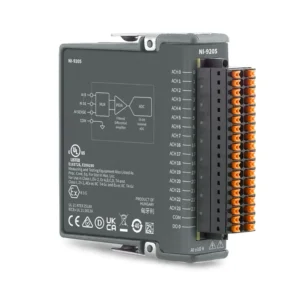
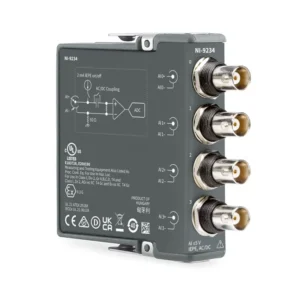
The controller supports up to 4 NI C Series modules, allowing flexible integration of:
- Analog input/output
- Digital I/O
- CAN / CAN FD
- LIN communication
- Motion control
- Vibration acquisition
- Temperature measurement
- Industrial communication modules
The cRIO-9053 can simultaneously function as:
- A deterministic industrial controller
- A distributed acquisition system
- An FPGA edge processing platform
- A real-time industrial coprocessing system
Compared with traditional PLC systems, CompactRIO platforms provide significantly greater hardware flexibility and deterministic control capability.
Industrial Applications
Robotics and Motion Control
The UltraScale FPGA architecture enables:
- Multi-axis servo synchronization
- Robotics systems
- CNC automation
- Precision motion control
- Semiconductor positioning systems
Advanced Condition Monitoring
Using FPGA processing and vibration modules, engineers can implement:
- Predictive maintenance
- FFT analysis
- Rotating machinery diagnostics
- Inline vibration analysis
- Industrial health monitoring
Automotive HIL and Simulation
The cRIO-9053 is widely used for:
- ECU validation
- Real-time simulation
- CAN/LIN/FlexRay testing
- Distributed automotive testing
- HIL simulation systems
Industrial Edge Computing
The platform supports:
- Edge analytics
- Real-time data processing
- Industrial IoT gateways
- Distributed monitoring
- Embedded industrial AI preprocessing
Connectivity and Industrial Design
The controller provides:
- Dual Gigabit Ethernet
- TSN synchronization support
- USB 3.1 Type-C
- USB 2.0
- RS232 / RS485
- SD card slot
Industrial features include:
- Fanless construction
- Operating range from -40 °C to 70 °C
- Shock and vibration resistance
- DIN-rail and panel mounting
These features make the cRIO-9053 suitable for long-term industrial deployment in harsh environments.
Comparison with Similar Models
| Model | Main Difference | Typical Use |
|---|---|---|
| cRIO-9049 | Kintex-7 FPGA platform | Standard distributed automation |
| cRIO-9047 | Intel Core i7 + Kintex-7 | High-end edge automation |
| cRIO-9054 | Larger UltraScale FPGA | Advanced FPGA processing |
| PXIe FPGA Systems | PXI centralized architecture | High-performance lab testing |
| Industrial PLC Systems | Software-based control | Standard factory automation |
Compared with the cRIO-904x series, the cRIO-9053 provides significantly stronger FPGA performance and improved scalability through the UltraScale architecture.
Compared with PXI FPGA systems, the cRIO-9053 offers a more compact and rugged embedded deployment platform for field automation applications.
Engineering Advantages
From an engineering deployment perspective, the cRIO-9053 provides:
- Deterministic real-time control
- UltraScale FPGA acceleration
- TSN synchronized networking
- Flexible modular I/O
- Industrial edge processing capability
- Rugged industrial reliability
- Long-term deployment stability
- Tight LabVIEW and NI ecosystem integration
These capabilities make it highly suitable for advanced industrial embedded systems and FPGA-intensive automation platforms.
Conclusion
The NI cRIO-9053 is a next-generation CompactRIO embedded controller designed for deterministic automation, UltraScale FPGA processing, synchronized distributed systems, and industrial edge computing applications.
Its combination of:
- Intel Atom quad-core processing
- Xilinx UltraScale FPGA
- TSN networking
- Modular C Series expansion
- Industrial ruggedness
- LabVIEW integration
makes it an ideal solution for robotics, semiconductor automation, HIL simulation, predictive maintenance, smart manufacturing, and advanced embedded industrial control systems.