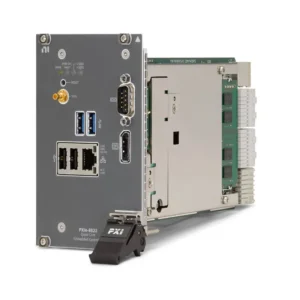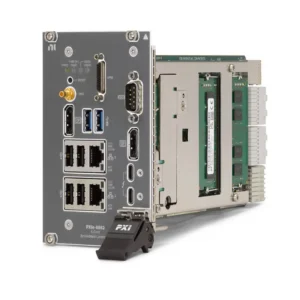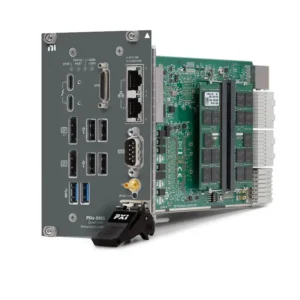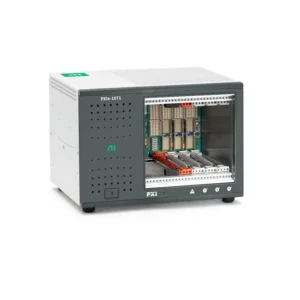




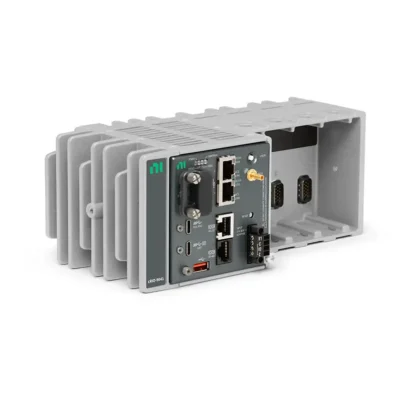
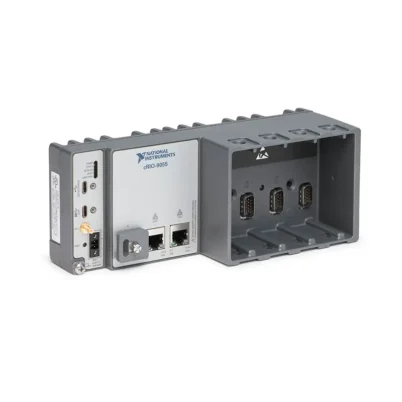
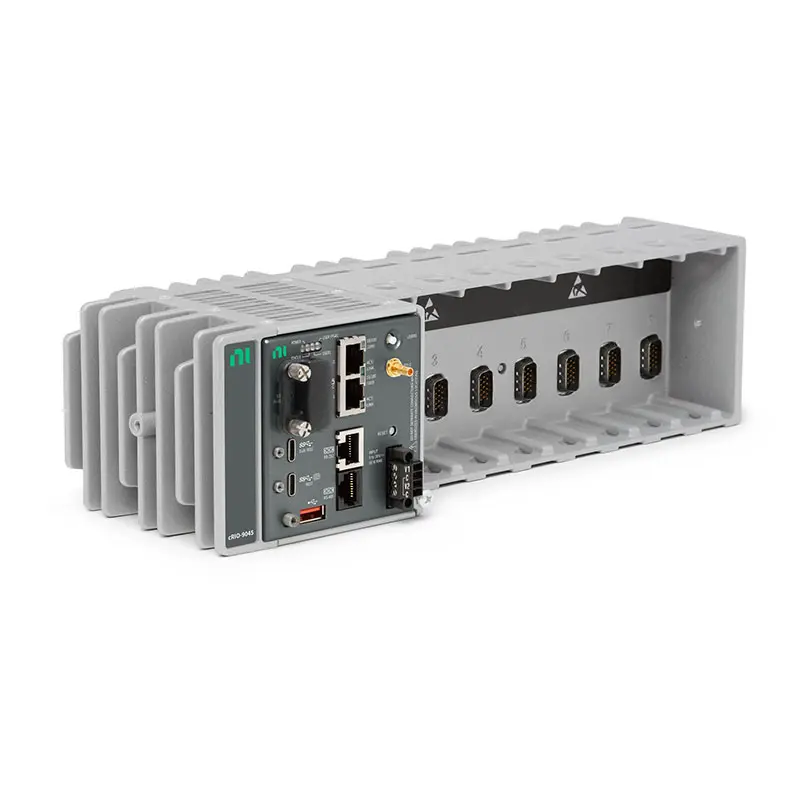
The NI cRIO-9045 is a high-performance 8-slot CompactRIO embedded controller designed for advanced industrial automation, edge computing, synchronized distributed systems, and FPGA-based real-time processing applications. It combines an Intel Core i7 processor, a Xilinx Kintex-7 FPGA, and TSN (Time-Sensitive Networking) support into a rugged industrial platform optimized for deterministic control and high-speed data processing.
Compared with traditional PLC or industrial PC systems, the cRIO-9045 integrates deterministic real-time processing and FPGA hardware acceleration into a single architecture, enabling ultra-low-latency control, inline signal analysis, synchronized acquisition, and custom hardware-level communication protocols.
Typical applications include:
- Advanced industrial automation
- Robotics and motion systems
- Automotive HIL simulation
- Semiconductor manufacturing equipment
- Smart grid and energy systems
- Machine condition monitoring
- Distributed edge computing
- Aerospace and defense validation systems
Processor and FPGA Architecture
The cRIO-9045 is built around:
- Intel Core i7-6822EQ quad-core processor
- 2.0 GHz base frequency
- 8 GB DDR4 RAM
- 32 GB onboard storage
- Xilinx Kintex-7 325T FPGA
- NI Linux Real-Time operating system
The powerful Intel Core i7 processor provides significantly higher computing capability compared with Atom-based CompactRIO systems, making the cRIO-9045 suitable for:
- Edge analytics
- Real-time data logging
- Vision preprocessing
- Distributed AI inference
- High-speed industrial data handling
The onboard FPGA supports:
- Deterministic hardware timing
- High-speed signal processing
- Encoder synchronization
- FPGA-based trigger logic
- Motion control acceleration
- Industrial communication protocols
- Real-time inline analysis
Compared with standard industrial PCs, FPGA-based CompactRIO systems provide lower latency, deterministic execution, and tighter synchronization under high system loads.
TSN and Distributed Synchronization
One of the key advantages of the cRIO-9045 is integrated TSN networking support, including:
- IEEE 802.1AS
- IEEE 1588 synchronization
- Deterministic Ethernet communication
- Sub-microsecond synchronization accuracy
This allows synchronized distributed control and acquisition across multiple CompactRIO and industrial systems.
Typical TSN applications include:
- Distributed robotics
- Smart manufacturing systems
- Multi-node acquisition platforms
- High-speed synchronized testing
- Energy grid synchronization
- Distributed industrial automation
Compared with older CompactRIO generations, the cRIO-9045 offers significantly improved synchronization capability and distributed processing performance.
Modular C Series Expansion
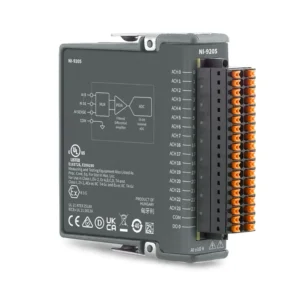
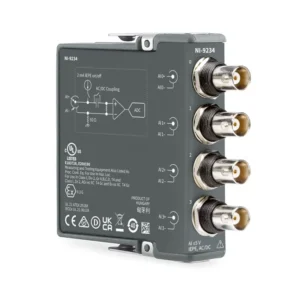
The cRIO-9045 supports up to 8 NI C Series modules, allowing engineers to integrate:
- Analog input/output
- Digital I/O
- CAN / CAN FD
- LIN communication
- Motion control
- Vibration acquisition
- Temperature and strain measurement
- Industrial communication interfaces
This modular architecture allows the controller to simultaneously function as:
- A deterministic automation controller
- A distributed acquisition system
- An edge computing platform
- An FPGA coprocessing system
Unlike fixed-function PLC systems, CompactRIO platforms provide highly flexible hardware customization for application-specific industrial requirements.
Industrial Applications
Advanced Robotics and Motion Control
The FPGA architecture enables deterministic synchronization for:
- Multi-axis servo systems
- Robotics platforms
- CNC equipment
- Semiconductor automation
- High-speed production machinery
Condition Monitoring and Predictive Maintenance
Using vibration and analog modules, engineers can implement:
- FFT analysis systems
- Rotating machinery diagnostics
- Predictive maintenance
- Inline signal analysis
- Industrial health monitoring
Automotive HIL and Simulation
The cRIO-9045 is widely used for:
- ECU validation
- Real-time simulation
- Automotive communication testing
- Distributed HIL systems
- CAN/LIN/FlexRay integration
Smart Grid and Energy Systems
Applications include:
- Power quality monitoring
- Distributed energy control
- Smart grid synchronization
- Relay protection validation
- Real-time energy analytics
Connectivity and Industrial Design
The controller provides:
- Dual Gigabit Ethernet
- TSN synchronization support
- USB 3.1 Type-C
- USB 3.0
- RS232 / RS485
- DisplayPort
- SD card slot
Industrial features include:
- Fanless construction
- Operating temperature from -40 °C to 70 °C
- Shock and vibration resistance
- DIN-rail and panel mounting support
These features make the cRIO-9045 suitable for long-term deployment in harsh industrial environments.
Comparison with Similar Models
| Model | Main Difference | Typical Use |
|---|---|---|
| cRIO-9043 | Atom processor platform | Mid-range automation |
| cRIO-9047 | Higher FPGA resource version | Advanced FPGA applications |
| cRIO-9054 | UltraScale FPGA architecture | Next-generation FPGA systems |
| cRIO-9039 | Previous-generation platform | Legacy distributed systems |
| PXIe Controllers | PXI modular architecture | Large centralized test systems |
Compared with Atom-based CompactRIO systems, the cRIO-9045 offers significantly stronger edge computing capability and data processing performance.
Compared with PXI systems, the cRIO-9045 provides a more compact and rugged embedded deployment platform for field automation applications.
Engineering Advantages
From an engineering deployment perspective, the cRIO-9045 provides:
- Deterministic real-time control
- High-performance Intel Core i7 processing
- FPGA hardware acceleration
- TSN synchronized networking
- Flexible modular I/O
- Edge computing capability
- Industrial ruggedness
- Long-term deployment stability
- Tight LabVIEW and NI ecosystem integration
These features make it highly suitable for advanced industrial edge systems and distributed automation architectures.
Conclusion
The NI cRIO-9045 is a high-end CompactRIO embedded controller designed for deterministic automation, FPGA-based processing, synchronized distributed systems, and industrial edge computing applications.
Its combination of:
- Intel Core i7 processing
- Kintex-7 FPGA acceleration
- TSN networking
- Modular C Series expansion
- Industrial ruggedness
- LabVIEW integration
makes it an ideal platform for robotics, semiconductor automation, HIL simulation, smart manufacturing, energy systems, predictive maintenance, and advanced embedded industrial control applications.