



Product Introduction
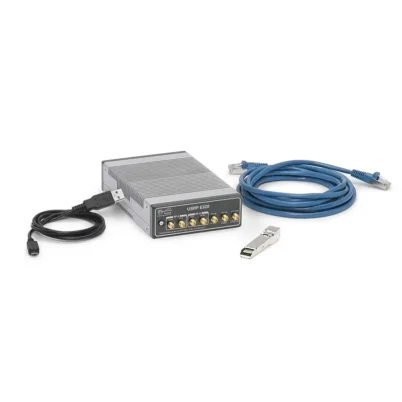
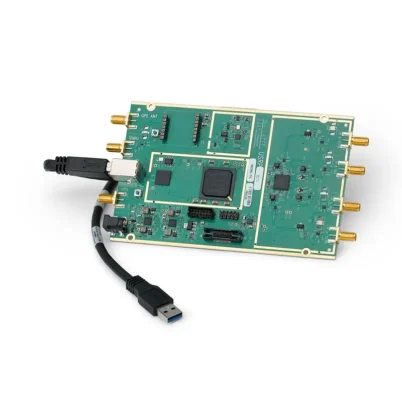
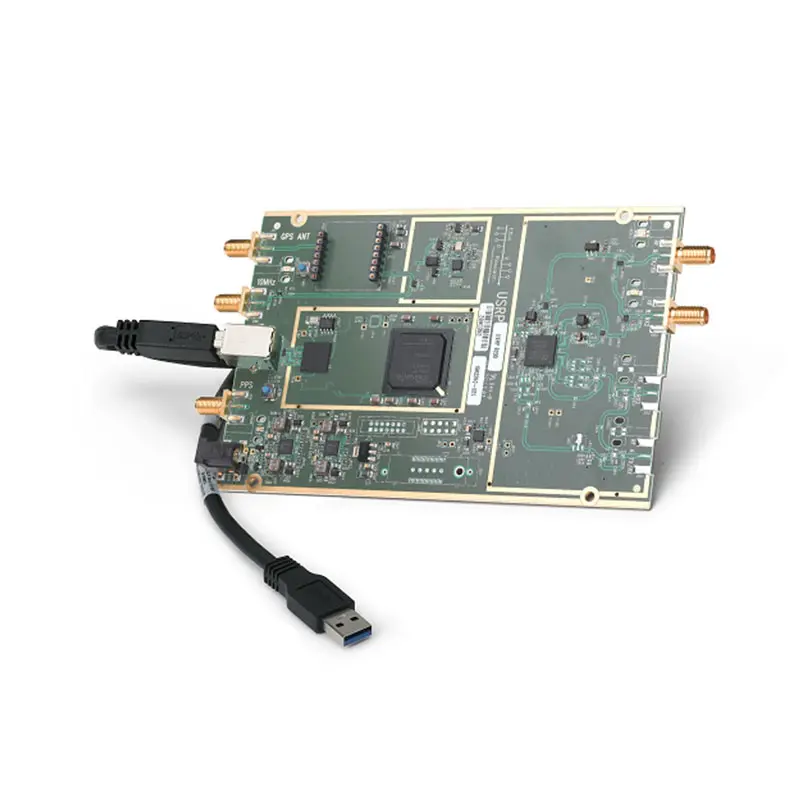
The Ettus USRP B200 is a compact and affordable software defined radio (SDR) platform designed for wireless communications research, RF experimentation, spectrum monitoring, prototyping, education, and embedded SDR development.
The USRP B200 integrates a wideband RF transceiver, programmable FPGA processing, USB 3.0 connectivity, and UHD software support into a compact single-channel SDR platform. It provides an excellent entry point for engineers, researchers, and developers working with software-defined radio technologies.
Supporting RF operation from 70 MHz to 6 GHz, 1 transmit channel and 1 receive channel, up to 56 MHz instantaneous bandwidth, and high-speed USB 3.0 connectivity, the B200 provides a flexible platform for RF prototyping and wireless communication development.
Product Overview
The Ettus USRP B200 belongs to the Ettus USRP Bus Series and is designed as a compact USB-based SDR platform for general-purpose RF development.
Unlike higher-performance USRP platforms such as the X Series and N Series, the B200 focuses on portability, affordability, and ease of deployment while maintaining the flexibility of FPGA-based SDR processing.
The B200 is widely used in universities, research laboratories, wireless development teams, and engineering environments for developing and testing custom RF applications.
Key Features
70 MHz to 6 GHz RF Frequency Coverage
The USRP B200 provides broad RF coverage suitable for many wireless and RF applications.
- 70 MHz to 6 GHz frequency range
- Wideband RF transceiver architecture
- Software-defined frequency tuning
- Support for multiple wireless bands
- Flexible RF experimentation
Advantage: The wide frequency range allows the B200 to support cellular research, IoT, WLAN, amateur radio, spectrum monitoring, and RF education.
1 TX / 1 RX RF Channel
The USRP B200 provides one transmit channel and one receive channel for single-channel SDR applications.
- 1 transmit channel
- 1 receive channel
- Full-duplex operation
- Single-antenna applications
- RF prototyping
Advantage: Single-channel architecture provides a simple and cost-effective solution for SDR development and testing.
Up to 56 MHz Instantaneous Bandwidth
The B200 supports wideband RF operation with up to 56 MHz instantaneous bandwidth.
- Up to 56 MHz bandwidth
- Wideband I/Q streaming
- Signal acquisition
- Waveform generation
- Wireless protocol testing
Advantage: The bandwidth capability supports many modern communication experiments and RF signal-processing applications.
Integrated RF Transceiver
The USRP B200 uses an integrated RF transceiver architecture that provides wide frequency coverage in a compact design.
- Integrated RF front end
- Wide frequency tuning range
- Compact hardware design
- Reduced system complexity
- Easy deployment
Advantage: The integrated RF design makes the B200 easy to configure and suitable for rapid SDR development.
FPGA-Based Signal Processing
The B200 includes programmable FPGA resources for real-time digital signal processing.
- FPGA-based DSP
- Digital filtering
- Digital upconversion
- Digital downconversion
- Custom FPGA processing
Advantage: FPGA processing provides low-latency signal processing and hardware acceleration.
USB 3.0 Connectivity
The USRP B200 uses USB 3.0 connectivity for communication with a host computer.
- USB 3.0 interface
- High-speed data transfer
- Portable SDR operation
- Easy PC integration
Advantage: USB connectivity simplifies installation and makes the B200 suitable for portable SDR applications.
Compact Portable SDR Design
The small form factor of the B200 enables flexible deployment.
- Compact enclosure
- Portable operation
- Low-power design
- Laboratory and field use
- Embedded integration
Advantage: The compact design allows engineers to easily deploy SDR systems in different environments.
External Clock Support
The USRP B200 supports external clock and timing reference options for improved synchronization.
- External reference clock
- Improved frequency stability
- Synchronized SDR experiments
UHD Software Support
The USRP B200 is supported by the Ettus UHD software ecosystem.
- UHD driver support
- GNU Radio integration
- C/C++ development
- Python SDR applications
- Open-source SDR workflows
Technical Specifications
| Parameter | Description |
|---|---|
| Product Type | USB Software Defined Radio |
| Model | Ettus USRP B200 |
| RF Frequency Range | 70 MHz to 6 GHz |
| RF Channels | 1 TX / 1 RX |
| MIMO Capability | 1×1 SISO |
| Instantaneous Bandwidth | Up to 56 MHz |
| Host Interface | USB 3.0 |
| FPGA | Programmable FPGA Architecture |
| RF Architecture | Integrated RF Transceiver |
| Synchronization | External Reference Clock Support |
| Software Support | UHD, GNU Radio, C/C++, Python |
| Primary Applications | Wireless Research, Education, RF Prototyping, Spectrum Monitoring |
Software Ecosystem
The Ettus USRP B200 supports a broad software ecosystem for SDR development.
- UHD: Provides hardware drivers and APIs for frequency control, gain control, streaming, and device configuration.
- GNU Radio: Enables graphical development of SDR applications including modulation, demodulation, and signal processing.
- C/C++: Supports high-performance custom SDR applications.
- Python: Enables rapid prototyping, automation, and SDR experimentation.
Industries
- Wireless Communications
- Universities and Education
- RF Engineering
- Telecommunications
- Aerospace and Defense Research
- Embedded System Development
- Spectrum Monitoring
Applications
Wireless Communication Research
The B200 provides an affordable platform for developing and testing wireless communication systems.
- Digital modulation experiments
- Wireless protocol development
- Signal processing research
- Communication algorithm testing
SDR Education and Laboratory Training
The simple architecture and low cost make the B200 widely used for SDR education.
- University laboratories
- SDR teaching platforms
- GNU Radio training
- RF engineering education
Spectrum Monitoring
The wide frequency range allows the B200 to be used for basic spectrum analysis applications.
- Signal observation
- RF environment analysis
- Interference detection
- Frequency monitoring
IoT and Wireless Prototyping
The B200 provides a flexible hardware platform for developing custom wireless devices.
- IoT communication research
- Wireless sensor systems
- Custom protocols
- RF experiments
RF Signal Processing
The FPGA and UHD environment support custom signal-processing research.
- Digital filtering
- Signal detection
- Modulation analysis
- Real-time DSP experiments
Comparison with Similar USRP Devices
| Model | Main Difference | Best Application |
|---|---|---|
| USRP B200 | Compact USB SDR with 70 MHz to 6 GHz coverage, 1 TX/1 RX and 56 MHz bandwidth. | Education, portable SDR and RF prototyping |
| USRP B210 | Dual-channel version with 2 TX/2 RX and 56 MHz bandwidth. | MIMO and multi-channel SDR applications |
| USRP E310 | Embedded portable SDR with integrated processor and standalone operation. | Embedded and field SDR systems |
| USRP X310 | High-performance modular SDR with larger FPGA resources. | Advanced RF research and FPGA applications |
Recommended Related Products
| Ettus USRP B210 | Dual-channel USB SDR platform supporting 2 TX/2 RX MIMO applications. |
| Ettus USRP E320 | Portable embedded SDR platform for standalone RF applications. |
| Ettus USRP X310 | High-performance modular SDR platform for advanced research. |
Why Choose USRP B200?
- 70 MHz to 6 GHz RF coverage
- 1 TX / 1 RX channel
- Up to 56 MHz bandwidth
- USB 3.0 connectivity
- Compact portable design
- FPGA-based processing
- UHD and GNU Radio support
- Affordable SDR development platform
- Ideal for education and research
- Suitable for rapid RF prototyping
Frequently Asked Questions
What is the Ettus USRP B200?
The USRP B200 is a compact USB software-defined radio platform designed for RF experimentation, wireless research, education, and SDR prototyping.
What frequency range does the USRP B200 support?
The USRP B200 supports RF operation from 70 MHz to 6 GHz.
How many channels does the USRP B200 provide?
The B200 provides one transmit channel and one receive channel.
What bandwidth does the USRP B200 support?
The USRP B200 supports up to 56 MHz instantaneous bandwidth.
What is the difference between USRP B200 and B210?
The main difference is channel count. The B200 provides 1 TX/1 RX, while the B210 provides 2 TX/2 RX channels for MIMO and multi-channel applications.
Does the USRP B200 support GNU Radio?
Yes. The B200 is fully supported by UHD and GNU Radio for SDR application development.
Can the USRP B200 be used for education?
Yes. Due to its compact size, affordable cost, and flexible software ecosystem, the B200 is widely used in SDR education and university laboratories.
Conclusion
The Ettus USRP B200 software defined radio is a compact and flexible SDR platform designed for wireless research, education, RF prototyping, and spectrum monitoring applications. With 70 MHz to 6 GHz RF coverage, 1 TX/1 RX operation, up to 56 MHz bandwidth, USB 3.0 connectivity, FPGA processing, and UHD software support, the USRP B200 provides an excellent entry-level solution for engineers and researchers exploring software-defined radio technology.