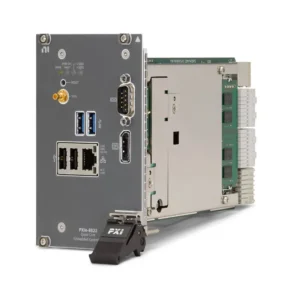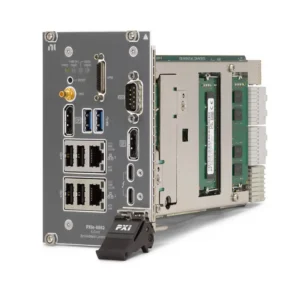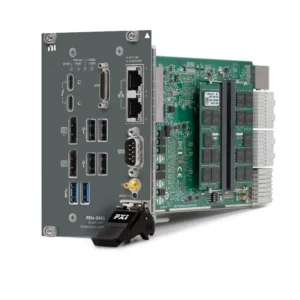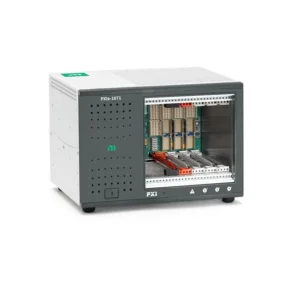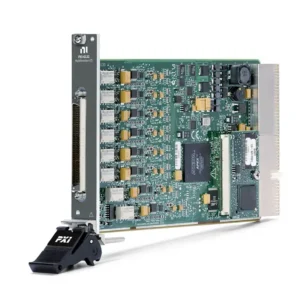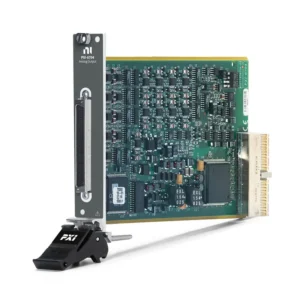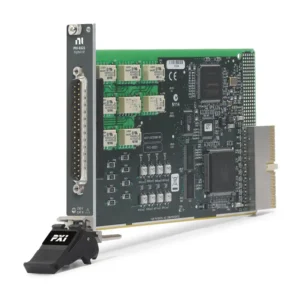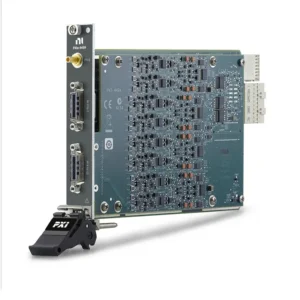


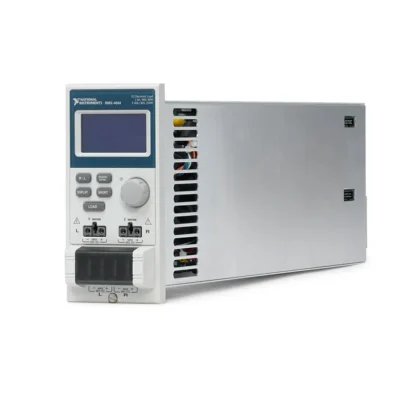
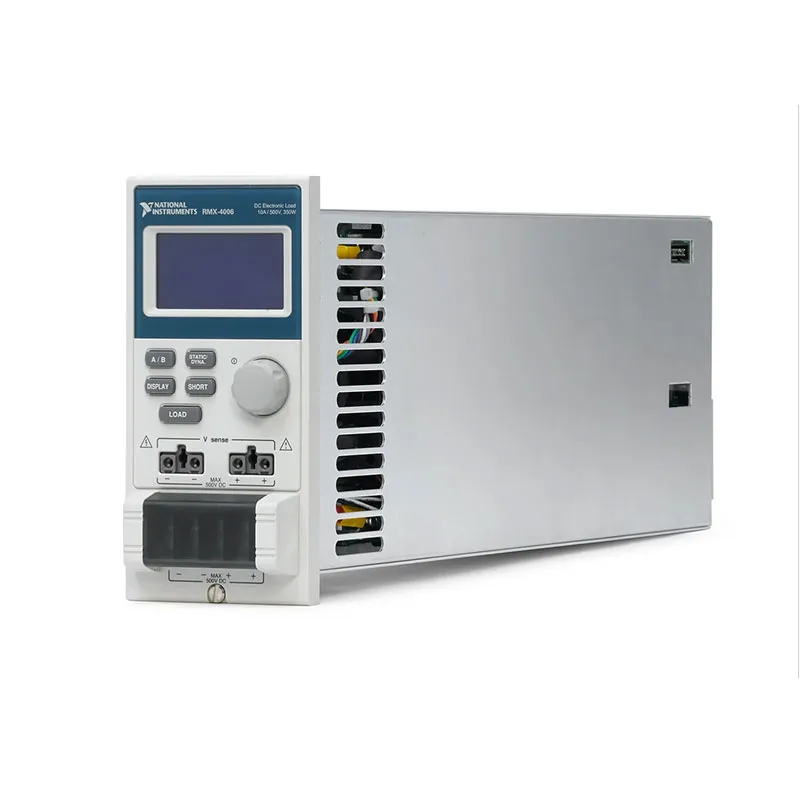
RMX-4006 350 W 500 V Programmable DC Electronic Load
The RMX-4006 is a single-channel programmable DC electronic load module designed for high-voltage power-supply development, converter characterization, production testing and automated power-system validation. It can absorb as much as 350 W from sources operating at up to 500 VDC or 10 A.
The RMX-4006 installs in a compatible RMX-4000 two-slot mainframe or RMX-4002 four-slot mainframe. The mainframe provides operating power, cooling, front-panel control and remote communication for the electronic-load module.
Constant-current, constant-voltage, constant-resistance and constant-power operating modes allow the RMX-4006 to simulate different types of electrical loads. Dynamic load, sequence, measurement and Go/No-Go functions support repeatable laboratory and production test procedures.
Key Features of the RMX-4006
- One programmable DC electronic-load channel
- 350 W maximum input power
- 0 V to 500 VDC input-voltage range
- 0 A to 10 A current range
- Designed for high-voltage DC source testing
- Constant-current operating mode
- Constant-voltage operating mode
- Constant-resistance operating mode
- Constant-power operating mode
- Combined constant-voltage and constant-current operation
- Static and dynamic load control
- Programmable current slew rate
- Two-level dynamic load operation
- Voltage, current and power measurement
- Short-circuit simulation
- Go/No-Go limit testing
- Programmable sequence operation
- Parallel operation for increased current and power
- Compatible with RMX-4000 and RMX-4002 mainframes
- NI RMX-400x Loads driver support
RMX-4006 Technical Specifications
| Product Model | RMX-4006 |
|---|---|
| Part Number | 786532-01 |
| Product Type | High-voltage programmable DC electronic-load module |
| Number of Load Channels | 1 |
| Maximum Input Power | 350 W |
| Input-Voltage Range | 0 V to 500 VDC |
| Maximum Input Current | 10 A |
| Primary Operating Modes | CC, CV, CV+CC, CR and CP |
| Dynamic Operating Modes | Dynamic constant-current and constant-resistance operation |
| Measurements | Input voltage, current and calculated power |
| Compatible Mainframes | RMX-4000 and RMX-4002 |
| Maximum Modules in RMX-4000 | 2 |
| Maximum Modules in RMX-4002 | 4 |
| Remote Interfaces | Provided by the mainframe through USB, RS232 and supported interface options |
| Software Driver | NI RMX-400x Loads instrument driver |
| Minimum Legacy Driver Requirements | LabVIEW 8.2 or later and NI-VISA 5.0 or later |
| Electrical Safety Class | Class I equipment |
| Ingress Protection | IPX0 |
The 500 V, 10 A and 350 W ratings cannot all be used simultaneously. The selected operating point must remain inside the module’s voltage, current, power and safe-operating-area limits.
At 500 V, the 350 W rating limits the maximum input current to approximately 0.7 A. The full 10 A current is available only at input voltages of approximately 35 V or lower, subject to the module’s minimum operating-voltage and safe-operating-area requirements.
RMX-4006 Part Number and Required Mainframes
| Item | Part Number | Description |
|---|---|---|
| RMX-4006 | 786532-01 | Single-channel, 350 W, 500 V, 10 A DC electronic-load module |
| RMX-4000 | Model dependent | Two-slot mainframe for RMX-400x electronic-load modules |
| RMX-4002 | 786528-01 | Four-slot mainframe for RMX-400x electronic-load modules |
The RMX-4006 is not a standalone electronic load. It requires a compatible RMX-4000 or RMX-4002 mainframe for power, control, cooling and communication.
When requesting a quotation, specify whether you require only the RMX-4006 module or a complete system containing the mainframe, communication accessories and additional load modules.
Single-Channel High-Voltage Architecture
The RMX-4006 provides one load channel optimized for higher-voltage sources. Its 500 V input rating is substantially higher than the 80 V rating of the RMX-4003, RMX-4004 and RMX-4005.
This architecture is suitable for DC power supplies, converters and other sources whose output voltage exceeds the range of conventional low-voltage electronic loads.
The channel can be configured and monitored independently through the RMX mainframe. Input voltage, current and power information can be displayed locally or retrieved by automated test software.
350 W Power-Sinking Capacity
The RMX-4006 can dissipate as much as 350 W of DC input power. Energy absorbed from the DUT is converted into heat and removed through the forced-air cooling system of the RMX mainframe.
Because the RMX-4006 is a dissipative load, it does not return energy to the AC supply. Continuous high-power operation therefore requires adequate rack ventilation and unobstructed airflow.
For applications exceeding 350 W, multiple RMX-4006 modules can be connected in parallel according to the official operating instructions.
0 V to 500 VDC Input Range
The RMX-4006 supports input voltages up to 500 VDC. This range makes it suitable for industrial power supplies, high-voltage DC converters, photovoltaic-related source development and power-electronics validation.
Although the published range begins at 0 V, an electronic load requires sufficient terminal voltage to regulate current. Check the operating-area curves when the application requires high current at very low voltage.
The DUT’s normal output, overshoot, transient voltage and open-circuit voltage must all remain within the module rating.
0 A to 10 A Current Range
The module can sink as much as 10 A when the input voltage and power remain within its allowable operating area.
At higher voltages, maximum current is reduced by the 350 W power rating. Test software should calculate input power continuously when sweeping either voltage or current.
Use cables, connectors, fuses and switching components rated for the maximum expected voltage and current.
High-Voltage Safety
The RMX-4006 can be connected to hazardous and potentially lethal DC voltages. Only qualified personnel should install and operate the module in a high-voltage system.
Use insulated fixtures, terminal covers, protective earth, interlocks, emergency shutdown circuits and a verified method for discharging capacitors after a test.
Turning the electronic load off does not guarantee that the DUT output has discharged. Measure the remaining voltage with appropriately rated equipment before touching the circuit.
Constant-Current Mode
In constant-current mode, the RMX-4006 sinks the programmed current while the source voltage changes within the module’s operating range.
This mode is commonly used to evaluate power-supply load regulation, current capability, battery discharge characteristics and overcurrent protection.
If the DUT cannot supply the programmed current, its voltage may fall and the electronic load may leave normal regulation.
Constant-Voltage Mode
In constant-voltage mode, the electronic load changes its input current to maintain a programmed voltage at its terminals.
This mode can be useful when testing current sources, battery chargers and other devices whose behavior depends on the voltage maintained by the connected load.
The CV+CC function provides a current-limiting value while operating in constant-voltage mode.
Constant-Resistance Mode
Constant-resistance mode adjusts current in proportion to the applied voltage, allowing the RMX-4006 to simulate a programmable resistive load.
This is useful for testing sources that normally power heaters, resistive circuits or other loads whose current changes with voltage.
Constant-Power Mode
In constant-power mode, the load increases or decreases its input current to maintain approximately the programmed power as the DUT voltage changes.
This behavior can simulate electronic equipment and DC converters that draw relatively constant power from their source.
Because current increases as voltage decreases, a constant-power load can interact with the source’s control loop. Configure appropriate current limits and protection before performing the test.
Static Load Operation
Static operation maintains a programmed current, voltage, resistance or power level until another setting is selected.
Static testing supports measurements of output accuracy, efficiency, load regulation, thermal performance and long-term stability.
Dynamic Load Operation
Dynamic constant-current and constant-resistance modes alternate between two load levels. Engineers can configure the load levels, timing and transition behavior to reproduce a changing DUT load.
Dynamic operation is valuable for evaluating source-transient response, control-loop stability, output-capacitor performance and recovery time.
An oscilloscope or digitizer is normally used with the RMX-4006 to capture voltage overshoot, undershoot and stabilization after each load transition.
Programmable Slew Rate
The programmable slew rate controls how quickly the RMX-4006 changes between load levels. Separate rise and fall behavior can be configured according to the selected current range and operating mode.
A slower transition can represent gradually changing equipment, while a faster transition can simulate a load that switches on or off rapidly.
External cable inductance and DUT output capacitance affect the measured transition, so keep high-current test connections short and properly arranged.
Parallel Load Operation
Multiple RMX-4006 modules can be connected in parallel to increase total current and power-sinking capacity. Parallel operation does not increase the 500 V input rating.
Two modules can provide up to 700 W of aggregate installed capacity, while four RMX-4006 modules in an RMX-4002 mainframe can provide up to 1400 W.
Each module remains subject to its individual voltage, current, power and operating-area limits. Use matched cables to promote balanced current sharing.
Voltage, Current and Power Measurement
The RMX-4006 measures the input voltage and current applied to its load channel. The system can calculate the corresponding absorbed power.
These measurements can be viewed from the front panel or retrieved through remote commands for automated data logging and pass/fail evaluation.
Use an external calibrated meter when the application requires accuracy, resolution or traceability beyond the electronic load’s internal measurement specifications.
Short-Circuit Simulation
The short function applies a low-impedance load condition according to the selected range and operating configuration. This helps verify current limiting, foldback behavior and short-circuit protection in a power source.
Before applying a short test, evaluate the source’s maximum fault current and stored energy. The DUT, load module, cables and protection devices must all tolerate the expected event.
Go/No-Go Testing
Go/No-Go functions compare measured voltage or current against configured upper and lower limits. The system can identify whether the DUT passes the programmed requirements.
This capability is useful for production testing and repetitive incoming inspection. Automated software can record both the pass/fail decision and measured values.
Sequence Operation
Sequence operation applies a programmed series of load points with defined current, timing and transition settings.
A sequence can reproduce a product’s operating cycle, perform a multi-point power-supply test or exercise a converter repeatedly during reliability testing.
Using onboard sequence execution can provide more repeatable timing than sending every load transition individually from the host computer.
RMX-4000 Mainframe Integration
The RMX-4000 provides two electronic-load module slots. It can accommodate as many as two RMX-4006 modules for two independent high-voltage channels or parallel operation up to 700 W aggregate capacity.
Select this mainframe when the application requires no more than two modules and a smaller rack configuration is preferred.
RMX-4002 Mainframe Integration
The RMX-4002 provides four module slots. It can support four independent RMX-4006 channels or a mixture of high-voltage, high-current and dual-channel RMX-400x loads.
A mixed configuration is useful when a DUT contains a high-voltage main rail together with several low-voltage auxiliary outputs.
Remote Control and Automation
The RMX-4006 is controlled remotely through the interface of its RMX mainframe. Supported system configurations include USB, RS232 and available GPIB communication.
Remote commands can configure load mode, input range, level, slew rate, sequence, protection settings and measurement queries.
Automation helps ensure that each DUT receives the same test conditions and reduces the need for manual front-panel adjustments.
NI RMX-400x Loads Driver
NI provides the RMX-400x Loads project-style instrument driver for LabVIEW. Supported load modules include the RMX-4003, RMX-4004, RMX-4005 and RMX-4006.
NI identifies LabVIEW 8.2 or later and NI-VISA 5.0 or later as the minimum legacy requirements. Confirm driver compatibility with the intended operating system and LabVIEW version before deployment.
High-Voltage Power-Supply Testing
The RMX-4006 can apply controlled loads to DC power supplies operating at voltages above the 80 V limit of other RMX-400x modules.
Engineers can measure output regulation, current limiting, transient response, ripple and thermal performance across different load conditions.
DC-DC Converter Testing
The module can characterize higher-voltage converter outputs under static and dynamic load conditions. Test software can sweep the load, collect voltage and current data and calculate conversion efficiency when input measurements are also available.
Multiple modules can test separate outputs or operate in parallel when one output requires more than 350 W of load capacity.
Photovoltaic and Energy-System Development
The 500 V input capability can support selected DC-source and energy-system applications within the 350 W power limit.
The RMX-4006 is a dissipative electronic load rather than a dedicated solar-array simulator or regenerative load. Confirm that its operating modes and power capacity match the required application.
Battery and Charger Testing
The electronic load can discharge higher-voltage battery assemblies at controlled current, resistance or power levels within its ratings.
Test software can monitor voltage and stop the load when the specified discharge limit is reached. Independent battery-management, temperature and overdischarge protection should remain active.
The RMX-4006 does not return absorbed battery energy to the AC supply; it converts that energy into heat.
Power-Capacitor Discharge Testing
The RMX-4006 can provide a controlled load for selected capacitor-discharge and DC bus tests. Stored energy must be calculated before connection.
High-energy capacitors can generate peak current beyond the electronic load’s normal rating. Add precharge, current limiting, switching and discharge protection appropriate for the circuit.
Production Functional Testing
In production systems, the RMX-4006 can apply repeatable high-voltage load conditions while test software monitors the DUT output and determines whether it meets specified limits.
Go/No-Go and remote measurement functions help integrate the module into automated pass/fail processes.
Burn-In and Reliability Testing
The RMX-4006 can maintain a controlled load during long-duration burn-in tests. Automated software can change load levels, record measurements and stop the test if the DUT leaves the allowable range.
Continuous high-power operation requires careful thermal management because all absorbed power is dissipated as heat.
RMX-4006 Applications
- High-voltage DC power-supply testing
- Industrial converter characterization
- DC-DC converter validation
- High-voltage battery discharge testing
- Battery charger evaluation
- Power-electronics development
- DC bus loading
- Photovoltaic component testing
- Power-capacitor discharge testing
- Dynamic load-transient analysis
- Production functional testing
- Go/No-Go inspection
- Burn-in and reliability testing
- Automated test equipment
RMX-4006 Installation Workflow
Step 1: Select a Compatible Mainframe
Choose an RMX-4000 for as many as two modules or an RMX-4002 for as many as four modules.
Step 2: Turn Off Mainframe Power
Disconnect the mainframe from AC power before inserting or removing an RMX-4006. Hot insertion is not supported.
Step 3: Install the Load Module
Slide the module into an available slot until it is fully seated, then secure it according to the mainframe instructions.
Step 4: Connect the DUT
Connect the positive and negative DUT outputs to the corresponding load terminals using voltage- and current-rated cables. Install terminal covers and required safety barriers.
Step 5: Configure Conservative Limits
Select the load mode, range, input level and protection settings before enabling the channel. Begin with a low-power operating point.
Step 6: Verify Measurements
Confirm the displayed voltage, current and power before increasing the load. Ensure that the operating point remains within the safe operating area.
RMX-4006 Troubleshooting
The RMX-4006 Is Not Recognized
Turn off the mainframe and verify that the module is fully installed in a compatible slot. Inspect the module and mainframe connectors before reinstalling it.
The Load Does Not Sink Current
Confirm that the channel is enabled and the DUT is connected with correct polarity. Check the operating mode, selected range and programmed current.
The DUT voltage may be too low for the electronic load to regulate at the requested current.
The Module Cannot Sink 10 A
Check the 350 W power limit. At 100 V, for example, the maximum current permitted by the power rating is approximately 3.5 A.
At 500 V, the corresponding current is approximately 0.7 A. The requested point must also remain within the module’s safe operating area.
The Module Reports Overpower
Reduce current, voltage or the programmed constant-power level. Confirm that transient conditions are not causing input power to exceed the 350 W rating.
The Voltage Reading Is Lower Than Expected
Measure the DUT voltage at both the source and load terminals. Cable resistance and switching components can create voltage drop, especially at higher current.
Dynamic Operation Is Unstable
Review the programmed load levels and slew rate. Use short, low-inductance cables and check the DUT output capacitance and control-loop stability.
The Module Reports Overtemperature
Disable the load and allow the system to cool. Inspect the mainframe fans, air inlet, exhaust path and rack temperature.
Remote Communication Does Not Work
Check the mainframe interface, cable, address and VISA resource. Confirm installation of the RMX-400x Loads instrument driver.
Parallel Modules Do Not Share Current Evenly
Verify that all modules use compatible settings. Use matched cables with similar length and conductor size to minimize differences in connection resistance.
RMX-4006 Comparison with Similar Electronic Load Modules
| Model | Channel and Input Ratings | Best Suited For |
|---|---|---|
| RMX-4003 | 2 channels, 100 W per channel, 80 V, 20 A | Multi-output and higher-channel-density testing |
| RMX-4004 | 2 channels, 30 W/5 A and 250 W/40 A, 80 V | Main and auxiliary power-rail testing |
| RMX-4005 | 1 channel, 350 W, 80 V, 70 A | Low-voltage, high-current source testing |
| RMX-4006 | 1 channel, 350 W, 500 V, 10 A | High-voltage DC source testing |
RMX-4006 vs RMX-4005
The RMX-4006 and RMX-4005 are both single-channel 350 W electronic loads. Their voltage and current ranges are designed for different applications.
The RMX-4005 supports as much as 80 V and 70 A, making it suitable for low-voltage, high-current sources. The RMX-4006 supports as much as 500 V and 10 A for higher-voltage systems.
RMX-4006 vs RMX-4003
The RMX-4003 provides two 100 W channels rated for 80 V and 20 A per channel. The RMX-4006 provides one 350 W channel rated for 500 V and 10 A.
Choose the RMX-4003 for two lower-voltage outputs or greater channel density. Choose the RMX-4006 when the source voltage exceeds 80 V or one higher-power channel is required.
RMX-4006 with RMX-4127
The RMX-4127 is a programmable power supply that generates as much as 650 V and 1500 W. The RMX-4006 is an electronic load that absorbs as much as 500 V and 350 W.
The two products can perform complementary source-and-load functions only when the programmed voltage, current and power remain within the lower applicable rating. The RMX-4006 cannot absorb the full 650 V or 1500 W output capability of the RMX-4127.
Selecting the Right RMX-400x Load Module
Choose the RMX-4006 when the DUT voltage can exceed 80 V but remains at or below 500 V, and the required continuous load power does not exceed 350 W per module.
Choose the RMX-4005 for currents above 10 A at lower voltage. Select the RMX-4003 or RMX-4004 when two independent channels are more important than maximum voltage.
Record the source’s maximum voltage, transient voltage, continuous current, peak current, power and minimum operating voltage before selecting an electronic load.
Recommended Related Products
- RMX-4000 2-Slot Electronic Load Mainframe
- RMX-4002 4-Slot Electronic Load Mainframe
- RMX-4003 2-Channel 100 W Electronic Load Module
- RMX-4004 Dual-Channel Electronic Load Module
- RMX-4005 350 W 70 A Electronic Load Module
- RMX-4126 1500 W 230 V Programmable DC Power Supply
- RMX-4127 1500 W 650 V Programmable DC Power Supply
- View More National Instruments Products
Why Choose the RMX-4006?
- Supports DC input voltage up to 500 V
- Absorbs as much as 350 W
- Provides current capability up to 10 A
- Offers CC, CV, CR and CP operating modes
- Supports dynamic load testing and programmable slew rate
- Measures input voltage, current and power
- Can be connected in parallel for additional capacity
- Integrates with two-slot and four-slot RMX mainframes
- Supports automated LabVIEW control
- Is well suited for high-voltage power-source validation
Frequently Asked Questions
What is the RMX-4006?
The RMX-4006 is a single-channel, 350 W programmable DC electronic-load module supporting input voltages up to 500 V and current up to 10 A.
What is the RMX-4006 part number?
The standard NI part number for the RMX-4006 is 786532-01.
Does the RMX-4006 operate independently?
No. It must be installed in an RMX-4000 or RMX-4002 electronic-load mainframe.
Can the RMX-4006 sink 10 A at 500 V?
No. That operating point would equal 5000 W. The module is limited to 350 W, so at 500 V it can sink approximately 0.7 A.
At what voltage can it sink the full 10 A?
The 350 W power limit permits 10 A at approximately 35 V or lower, subject to the module’s minimum operating-voltage and safe-operating-area limits.
Which load modes are supported?
The RMX-400x platform supports constant-current, constant-voltage, constant-resistance and constant-power operation, plus dynamic current and resistance modes.
Can multiple RMX-4006 modules be connected in parallel?
Yes. Parallel operation can increase total current and power capacity. It does not increase the maximum 500 V input rating.
How many RMX-4006 modules fit in an RMX-4002?
The RMX-4002 can hold as many as four RMX-4006 modules, providing four independent channels or up to 1400 W of aggregate installed load capacity.
Is the RMX-4006 regenerative?
No. It converts absorbed electrical energy into heat and requires adequate forced-air cooling.
Which software controls the RMX-4006?
NI provides the RMX-400x Loads instrument driver for LabVIEW. The module is controlled through the communication interface of its mainframe.
What is the difference between the RMX-4005 and RMX-4006?
The RMX-4005 is optimized for low-voltage, high-current applications up to 80 V and 70 A. The RMX-4006 is optimized for high-voltage applications up to 500 V and 10 A.
Request a Quote for the RMX-4006
Contact us for current availability, lead time and project pricing for the RMX-4006 350 W 500 V Programmable DC Electronic Load Module, part number 786532-01. We can also help select an RMX-4000 or RMX-4002 mainframe and compare compatible electronic-load modules for your required voltage, current and power range.