



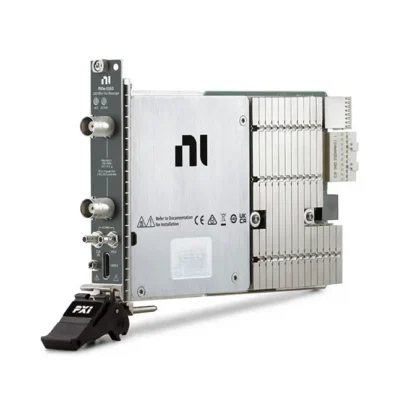
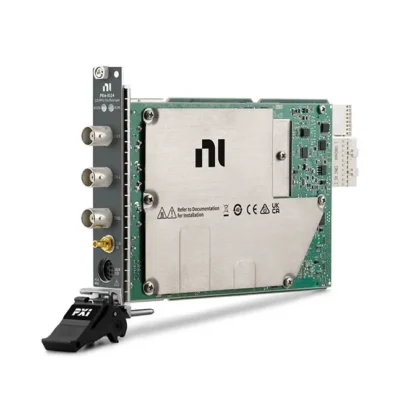
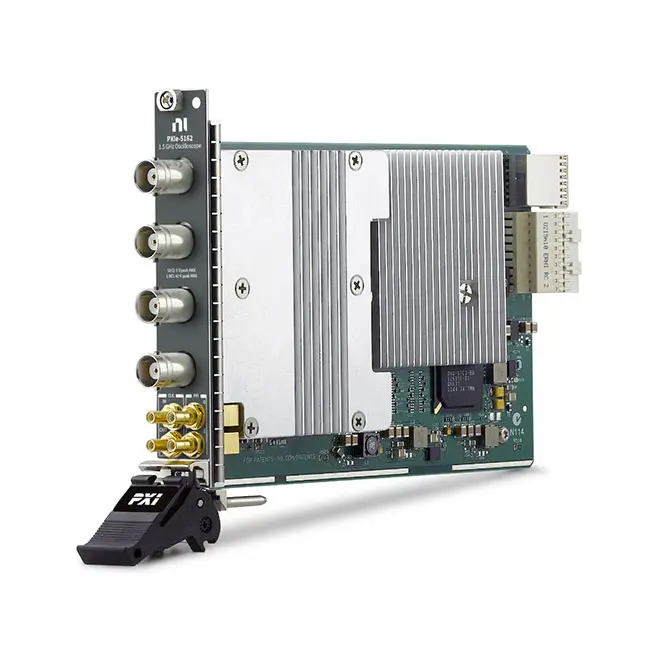
Product Introduction
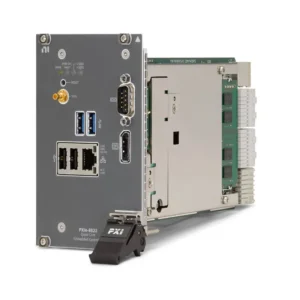
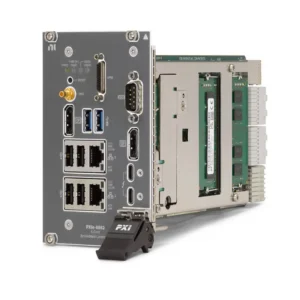
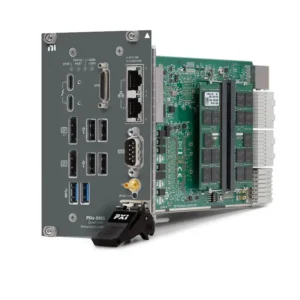
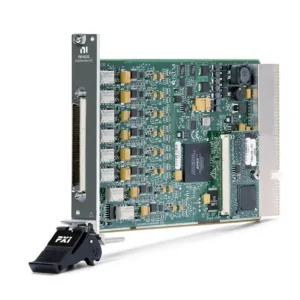
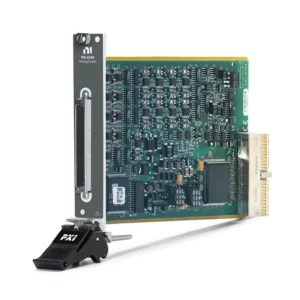
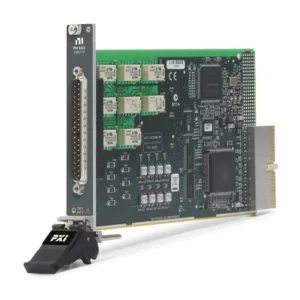
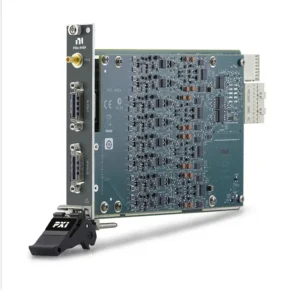
The NI PXIe-5162 is a high-performance PXI Express oscilloscope designed for automated electronic test, high-speed waveform acquisition, semiconductor validation, RFIC characterization, production test, and other applications requiring wide analog bandwidth and fast real-time sampling.
The PXIe-5162 provides up to 1.5 GHz analog bandwidth, a maximum real-time sample rate of 5 GS/s, and 10-bit vertical resolution. Depending on the selected configuration, the module provides either 2 or 4 analog input channels together with deep onboard acquisition memory.
The combination of high-speed sampling, flexible input configurations, precision triggering, PXI synchronization, data streaming, and optional CableSense technology makes the PXIe-5162 particularly suitable for automated measurement systems that require both oscilloscope performance and modular PXI integration.
Product Overview
The National Instruments PXIe-5162 is designed for fast electronic signals requiring analog bandwidth up to 1.5 GHz.
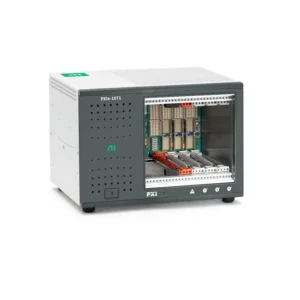
Unlike a standalone benchtop oscilloscope, the PXIe-5162 operates within a PXI Express chassis and can be tightly integrated with other modular instruments under software control.
Typical applications include:
- High-speed waveform acquisition
- Semiconductor characterization
- RFIC validation
- Electronic design verification
- Production test
- Signal integrity measurements
- Transient analysis
- High-channel-count oscilloscope systems
- Aerospace and defense test
- Automated functional testing
Key Features
1.5 GHz Analog Bandwidth
The PXIe-5162 provides up to 1.5 GHz analog bandwidth, making it suitable for significantly faster signals than lower-bandwidth PXI oscilloscopes.
The 1.5 GHz bandwidth can support applications involving:
- High-speed digital signals
- Fast clock waveforms
- RF and IF signals within the instrument bandwidth
- High-speed pulses
- Semiconductor device characterization
- Fast switching events
- Signal integrity measurements
5 GS/s Maximum Sample Rate
The PXIe-5162 provides a maximum real-time sample rate of 5 GS/s.
At 5 billion samples per second, the instrument can capture waveform samples at intervals as small as approximately 200 ps under applicable operating conditions.
High sampling speed is particularly important for:
- Fast rise and fall times
- Short-duration pulses
- Clock edge analysis
- Transient capture
- High-frequency waveform reconstruction
Sample Rate Depends on Enabled Channels
The maximum PXIe-5162 real-time sample rate depends on the number of enabled channels.
| Enabled Channels | Maximum Real-Time Sample Rate |
|---|---|
| 1 Channel | 5 GS/s |
| 2 Channels | 2.5 GS/s |
| 4 Channels | 1.25 GS/s |
This is an important system-design consideration. The headline 5 GS/s specification applies when one channel is enabled; simultaneously enabling additional channels reduces the available sample rate per channel.
10-Bit Vertical Resolution
The PXIe-5162 provides 10-bit vertical resolution.
A 10-bit ADC provides 1,024 theoretical quantization levels across the selected input range.
| ADC Resolution | Theoretical Levels |
|---|---|
| 8 Bit | 256 |
| 10 Bit | 1,024 |
| 12 Bit | 4,096 |
| 14 Bit | 16,384 |
Compared with an 8-bit architecture, 10-bit conversion provides four times as many theoretical quantization levels.
Actual measurement accuracy also depends on noise, bandwidth, input range, calibration, and other analog front-end specifications.
2-Channel and 4-Channel Configurations
The PXIe-5162 is available with either 2 or 4 analog input channels.
| Channel Configuration | Typical Application |
|---|---|
| 2 Channels | High-Speed Dual-Signal Measurements |
| 4 Channels | Multi-Signal and High-Channel-Count Automated Test |
The four-channel configuration provides greater channel density, while the two-channel versions can be appropriate for applications that prioritize fewer acquisition channels.
Deep Onboard Memory
The PXIe-5162 family supports deep onboard acquisition memory, with configurations available up to 2 GB.
Deep memory allows longer waveform records to be captured while maintaining high sample rates.
This is useful for:
- Long transient acquisitions
- Rare-event capture
- Protocol-related waveform analysis
- Startup and shutdown sequences
- Long-duration high-speed waveform recording
- Detailed post-processing
50 Ω and 1 MΩ Input Impedance
The PXIe-5162 supports flexible oscilloscope input impedance options including 50 Ω and 1 MΩ.
| Input Impedance | Typical Application |
|---|---|
| 50 Ω | High-Frequency Coaxial and RF-Like Signal Paths |
| 1 MΩ | General Oscilloscope and High-Impedance Measurements |
Up to 50 V Peak-to-Peak Input Class
The PXIe-5162 family provides input capability up to approximately 50 V peak-to-peak under applicable input configurations.
The selected input range, impedance, coupling mode, probe configuration, and maximum input ratings should always be verified before connecting the DUT.
Flexible Input Coupling
The PXIe-5162 provides flexible input configuration including selectable coupling options.
DC coupling allows both DC offset and AC waveform components to be measured, while AC coupling can remove the DC component when analysis is focused on the time-varying signal.
High-Precision Triggering
The PXIe-5162 includes a high-precision triggering circuit designed for repeatable high-speed waveform acquisition.
Triggering can be used to capture:
- Signal edges
- Pulse events
- Transient conditions
- DUT startup events
- Synchronized stimulus-response measurements
- Rare waveform anomalies
PXI Synchronization
The PXIe-5162 supports PXI timing and synchronization resources, allowing multiple compatible instruments to coordinate acquisitions.
This capability is particularly valuable when building:
- Multi-channel oscilloscope systems
- Mixed-signal test systems
- Synchronized RF and DC measurement platforms
- Parallel semiconductor test systems
- High-channel-count waveform acquisition systems
Data Streaming
The PXIe-5162 supports high-speed waveform data streaming through the PXI Express architecture.
Streaming enables acquired waveform data to be transferred to the host system for:
- Real-time processing
- Automated waveform analysis
- Data logging
- Custom signal processing
- Long-duration recording
CableSense Technology
Selected PXIe-5162 configurations support NI CableSense technology.
CableSense can help detect and locate signal-path faults, changes, or discontinuities associated with cables, connectors, and fixtures.
This can help identify:
- Disconnected cables
- Damaged signal paths
- Fixture connection problems
- Interconnect changes
- Production test cabling faults
Technical Specifications
| Parameter | Specification |
|---|---|
| Product Type | PXI Express Oscilloscope |
| Model | NI PXIe-5162 |
| Platform | PXI Express |
| Maximum Analog Bandwidth | 1.5 GHz |
| Maximum Real-Time Sample Rate | 5 GS/s |
| 2-Channel Maximum Sample Rate | 2.5 GS/s |
| 4-Channel Maximum Sample Rate | 1.25 GS/s |
| Vertical Resolution | 10 Bit |
| Analog Input Channels | 2 or 4, Configuration Dependent |
| Input Impedance | 50 Ω / 1 MΩ |
| Maximum Input Voltage Class | Up to 50 Vpk-pk |
| Maximum Onboard Memory | Up to 2 GB |
| Precision Triggering | Supported |
| PXI Synchronization | Supported |
| Data Streaming | Supported |
| CableSense | Available on Selected Configurations |
| Primary Applications | High-Speed Waveform Acquisition, Semiconductor Test, RFIC Characterization and Automated Test |
PXIe-5162 Ordering Configurations
The PXIe-5162 is available in multiple NI ordering configurations. Current NI product listings include the following part numbers:
- 782622-01
- 782622-05
- 782622-06
- 782622-11
- 782622-15
- 782622-16
The exact configuration should be verified before ordering because channel count, onboard memory, and CableSense functionality can differ between versions.
What Is a PXI Oscilloscope?
A PXI oscilloscope is a modular high-speed waveform digitizer designed for software-controlled acquisition within a PXI test system.
It provides many of the same fundamental measurements as a benchtop oscilloscope but is optimized for:
- Automation
- Multi-instrument synchronization
- High channel density
- PXI triggering
- High-speed data transfer
- Production test integration
Why 1.5 GHz Bandwidth Matters
Oscilloscope bandwidth determines the range of signal-frequency content that can pass through the analog front end with the specified response.
The 1.5 GHz bandwidth of the PXIe-5162 makes it appropriate for significantly faster signals than 500 MHz-class instruments.
Bandwidth should be selected according to both the fundamental signal frequency and the rise-time characteristics of the waveform.
Why 5 GS/s Sampling Matters
Sample rate describes how frequently the oscilloscope converts the analog input waveform into digital samples.
At 5 GS/s, one sample can be taken approximately every 200 picoseconds when one channel is enabled.
This provides detailed waveform representation for fast electronic signals.
Bandwidth vs Sample Rate
Bandwidth and sample rate describe different oscilloscope characteristics.
| Specification | What It Controls |
|---|---|
| Analog Bandwidth | Highest-Frequency Content Passed by the Analog Front End |
| Sample Rate | How Frequently the Analog Waveform Is Digitized |
| Resolution | Voltage Quantization Granularity |
| Memory | How Long a Waveform Can Be Captured at a Given Sampling Configuration |
A suitable oscilloscope must provide adequate performance in all four areas for the intended waveform.
High-Speed Digital Validation
The PXIe-5162 can be used for high-speed digital validation within its 1.5 GHz analog bandwidth.
Typical measurements may include:
- Clock waveform verification
- Rise time
- Fall time
- Overshoot
- Undershoot
- Pulse width
- Amplitude
- Timing relationships
- Transient anomalies
Semiconductor Characterization
The PXIe-5162 can serve as the high-speed waveform acquisition instrument within semiconductor characterization systems.
It can be combined with:
- PXI Source Measure Units
- Digital pattern instruments
- RF instruments
- PXI switching modules
- Programmable power supplies
- Timing and synchronization hardware
This architecture enables time-domain waveform analysis to be correlated with DC, digital, and RF device behavior.
RFIC Characterization
NI uses the PXIe-5162 in RFIC characterization reference architectures because its 1.5 GHz bandwidth and 5 GS/s acquisition capability can capture fast time-domain signals associated with semiconductor devices and RF front-end systems.
A typical characterization architecture may include:
PXI RF Instrument → DUT → PXIe-5162 Time-Domain Acquisition
Additional SMUs and digital instruments can provide DC power and device control.
Transient Analysis
The combination of high sample rate and deep memory makes the PXIe-5162 useful for transient waveform analysis.
Typical transient events may include:
- DUT startup
- Shutdown
- Power sequencing
- Fault conditions
- Switching events
- Mode changes
- Rare signal anomalies
Signal Integrity Measurements
Within its specified bandwidth and input limits, the PXIe-5162 can be used for signal integrity measurements such as:
- Rise time
- Fall time
- Overshoot
- Undershoot
- Pulse width
- Amplitude
- Timing relationships
- Clock behavior
High-Channel-Count Oscilloscope Systems
Multiple PXIe-5162 modules can be integrated into a PXI chassis to build synchronized high-channel-count waveform measurement systems.
With four-channel modules, PXI architectures can scale to dozens of synchronized oscilloscope channels within a single chassis.
A simplified system is:
Multiple DUT Signals → Multiple PXIe-5162 Modules → PXI Timing → Centralized Acquisition Software
Production Test Applications
The PXIe-5162 is well suited for production test systems that require fast automated waveform measurements.
Typical production applications include:
- Electronic assembly testing
- Semiconductor production test
- Waveform pass/fail testing
- Timing verification
- Pulse characterization
- High-speed functional test
- Automated transient validation
Automated Waveform Test Workflow
A typical automated test sequence using the PXIe-5162 can be:
- Configure the DUT operating condition.
- Configure oscilloscope input channels.
- Set the sample rate and record length.
- Configure triggering.
- Arm the acquisition.
- Apply DUT stimulus.
- Acquire the waveform.
- Calculate waveform parameters.
- Compare measurements against limits.
- Record the test result.
PXIe-5162 with a Waveform Generator
The PXIe-5162 can be combined with a PXI waveform generator to create a synchronized stimulus-response system.
A typical configuration is:
PXI Waveform Generator → DUT → PXIe-5162 → Automated Analysis
PXI hardware triggering can coordinate generation and acquisition for repeatable automated measurements.
PXIe-5162 with PXI Switching
A PXI switching module can route multiple compatible DUT signals to a PXIe-5162 when signals can be measured sequentially.
A typical architecture is:
Multiple DUT Signals → PXI Switch → PXIe-5162
For high-frequency signals, the switching hardware, cables, connectors, and fixture must provide adequate bandwidth and controlled impedance.
PXIe-5162 vs PXIe-5160
The PXIe-5160 and PXIe-5162 use similar 10-bit PXI oscilloscope architectures but target different bandwidth and sampling requirements.
| Feature | PXIe-5162 | PXIe-5160 |
|---|---|---|
| Maximum Bandwidth | 1.5 GHz | 500 MHz |
| Maximum Sample Rate | 5 GS/s | 2.5 GS/s |
| Resolution | 10 Bit | 10 Bit |
| Channels | 2 or 4 | 2 or 4 |
| Maximum Onboard Memory | Up to 2 GB | Up to 2 GB |
| Primary Advantage | Higher Bandwidth and Sampling Speed | Lower-Bandwidth High-Speed Measurement |
Choose the PXIe-5162 when the application requires signal bandwidth above 500 MHz or sampling performance beyond the PXIe-5160’s 2.5 GS/s maximum capability.
PXIe-5162 vs PXIe-5171R
| Feature | PXIe-5162 | PXIe-5171R |
|---|---|---|
| Resolution | 10 Bit | 14 Bit |
| Maximum Sample Rate | 5 GS/s | 250 MS/s |
| Bandwidth | 1.5 GHz | 250 MHz |
| Primary Strength | Very High-Speed Acquisition | Higher Resolution and FPGA Reconfigurability |
The PXIe-5162 is more appropriate when bandwidth and sample rate are the dominant requirements, while FPGA-based instruments may be more suitable for applications emphasizing custom real-time processing or higher ADC resolution.
PXIe-5162 vs Multifunction DAQ
| Feature | PXIe-5162 | Typical Multifunction DAQ |
|---|---|---|
| Primary Function | High-Speed Oscilloscope | General Data Acquisition |
| Maximum Sample Rate | 5 GS/s | Typically Much Lower |
| Bandwidth | 1.5 GHz | Typically Much Lower |
| Triggering | Oscilloscope-Oriented | DAQ-Oriented |
| Deep Onboard Memory | Up to 2 GB | Architecture Dependent |
| Best Application | Fast Electronic Waveforms | Sensors, Control and General Measurements |
PXIe-5162 in a Complete PXI System
The PXIe-5162 can operate as the high-speed waveform measurement instrument within a complete PXI system.
A typical automated test system may include:
- PXI Chassis
- PXI Controller
- PXIe-5162 Oscilloscope
- PXI Modules
- PXI waveform generators
- PXI Source Measure Units
- PXI switching modules
- PXI digital pattern instruments
- RF measurement instruments
PXI synchronization allows these instruments to coordinate stimulus, switching, acquisition, and measurement operations within the same automated test platform.
Software and Driver Support
The PXIe-5162 is supported by NI oscilloscope instrumentation software and drivers for automated waveform acquisition.
Test applications can configure:
- Analog input channels
- Voltage ranges
- Input impedance
- Input coupling
- Sample rate
- Record length
- Trigger settings
- Waveform acquisition
- Data streaming
- Automated waveform analysis
Automated Waveform Analysis
Acquired PXIe-5162 waveform data can be processed programmatically to calculate parameters such as:
- Frequency
- Period
- Amplitude
- Peak-to-peak voltage
- RMS voltage
- Rise time
- Fall time
- Pulse width
- Duty cycle
- Overshoot
- Undershoot
Oscilloscope Selection Considerations
Before selecting the PXIe-5162, engineers should evaluate the complete waveform measurement requirements.
- Required analog bandwidth
- Required sample rate
- Number of simultaneous channels
- 10-bit resolution suitability
- Input voltage range
- 50 Ω or 1 MΩ input requirement
- Record length and onboard memory
- Triggering requirements
- PXI synchronization
- Data streaming
- CableSense requirement
- Chassis compatibility
- Required probes and cables
Industries
- Semiconductor Test
- RF and Wireless Test
- Electronic Manufacturing
- Automated Test Equipment
- Aerospace and Defense
- Automotive Electronics
- Communication Equipment
- Power Electronics
- Research and Development
Applications
High-Speed Waveform Acquisition
The PXIe-5162 provides 1.5 GHz analog bandwidth and up to 5 GS/s real-time sampling for fast waveform acquisition.
Semiconductor Characterization
The module can capture fast DUT waveforms while other PXI instruments provide DC bias, digital control, RF stimulus, and parametric measurements.
RFIC Characterization
High analog bandwidth and sampling speed make the PXIe-5162 useful for compatible time-domain measurements in RF semiconductor test architectures.
Signal Integrity Testing
The PXIe-5162 can measure rise time, fall time, overshoot, undershoot, timing, and other waveform characteristics within its specified bandwidth.
Transient Analysis
High-speed acquisition and deep memory support analysis of startup events, faults, switching transitions, and rare waveform anomalies.
Automated Production Test
Software-controlled acquisition and PXI integration make the PXIe-5162 suitable for repeatable high-speed production measurements.
High-Channel-Count Testing
Multiple PXIe-5162 modules can be synchronized to build systems requiring many high-speed oscilloscope channels.
Recommended Related Products
| NI PXIe-5162 | 1.5 GHz, 5 GS/s, 10-bit PXI Express oscilloscope available with two or four analog input channels. |
| NI PXIe-5160 | 500 MHz, 2.5 GS/s, 10-bit PXI oscilloscope for applications that do not require the PXIe-5162’s higher bandwidth. |
| NI PXIe-4147 | Four-channel precision PXI Source Measure Unit for high-current DC bias and semiconductor characterization. |
| NI PXIe-4162 | High-density PXI SMU for multi-channel semiconductor parametric measurements. |
| NI PXI Modules | PXI instrumentation for waveform acquisition, source measurement, switching, RF testing, data acquisition, and automated test. |
Why Choose NI PXIe-5162?
- 1.5 GHz analog bandwidth
- Up to 5 GS/s real-time sample rate
- 10-bit vertical resolution
- 2-channel and 4-channel configurations
- Up to 2 GB onboard memory
- 50 Ω and 1 MΩ input configurations
- High-precision triggering
- PXI timing and synchronization
- High-speed data streaming
- CableSense available on selected models
- Suitable for semiconductor test
- Suitable for RFIC characterization
- Suitable for high-channel-count systems
- Designed for automated production test
Frequently Asked Questions
What is the NI PXIe-5162?
The NI PXIe-5162 is a 1.5 GHz, 5 GS/s, 10-bit PXI Express oscilloscope designed for high-speed waveform acquisition and automated test applications.
What is the bandwidth of the PXIe-5162?
The PXIe-5162 provides up to 1.5 GHz analog bandwidth.
What is the maximum sample rate of the PXIe-5162?
The maximum real-time sample rate is 5 GS/s when one channel is enabled.
Does the PXIe-5162 always sample at 5 GS/s?
No. The maximum sample rate depends on the number of active channels. With one channel enabled it can reach 5 GS/s, with two channels up to 2.5 GS/s, and with four channels up to 1.25 GS/s.
What is the resolution of the PXIe-5162?
The PXIe-5162 provides 10-bit vertical resolution.
How many channels does the PXIe-5162 have?
The PXIe-5162 is available with either 2 or 4 analog input channels, depending on the selected ordering configuration.
How much onboard memory does the PXIe-5162 support?
PXIe-5162 configurations are available with deep onboard acquisition memory up to 2 GB.
What input impedance does the PXIe-5162 support?
The PXIe-5162 supports flexible input impedance configurations including 50 Ω and 1 MΩ.
Does the PXIe-5162 support CableSense?
Yes. Selected PXIe-5162 ordering configurations include CableSense technology for detecting and locating changes, faults, and discontinuities in the connected signal path.
Can multiple PXIe-5162 modules be synchronized?
Yes. PXI timing and synchronization resources allow compatible PXIe-5162 modules to operate within synchronized high-channel-count measurement systems.
Can the PXIe-5162 be used for semiconductor testing?
Yes. The module can provide high-speed time-domain waveform acquisition in semiconductor characterization, validation, and production-test systems.
Can the PXIe-5162 be used for RFIC characterization?
Yes. NI has used the PXIe-5162 in RFIC characterization architectures where high-speed time-domain waveform measurements are required.
What is the difference between PXIe-5162 and PXIe-5160?
The PXIe-5162 provides up to 1.5 GHz bandwidth and 5 GS/s sampling, while the PXIe-5160 provides up to 500 MHz bandwidth and 2.5 GS/s. Both use a 10-bit architecture and are available with two or four channels.
Is the PXIe-5162 better than the PXIe-5160?
The PXIe-5162 provides higher bandwidth and sampling speed, but the correct choice depends on the required signal bandwidth, sample rate, channel count, memory, and system cost. Applications below 500 MHz may not require the higher performance of the PXIe-5162.
Can the PXIe-5162 be used for signal integrity testing?
Yes. Within its specified bandwidth and input limits, the PXIe-5162 can perform compatible rise-time, fall-time, overshoot, undershoot, pulse, timing, and waveform-quality measurements.
What part numbers are available for the PXIe-5162?
NI currently lists PXIe-5162 ordering part numbers including 782622-01, 782622-05, 782622-06, 782622-11, 782622-15, and 782622-16. The exact channel count, memory, and CableSense configuration should be verified before ordering.
What should I check before purchasing a PXIe-5162?
Before purchasing a PXIe-5162, verify the required analog bandwidth, number of input channels, simultaneous-channel sample rate, onboard memory, input impedance, voltage range, CableSense requirement, triggering, synchronization, PXI Express chassis compatibility, software requirements, and exact ordering part number.
Conclusion
The NI PXIe-5162 1.5 GHz, 5 GS/s, 10-Bit PXI Express Oscilloscope provides high-speed waveform acquisition with two- or four-channel configurations, deep onboard memory, high-precision triggering, PXI synchronization, and high-speed data streaming. Selected configurations also support CableSense signal-path diagnostics. Its combination of 1.5 GHz bandwidth and up to 5 GS/s acquisition makes the PXIe-5162 particularly suitable for semiconductor characterization, RFIC testing, signal integrity measurements, transient analysis, high-channel-count measurement systems, and automated high-speed production test.