




Product Introduction
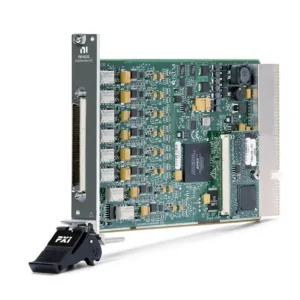
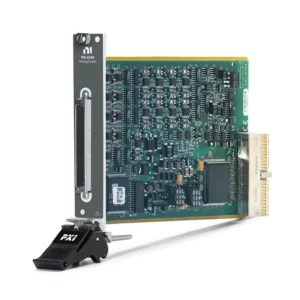
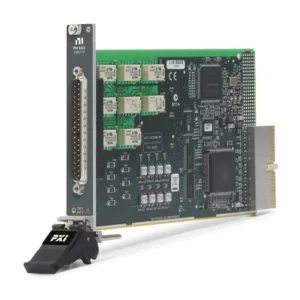
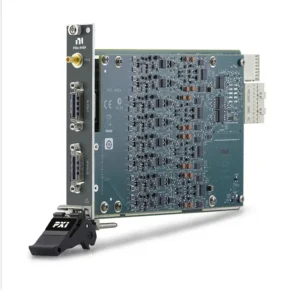
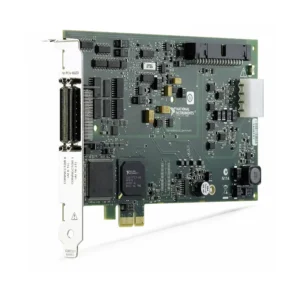
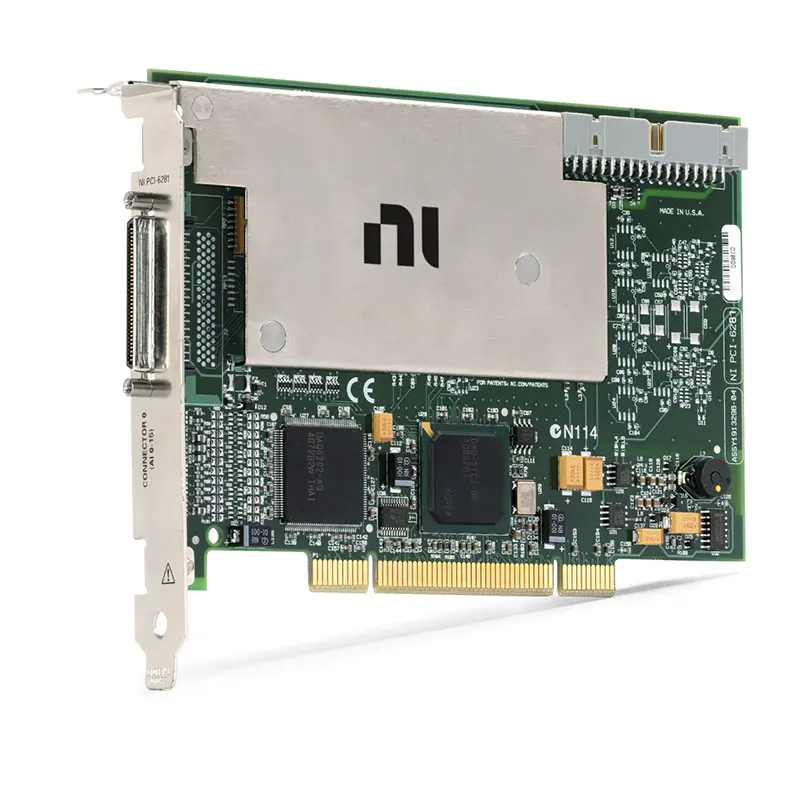
The NI PCI-6281 is a high-accuracy M Series multifunction data acquisition (DAQ) device designed for PCI-based measurement and automated test systems. It combines high-resolution analog input, analog output, digital I/O, counters/timers, and hardware triggering on a single multifunction DAQ board.
The PCI-6281 provides up to 16 single-ended or 8 differential analog input channels with 18-bit resolution, making it particularly suitable for applications where measurement accuracy and resolution are more important than extremely high acquisition speed.
In addition to analog input, the PCI-6281 provides 2 analog output channels, 24 digital I/O lines, and two 32-bit counters/timers. This multifunction architecture allows engineers to perform measurement, generation, digital control, event counting, and timing functions with a single PCI DAQ device.
Typical applications include laboratory automation, research, design validation, electronic testing, manufacturing test, sensor measurement, data logging, process monitoring, and automated test equipment.
Product Overview
The National Instruments PCI-6281 belongs to the high-accuracy NI M Series multifunction DAQ family.
A typical measurement architecture is:
Sensors / Voltage Signals → Signal Conditioning → PCI-6281 → PCI Bus → Host Computer → NI-DAQmx / LabVIEW
The PCI-6281 integrates multiple measurement and control functions into a single device, reducing the number of separate interface cards required in a PC-based test system.
Key Features
18-Bit Analog Input Resolution
One of the most important characteristics of the PCI-6281 is its 18-bit analog input resolution.
The higher ADC resolution provides finer measurement granularity than conventional 16-bit multifunction DAQ devices, making the PCI-6281 suitable for precision voltage measurements and sensor acquisition applications.
Up to 625 kS/s Analog Input
The PCI-6281 provides high-resolution analog acquisition with sampling performance up to 625 kS/s.
This combination of resolution and acquisition speed makes the device suitable for precision measurement applications that require significantly more performance than low-speed monitoring hardware.
16 Single-Ended Analog Inputs
The PCI-6281 provides up to 16 single-ended analog input channels.
This configuration is useful when a test system must acquire multiple voltage or conditioned sensor signals using a common measurement architecture.
8 Differential Analog Inputs
The analog input channels can also be configured for up to 8 differential measurements.
Differential measurement can provide improved rejection of common-mode noise and is often preferred for precision measurements, remote sensors, and electrically noisy environments.
2 Analog Output Channels
The PCI-6281 provides two analog output channels for generating programmable voltage signals.
Analog outputs can be used for:
- Device excitation
- Control signals
- Test stimulus generation
- Setpoint generation
- Closed-loop test applications
- Automated device validation
24 Digital I/O Lines
The PCI-6281 includes 24 digital I/O lines for interfacing with digital devices and control signals.
Digital I/O can be used for:
- Device control
- Status monitoring
- Relay control
- Digital triggering
- Logic-state monitoring
- Automated test sequencing
Two 32-Bit Counters/Timers
The PCI-6281 provides two 32-bit counters/timers for timing and event-based measurement applications.
Counter/timer applications can include:
- Event counting
- Frequency measurement
- Period measurement
- Pulse-width measurement
- Encoder measurement
- Pulse generation
- Digital timing
Analog and Digital Triggering
The PCI-6281 supports hardware triggering capabilities for synchronized and event-driven acquisition.
Triggering allows measurements to begin or respond according to defined analog or digital events rather than relying exclusively on software timing.
PCI Interface
The PCI-6281 installs directly into a compatible PCI slot in a desktop, industrial, or rackmount computer.
It is particularly useful for maintaining and expanding existing PCI-based automated test and measurement systems.
NI-DAQmx Support
The PCI-6281 is supported through the NI-DAQmx measurement architecture, providing configuration, acquisition, generation, timing, triggering, and programming functionality.
The device can be integrated into applications developed with LabVIEW and other compatible programming environments.
Technical Specifications
| Parameter | Specification |
|---|---|
| Product Type | M Series Multifunction DAQ Device |
| Model | PCI-6281 |
| Manufacturer | National Instruments |
| Bus Interface | PCI |
| Analog Input Resolution | 18-Bit |
| Maximum Analog Input Sample Rate | Up to 625 kS/s |
| Maximum Single-Ended Analog Inputs | 16 |
| Maximum Differential Analog Inputs | 8 |
| Analog Output Channels | 2 |
| Digital I/O | 24 Lines |
| Counters/Timers | 2 |
| Counter Resolution | 32-Bit |
| Triggering | Analog and Digital |
| I/O Connector | 68-Pin VHDCI |
| Driver | NI-DAQmx |
| Product Family | NI M Series DAQ |
| Primary Function | Precision Multifunction Data Acquisition |
How Does the PCI-6281 Work?
The PCI-6281 acquires analog signals from sensors, transducers, test points, and other voltage sources and converts them into digital measurement data using its high-resolution analog-to-digital converter.
A simplified acquisition path is:
Analog Signal → Input Circuitry → Multiplexer → 18-Bit ADC → PCI-6281 → PCI Bus → Host Application
The same device also provides analog output, digital I/O, counters/timers, and triggering resources, allowing measurement and control operations to be coordinated within one DAQ system.
High-Accuracy Data Acquisition
The PCI-6281 is particularly useful when measurement accuracy and resolution are major system requirements.
Its 18-bit analog input architecture provides finer voltage measurement resolution than lower-resolution multifunction DAQ hardware.
Typical applications include:
- Precision voltage measurement
- Sensor characterization
- Electronic device validation
- Laboratory measurement
- Research experiments
- Automated data logging
Sensor Measurement
The PCI-6281 can acquire signals from sensors that provide compatible voltage outputs or from sensors connected through appropriate signal-conditioning hardware.
Applications can include:
- Pressure measurement
- Force measurement
- Position measurement
- Temperature measurement with appropriate conditioning
- Voltage monitoring
- Process sensor acquisition
Always verify sensor output range, grounding, signal conditioning, excitation, and input protection requirements before connecting a sensor directly to the DAQ device.
Laboratory Automation
The PCI-6281 combines analog measurement, waveform generation, digital control, and timing functions in one PCI device.
This makes it suitable for automated laboratory systems where a computer must simultaneously acquire sensor data and control external equipment.
Design Verification and Electronic Test
The PCI-6281 can be used for electronic design verification and functional testing where multiple voltages, control signals, and timing events must be measured or generated.
Typical applications include:
- Voltage monitoring
- Device characterization
- Functional validation
- Power-supply monitoring
- Control-signal generation
- Automated pass/fail testing
Manufacturing Test
Manufacturing test systems can use the PCI-6281 for automated acquisition and control operations.
A typical production test sequence can:
- Configure analog and digital channels.
- Generate the required test stimulus.
- Control the device under test.
- Acquire voltage measurements.
- Measure timing or frequency signals.
- Evaluate pass/fail limits.
- Store the test results.
Analog Input Configuration
The PCI-6281 supports multiple analog input connection configurations according to the measurement architecture.
The appropriate configuration depends on:
- Signal source type
- Grounding
- Noise environment
- Required channel count
- Common-mode voltage
- Measurement accuracy requirements
Single-Ended Measurements
Single-ended configuration provides the maximum analog input channel count and can be appropriate for short connections and properly grounded signal sources.
Differential Measurements
Differential configuration measures the voltage difference between two input terminals and can provide better common-mode noise rejection.
For precision or electrically noisy applications, differential measurement is often preferred when the reduced channel count is acceptable.
Analog Output Applications
The two analog outputs allow the PCI-6281 to generate programmable voltage signals while simultaneously performing other measurement and control operations.
Typical analog output applications include:
- Device stimulus
- Voltage setpoints
- Control-system references
- Automated test excitation
- Waveform generation
Digital I/O Applications
The 24 digital I/O lines can be incorporated into test and automation systems for controlling or monitoring digital signals.
Typical applications include:
- Relay control
- Switch control
- Device status monitoring
- Digital handshaking
- Trigger generation
- Pass/fail indicators
Counter and Timer Applications
The PCI-6281 provides two 32-bit counters/timers for hardware-timed digital measurements and generation.
Counter functions can support applications involving:
- Frequency
- Period
- Pulse width
- Event counting
- Encoder signals
- Pulse trains
- Digital timing
Hardware Triggering
Hardware triggering is important when acquisition must begin in response to a specific electrical event.
The PCI-6281 can participate in triggered measurement architectures for applications such as:
- Transient capture
- Automated device testing
- Event-based data acquisition
- Synchronized measurements
- Repeatable laboratory experiments
PCI-6281 vs PXI-6281
The PCI-6281 and PXI-6281 provide closely related M Series multifunction DAQ capabilities but use different system platforms.
| Feature | PCI-6281 | PXI-6281 |
|---|---|---|
| Platform | PCI | PXI |
| Analog Input Resolution | 18-Bit | 18-Bit |
| Analog Input Channels | 16 SE / 8 Differential | 16 SE / 8 Differential |
| Analog Output Channels | 2 | 2 |
| Digital I/O | 24 | 24 |
| Counters/Timers | 2 | 2 |
| Installation | Desktop / Industrial PC | PXI Chassis |
| Best Application | PC-Based DAQ | Modular PXI Test Systems |
PCI-6281 vs USB-6281
The PCI-6281 and USB-6281 belong to the same high-accuracy M Series DAQ family but use different host interfaces.
| Feature | PCI-6281 | USB-6281 |
|---|---|---|
| Host Interface | PCI | USB 2.0 |
| Analog Input Resolution | 18-Bit | 18-Bit |
| Maximum Single-Ended AI | 16 | 16 |
| Maximum Differential AI | 8 | 8 |
| Digital I/O | 24 | 24 |
| Counters/Timers | 2 | 2 |
| Installation | Internal PC Card | External USB Device |
| Best Application | Permanent PC-Based Systems | Portable / External DAQ Systems |
PCI-6281 vs PCI-6280
The PCI-6281 and PCI-6280 are both high-accuracy M Series DAQ devices. The PCI-6281 adds analog output capability, making it better suited to applications requiring both acquisition and analog signal generation.
| Feature | PCI-6281 | PCI-6280 |
|---|---|---|
| Analog Input Resolution | 18-Bit | 18-Bit |
| Analog Input | Yes | Yes |
| Analog Output | 2 Channels | No |
| Digital I/O | 24 | 24 |
| Counters/Timers | 2 | 2 |
| Primary Advantage | Multifunction AI + AO | Acquisition-Focused Applications |
PCI-6281 vs PCI-6284
Both the PCI-6281 and PCI-6284 belong to the high-accuracy M Series family. The PCI-6284 provides a larger analog input channel count, while the PCI-6281 is designed for applications requiring fewer analog inputs together with analog output capability.
| Feature | PCI-6281 | PCI-6284 |
|---|---|---|
| Analog Input Resolution | 18-Bit | 18-Bit |
| Single-Ended Analog Inputs | 16 | 32 |
| Differential Analog Inputs | 8 | 16 |
| I/O Connector Architecture | Single VHDCI | Dual VHDCI |
| Primary Advantage | Compact Multifunction Measurement | Higher Analog Input Channel Count |
68-Pin VHDCI Connectivity
The PCI-6281 uses a 68-pin VHDCI I/O connection.
The appropriate NI cable and terminal block should be selected according to the required signal connections, shielding, mounting method, and application environment.
Before purchasing accessories, verify compatibility with the PCI-6281 rather than selecting accessories only by connector appearance.
Signal Conditioning
Some sensors cannot be connected directly to a multifunction DAQ device and require signal conditioning.
Depending on the sensor and application, signal conditioning may provide:
- Amplification
- Filtering
- Isolation
- Sensor excitation
- Voltage attenuation
- Current-to-voltage conversion
- Sensor-specific linearization
The signal-conditioning architecture should be selected according to the sensor output and measurement requirements.
NI-DAQmx Software
The PCI-6281 uses NI-DAQmx for hardware configuration and application development.
NI-DAQmx provides functionality for:
- Device configuration
- Analog input acquisition
- Analog output generation
- Digital I/O
- Counter/timer operations
- Timing configuration
- Hardware triggering
- Calibration information
- Device diagnostics
LabVIEW Integration
The PCI-6281 can be integrated into LabVIEW-based measurement and automated test applications using compatible NI-DAQmx software.
A typical application workflow is:
Configure Channels → Configure Timing → Configure Trigger → Start Acquisition → Read Data → Analyze → Log Results
Legacy System Replacement
The PCI-6281 is particularly relevant for maintaining existing test systems built around conventional PCI computers.
When replacing a failed PCI-6281 or migrating an older system, verify:
- PCI slot availability
- Operating system compatibility
- NI-DAQmx version
- LabVIEW version
- Existing cable compatibility
- Terminal block compatibility
- Application source code
- Timing and triggering requirements
- Analog input configuration
- Analog output requirements
How to Choose a Multifunction DAQ Device
Before selecting the PCI-6281, evaluate:
- Required analog input resolution
- Required sample rate
- Number of analog input channels
- Single-ended or differential measurements
- Required input voltage ranges
- Analog output requirements
- Digital I/O requirements
- Counter/timer requirements
- Triggering requirements
- PCI slot availability
- Cable and terminal block requirements
- Sensor signal-conditioning requirements
- NI-DAQmx compatibility
- Operating system compatibility
Industries
- Automated Test
- Electronic Validation
- Industrial Measurement
- Laboratory Automation
- Research and Development
- Manufacturing Test
- Scientific Research
- Process Monitoring
- Education and Research
Applications
Precision Voltage Measurement
The 18-bit analog input architecture makes the PCI-6281 suitable for applications requiring precise voltage measurements and high measurement resolution.
Sensor Data Acquisition
Compatible sensors and conditioned sensor signals can be acquired through the PCI-6281 for monitoring, research, and automated testing.
Automated Test
Analog input, analog output, digital I/O, counters, and triggering can be combined to build multifunction automated test systems.
Laboratory Automation
The PCI-6281 can acquire experimental data while controlling external equipment through analog and digital signals.
Electronic Validation
Engineers can use the PCI-6281 for voltage monitoring, stimulus generation, digital control, and timing measurements during electronic device validation.
Manufacturing Test
The multifunction architecture supports automated production test applications requiring measurement, control, timing, and pass/fail evaluation.
Recommended Related Products
| PCI-6281 | 18-bit multifunction PCI DAQ device with analog input, analog output, digital I/O, and counters. |
| PXI-6281 | PXI version for modular test and measurement systems requiring similar high-accuracy M Series DAQ functionality. |
| USB-6281 | USB-based high-accuracy M Series DAQ option for external and portable measurement systems. |
| PCI-6280 | High-accuracy PCI M Series DAQ device for applications focused primarily on analog input acquisition. |
| PCI-6284 | Higher-channel-count 18-bit M Series PCI DAQ device for applications requiring additional analog inputs. |
| PCI-6289 | High-channel-count M Series multifunction DAQ device for more extensive measurement and control systems. |
Why Choose PCI-6281?
- 18-bit analog input resolution
- Up to 625 kS/s analog acquisition
- 16 single-ended analog inputs
- 8 differential analog inputs
- 2 analog output channels
- 24 digital I/O lines
- Two 32-bit counters/timers
- Analog and digital triggering
- PCI host interface
- 68-pin VHDCI connectivity
- NI-DAQmx support
- LabVIEW integration
- Suitable for precision measurement
- Suitable for automated testing
- Suitable for laboratory automation
Frequently Asked Questions
What is the NI PCI-6281?
The NI PCI-6281 is an 18-bit M Series multifunction data acquisition device for PCI-based computers. It combines analog input, analog output, digital I/O, counters/timers, and hardware triggering.
What is the analog input resolution of PCI-6281?
The PCI-6281 provides 18-bit analog input resolution, making it suitable for high-accuracy measurement applications.
What is the maximum sample rate of PCI-6281?
The PCI-6281 supports analog input sampling rates up to 625 kS/s.
How many analog input channels does PCI-6281 have?
The PCI-6281 supports up to 16 single-ended analog inputs or 8 differential analog inputs.
Does PCI-6281 have analog outputs?
Yes. The PCI-6281 provides two analog output channels for programmable signal generation and control applications.
How many digital I/O lines does PCI-6281 have?
The PCI-6281 provides 24 digital I/O lines.
Does PCI-6281 have counters?
Yes. The PCI-6281 provides two 32-bit counters/timers for frequency, period, event-counting, encoder, pulse-generation, and timing applications.
What connector does PCI-6281 use?
The PCI-6281 uses a 68-pin VHDCI I/O connector. Compatible NI cables and terminal blocks should be selected according to the required wiring architecture.
What is the difference between PCI-6281 and PXI-6281?
The primary difference is the system interface. PCI-6281 installs in a conventional PCI computer, while PXI-6281 installs in a PXI chassis. They provide closely related M Series DAQ functionality.
What is the difference between PCI-6281 and USB-6281?
PCI-6281 is an internal PCI DAQ board, while USB-6281 is an external USB-based DAQ device. The appropriate model depends primarily on the required host interface and system architecture.
What is the difference between PCI-6281 and PCI-6280?
Both are high-accuracy M Series DAQ devices, but the PCI-6281 includes two analog output channels, making it more suitable for multifunction applications requiring both measurement and analog signal generation.
Can PCI-6281 be used with LabVIEW?
Yes. PCI-6281 can be used in LabVIEW data acquisition and automated test applications through compatible NI-DAQmx software.
What driver does PCI-6281 use?
The PCI-6281 uses the NI-DAQmx driver architecture.
Can PCI-6281 measure sensors directly?
It can directly acquire compatible voltage signals. Sensors requiring excitation, amplification, isolation, filtering, or other signal conditioning require appropriate external signal-conditioning hardware.
Can PCI-6281 be used for differential measurements?
Yes. The PCI-6281 supports up to eight differential analog input channels. Differential measurement can be useful when improved common-mode noise rejection is required.
Can PCI-6281 generate analog signals?
Yes. Its two analog output channels can generate programmable voltage signals for device excitation, control, stimulus generation, and automated testing.
What should I check before purchasing a PCI-6281?
Before purchasing, verify the required 18-bit measurement resolution, analog input channel count, sample rate, analog output requirements, digital I/O, counters, PCI slot availability, 68-pin cable and terminal block compatibility, signal-conditioning requirements, operating system, NI-DAQmx version, and application software compatibility.
Conclusion
The NI PCI-6281 M Series Multifunction DAQ combines high-resolution 18-bit analog acquisition with up to 16 single-ended or 8 differential analog inputs, two analog outputs, 24 digital I/O lines, two 32-bit counters/timers, and hardware triggering. Its combination of precision measurement and multifunction I/O makes it well suited for laboratory automation, sensor acquisition, electronic validation, research, manufacturing test, process monitoring, and legacy PCI-based automated test systems.