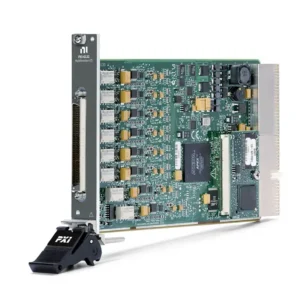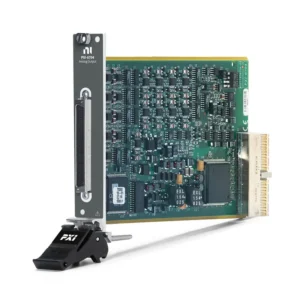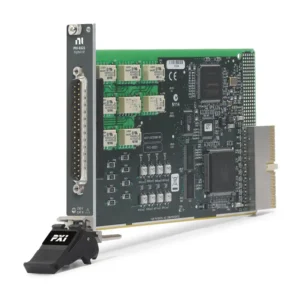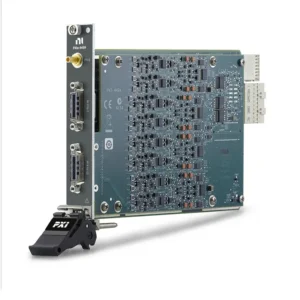


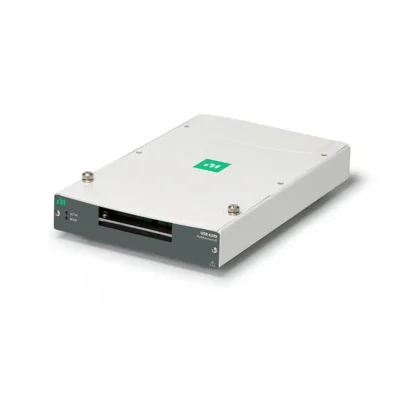
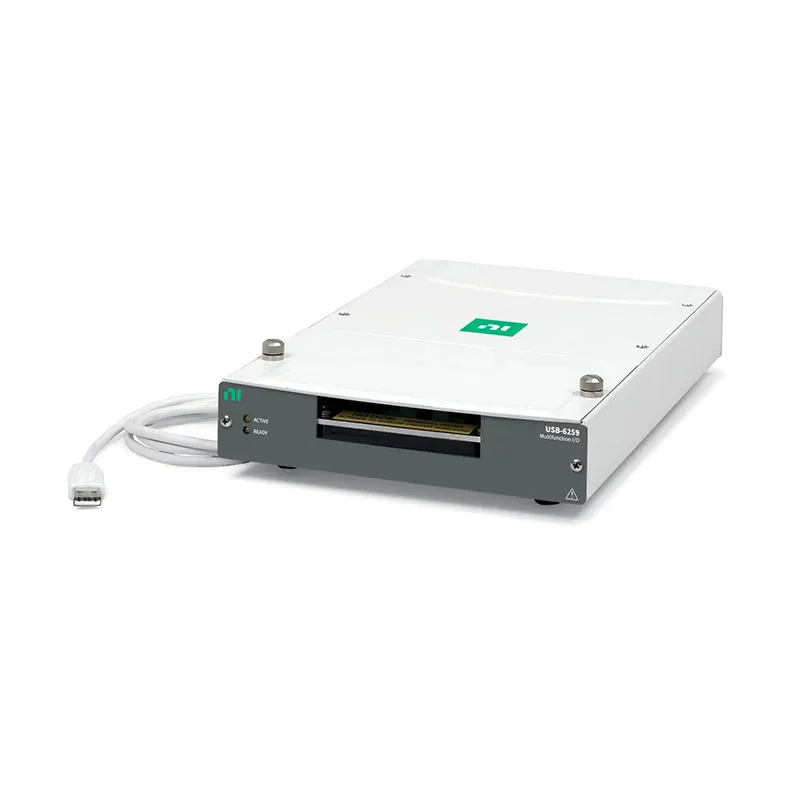
USB-6259 High-Performance USB Multifunction DAQ Device
The NI USB-6259 is a high-performance M Series multifunction data acquisition device for automated test, laboratory measurement, industrial monitoring and control. It provides an extensive combination of analog input, analog output, digital I/O and counter resources.
The device includes 32 single-ended or 16 differential analog inputs with 16-bit resolution and a maximum single-channel rate of 1.25 MS/s. Four high-speed analog outputs and 48 digital I/O lines support complex stimulus-and-response and test-fixture applications.
Key Features of the USB-6259
- 32 single-ended or 16 differential analog inputs
- 16-bit analog input resolution
- 1.25 MS/s maximum single-channel sampling
- 1.00 MS/s aggregate multichannel sampling
- Seven input ranges from ±0.1 V to ±10 V
- 1.7 MHz small-signal input bandwidth
- Four 16-bit analog outputs
- High-speed hardware-timed waveform generation
- 48 individually programmable digital I/O lines
- Up to 32 correlated digital I/O lines
- Two 32-bit counter/timers
- Analog and digital triggering
- USB 2.0 Hi-Speed interface
- Screw-terminal, BNC, mass-termination and OEM versions
- NI-DAQmx compatibility
USB-6259 Technical Specifications
| Product Model | USB-6259 |
|---|---|
| Product Family | NI M Series multifunction DAQ |
| Analog Inputs | 32 single-ended or 16 differential |
| ADC Resolution | 16 bits |
| Single-Channel AI Rate | 1.25 MS/s maximum |
| Multichannel AI Rate | 1.00 MS/s aggregate |
| Input Ranges | ±0.1 V, ±0.2 V, ±0.5 V, ±1 V, ±2 V, ±5 V and ±10 V |
| Input Bandwidth | 1.7 MHz |
| Analog Outputs | 4 |
| DAC Resolution | 16 bits |
| Analog Output Range | ±10 V |
| Maximum AO Rate | Up to approximately 2.86 MS/s, channel configuration dependent |
| Digital I/O | 48 individually programmable lines |
| Correlated Digital I/O | Up to 32 hardware-timed lines |
| Counters | 2 × 32-bit |
| USB Interface | USB 2.0 Hi-Speed |
| External Power | Required |
| Connector Options | Screw terminal, BNC, mass termination and OEM |
| Driver | NI-DAQmx |
USB-6259 Part Number and Accessories
The USB-6259 is available in several connector configurations. Each version should be treated as a distinct hardware configuration when selecting cables, terminal blocks and mounting hardware.
| Configuration or Accessory | Description |
|---|---|
| USB-6259 Screw Terminal | Integrated terminal access for field and fixture wiring |
| USB-6259 BNC | Direct coaxial access for laboratory measurements |
| USB-6259 Mass Termination | High-density connection for automated test fixtures |
| USB-6259 OEM | Board-level integration into custom systems |
| SHC68-68-EPM Cable | Shielded 68-pin cable for compatible mass-termination connections |
| SCB-68A Connector Block | Shielded screw-terminal signal connection |
| External Power Supply | DC power for the enclosed USB device |
32 Analog Inputs
The USB-6259 provides twice the analog input count of the USB-6251 while maintaining the same maximum single-channel sampling performance. It can measure 32 single-ended or 16 differential voltage channels.
Because the inputs share a multiplexed ADC, signals are not sampled at exactly the same instant. Applications requiring simultaneous phase measurements should use a simultaneous-sampling DAQ architecture.
Four Analog Outputs
Four hardware-timed analog outputs allow the USB-6259 to generate multiple stimulus signals or control voltages. This is useful for multiaxis experiments, component characterization and automated DUT testing.
Output rate depends on the number of active output channels and waveform configuration. Verify the required aggregate update performance during application design.
48 Digital I/O Lines
The USB-6259 provides 48 programmable digital lines, making it suitable for fixture control, status monitoring and digital communication with compatible logic circuits.
Up to 32 digital lines support correlated input or output using a supplied sample clock. This enables synchronized digital patterns and captured digital waveforms.
USB-6259 Applications
- Complex automated functional testing
- Multi-DUT production testing
- Electronic device characterization
- High-channel-count data acquisition
- Analog stimulus and response systems
- Hardware-timed digital control
- Research and prototype testing
- Encoder and motion measurement
- Mixed-signal laboratory automation
Multi-DUT Testing
Four analog outputs and 48 digital lines allow one USB-6259 to control several fixture functions or DUT interfaces. The analog inputs can then measure multiple response points.
Mixed-Signal Validation
The device can coordinate analog acquisition, waveform generation, digital control and counter measurements through NI-DAQmx hardware timing and triggers.
USB-6259 Installation Workflow
Step 1: Select the Connector Configuration
Choose screw terminal, BNC or mass termination based on signal density, shielding and fixture design.
Step 2: Install NI-DAQmx
Install a compatible driver before connecting the device and developing measurement tasks.
Step 3: Connect External Power
Use the specified power supply and verify the connector polarity.
Step 4: Connect USB
Connect the device to a Hi-Speed USB port using a short, reliable cable.
Step 5: Verify Connector Pinouts
Check the documentation for the exact USB-6259 version. BNC, screw-terminal and mass-termination pin assignments differ.
Step 6: Test Individual Subsystems
Validate analog input, analog output, digital I/O and counters separately before combining them.
Step 7: Validate Full-System Throughput
Run the application with the intended channels, rates and waveforms while monitoring buffer and USB transfer performance.
USB-6259 Troubleshooting
The Wrong Channels Appear in Software
Confirm the exact connector version and physical channel mapping. Do not use a pinout intended for another enclosure.
The Analog Input Cannot Reach 1.25 MS/s
The maximum 1.25 MS/s rate applies to single-channel operation. Multichannel acquisition is limited by the aggregate rate.
Digital Waveform Tasks Report Clock Errors
Configure a compatible sample-clock source. The correlated digital subsystem relies on an external or shared internal clock.
The USB Buffer Overflows
Increase application read frequency, reduce task rate, use larger buffers and disable unnecessary background processes.
Analog Output Waveforms Are Clipped
Confirm that values remain within the ±10 V output range and that the connected load does not exceed the output-current specification.
USB-6259 Comparison
| Model | AI Resolution | Analog Inputs | Analog Outputs | Digital I/O |
|---|---|---|---|---|
| USB-6251 | 16 bits | 16 | 2 | 24 |
| USB-6255 | 16 bits | 80 | 2 | 24 |
| USB-6259 | 16 bits | 32 | 4 | 48 |
| USB-6289 | 18 bits | 32 | 4 | 48 |
The USB-6259 offers a balanced combination of input channels, analog outputs and digital I/O. Choose the USB-6289 when higher 18-bit analog input resolution is more important than maximum acquisition speed.
USB-6259 Frequently Asked Questions
How many analog inputs are available?
The USB-6259 provides 32 single-ended or 16 differential analog inputs.
How many analog outputs does it provide?
It provides four 16-bit analog outputs.
How many digital lines are available?
The device provides 48 individually programmable digital I/O lines.
Does it support hardware-timed digital I/O?
Yes. Up to 32 digital lines can participate in correlated digital input or output operations.
Is external power required?
Yes. The enclosed USB-6259 requires an appropriate external DC supply.
Recommended Related Products
Request a Quote for the USB-6259
Contact us for current availability, connector selection and project pricing for the NI USB-6259 high-performance multifunction DAQ device.