



Product Introduction
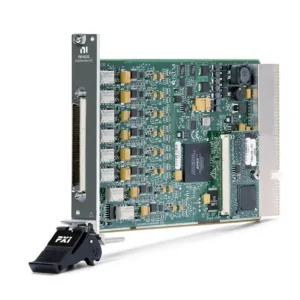
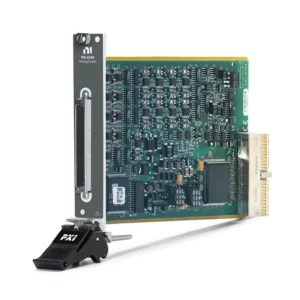
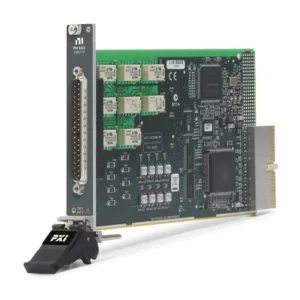
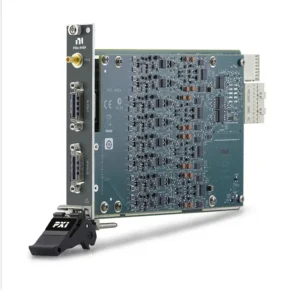
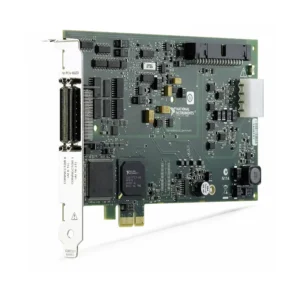
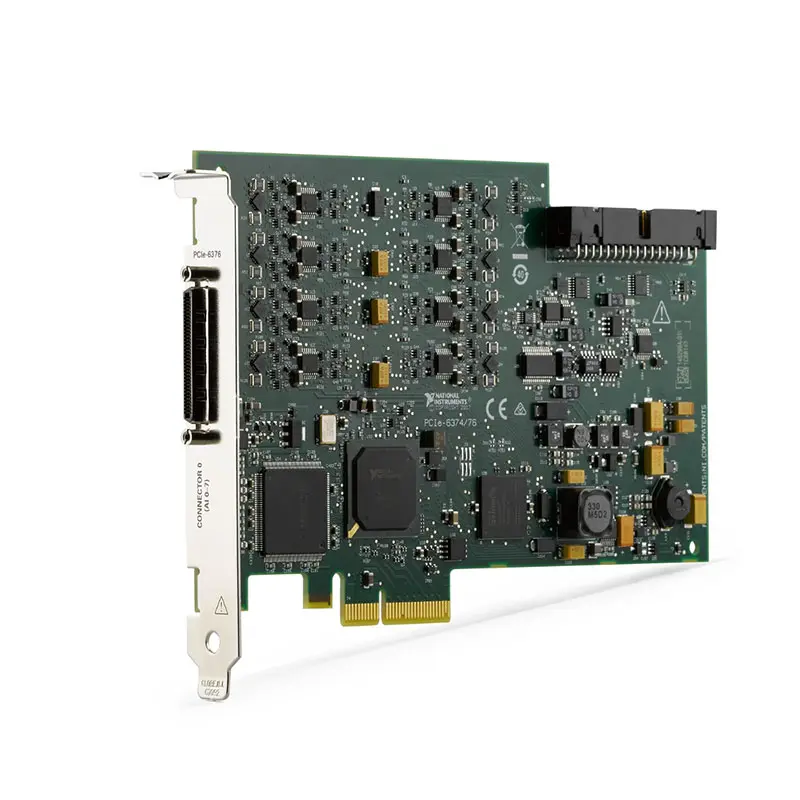
The NI PCIe-6376 is a high-performance X Series multifunction I/O (DAQ) device designed for simultaneous analog acquisition, waveform generation, digital I/O, counter/timer measurements, automated test, research, and industrial measurement applications.
The PCIe-6376 provides 8 simultaneously sampled analog input channels with 16-bit resolution and a maximum sampling rate of 3.571 MS/s per channel. Unlike multiplexed DAQ devices that share one ADC across multiple channels, the PCIe-6376 uses simultaneous sampling architecture to preserve the timing relationship between channels.
In addition to analog input, the device provides 2 analog output channels, 24 digital I/O lines, and four 32-bit counter/timers, making it a versatile PCI Express measurement platform for mixed-signal automated test and data acquisition systems.
Product Overview
The National Instruments PCIe-6376 belongs to the NI X Series family of multifunction data acquisition devices.
A typical measurement architecture is:
Sensors / Analog Signals → PCIe-6376 → PCI Express → Host Computer → NI-DAQmx / LabVIEW
For mixed-signal test systems, the same device can acquire analog signals, generate analog waveforms, monitor or control digital lines, perform counter/timer measurements, and synchronize these operations through hardware timing and triggering.
Key Features
8 Simultaneously Sampled Analog Inputs
The PCIe-6376 provides 8 analog input channels with simultaneous sampling.
Each channel has dedicated high-speed conversion capability, allowing all eight channels to acquire data at the same time rather than sequentially through a multiplexer.
This architecture is particularly valuable for:
- Phase measurements
- Multi-channel waveform acquisition
- Transient measurements
- Power electronics testing
- Automated electronic test
- Multi-sensor measurement
- Control-system validation
3.571 MS/s per Channel
Each analog input channel supports sampling rates up to 3.571 MS/s.
Because the channels are simultaneously sampled, the PCIe-6376 can acquire multiple high-speed signals without the interchannel timing skew associated with conventional multiplexed DAQ architectures.
16-Bit Analog Input Resolution
The PCIe-6376 provides 16-bit analog input resolution, offering a useful combination of measurement resolution and multi-megasample acquisition speed.
This makes the device suitable for applications requiring accurate waveform acquisition across multiple synchronized channels.
Multiple Analog Input Ranges
The PCIe-6376 supports programmable analog input ranges for adapting the measurement system to different signal amplitudes.
Typical supported bipolar ranges include:
- ±10 V
- ±5 V
- ±2 V
- ±1 V
Selecting an appropriate input range helps maximize effective measurement resolution while keeping the signal within the supported input limits.
2 Analog Output Channels
The PCIe-6376 provides 2 analog output channels for waveform generation, stimulus generation, control signals, and automated test applications.
Analog outputs can be used for:
- Device stimulus
- Waveform generation
- Control voltage generation
- Sensor simulation
- Automated test sequences
- Closed-loop test systems
16-Bit Analog Output Resolution
The analog outputs provide 16-bit resolution, enabling programmable voltage generation for compatible measurement and control applications.
24 Digital I/O Lines
The PCIe-6376 provides 24 digital I/O lines for digital control, status monitoring, triggering, and hardware-timed digital applications.
Digital I/O can be integrated with analog acquisition and generation to create mixed-signal automated test systems using a single DAQ device.
Four 32-Bit Counter/Timers
The PCIe-6376 includes four 32-bit counter/timers.
Counter/timer applications can include:
- Event counting
- Frequency measurement
- Period measurement
- Pulse-width measurement
- Encoder measurements
- Pulse generation
- Pulse-train generation
PCI Express Interface
The PCIe-6376 installs directly into a compatible PCI Express slot.
PCI Express provides a high-bandwidth communication path between the DAQ hardware and host computer, making it suitable for high-throughput simultaneous analog acquisition.
Hardware Timing and Triggering
The PCIe-6376 provides hardware timing and triggering capabilities for synchronizing acquisition and generation operations.
Hardware triggering can coordinate measurements with:
- External sensors
- Devices under test
- Other measurement instruments
- Motion systems
- Production equipment
- Automated test sequences
Technical Specifications
| Parameter | Specification |
|---|---|
| Product Type | X Series Multifunction I/O Device |
| Model | PCIe-6376 |
| Manufacturer | National Instruments |
| Bus Interface | PCI Express |
| Analog Input Channels | 8 |
| Analog Input Architecture | Simultaneous Sampling |
| Maximum AI Sample Rate | 3.571 MS/s per Channel |
| Analog Input Resolution | 16 Bit |
| Maximum Analog Input Range | ±10 V |
| Analog Output Channels | 2 |
| Analog Output Resolution | 16 Bit |
| Digital I/O | 24 Lines |
| Counter/Timers | 4 |
| Counter Resolution | 32 Bit |
| Synchronization | Hardware Timing and Triggering |
| Driver | NI-DAQmx |
| Product Family | NI X Series |
| Primary Applications | Automated Test, Data Acquisition, Electronic Validation and Multi-Channel Measurement |
How Does the PCIe-6376 Work?
The PCIe-6376 converts multiple analog input signals into digital measurement data using simultaneous analog-to-digital conversion.
A simplified signal path is:
Analog Signals → Signal Conditioning → Simultaneous ADCs → PCIe-6376 → PCI Express → Host Application
At the same time, the device can generate analog signals, control digital lines, and perform hardware counter/timer operations.
What Is Simultaneous Sampling?
Simultaneous sampling means that multiple analog input channels are sampled at the same instant.
This differs from multiplexed DAQ hardware, where multiple input channels share an ADC and are measured sequentially.
For example:
Simultaneous Sampling: CH0 + CH1 + CH2 + CH3 → Sampled at the Same Time
Compared with:
Multiplexed Sampling: CH0 → CH1 → CH2 → CH3 → Sequential Sampling
Simultaneous sampling is especially important when the relative timing or phase between channels is part of the measurement.
Why Use Simultaneous Analog Inputs?
In many measurement applications, the relationship between multiple signals is as important as the individual waveform.
Examples include:
- Voltage and current measurements
- Multi-phase electrical measurements
- Phase comparison
- Multiple sensor measurements
- Electronic circuit validation
- Control-system response measurements
The simultaneous architecture of the PCIe-6376 helps preserve these timing relationships.
High-Speed Data Acquisition
With eight channels capable of sampling at up to 3.571 MS/s per channel, the PCIe-6376 can acquire a substantial amount of measurement data.
This makes it suitable for applications involving:
- Fast transient capture
- High-speed sensor signals
- Electronic waveform measurements
- Power electronics
- Automated validation
- Research experiments
Analog Input Measurement
The analog input subsystem can acquire voltage signals from compatible sensors, circuits, devices under test, and signal-conditioning equipment.
Typical measurement signals include:
- Voltage waveforms
- Sensor outputs
- Control signals
- Electronic circuit signals
- Power-system signals
- Transient waveforms
Analog Output Generation
The two analog outputs allow the PCIe-6376 to generate programmable voltage signals while simultaneously performing other DAQ functions.
A typical automated test architecture is:
PCIe-6376 Analog Output → DUT Stimulus → DUT Response → PCIe-6376 Analog Input → Test Software
This allows one multifunction DAQ device to provide both stimulus and response acquisition.
Waveform Generation
The analog output channels can generate programmable waveforms for compatible test and control applications.
Possible waveform applications include:
- Sine wave generation
- Arbitrary stimulus waveforms
- Control signals
- Test patterns
- Sensor simulation
Digital I/O Applications
The 24 digital I/O lines can be used alongside the analog resources for mixed-signal systems.
Applications include:
- Relay control
- DUT status monitoring
- Digital triggering
- Production fixture control
- Digital communication
- Test-sequence control
Counter/Timer Applications
The four 32-bit counter/timers expand the PCIe-6376 beyond basic analog data acquisition.
Counter functions can be used for:
- Encoder position measurement
- Event counting
- Frequency measurement
- Period measurement
- Pulse-width measurement
- Pulse generation
Encoder Measurement
Compatible encoder signals can be acquired using the counter/timer resources.
A typical measurement architecture is:
Encoder → A/B/Z Signals → PCIe-6376 Counter → Position / Direction Measurement
This allows analog measurements and motion-related measurements to be integrated into the same DAQ system.
Frequency Measurement
The hardware counter/timers can measure the frequency of compatible digital pulse signals.
Typical frequency sources include:
- Tachometers
- Encoders
- Pulse-output sensors
- Digital oscillators
- Electronic circuits
Hardware Triggering
Hardware triggering allows the PCIe-6376 to start or coordinate measurements based on external or internally routed events.
A typical triggered measurement is:
Trigger Event → PCIe-6376 → Simultaneous Analog Acquisition → Host Processing
This is useful for capturing transient events and synchronizing measurements with a DUT or external process.
Pretrigger and Posttrigger Acquisition
In compatible NI-DAQmx acquisition configurations, triggered measurements can capture data around a defined event.
This is useful for analyzing signal behavior immediately before and after:
- Fault events
- Switching transitions
- Device startup
- Control events
- External triggers
Power Electronics Testing
Simultaneous acquisition makes the PCIe-6376 useful for compatible power electronics measurement systems.
Applications can include simultaneous acquisition of:
- Input voltage
- Input current
- Output voltage
- Output current
- Control signals
- Switching-related waveforms
Appropriate isolation, attenuation, probes, and signal conditioning must be used when measuring voltages or currents outside the direct electrical limits of the PCIe-6376.
Automated Electronic Test
The PCIe-6376 combines analog acquisition, analog generation, digital I/O, and counters in one device, making it useful for automated electronic test systems.
A typical test sequence can:
- Configure DUT control lines.
- Generate an analog stimulus.
- Trigger the DUT.
- Acquire multiple analog response channels simultaneously.
- Measure pulse or frequency signals.
- Analyze the results.
- Determine pass or fail status.
Research and Laboratory Measurement
The PCIe-6376 can be integrated into laboratory systems requiring synchronized acquisition of multiple analog signals.
Typical applications include:
- Experimental data acquisition
- Prototype validation
- Multi-sensor measurement
- Electronic circuit research
- Control-system development
- University laboratories
NI X Series Architecture
The PCIe-6376 belongs to the NI X Series multifunction DAQ family.
X Series devices combine multifunction analog and digital I/O with advanced hardware timing and PCI Express data transfer.
Typical X Series resources include:
- Analog input
- Analog output
- Digital I/O
- Counter/timers
- Hardware triggering
- Advanced timing
- PCI Express data transfer
PCIe-6376 vs Multiplexed DAQ Device
| Feature | PCIe-6376 | Typical Multiplexed DAQ |
|---|---|---|
| Analog Input Architecture | Simultaneous Sampling | Multiplexed |
| Number of AI Channels | 8 | Model Dependent |
| Maximum AI Rate | 3.571 MS/s per Channel | Usually Shared Across Channels |
| Interchannel Timing | Simultaneous | Sequential |
| Phase-Sensitive Measurement | Well Suited | Less Ideal |
| Typical Advantage | High-Speed Synchronized Measurement | Higher Channel Density / Lower Cost |
PCIe-6376 vs PCIe-6363
The PCIe-6376 and PCIe-6363 are both NI X Series multifunction DAQ devices, but their analog input architectures target different applications.
| Feature | PCIe-6376 | PCIe-6363 |
|---|---|---|
| Analog Input Architecture | Simultaneous Sampling | Multiplexed |
| Analog Input Channels | 8 | More Channels |
| Maximum AI Rate | 3.571 MS/s per Channel | Shared Aggregate Rate |
| Analog Output | 2 | 4 |
| Digital I/O | 24 | 48 |
| Best Application | High-Speed Synchronized Acquisition | Higher-Channel-Count General DAQ |
PCIe-6376 vs Dedicated Digitizer
The PCIe-6376 offers multifunction DAQ capability, while a dedicated high-speed digitizer typically prioritizes much higher sample rates and analog bandwidth.
| Feature | PCIe-6376 | High-Speed Digitizer |
|---|---|---|
| Analog Input | Yes | Yes |
| Analog Output | Yes | Usually No |
| Digital I/O | 24 Lines | Limited / Model Dependent |
| Counter/Timers | 4 | Not Primary Function |
| Sampling Rate | 3.571 MS/s/ch | Typically Much Higher |
| Primary Advantage | Multifunction Measurement | High-Speed Waveform Acquisition |
PCIe-6376 vs PCIe-6374
The PCIe-6376 and PCIe-6374 belong to the same simultaneous-sampling X Series family and are designed for applications where channel-to-channel timing is important.
When choosing between these models, compare:
- Number of analog input channels
- Maximum sampling rate
- Analog output requirements
- Digital I/O requirements
- Counter/timer requirements
- Connector architecture
- Required system bandwidth
NI-DAQmx Integration
The PCIe-6376 uses the NI-DAQmx driver for configuration and measurement.
NI-DAQmx provides APIs for:
- Analog input
- Analog output
- Digital input
- Digital output
- Counter input
- Counter output
- Timing
- Triggering
- Synchronization
LabVIEW Integration
The PCIe-6376 can be integrated into compatible LabVIEW applications through NI-DAQmx.
A typical analog acquisition workflow is:
Create Task → Configure AI Channels → Configure Sample Clock → Configure Trigger → Start Acquisition → Read Data → Analyze / Log Results
This architecture can be expanded to include analog generation, digital control, and counter measurements in the same automated application.
Signal Conditioning
The PCIe-6376 directly measures compatible voltage signals. Sensors that produce other signal types may require external signal conditioning.
Signal conditioning may be required for:
- Thermocouples
- RTDs
- Strain gauges
- IEPE sensors
- High-voltage signals
- Current measurements
- Isolated measurements
The appropriate conditioning hardware should be selected according to sensor type, signal level, bandwidth, isolation, and measurement accuracy requirements.
How to Choose a Multifunction DAQ Device
Before selecting the PCIe-6376, evaluate:
- Required number of analog input channels
- Need for simultaneous sampling
- Maximum signal frequency
- Required sample rate per channel
- Required analog input resolution
- Signal voltage range
- Analog output requirements
- Digital I/O requirements
- Counter/timer requirements
- Triggering requirements
- Synchronization requirements
- PCI Express slot availability
- Signal-conditioning requirements
- Connector and cable requirements
- NI-DAQmx compatibility
Industries
- Automated Test
- Electronics Manufacturing
- Power Electronics
- Industrial Measurement
- Research and Development
- Laboratory Automation
- Control-System Testing
- Automotive Testing
- Aerospace Testing
- University Research
Applications
Simultaneous Multi-Channel Acquisition
The PCIe-6376 can simultaneously sample eight analog signals at up to 3.571 MS/s per channel for applications requiring accurate channel-to-channel timing.
Automated Test
Analog input, analog output, digital I/O, and counter/timer resources can be combined in automated electronic and electromechanical test systems.
Power Electronics Measurement
Simultaneous channels can acquire multiple conditioned voltage and current signals while preserving their timing relationship for power-system analysis and validation.
Electronic Validation
The PCIe-6376 can capture multiple electronic waveforms simultaneously while providing analog and digital stimulus to a device under test.
Transient Acquisition
High-speed simultaneous analog inputs can capture transient events across multiple measurement points.
Research and Laboratory DAQ
The device provides a flexible combination of synchronized analog acquisition, analog generation, digital I/O, and counters for laboratory experiments and research systems.
Recommended Related Products
| PCIe-6376 | 8-channel simultaneous-sampling X Series multifunction DAQ device with up to 3.571 MS/s per channel. |
| PCIe-6374 | Related simultaneous-sampling X Series multifunction DAQ device for high-speed synchronized measurements. |
| PCIe-6363 | X Series multifunction DAQ device suited to applications prioritizing higher general-purpose I/O channel density. |
| PCIe-6353 | Multifunction X Series DAQ device for general automated test, data acquisition, and control applications. |
| PXIe-6376 | PXI Express platform option for modular test systems requiring related high-speed simultaneous-sampling functionality. |
Why Choose PCIe-6376?
- 8 simultaneously sampled analog input channels
- Up to 3.571 MS/s per channel
- 16-bit analog input resolution
- Up to ±10 V analog input range
- 2 analog output channels
- 16-bit analog output resolution
- 24 digital I/O lines
- Four 32-bit counter/timers
- Hardware timing and triggering
- High-speed PCI Express interface
- NI X Series architecture
- NI-DAQmx support
- LabVIEW integration
- Simultaneous multi-channel measurement
- Automated test applications
- Electronic validation
- Power electronics measurement
Frequently Asked Questions
What is the NI PCIe-6376?
The NI PCIe-6376 is an X Series PCI Express multifunction I/O device providing eight simultaneously sampled analog inputs, analog outputs, digital I/O, and hardware counter/timers for high-speed data acquisition and automated test.
How many analog input channels does PCIe-6376 have?
The PCIe-6376 provides 8 analog input channels.
Does PCIe-6376 support simultaneous sampling?
Yes. The PCIe-6376 uses a simultaneous-sampling architecture, allowing all eight analog input channels to be sampled at the same time.
What is the maximum sample rate of PCIe-6376?
The PCIe-6376 supports analog input sampling rates up to 3.571 MS/s per channel.
What is the analog input resolution of PCIe-6376?
The PCIe-6376 provides 16-bit analog input resolution.
What is the maximum analog input range?
The PCIe-6376 supports analog input ranges up to approximately ±10 V. The appropriate range should be selected according to the signal amplitude and measurement requirements.
Does PCIe-6376 have analog outputs?
Yes. The PCIe-6376 provides 2 analog output channels with 16-bit resolution for waveform and stimulus generation.
How many digital I/O lines does PCIe-6376 have?
The PCIe-6376 provides 24 digital I/O lines.
How many counters does PCIe-6376 have?
The device provides four 32-bit counter/timers.
Can PCIe-6376 measure encoder signals?
Yes. Compatible encoder signals can be measured using the hardware counter/timer resources.
Can PCIe-6376 measure frequency?
Yes. The hardware counters can perform frequency measurements on compatible digital pulse signals.
Can PCIe-6376 generate analog signals?
Yes. Its two analog output channels can generate programmable voltage waveforms and stimulus signals for compatible automated test and control applications.
What is the difference between simultaneous and multiplexed sampling?
Simultaneous sampling acquires multiple channels at the same instant, while multiplexed sampling measures channels sequentially through a shared ADC. Simultaneous sampling is generally preferable when phase and channel-to-channel timing relationships are important.
Is PCIe-6376 suitable for power electronics testing?
Yes. Its simultaneous analog input architecture can be useful for acquiring conditioned voltage and current waveforms. Appropriate probes, attenuation, isolation, and signal conditioning are required when the original signals exceed the device’s electrical specifications.
What software is used with PCIe-6376?
The PCIe-6376 uses NI-DAQmx and can be integrated into compatible LabVIEW, LabWindows/CVI, C/C++, .NET, Python, and other supported development environments.
What is the difference between PCIe-6376 and PCIe-6363?
The PCIe-6376 is optimized for high-speed simultaneous analog acquisition, providing eight simultaneously sampled inputs at up to 3.571 MS/s per channel. The PCIe-6363 uses a multiplexed analog input architecture and is better suited to applications prioritizing larger general-purpose I/O channel counts rather than simultaneous high-speed sampling.
Is PCIe-6376 a digitizer or multifunction DAQ device?
The PCIe-6376 is primarily classified as an X Series multifunction I/O device. Although it provides high-speed waveform acquisition, it also includes analog outputs, digital I/O, and counter/timers, distinguishing it from a dedicated digitizer.
What should I check before purchasing PCIe-6376?
Verify the required number of analog channels, simultaneous-sampling requirement, sample rate, signal voltage range, analog output requirements, digital I/O count, counter/timer requirements, trigger and synchronization requirements, PCI Express slot compatibility, connector and cable requirements, NI-DAQmx version, operating system, and application software compatibility.
Conclusion
The NI PCIe-6376 X Series Multifunction I/O Device combines eight simultaneously sampled 16-bit analog inputs at up to 3.571 MS/s per channel with two analog outputs, 24 digital I/O lines, four 32-bit counter/timers, hardware timing, triggering, and PCI Express connectivity. Its simultaneous-sampling architecture makes it particularly suitable for multi-channel waveform acquisition, phase-sensitive measurement, power electronics testing, automated electronic validation, transient capture, research, and high-performance data acquisition systems.