



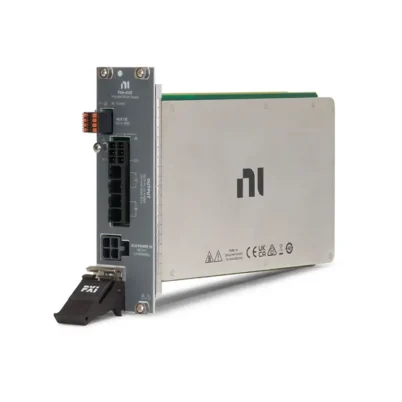
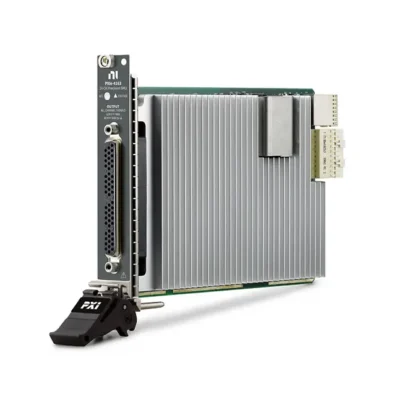
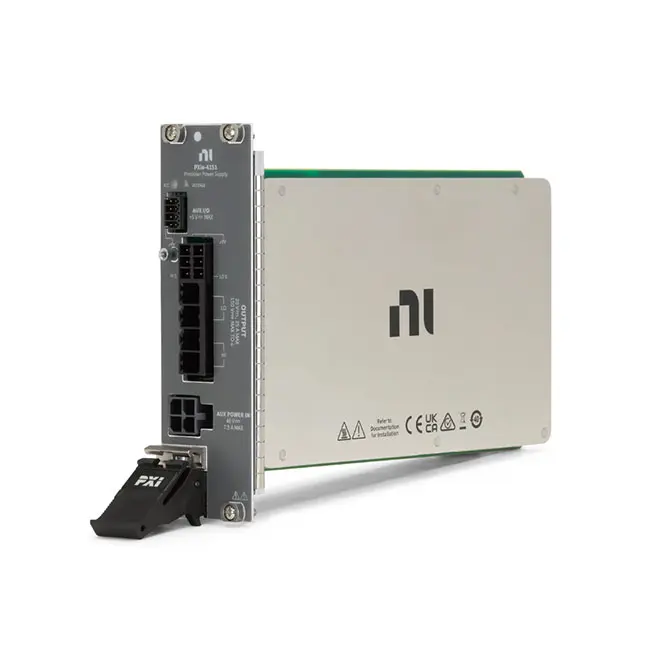
Product Introduction
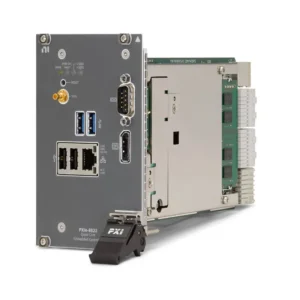
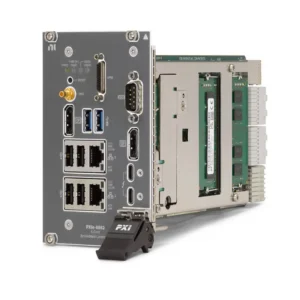
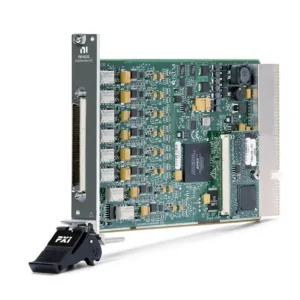
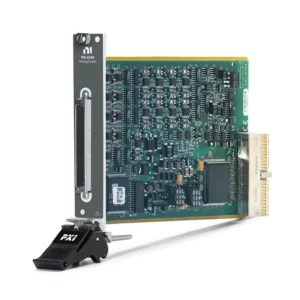
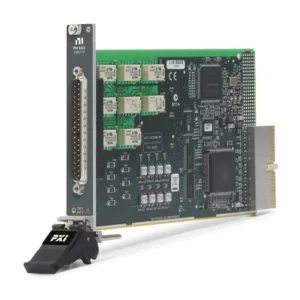
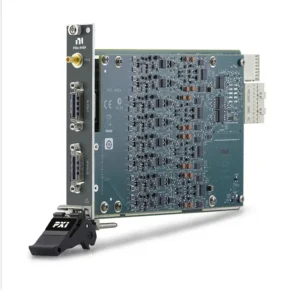
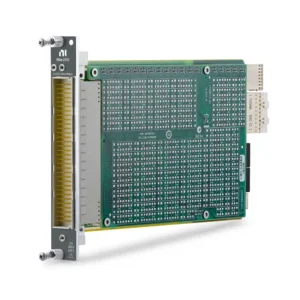
The NI PXIe-4151 is a single-channel PXI Express Source Measure Unit (SMU) designed for precision voltage and current sourcing and measurement in automated test, semiconductor characterization, electronic validation, and research applications.
The PXIe-4151 combines the functionality of a programmable power source and precision measurement instrument within a compact PXI Express module. It provides 4-quadrant operation, allowing the instrument to both source and sink power while measuring voltage and current.
With output capability up to approximately ±20 V, current capability up to 1 A, and power capability up to 20 W, the PXIe-4151 is well suited for automated I-V characterization, semiconductor device testing, component validation, power management IC testing, and other precision DC measurement applications.
Product Overview
The National Instruments PXIe-4151 is a precision PXI Source Measure Unit designed for applications where programmable sourcing and accurate electrical measurement must be performed by the same instrument.
A conventional test setup may require separate instruments for:
- DC voltage sourcing
- DC current sourcing
- Voltage measurement
- Current measurement
- Electronic loading
The PXIe-4151 integrates these capabilities into a single programmable SMU channel, helping simplify automated test-system architecture.
Key Features
Single-Channel Source Measure Unit
The PXIe-4151 provides one precision SMU channel for sourcing and measuring electrical signals.
The channel can be configured according to the test requirement to source voltage or current while simultaneously measuring the DUT response.
A typical configuration is:
PXIe-4151 → Source Voltage → DUT → Measure Current
Alternatively:
PXIe-4151 → Source Current → DUT → Measure Voltage
4-Quadrant Operation
One of the most important capabilities of the PXIe-4151 is 4-quadrant operation.
A four-quadrant SMU can operate with positive and negative voltage and current combinations, allowing the instrument to both source and sink electrical power.
| Quadrant | Voltage | Current | Typical Operation |
|---|---|---|---|
| I | Positive | Positive | Source Power |
| II | Positive | Negative | Sink Power |
| III | Negative | Negative | Source Power |
| IV | Negative | Positive | Sink Power |
This capability makes the PXIe-4151 significantly more flexible than a conventional unidirectional programmable DC power supply.
Up to ±20 V Operation
The PXIe-4151 provides bipolar voltage capability extending to approximately ±20 V.
Bipolar operation is useful for devices and components that must be characterized under both positive and negative bias conditions.
Typical applications include:
- Semiconductor characterization
- Diode testing
- Transistor testing
- Sensor characterization
- Analog component testing
- Power-management device validation
Up to 1 A Current Capability
The PXIe-4151 provides current capability up to approximately 1 A, depending on the selected operating range and voltage conditions.
This allows the module to characterize devices requiring substantially more current than ultra-low-current precision measurement applications.
Up to 20 W Power Capability
The PXIe-4151 provides up to approximately 20 W of source or sink capability within its specified operating envelope.
Voltage, current, and power limits should always be considered together when configuring the instrument.
The required operating point should be verified against the PXIe-4151 output characteristics rather than assuming that maximum voltage and maximum current are simultaneously available under every condition.
Precision Voltage Sourcing
The PXIe-4151 can operate as a programmable precision voltage source.
In this mode, the instrument applies a programmed voltage to the DUT while simultaneously measuring current.
This is commonly used for:
- I-V characterization
- Leakage measurements
- Power consumption testing
- Device biasing
- Semiconductor characterization
Precision Current Sourcing
The PXIe-4151 can also operate as a programmable current source.
In this configuration, the instrument applies a specified current and measures the resulting DUT voltage.
This capability can be useful for:
- Diode characterization
- LED testing
- Resistance measurements
- Sensor excitation
- Component characterization
Simultaneous Source and Measurement
Unlike a conventional programmable power supply, an SMU is specifically designed to combine stimulus and precision measurement.
For example, the PXIe-4151 can:
- Source voltage and measure current
- Source current and measure voltage
- Apply positive bias
- Apply negative bias
- Sink current from a DUT
This combination is particularly valuable for automated device characterization.
Source and Sink Capability
The PXIe-4151 can operate as both an electrical source and an electronic load within its supported operating limits.
Source operation supplies electrical power to the DUT, while sink operation absorbs power from the DUT.
This makes the PXIe-4151 useful for testing devices that can both consume and generate electrical energy.
Programmable Compliance Limits
Compliance limits can be configured to protect the DUT during automated testing.
For example, when sourcing voltage, a current limit can be programmed to prevent excessive current through the DUT.
When sourcing current, an appropriate voltage limit can be configured.
Compliance control is particularly important when testing sensitive semiconductor devices.
PXI Express Integration
The PXIe-4151 operates within a PXI Express modular instrumentation system.
This allows the SMU to be combined with other PXI instruments such as:
- Oscilloscopes and digitizers
- Digital multimeters
- Programmable power supplies
- Waveform generators
- Digital pattern instruments
- RF instruments
- PXI switches
- Data acquisition modules
Technical Specifications
| Parameter | Description |
|---|---|
| Product Type | PXI Source Measure Unit |
| Model | NI PXIe-4151 |
| Platform | PXI Express |
| Number of SMU Channels | 1 |
| Operation | 4-Quadrant |
| Voltage Capability | Up to Approximately ±20 V |
| Current Capability | Up to Approximately 1 A |
| Maximum Power | Up to Approximately 20 W |
| Voltage Source | Supported |
| Current Source | Supported |
| Voltage Measurement | Supported |
| Current Measurement | Supported |
| Source Capability | Supported |
| Sink Capability | Supported |
| Compliance Control | Programmable |
| Primary Applications | Semiconductor Characterization, I-V Measurement, Electronic Validation and Automated Test |
What Is a Source Measure Unit?
A Source Measure Unit, commonly abbreviated as SMU, is an instrument that combines precision electrical sourcing and measurement capabilities.
An SMU can typically perform the functions of:
- Precision voltage source
- Precision current source
- Voltage measurement instrument
- Current measurement instrument
- Electronic load
Combining these functions into one instrument simplifies many semiconductor and component characterization applications.
PXIe-4151 for I-V Characterization
One of the primary applications of the PXIe-4151 is automated current-voltage (I-V) characterization.
An I-V sweep measures how DUT current changes as the applied voltage changes.
A simplified test sequence is:
- Configure the starting voltage.
- Configure current compliance.
- Apply the first voltage point.
- Measure DUT current.
- Increment the voltage.
- Measure the new current value.
- Repeat across the required sweep range.
- Generate the DUT I-V characteristic.
Voltage Sweep Measurements
The PXIe-4151 can perform automated voltage sweeps while measuring the corresponding DUT current.
For example:
V1 → Measure I1
V2 → Measure I2
V3 → Measure I3
V4 → Measure I4
The resulting measurement points can be used to construct an I-V curve for the device under test.
Current Sweep Measurements
The instrument can also source a sequence of current levels while measuring DUT voltage.
A simplified current sweep can be represented as:
I1 → Measure V1
I2 → Measure V2
I3 → Measure V3
I4 → Measure V4
Current sweeps are useful for devices where current is the preferred controlled stimulus.
Semiconductor Characterization
The PXIe-4151 is particularly suitable for semiconductor characterization because it combines programmable biasing and precision electrical measurement.
Typical devices may include:
- Diodes
- LEDs
- Transistors
- MOSFETs
- Integrated circuits
- Power-management devices
- Sensors
- Analog components
Diode Testing
A PXIe-4151 can source voltage or current to a diode and measure its electrical response.
Typical diode measurements can include:
- Forward voltage
- Forward current
- Reverse-bias behavior
- Leakage current
- I-V characteristics
The bipolar sourcing capability is useful when both forward and reverse device behavior must be evaluated.
LED Testing
For compatible LEDs, the PXIe-4151 can source current while measuring forward voltage.
A typical electrical test architecture is:
PXIe-4151 → Programmed Current → LED → Measure Forward Voltage
The electrical measurements can be combined with optical measurement equipment when complete LED characterization is required.
Transistor Testing
Transistors frequently require multiple bias and measurement points to characterize device behavior.
One or more SMUs can be used to apply electrical bias to different transistor terminals while measuring resulting current and voltage.
Typical measurements may include:
- Transfer characteristics
- Output characteristics
- Gate leakage
- Drain current
- Threshold behavior
MOSFET Characterization
MOSFET characterization often requires more than one programmable source-measure channel.
For example:
SMU 1 → Gate Bias
SMU 2 → Drain Bias and Current Measurement
Multiple PXI SMUs can therefore be integrated into the same PXI system for multi-terminal semiconductor characterization.
Power Management IC Testing
The PXIe-4151 can be used in automated power-management IC validation where precision voltage and current control is required.
Typical applications may include:
- Voltage regulator characterization
- Power management IC validation
- Power rail testing
- Quiescent current measurement
- Line and load characterization
- Device power-state testing
Battery and Power Device Testing
Because the PXIe-4151 provides source and sink operation, it can be useful in compatible power-device and battery-related test applications within its voltage, current, power, and safety limits.
Source and sink capability allows the instrument to emulate certain charging and discharging conditions when the required operating point falls within the SMU specifications.
Component Characterization
The PXIe-4151 is not limited to semiconductor devices. It can also be used to characterize compatible electrical and electronic components.
Examples include:
- Resistors
- Diodes
- LEDs
- Sensors
- Analog components
- Electronic subassemblies
Automated Production Test
The PXIe-4151 can be incorporated into production test systems where electrical characteristics must be measured automatically and consistently.
A typical sequence can include:
- Connect the DUT through a fixture or switching system.
- Configure source mode.
- Set the required voltage or current.
- Configure compliance limits.
- Apply the stimulus.
- Measure the DUT response.
- Compare results with test limits.
- Generate a pass/fail result.
Electronic Design Validation
During electronic design validation, engineers frequently need to evaluate devices across multiple electrical operating conditions.
The PXIe-4151 can automatically change source levels while recording the corresponding voltage and current response.
This makes it suitable for:
- Device characterization
- Design-margin testing
- Power-state analysis
- Component validation
- Parametric testing
- Automated regression testing
PXIe-4151 vs Programmable Power Supply
Although both instruments can supply electrical power, an SMU and a programmable power supply are optimized for different applications.
| Feature | PXIe-4151 SMU | Programmable Power Supply |
|---|---|---|
| Primary Purpose | Precision Source and Measurement | DUT Power |
| Voltage Source | Yes | Yes |
| Current Source | Yes | Model Dependent |
| Precision Current Measurement | Yes | Generally More Limited |
| 4-Quadrant Operation | Yes | Usually No |
| Source and Sink | Yes | Model Dependent |
| I-V Characterization | Excellent | Not Primary Application |
| Typical Application | Parametric Test | Powering DUTs |
PXIe-4151 vs PXIe-4113
The PXIe-4151 and PXIe-4113 serve different roles in an automated PXI system.
| Feature | PXIe-4151 | PXIe-4113 |
|---|---|---|
| Instrument Type | Source Measure Unit | Programmable Power Supply |
| Primary Function | Precision Source and Measurement | Programmable DUT Power |
| 4-Quadrant Operation | Yes | Different Power-Supply Architecture |
| I-V Characterization | Primary Application | Not Primary Application |
| Precision Current Measurement | Major Strength | Not Primary Function |
| Best Application | Device Characterization | DUT Power Supply |
PXIe-4151 with PXI Switching
A PXI switching module can route a single SMU to multiple DUTs or test points.
A simplified architecture is:
PXIe-4151 → PXI Switch → DUT 1 / DUT 2 / DUT 3 / DUT 4
This architecture can reduce the number of SMUs required when measurements do not need to occur simultaneously.
The selected switching hardware must be suitable for the required voltage, current, leakage, contact resistance, and measurement accuracy.
PXIe-4151 with Multiple SMUs
More complex semiconductor devices may require several source-measure channels.
Multiple PXIe-4151 modules or other compatible PXI SMUs can be installed in the same PXI Express system.
For example:
SMU 1 → DUT Terminal A
SMU 2 → DUT Terminal B
SMU 3 → DUT Terminal C
This architecture supports automated multi-terminal device characterization.
PXIe-4151 in a Complete PXI System
The PXIe-4151 can function as the precision DC source and measurement instrument within a complete PXI system.
A typical system may include:
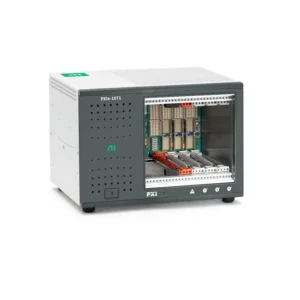
- PXI Chassis
- PXI Controller
- PXIe-4151 Source Measure Unit
- PXI Modules
- PXI switching modules
- PXI oscilloscopes and digitizers
- PXI digital multimeters
- PXI programmable power supplies
- Digital pattern instruments
- RF measurement modules
This modular architecture allows DC parametric measurements to be combined with functional, digital, waveform, and RF testing within the same automated platform.
Software-Controlled Measurements
The PXIe-4151 is designed for automated software control.
Test software can configure:
- Voltage source level
- Current source level
- Voltage limits
- Current compliance
- Measurement ranges
- Source sequences
- Voltage sweeps
- Current sweeps
- Measurement timing
This allows complex device characterization procedures to be automated and repeated consistently.
SMU Selection Considerations
Selecting an SMU requires careful evaluation of both source and measurement requirements.
Before selecting the PXIe-4151, engineers should verify:
- Required voltage range
- Required current range
- Maximum source power
- Required sink power
- Voltage measurement accuracy
- Current measurement accuracy
- Minimum measurable current
- Required measurement resolution
- Number of DUT terminals
- Required number of SMU channels
- Measurement speed
- Compliance requirements
- Cabling and connection requirements
- PXI chassis compatibility
Source and Sink Operating Area
The PXIe-4151 voltage, current, and power specifications should be evaluated as an operating envelope.
The relationship between voltage, current, and power can be represented as:
Power (W) = Voltage (V) × Current (A)
However, the actual source and sink operating area depends on the instrument’s specified quadrant and range limits.
Always verify the required operating point against the official PXIe-4151 specifications before configuring high-power source or sink conditions.
Industries
- Semiconductor Test
- Electronic Manufacturing
- Automated Test Equipment
- Consumer Electronics
- Automotive Electronics
- Aerospace and Defense
- Power Electronics
- Research and Development
- Electronic Design Validation
Applications
I-V Characterization
The PXIe-4151 can source a sequence of voltage or current values while measuring DUT response to generate automated I-V characteristics.
Semiconductor Testing
Four-quadrant source and measurement capability makes the PXIe-4151 suitable for automated characterization of compatible semiconductor devices.
Diode and LED Testing
The SMU can provide controlled electrical stimulus while measuring forward voltage, current, reverse-bias behavior, and other device characteristics.
Transistor Characterization
One or more PXI SMUs can provide programmable terminal bias and electrical measurements for transistor and MOSFET characterization.
Power Management IC Validation
The PXIe-4151 can provide programmable bias and measurement capabilities for compatible power-management and low-power electronic devices.
Automated Parametric Test
Software-controlled sourcing, measurement, compliance, and sweeping capabilities make the PXIe-4151 suitable for automated electrical parametric testing.
Recommended Related Products
| NI PXIe-4151 | Single-channel, four-quadrant PXI Source Measure Unit for precision voltage/current sourcing and measurement. |
| NI PXIe-4113 | Programmable PXI DC power supply for applications primarily requiring automated DUT power rather than precision SMU characterization. |
| NI PXIe-4190 | PXI LCR meter and SMU designed for impedance, capacitance-voltage, current-voltage, and semiconductor parametric measurements. |
| NI PXI Modules | PXI and PXI Express instrumentation for source measurement, programmable power, switching, waveform acquisition, RF testing, and automated measurement systems. |
Why Choose NI PXIe-4151?
- Single-channel PXI Source Measure Unit
- 4-quadrant operation
- Bipolar voltage sourcing
- Up to approximately ±20 V operation
- Up to approximately 1 A current capability
- Up to approximately 20 W power capability
- Voltage sourcing and measurement
- Current sourcing and measurement
- Source and sink operation
- Programmable compliance limits
- Automated voltage and current sweeps
- Suitable for I-V characterization
- Suitable for semiconductor testing
- PXI Express modular architecture
- Integration with PXI switching and measurement instruments
Frequently Asked Questions
What is the NI PXIe-4151?
The NI PXIe-4151 is a single-channel PXI Express Source Measure Unit designed for precision voltage and current sourcing and measurement in automated test and device characterization applications.
Is the PXIe-4151 an SMU?
Yes. The PXIe-4151 is a Source Measure Unit, or SMU, combining programmable voltage/current sourcing with voltage/current measurement capability.
How many channels does the PXIe-4151 have?
The PXIe-4151 provides one SMU channel.
Does the PXIe-4151 support four-quadrant operation?
Yes. The PXIe-4151 provides four-quadrant operation, allowing compatible source and sink operation with positive and negative voltage and current conditions.
What is the voltage range of the PXIe-4151?
The PXIe-4151 provides bipolar voltage capability extending to approximately ±20 V. The applicable range and operating limits should be verified for the specific source or measurement mode.
How much current can the PXIe-4151 provide?
The PXIe-4151 provides current capability up to approximately 1 A, subject to its selected range, voltage, power, and operating-quadrant limits.
What is the maximum power of the PXIe-4151?
The PXIe-4151 provides up to approximately 20 W within its specified source and sink operating envelope.
Can the PXIe-4151 source voltage and measure current?
Yes. This is one of the primary operating modes of an SMU and is commonly used for I-V characterization and semiconductor testing.
Can the PXIe-4151 source current and measure voltage?
Yes. The PXIe-4151 can operate as a programmable current source while measuring the resulting DUT voltage.
Can the PXIe-4151 sink current?
Yes. Its four-quadrant architecture provides both source and sink capability within the instrument’s specified operating limits.
Can the PXIe-4151 perform I-V sweeps?
Yes. Automated voltage or current sweeps can be performed while measuring DUT response, making the PXIe-4151 suitable for generating I-V characteristics.
Can the PXIe-4151 test diodes?
Yes. The module can be used for compatible diode characterization, including forward-bias, reverse-bias, current-voltage, and leakage-related measurements within its measurement capabilities.
Can the PXIe-4151 test MOSFETs?
Yes. The PXIe-4151 can provide one of the required bias and measurement channels for MOSFET characterization. Multiple SMUs may be required when several transistor terminals need independent source-measure channels.
What is the difference between PXIe-4151 and PXIe-4113?
The PXIe-4151 is a precision Source Measure Unit optimized for sourcing and measuring voltage and current, including I-V characterization and four-quadrant operation. The PXIe-4113 is primarily a programmable DC power supply intended for providing DUT power.
Can the PXIe-4151 replace a programmable power supply?
For applications within its voltage, current, and power capabilities, the PXIe-4151 can provide programmable DUT power. However, its primary advantage is precision sourcing and measurement. For applications requiring primarily higher-power DUT supply, a dedicated programmable power supply may be more appropriate.
Can multiple PXIe-4151 modules be used together?
Yes. Multiple SMUs can be integrated into a compatible PXI Express system when multi-terminal devices require several independent source and measurement channels.
Can the PXIe-4151 be connected through a PXI switch?
Yes. Compatible PXI switching hardware can route an SMU to multiple DUTs or test points. The switch must meet the application’s voltage, current, leakage, contact-resistance, and measurement-accuracy requirements.
What applications are suitable for the PXIe-4151?
Typical applications include semiconductor characterization, I-V measurements, diode and LED testing, transistor characterization, power-management IC validation, electronic component testing, automated parametric test, and electronic design validation.
What should I check before purchasing a PXIe-4151?
Before purchasing a PXIe-4151, verify the required source voltage, source current, source and sink power, measurement accuracy, current sensitivity, number of channels, compliance requirements, sweep speed, DUT connection method, PXI Express chassis compatibility, software requirements, and the exact NI ordering part number.
Conclusion
The NI PXIe-4151 PXI Source Measure Unit combines precision voltage and current sourcing with measurement capability in a compact PXI Express instrument. Its single-channel four-quadrant architecture, bipolar operation, source and sink capability, programmable compliance, and automated sweep functionality make it particularly suitable for semiconductor characterization, I-V measurements, electronic component validation, power-management device testing, and automated parametric test systems.