




Product Introduction
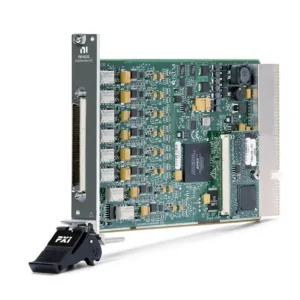
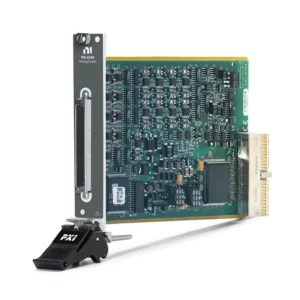
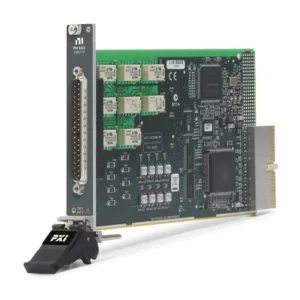
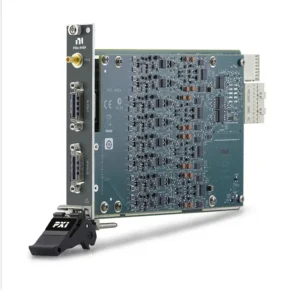
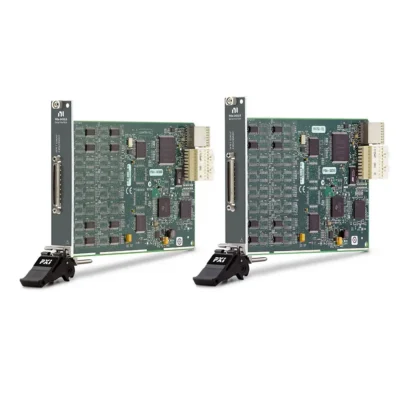
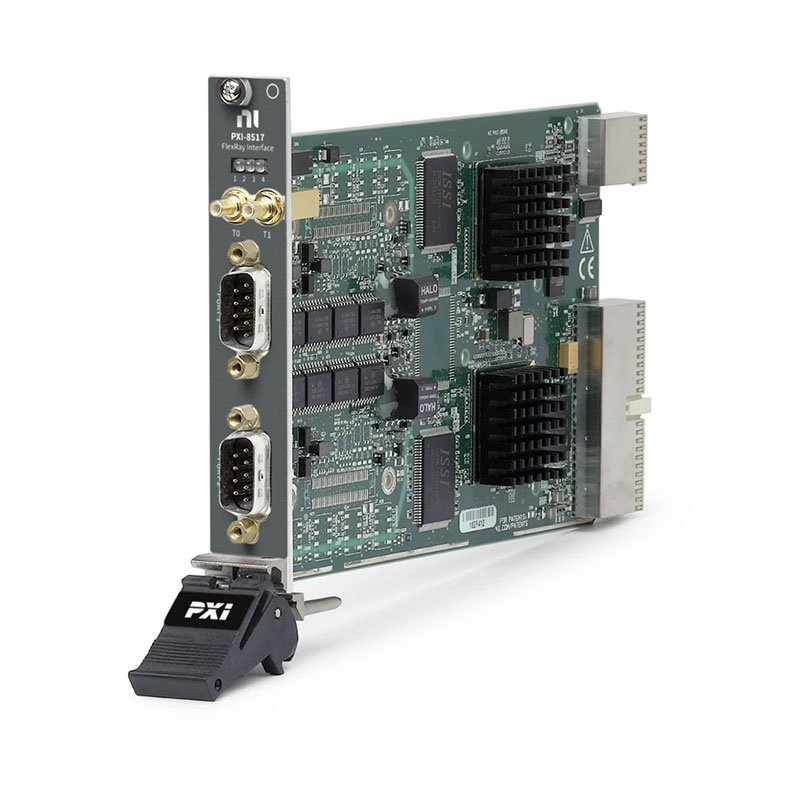
The NI PXI-8517 is a 2-port PXI FlexRay interface module designed for developing, testing, monitoring, and validating FlexRay-based automotive and embedded communication systems.
As part of the NI-XNET platform, the PXI-8517 is optimized for applications requiring deterministic, high-speed manipulation of large numbers of FlexRay frames and signals. Typical applications include hardware-in-the-loop (HIL) simulation, electronic control unit (ECU) testing, rapid control prototyping, vehicle network monitoring, automated validation, and automotive communication development.
The PXI-8517 provides two fully functional FlexRay interfaces. These interfaces can be used together for FlexRay development or independently to connect two separate FlexRay networks while maintaining full performance on each interface.
Product Overview
The National Instruments PXI-8517 provides FlexRay communication capability within a modular PXI test system. It combines dual FlexRay interfaces with NI-XNET software support and PXI synchronization features, making it particularly suitable for automated automotive test systems.
Each interface supports the FlexRay communication protocol and can be used for transmitting, receiving, monitoring, and manipulating FlexRay frames and signals in real time.
Because the PXI-8517 contains two independent FlexRay interfaces, engineers can connect an individual ECU when additional cold-start nodes are unavailable or use the two interfaces to communicate with separate FlexRay networks.
Key Features
Two Independent FlexRay Interfaces
The PXI-8517 provides two fully functional FlexRay interfaces for advanced vehicle network testing.
- 2 FlexRay interfaces
- Independent network operation
- Dual-network connectivity
- ECU communication testing
- FlexRay bus monitoring
Advantage: The two interfaces can operate independently, allowing a single PXI module to connect to two separate FlexRay networks.
1 Mbps to 10 Mbps FlexRay Communication
The PXI-8517 supports FlexRay communication rates from 1 Mbps to 10 Mbps.
- Minimum baud rate: 1 Mbps
- Maximum baud rate: 10 Mbps
- High-speed automotive communication
- Real-time frame transmission and reception
Advantage: High-speed communication capability makes the module suitable for demanding automotive control and validation systems.
NI-XNET Platform Integration
The PXI-8517 is part of the NI-XNET automotive and embedded network interface platform.
- NI-XNET driver support
- Frame-level communication
- Signal-level communication
- Network database integration
- High-performance data transfer
- Automated test integration
Advantage: NI-XNET simplifies the development of automated FlexRay communication and validation applications.
Real-Time FlexRay Frame and Signal Processing
The PXI-8517 is designed for applications requiring high-speed manipulation of hundreds of FlexRay frames and signals.
- Real-time frame processing
- Signal acquisition
- Frame transmission
- Bus monitoring
- Automated communication testing
Advantage: Engineers can integrate FlexRay communication directly into real-time automotive test and simulation systems.
Designed for ECU Testing
The PXI-8517 is particularly useful for testing electronic control units that communicate over FlexRay networks.
- ECU functional testing
- ECU communication validation
- Network simulation
- Fault investigation
- Automated ECU testing
Hardware-in-the-Loop Simulation
The PXI-8517 can be integrated into PXI-based HIL systems for real-time automotive controller validation.
- HIL simulation
- Controller validation
- Vehicle network simulation
- Real-time ECU testing
- Automated validation systems
PXI Trigger and Synchronization Capability
The PXI-8517 provides synchronization resources for integration with other instruments in a PXI test system.
- 7 trigger input/output lines
- 1 clock input/output line
- 2 front-panel synchronization connectors
- TTL-compatible synchronization I/O
- Rising-edge trigger response
Advantage: These synchronization resources allow FlexRay communication events to be coordinated with data acquisition, signal generation, measurement, and other PXI instruments.
Electrical Isolation
The PXI-8517 provides electrical isolation designed to help prevent ground loops in automotive and laboratory test systems.
- Port-to-port ground isolation
- Port-to-earth ground isolation
- 500 Vrms withstand rating
- 60 VDC continuous rating
Technical Specifications
| Parameter | Description |
|---|---|
| Product Type | PXI FlexRay Interface Module |
| Model | NI PXI-8517 |
| Part Number | 780689-02 |
| Bus Interface | FlexRay |
| Number of Interfaces | 2 |
| Maximum Baud Rate | 10 Mbps |
| Minimum Baud Rate | 1 Mbps |
| Transceivers | 2 × NXP TJA1080 |
| Trigger Lines | 7 Input/Output |
| Clock Lines | 1 Input/Output |
| Front Panel Sync Connectors | 2 Input/Output |
| Synchronization I/O | TTL Compatible |
| Trigger Response | Rising Edge |
| Dimensions | 10.67 cm × 16.76 cm (4.2 in × 6.6 in) |
| Weight | 102 g (3.6 oz) |
| Operating Temperature | 0 °C to 55 °C |
| Storage Temperature | -20 °C to 70 °C |
| Software Platform | NI-XNET |
| Primary Applications | HIL Simulation, ECU Testing, FlexRay Monitoring, Rapid Control Prototyping |
FlexRay Interface and Connectivity
The PXI-8517 provides two FlexRay interfaces that can be used simultaneously or independently depending on the test architecture.
Each FlexRay interface supports both FlexRay communication channels, allowing engineers to connect the module to automotive FlexRay networks for transmitting, receiving, and monitoring communication traffic.
This architecture is particularly valuable when testing individual ECUs because the PXI-8517 can provide the FlexRay communication resources needed when other cold-start nodes are unavailable.
NI-XNET Software Support
The NI PXI-8517 operates as part of the NI-XNET platform, which provides APIs and tools for automotive and embedded network communication.
- FlexRay frame transmission and reception
- Signal-level communication
- Network database support
- Bus monitoring
- Automated test development
- Real-time application integration
NI-XNET enables the PXI-8517 to be integrated with other NI hardware and software for complete automotive test and validation systems.
Industries
- Automotive Electronics
- Automotive ECU Manufacturing
- Vehicle Network Development
- Transportation Systems
- Automotive Research Laboratories
- Electronic Validation
- Automated Test Systems
- Hardware-in-the-Loop Testing
Applications
Automotive ECU Testing
The PXI-8517 can communicate with FlexRay-enabled electronic control units during development and production testing.
- ECU functional testing
- Communication validation
- Network response testing
- Automated ECU test sequences
Hardware-in-the-Loop Testing
The module can be integrated into PXI-based HIL systems for real-time validation of automotive controllers.
- Vehicle network simulation
- Controller testing
- Real-time FlexRay communication
- Automated validation
FlexRay Bus Monitoring
The PXI-8517 can monitor FlexRay frames and signals during vehicle network development and troubleshooting.
- FlexRay traffic monitoring
- Frame acquisition
- Signal analysis
- Network diagnostics
Rapid Control Prototyping
Engineers can use the PXI-8517 in rapid control prototyping systems to evaluate control algorithms with real FlexRay networks and ECUs.
Automated Automotive Validation
The PXI architecture allows the PXI-8517 to operate alongside data acquisition, switching, signal generation, and measurement modules in automated automotive validation systems.
Comparison with Similar NI Automotive Interface Modules
| Model | Network Type | Typical Application |
|---|---|---|
| PXI-8517 | FlexRay | FlexRay ECU testing, HIL simulation and bus monitoring |
| PXI-8513 | CAN | Automotive CAN communication and ECU testing |
| PXI-8511 | Low-Speed/Fault-Tolerant CAN | Fault-tolerant CAN network testing |
| PXI-8516 | LIN | LIN communication and automotive subsystem testing |
| PXIe-8510 | Automotive Network Interface | Modern PXI Express vehicle network applications |
Recommended Related Products
| NI PXI-8513 | PXI CAN interface module for automotive CAN communication, ECU testing, and HIL applications. |
| NI PXI-8511 | Low-speed/fault-tolerant CAN interface for automotive network testing. |
| NI PXIe-8510 | PXI Express automotive communication interface for advanced vehicle network test systems. |
Why Choose NI PXI-8517?
- 2 fully functional FlexRay interfaces
- 1 Mbps to 10 Mbps communication rates
- NI-XNET platform support
- Real-time FlexRay frame and signal processing
- Designed for ECU validation
- Suitable for HIL simulation
- Supports rapid control prototyping
- 7 trigger I/O lines
- PXI synchronization capability
- Electrical isolation for ground-loop protection
- Integration with modular PXI test systems
Frequently Asked Questions
What is the NI PXI-8517?
The NI PXI-8517 is a 2-port PXI FlexRay interface module designed for automotive network communication, ECU testing, HIL simulation, rapid control prototyping, and FlexRay bus monitoring.
What is the part number of the PXI-8517?
The NI PXI-8517 is available under part number 780689-02.
How many FlexRay interfaces does the PXI-8517 have?
The PXI-8517 contains two fully functional FlexRay interfaces. They can be used together in a FlexRay application or independently to connect two separate FlexRay networks.
What communication speed does the PXI-8517 support?
The PXI-8517 supports FlexRay baud rates from 1 Mbps to 10 Mbps.
Can the PXI-8517 be used for HIL testing?
Yes. Hardware-in-the-loop simulation is one of the primary applications of the PXI-8517. It can provide real-time FlexRay communication between the HIL system and automotive ECUs.
Can the PXI-8517 connect to two different FlexRay networks?
Yes. Its two FlexRay interfaces can be operated independently, allowing the module to connect to two separate FlexRay networks while maintaining full performance on each interface.
What software is used with the PXI-8517?
The PXI-8517 is part of the NI-XNET platform, which provides the driver and APIs required to develop FlexRay communication and automotive test applications.
What is the difference between PXI-8517 and PXI-8513?
The primary difference is the supported automotive network. The PXI-8517 is designed for FlexRay, while the PXI-8513 is designed for CAN communication. The correct module therefore depends on the vehicle network used by the ECU or test system.
Is the PXI-8517 suitable for automated automotive testing?
Yes. Its PXI form factor, NI-XNET integration, synchronization resources, and real-time FlexRay communication capability make it suitable for automated ECU validation and automotive test systems.
Conclusion
The NI PXI-8517 2-Port PXI FlexRay Interface Module provides a high-performance solution for FlexRay communication within PXI-based automotive test systems. With two independent FlexRay interfaces, communication rates from 1 Mbps to 10 Mbps, NI-XNET support, PXI synchronization resources, and real-time frame and signal processing, the PXI-8517 is well suited for ECU testing, hardware-in-the-loop simulation, bus monitoring, rapid control prototyping, and automated automotive validation.