



Product Introduction
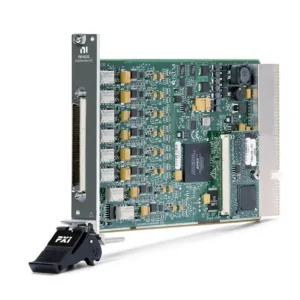
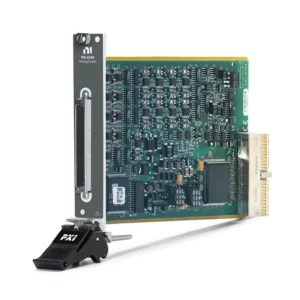
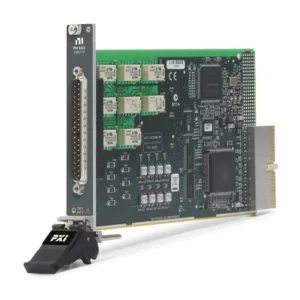
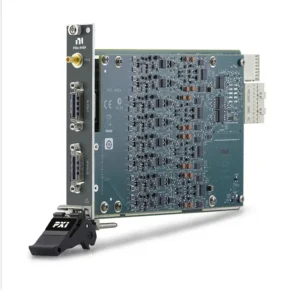
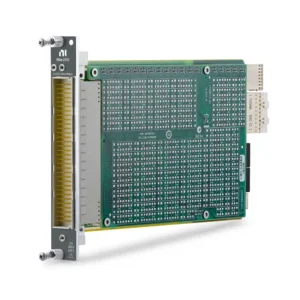
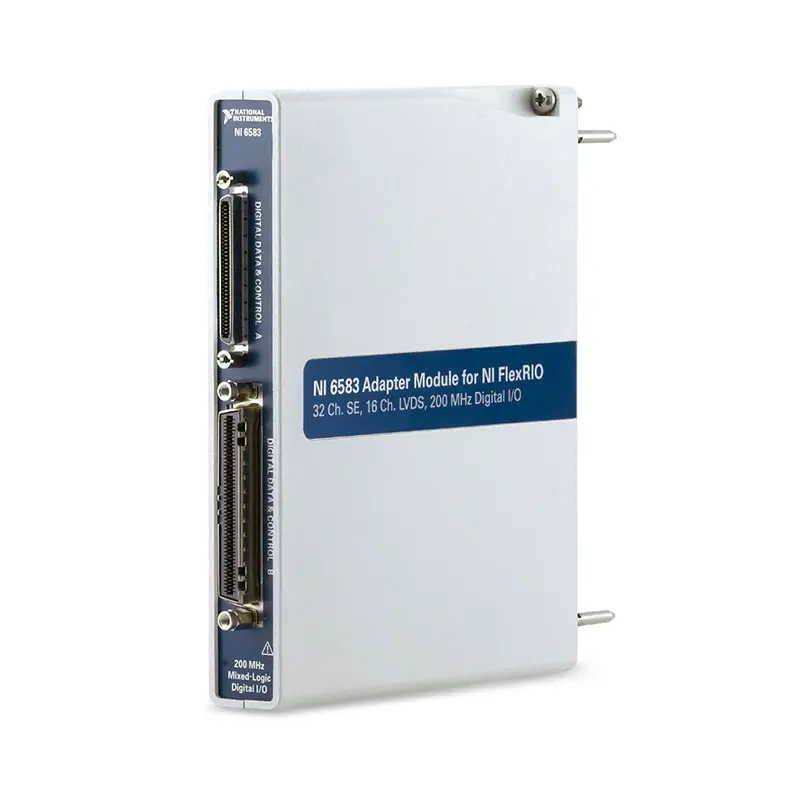
The NI-6583 is a 32-channel high-speed digital I/O adapter module for FlexRIO designed for custom digital communication, high-speed device testing, protocol implementation, digital waveform generation, and real-time FPGA-based data processing.
When combined with a compatible FlexRIO FPGA module, the NI-6583 provides engineers with a programmable digital instrumentation platform capable of acquiring and generating high-speed digital signals while implementing application-specific timing, triggering, protocol, and processing functions directly in FPGA hardware.
The NI-6583 is particularly useful for semiconductor test, electronic validation, digital interface testing, custom protocol development, aerospace and defense systems, research, and automated test applications that require more flexibility than conventional fixed-function digital instruments.
Product Overview
The National Instruments NI-6583 is part of the NI FlexRIO adapter module family.
It provides 32 bidirectional digital I/O channels and supports high-speed digital operation with multiple electrical signaling standards.
A typical system architecture is:
Digital DUT → NI-6583 → FlexRIO FPGA Module → PXI/PXIe System → Host Application
The NI-6583 handles the physical digital interface while the associated FPGA implements custom digital logic, timing, triggering, protocol processing, and data movement.
Key Features
32 Digital I/O Channels
The NI-6583 provides 32 bidirectional digital I/O channels.
These channels can be used for digital acquisition, digital waveform generation, device communication, custom protocol implementation, and high-speed DUT interfacing.
Typical applications include:
- High-speed digital acquisition
- Digital waveform generation
- Device interface testing
- Protocol emulation
- Semiconductor validation
- Digital communication testing
- Custom instrumentation
- Automated electronic test
200 MHz Digital Operation
The NI-6583 supports high-speed digital operation at rates up to approximately 200 MHz, making it suitable for demanding digital test and communication applications.
The high-speed interface can be combined with FPGA logic to implement application-specific digital acquisition and generation architectures.
Bidirectional Digital I/O
The NI-6583 digital channels are designed for bidirectional operation.
Depending on the FPGA application and interface configuration, channels can participate in digital input or output operations.
This provides greater flexibility than hardware designed exclusively for acquisition or generation.
LVDS Support
The NI-6583 supports LVDS (Low-Voltage Differential Signaling), which is widely used for high-speed digital communication.
LVDS provides differential signaling with relatively low voltage swing, making it suitable for applications requiring:
- High data rates
- Low electrical noise
- High signal integrity
- Reliable differential communication
- Low-voltage digital interfaces
RS-422 Support
The NI-6583 also supports RS-422 differential signaling.
RS-422 is commonly used in industrial, aerospace, instrumentation, and embedded applications where differential communication and improved noise immunity are required.
Single-Ended Digital Signaling
In addition to differential signaling, the NI-6583 supports compatible single-ended digital interfaces.
This gives engineers additional flexibility when connecting the module to different DUT voltage and signaling architectures.
Programmable FPGA Interface
The NI-6583 is designed to operate with a compatible FlexRIO FPGA module.
The FPGA can implement custom digital functions such as:
- Digital pattern generation
- Pattern acquisition
- Custom triggering
- Protocol decoding
- Protocol generation
- Data framing
- State machines
- Timing engines
- Data reduction
- Real-time decision logic
Technical Specifications
| Parameter | Specification |
|---|---|
| Product Type | FlexRIO Digital I/O Adapter Module |
| Model | NI-6583 |
| Manufacturer | National Instruments |
| Platform | FlexRIO |
| Digital I/O Channels | 32 |
| I/O Direction | Bidirectional |
| Maximum Digital Clock Rate | Up to 200 MHz |
| Differential Signaling | LVDS / RS-422 |
| Single-Ended Signaling | Supported |
| FPGA Processing | Supported through Compatible FlexRIO FPGA Hardware |
| Custom Triggering | FPGA Programmable |
| Custom Protocol Implementation | Supported |
| Digital Acquisition | Supported |
| Digital Generation | Supported |
| Primary Applications | High-Speed Digital Test, Protocol Development, Semiconductor Validation and Custom Instrumentation |
How Does the NI-6583 Work?
The NI-6583 provides the physical interface between a digital DUT and a compatible FlexRIO FPGA.
A simplified signal path is:
Digital DUT ↔ NI-6583 ↔ FlexRIO FPGA ↔ PXIe System ↔ Host Software
Incoming digital signals can be transferred directly to FPGA logic for deterministic processing. Similarly, FPGA-generated digital patterns can be transferred through the NI-6583 to the DUT.
NI-6583 Is a FlexRIO Adapter Module
The NI-6583 is an adapter module and should not be treated as a complete standalone digital instrument.
A complete NI-6583 system normally requires:
- NI-6583 Digital I/O Adapter Module
- Compatible FlexRIO FPGA Module
- Compatible PXI/PXIe chassis when using PXI-based FlexRIO hardware
- Controller or host computer
- Compatible NI software
- FPGA application or supported instrument design
FlexRIO FPGA Integration
FlexRIO combines application-specific adapter modules with user-programmable FPGA hardware.
For the NI-6583, this architecture allows engineers to create custom digital instruments without designing a complete high-speed digital interface from the ground up.
A typical processing architecture is:
Digital Input → NI-6583 → FPGA Logic → Trigger / Protocol Processing → DMA → Host
For generation:
Host / FPGA Pattern → FPGA Timing Logic → NI-6583 → Digital DUT
High-Speed Digital Acquisition
The NI-6583 can be used to capture high-speed digital signals and transfer them to FPGA logic for deterministic analysis.
Potential acquisition applications include:
- Digital bus monitoring
- Pattern detection
- Digital protocol analysis
- Timing verification
- Event detection
- Digital state monitoring
- Device characterization
Digital Waveform Generation
The bidirectional architecture also enables the NI-6583 to participate in digital waveform and pattern generation applications.
FPGA logic can generate deterministic patterns and transmit them to a connected DUT through the NI-6583.
This is useful for:
- Device stimulation
- Protocol emulation
- Functional testing
- Digital interface validation
- Custom communication
- Production testing
Custom Digital Protocols
One of the primary advantages of combining the NI-6583 with FlexRIO is the ability to implement custom digital protocols.
Instead of relying only on predefined instrument protocols, engineers can program FPGA logic according to the timing and framing requirements of the DUT.
Custom protocol functions can include:
- Clock generation
- Clock recovery
- Data framing
- Command generation
- Response decoding
- Error detection
- Packet processing
- Custom state machines
LVDS Digital Testing
LVDS is commonly used in high-speed digital electronics because of its low-voltage differential architecture.
The NI-6583 can be incorporated into FlexRIO systems for testing LVDS-based devices and digital interfaces.
Typical applications can include:
- FPGA interfaces
- High-speed digital electronics
- Embedded communication interfaces
- Custom digital buses
- Electronic subsystem validation
RS-422 Digital Testing
The NI-6583 can also be used for systems requiring RS-422-compatible differential signaling.
RS-422 is frequently encountered in industrial, aerospace, defense, and instrumentation equipment.
The combination of differential I/O and programmable FPGA logic enables the NI-6583 to interface with application-specific RS-422 communication architectures.
Differential vs Single-Ended Signaling
| Feature | Differential Signaling | Single-Ended Signaling |
|---|---|---|
| Signal Representation | Voltage Difference Between Two Lines | Signal Relative to Reference |
| Noise Immunity | Higher | Lower |
| Typical Application | High-Speed / Noise-Sensitive Interfaces | General Digital I/O |
| NI-6583 Support | Yes | Yes, for Supported Standards |
Custom FPGA Triggering
Traditional digital instruments often provide a predefined set of trigger functions.
With the NI-6583 and FlexRIO, trigger logic can be implemented directly in FPGA hardware.
Examples include:
- Digital edge trigger
- Pattern trigger
- Multi-channel trigger
- Sequence trigger
- Protocol-specific trigger
- Timing-qualified trigger
- Custom event trigger
Deterministic Digital Processing
FPGA processing provides deterministic hardware-level execution.
Digital data does not need to be transferred to a desktop operating system before every decision is made.
For example:
Digital Input → FPGA Pattern Detection → Immediate Digital Output Response
This architecture can be useful when the application requires predictable response timing.
Digital Data Streaming
The NI-6583 can be used in high-throughput data acquisition systems where digital data is processed and transferred through the FlexRIO FPGA architecture.
The FPGA can reduce host bandwidth requirements by processing raw digital data before transferring only the required information.
Examples include:
- Pattern filtering
- Event extraction
- Packet processing
- Data compression
- Trigger-based acquisition
- Selective recording
Semiconductor Test Applications
The NI-6583 is useful for semiconductor and electronic device validation where custom digital interfaces must be generated and analyzed.
Potential applications include:
- IC functional testing
- Digital interface characterization
- FPGA validation
- ASIC validation
- Prototype testing
- Device communication testing
- Production test development
Electronic Validation
During electronic product development, engineers may need to test digital interfaces that cannot be addressed efficiently by conventional fixed-function instrumentation.
The NI-6583 provides a programmable platform for creating DUT-specific digital stimulus and acquisition logic.
This makes it useful for prototype development, design verification, subsystem validation, and automated electronic test.
FPGA and ASIC Validation
FPGA and ASIC devices often contain custom digital interfaces with application-specific timing requirements.
The NI-6583 can be paired with a FlexRIO FPGA module to create custom test logic for:
- Pattern generation
- Pattern checking
- Interface verification
- Timing validation
- Error detection
- Functional testing
Automated Test Applications
The NI-6583 can be integrated into automated test systems where digital DUT interfaces must be stimulated and monitored.
A typical test sequence may include:
- Initialize the FlexRIO FPGA system.
- Configure the NI-6583 digital interface.
- Configure FPGA timing and protocol logic.
- Generate a digital stimulus pattern.
- Capture the DUT response.
- Process the response in FPGA hardware.
- Compare the response against expected data.
- Transfer test results to the host.
- Record pass/fail status.
Production Test
The NI-6583 can also be incorporated into production test systems for devices that require custom high-speed digital interfaces.
FPGA-based processing can provide deterministic pattern generation and response analysis while the host software manages sequencing, data logging, reporting, and test-system control.
Aerospace and Defense Applications
Aerospace and defense systems frequently use specialized digital interfaces and deterministic communication architectures.
The programmable nature of FlexRIO allows the NI-6583 to be adapted for research, validation, simulation, and automated test applications involving supported digital electrical standards.
Research and Custom Instrumentation
The NI-6583 is particularly valuable when researchers require a digital instrument whose behavior cannot be completely defined by a conventional off-the-shelf instrument.
FPGA programmability allows the measurement architecture to be customized for experimental systems, prototype communication interfaces, and application-specific digital processing.
NI-6583 vs Conventional Digital I/O
| Feature | NI-6583 + FlexRIO | Conventional Digital I/O |
|---|---|---|
| Channel Count | 32 | Device Dependent |
| High-Speed Operation | Up to 200 MHz | Often Lower |
| User-Programmable FPGA | Yes | Usually No |
| Custom Protocols | Yes | Limited |
| Custom Triggering | Yes | Device Dependent |
| Real-Time Hardware Processing | Yes | Limited |
| Development Complexity | Higher | Lower |
NI-6583 vs NI-6584
The NI-6583 and NI-6584 are both high-speed FlexRIO digital adapter modules, but they are designed around different electrical interface requirements and application architectures.
When selecting between them, verify:
- Required electrical signaling standard
- Required channel count
- Required digital data rate
- Direction-control requirements
- DUT voltage levels
- Connector and cabling requirements
- Compatible FlexRIO FPGA module
The exact NI model should be selected according to the DUT electrical interface rather than channel count alone.
NI-6583 vs NI-6589
The NI-6583 and NI-6589 belong to the FlexRIO digital adapter family but target different high-speed digital interface requirements.
Selection should be based on the required signaling technology, channel architecture, maximum data rate, FPGA interface, and DUT connection requirements.
NI-6583 and FlexRIO FPGA Modules
The NI-6583 must be paired with compatible FlexRIO FPGA hardware.
Depending on the generation and application requirements, FlexRIO systems can provide:
- User-programmable FPGA resources
- Onboard DRAM
- High-throughput PCI Express communication
- DMA data transfer
- PXI/PXIe synchronization
- Real-time digital processing
Always verify the NI-6583 compatibility list for the exact FlexRIO FPGA module and software version before purchasing.
LabVIEW FPGA Integration
The NI-6583 is designed for programmable digital applications using the LabVIEW FPGA development environment and supported FlexRIO software.
A typical development architecture is:
Configure FlexRIO Target → Configure NI-6583 Interface → Develop FPGA Logic → Compile FPGA Design → Deploy → Acquire / Generate Digital Data
The FPGA application defines much of the instrument behavior, making software and FPGA design an important part of the complete NI-6583 system.
CLIP Integration
FlexRIO adapter modules use FPGA interface resources to connect the adapter hardware to the programmable FPGA.
Depending on the supported NI software architecture, Component-Level Intellectual Property (CLIP) can expose digital I/O, clocks, and other adapter resources to the FPGA design.
Always use the NI-6583-specific software support package and documentation for the selected FlexRIO hardware generation.
Signal Integrity Considerations
At high digital frequencies, signal integrity becomes an important part of system design.
Before connecting the NI-6583 to a DUT, consider:
- Electrical signaling standard
- Logic voltage levels
- Cable impedance
- Cable length
- Differential pair routing
- Termination
- Grounding
- Clock quality
- Connector pinout
- Signal skew
Clocking and Synchronization
High-speed digital interfaces require accurate clocking and synchronization.
The FlexRIO FPGA architecture allows clock and timing resources to be incorporated into custom digital applications.
Synchronization can be important when the NI-6583 operates with:
- Other FlexRIO modules
- Digitizers
- Signal generators
- Digital instruments
- PXI timing hardware
- External DUT clocks
System Integration Considerations
Before selecting the NI-6583, verify the complete digital interface requirements.
- Required number of digital channels
- Input/output direction requirements
- Required digital clock or data rate
- LVDS requirements
- RS-422 requirements
- Single-ended voltage requirements
- DUT electrical levels
- Connector and cable requirements
- Termination requirements
- Compatible FlexRIO FPGA hardware
- FPGA resource requirements
- Data streaming requirements
- PXIe chassis bandwidth
- Software compatibility
Troubleshooting NI-6583 Systems
If an NI-6583 system does not communicate correctly with a DUT, check the complete hardware and FPGA configuration.
- Verify that the NI-6583 is correctly connected to a compatible FlexRIO FPGA module.
- Confirm that the FlexRIO FPGA module is detected by the system.
- Verify the required NI software support.
- Check the FPGA bitfile and interface configuration.
- Verify the selected electrical signaling standard.
- Check DUT voltage levels.
- Verify connector pinout and cable wiring.
- Check differential-pair polarity where applicable.
- Verify clock frequency and timing.
- Check termination and signal integrity.
- Verify FPGA input/output direction control.
- Check trigger logic.
- Verify DMA and host data transfer.
How to Choose a FlexRIO Digital I/O Module
Before purchasing a FlexRIO digital adapter module, determine:
- Required digital channel count
- Required electrical standard
- Single-ended or differential signaling
- Required clock frequency
- Required data throughput
- Input/output direction requirements
- Custom protocol requirements
- Triggering requirements
- FPGA processing requirements
- Compatible FlexRIO FPGA hardware
- Connector and cabling requirements
Industries
- Semiconductor Test
- Electronic Validation
- Aerospace and Defense
- Telecommunications
- Automated Test
- Electronics Manufacturing
- Scientific Research
- Embedded Systems
- Industrial Electronics
- Research and Development
Applications
High-Speed Digital Acquisition
The NI-6583 can capture high-speed digital signals and transfer them directly to programmable FPGA logic for deterministic processing.
Digital Pattern Generation
FPGA-generated digital patterns can be transmitted through the NI-6583 to stimulate and test digital devices.
LVDS Interface Testing
The NI-6583 can be incorporated into test systems for compatible LVDS digital interfaces requiring high-speed differential signaling.
RS-422 Interface Testing
The module can support RS-422-based digital test and communication applications through its differential interface capabilities.
Custom Protocol Development
User-programmable FPGA logic allows engineers to implement application-specific digital protocols, timing engines, and communication state machines.
Semiconductor Validation
The NI-6583 can be used for FPGA, ASIC, IC, and other semiconductor device interface testing and functional validation.
Automated Test
High-speed digital stimulus and response analysis can be incorporated into automated electronic test sequences using the NI-6583 and compatible FlexRIO FPGA hardware.
Recommended Related Products
| NI-6583 | 32-channel high-speed FlexRIO digital I/O adapter module for differential and single-ended digital applications. |
| NI-6584 | FlexRIO digital adapter module for high-speed digital interface and custom FPGA-based test applications. |
| NI-6589 | High-speed FlexRIO digital adapter module for demanding digital communication and validation systems. |
| PXIe-7975R | FlexRIO FPGA module for custom high-performance FPGA processing and digital instrumentation. |
| PXIe-7976R | High-performance FlexRIO FPGA module with substantial FPGA resources and onboard DRAM. |
Why Choose NI-6583?
- 32 bidirectional digital I/O channels
- Up to 200 MHz digital operation
- LVDS differential signaling support
- RS-422 support
- Supported single-ended digital operation
- FlexRIO architecture
- User-programmable FPGA processing
- Custom digital pattern generation
- High-speed digital acquisition
- Custom triggering
- Custom protocol implementation
- Deterministic FPGA processing
- High-throughput digital data handling
- Suitable for semiconductor test
- Suitable for electronic validation
- Suitable for automated test
- Suitable for custom instrumentation
Frequently Asked Questions
What is the NI-6583?
The NI-6583 is a 32-channel high-speed digital I/O adapter module for FlexRIO designed for digital acquisition, digital generation, custom protocol implementation, and FPGA-based signal processing.
How many digital channels does NI-6583 have?
The NI-6583 provides 32 bidirectional digital I/O channels.
What is the maximum digital rate of NI-6583?
The NI-6583 supports high-speed digital operation at rates up to approximately 200 MHz, depending on the interface and application configuration.
Does NI-6583 support LVDS?
Yes. The NI-6583 supports LVDS differential signaling for compatible high-speed digital interfaces.
Does NI-6583 support RS-422?
Yes. The NI-6583 supports compatible RS-422 differential signaling.
Are NI-6583 channels bidirectional?
Yes. The digital I/O architecture supports bidirectional operation, with the exact behavior controlled by the FPGA application and hardware configuration.
Is NI-6583 a standalone digital instrument?
No. The NI-6583 is a FlexRIO adapter module and requires compatible FlexRIO FPGA hardware to form a complete programmable digital instrument.
Can NI-6583 generate digital patterns?
Yes. When paired with a compatible FlexRIO FPGA module, the NI-6583 can be used to generate deterministic digital patterns for DUT stimulation and functional testing.
Can NI-6583 acquire digital signals?
Yes. The NI-6583 can capture digital signals and transfer the data directly to FPGA logic for processing, triggering, protocol analysis, or host transfer.
Can NI-6583 implement custom digital protocols?
Yes. Custom protocol engines, state machines, framing logic, timing functions, and trigger conditions can be implemented in the associated FlexRIO FPGA.
Can NI-6583 be used for semiconductor testing?
Yes. Semiconductor validation and electronic device testing are important NI-6583 applications, particularly when the DUT requires a custom high-speed digital interface.
Can NI-6583 be used for FPGA and ASIC testing?
Yes. The NI-6583 can be used to generate stimulus patterns and capture responses from FPGA, ASIC, and other digital devices when their electrical interface requirements are compatible.
Can NI-6583 be used with LabVIEW FPGA?
Yes. The NI-6583 is designed for programmable FlexRIO applications and can be integrated with compatible LabVIEW FPGA development environments.
Can NI-6583 be used with PXIe-7975R?
The NI-6583 belongs to the adapter-module generation used with compatible FlexRIO FPGA modules. Exact compatibility with the PXIe-7975R should be verified against the applicable NI hardware compatibility documentation and software version before system configuration.
What is the difference between NI-6583 and NI-6584?
Both are FlexRIO digital adapter modules, but their electrical interfaces and performance characteristics are intended for different digital test requirements. Selection should be based on channel architecture, signaling standard, voltage levels, speed, connector requirements, and compatible FlexRIO FPGA hardware.
What should I check before purchasing NI-6583?
Verify the required channel count, electrical signaling standard, maximum digital rate, DUT voltage levels, bidirectional I/O requirements, connector and cable configuration, FPGA processing requirements, compatible FlexRIO FPGA module, PXIe system architecture, software support, and exact NI part number.
Conclusion
The NI-6583 32-Channel High-Speed Digital I/O Adapter Module for FlexRIO provides a flexible interface for digital acquisition, waveform generation, differential communication, custom protocols, and deterministic FPGA processing. Its 32-channel architecture, high-speed operation, LVDS and RS-422 capabilities, and FlexRIO integration make it particularly suitable for semiconductor validation, FPGA and ASIC testing, electronic design verification, automated test, research, and custom digital instrumentation.