




Product Introduction
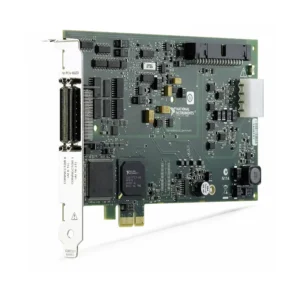
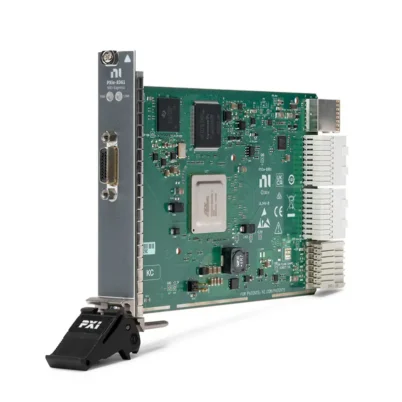
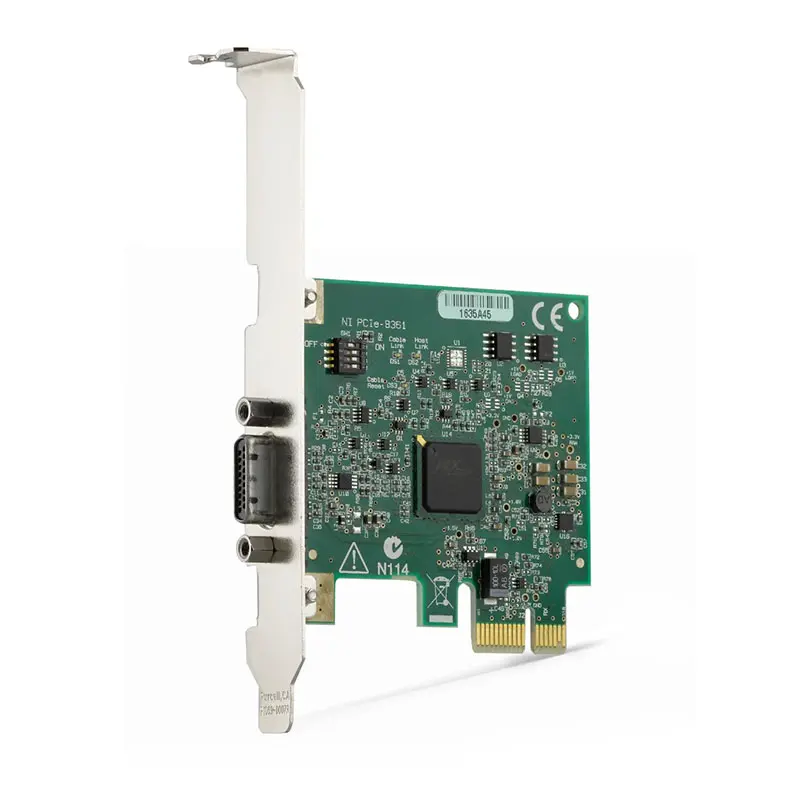
The NI PCIe-8361 is an MXI-Express interface card designed to connect a desktop, workstation, industrial PC, or rackmount computer to a compatible PXI or PXI Express chassis for remote system control.
Installed in a compatible PCI Express slot in the host computer, the PCIe-8361 forms part of an NI MXI-Express remote-control link. When paired with the appropriate chassis-side MXI interface and cable, it extends the computer’s PCI Express connectivity to the modular instrumentation system.
This architecture allows engineers to use a standard external computer as the controller for a PXI-based automated test, data acquisition, electronic validation, RF test, semiconductor test, and laboratory measurement system.
Product Overview
The National Instruments PCIe-8361 is not a measurement or data acquisition card. Its primary function is to provide the host-computer side of an MXI-Express remote-control connection.
A typical system architecture is:
Host PC → PCIe-8361 → MXI-Express Cable → Chassis-Side MXI Interface → PXI / PXI Express Chassis
From the operating system and application software perspective, compatible PXI hardware connected through the MXI link can operate as part of the host-controlled test system.
Key Features
MXI-Express Remote Control
The PCIe-8361 enables MXI-Express remote control of compatible modular instrumentation systems.
This architecture is useful when the system designer wants to use an external computer rather than installing an embedded controller directly inside the PXI chassis.
PCI Express Host Interface
The PCIe-8361 installs in a compatible PCI Express slot in the host computer.
A typical configuration is:
Desktop / Industrial PC → PCI Express Slot → PCIe-8361 → MXI Link → PXI System
This makes the card suitable for PC-controlled modular test and measurement systems.
External PC Control of PXI Systems
The PCIe-8361 allows a compatible external computer to function as the host controller for a PXI-based system.
This can be useful when the host computer requires:
- High-performance processors
- Large system memory
- Specialized graphics hardware
- Additional PCI Express expansion cards
- Custom storage configurations
- Corporate-standard computer hardware
- Easy computer replacement or upgrade
Transparent PCI Express Connectivity
MXI-Express technology extends the PCI Express bus between the host computer and compatible modular instrumentation hardware.
Unlike Ethernet-based instrument control, MXI-Express is designed around PCI Express bus extension rather than conventional network communication.
This makes it particularly appropriate for high-performance modular instrumentation systems.
PXI and PXI Express System Integration
The PCIe-8361 can be used as part of compatible PXI and PXI Express remote-control configurations.
The exact chassis-side remote-control module, cable, and supported chassis configuration must be verified before purchasing replacement hardware.
External Controller Architecture
Using the PCIe-8361 allows the system controller to remain outside the PXI chassis.
This architecture separates:
Computer Processing Resources
from:
PXI Measurement and Instrumentation Resources
This can simplify system upgrades and provide greater flexibility in selecting the host computer.
Suitable for Automated Test Systems
The PCIe-8361 can be used in automated test systems containing compatible PXI instruments such as:
- Data acquisition modules
- Digital multimeters
- Oscilloscopes and digitizers
- Signal generators
- Switch modules
- RF instruments
- Source measure units
- Programmable power supplies
- Digital I/O modules
Technical Specifications
| Parameter | Specification |
|---|---|
| Product Type | MXI-Express Interface Card |
| Model | PCIe-8361 |
| Manufacturer | National Instruments |
| Host Interface | PCI Express |
| Technology | MXI-Express |
| Installation Location | Host Computer |
| Primary Function | Remote Control / PCI Express Bus Extension |
| System Type | Compatible PXI / PXI Express Systems |
| External Computer Control | Supported |
| Measurement Channels | None |
| Analog Input | None |
| Analog Output | None |
| Primary Application | PXI Remote Control and Modular Test System Integration |
How Does the PCIe-8361 Work?
The PCIe-8361 is installed in the host computer and connected through an MXI-Express cable to the appropriate remote-control interface on the PXI system.
A simplified architecture is:
Application Software → Host PC → PCIe-8361 → MXI-Express Cable → PXI Remote Controller → PXI Chassis → Instrument Modules
The host computer runs the operating system, test software, instrument drivers, and user application, while the PXI chassis contains the measurement and instrumentation modules.
What Is MXI-Express?
MXI-Express is a remote-control and bus-extension technology used to connect a host computer to compatible PXI and PXI Express instrumentation systems.
Rather than placing the system controller inside the chassis, an MXI configuration allows the processing computer to remain external.
A typical architecture is:
External PC ↔ MXI-Express Link ↔ PXI Chassis
This provides an alternative to using an embedded PXI controller.
Host-Side and Chassis-Side MXI Hardware
A complete MXI-Express connection normally requires hardware on both sides of the link.
The host side contains:
Computer → PCIe-8361
The PXI system side contains:
Compatible MXI Remote-Control Interface → PXI / PXI Express Chassis
The two sides are connected using a compatible MXI cable.
Therefore, purchasing a PCIe-8361 alone does not create a complete remote-control system unless the required chassis-side interface and cable are already installed.
PCIe-8361 Is Not a PXI Controller
The PCIe-8361 should not be confused with an embedded PXI controller.
An embedded controller contains the processor, memory, storage, and operating system inside the PXI chassis.
The PCIe-8361 instead allows an external computer to control the chassis through an MXI-Express link.
MXI Remote Control vs Embedded PXI Controller
| Feature | PCIe-8361 MXI System | Embedded PXI Controller |
|---|---|---|
| Computer Location | External | Inside PXI Chassis |
| Host Processor | External PC CPU | Embedded Controller CPU |
| Host Memory | External PC RAM | Controller RAM |
| Storage | External PC | Embedded Controller |
| Connection | MXI-Express | Direct Chassis Connection |
| PC Hardware Flexibility | High | Controller Dependent |
| System Integration | Requires MXI Hardware | Self-Contained |
| Typical Application | PC-Controlled Test System | Integrated PXI System |
Why Use an External PC?
An MXI-Express architecture can be advantageous when a test system requires computing resources that are easier to provide with an external workstation or industrial PC.
Examples include:
- High-core-count processors
- Large memory capacity
- High-capacity storage
- GPU acceleration
- Additional PCIe cards
- Specialized computer interfaces
- Corporate-standardized PCs
The computer can also be upgraded independently of the PXI instrumentation chassis.
PCIe-8361 vs Ethernet Instrument Control
| Feature | PCIe-8361 / MXI-Express | Ethernet Control |
|---|---|---|
| Architecture | PCI Express Bus Extension | Network Communication |
| Primary Purpose | PXI Remote Control | Network Instrument Control |
| Host Integration | PCIe-Based | IP Network-Based |
| Hardware Required | Compatible MXI Hardware | Ethernet Interface |
| Typical Application | Modular PXI Systems | LAN Instruments |
PCIe-8361 vs PCIe-8362
The PCIe-8361 and PCIe-8362 belong to the NI MXI-Express interface family.
Although their model numbers are similar, they should not automatically be considered interchangeable.
Before replacing one with another, verify:
- Host interface requirements
- MXI link configuration
- Number of required links
- Compatible chassis-side controller
- MXI cable type
- Chassis compatibility
- Driver and software support
PCIe-8361 vs PCIe-8364
Both PCIe-8361 and PCIe-8364 are associated with NI MXI-Express remote-control systems, but they belong to different configurations and should be selected according to the complete host-to-chassis architecture.
When comparing these devices, evaluate:
- MXI generation
- Required bandwidth
- PCI Express host requirements
- Chassis-side interface
- Cable compatibility
- Existing system hardware
- Software support
PCIe-8361 vs PCIe-8398
The PCIe-8398 represents a newer generation of PCI Express remote-control interface technology compared with older MXI-Express products such as the PCIe-8361.
A newer remote-control interface can provide advantages for newer PXI Express systems, but it should not be treated as a direct replacement without checking the complete MXI link.
Migration considerations include:
- Host interface generation
- Chassis-side remote controller
- MXI cable
- Chassis compatibility
- Bandwidth requirements
- Operating system
- Driver support
PXI Remote Control Applications
The PCIe-8361 can be used to build PC-controlled PXI test systems for:
- Automated test
- Data acquisition
- Electronic validation
- Production test
- RF test
- Semiconductor test
- Industrial measurement
- Research and development
- Laboratory automation
Automated Test System Architecture
A typical automated test configuration can be:
Test Software → Host Computer → PCIe-8361 → MXI-Express → PXI Chassis → PXI Instruments → DUT
The PXI chassis can contain multiple measurement and stimulus modules while the external computer performs test sequencing, data processing, analysis, storage, and user-interface functions.
Data Acquisition Systems
An MXI-controlled chassis can contain compatible PXI data acquisition modules for high-channel-count measurement applications.
A typical architecture is:
Sensors → PXI DAQ Modules → PXI Chassis → MXI-Express → PCIe-8361 → Host Computer
The PCIe-8361 itself does not acquire sensor signals; it provides the communication link between the PXI system and host computer.
RF Test Systems
PXI RF instruments can be controlled from an external computer through a compatible MXI-Express architecture.
A system may contain:
- RF signal generators
- RF signal analyzers
- Vector signal transceivers
- RF switches
- Digitizers
- Timing modules
The PCIe-8361 provides the host-side remote-control interface rather than performing RF measurement itself.
Electronic Validation
Electronic validation systems often combine several PXI instruments in one chassis.
For example:
Host PC → PCIe-8361 → PXI Chassis → DMM + Switch + SMU + DAQ + Digitizer → DUT
This architecture allows the external computer to coordinate multiple instruments through one modular PXI system.
Production Test
The PCIe-8361 can be used in production test stations where an industrial or rackmount computer controls a PXI instrumentation chassis.
Possible advantages include:
- Centralized test software
- Flexible PC configuration
- Independent computer upgrades
- Modular instrumentation expansion
- Integration with factory IT systems
- Large local storage capacity
Chassis Compatibility
The PCIe-8361 should be selected as part of a complete MXI system rather than as an independent interface card.
Before purchase, verify:
- PXI or PXI Express chassis model
- Chassis-side remote-control module
- MXI generation
- MXI cable model
- Required cable length
- Host PCI Express slot
- Operating system
- NI software and driver compatibility
MXI Cable Compatibility
The MXI cable is a critical component of the remote-control link.
Do not select a cable based only on connector appearance. Verify that the cable is specified for the exact host-side and chassis-side MXI hardware.
When replacing an existing PCIe-8361, retaining the existing cable may be possible only if the replacement interface is compatible with the same MXI generation and link architecture.
PCI Express Slot Compatibility
Before installing the PCIe-8361, verify that the host computer provides an appropriate PCI Express expansion slot and that the computer platform is compatible with the required NI software environment.
Important factors include:
- Available PCI Express slot
- Physical card clearance
- Computer BIOS / UEFI
- Operating system
- NI driver support
- Other installed PCI Express devices
Software Integration
Once the MXI-Express link is correctly installed and recognized, the host computer can run compatible NI instrument drivers and application software for the modules installed in the chassis.
Depending on the test system, software may include:
- LabVIEW
- LabWindows/CVI
- TestStand
- NI instrument drivers
- NI-DAQmx
- NI-SCOPE
- NI-DMM
- NI-SWITCH
- Other compatible PXI instrument drivers
Legacy System Replacement
The PCIe-8361 is particularly relevant when maintaining an existing MXI-controlled PXI test system.
In many legacy systems, the host card, chassis controller, MXI cable, chassis, drivers, and application software were originally validated together.
When replacing an existing PCIe-8361, verify:
- Exact PCIe-8361 model
- Host computer configuration
- PCI Express slot
- Chassis model
- Chassis-side MXI controller
- MXI cable model
- Cable length
- Operating system
- NI driver version
- Installed PXI modules
- Application software
- System BIOS / UEFI configuration
Replacing only one component of an existing MXI system with a newer-generation device may require replacing the corresponding chassis-side interface and cable as well.
Troubleshooting an MXI-Express System
If the host computer does not detect the PXI system through the PCIe-8361, check the complete communication chain.
A systematic troubleshooting sequence is:
- Power down the host computer and PXI system according to the required procedure.
- Verify that the PCIe-8361 is correctly seated in the PCI Express slot.
- Verify the chassis-side MXI interface installation.
- Check both ends of the MXI cable.
- Confirm that the cable and controllers are compatible.
- Verify the required system power-up sequence.
- Check whether the host operating system detects the hardware.
- Verify NI driver installation.
- Check the PXI modules in NI system configuration software.
How to Choose a PXI Remote Control Interface
Before selecting the PCIe-8361 or another PXI remote-control solution, determine:
- PXI chassis model
- PXI or PXI Express architecture
- Host computer interface
- Required data bandwidth
- Number of chassis connections
- Required cable length
- Chassis-side controller compatibility
- Available PCI Express slot
- Operating system compatibility
- Driver compatibility
- Existing legacy hardware
- Future system expansion requirements
Industries
- Automated Test
- Aerospace and Defense
- Automotive Testing
- Electronic Manufacturing
- Semiconductor Test
- RF and Wireless Test
- Industrial Measurement
- Research and Development
- Laboratory Automation
- Production Test
Applications
PXI Remote Control
The PCIe-8361 provides the host-side interface for remotely controlling compatible PXI systems from an external PCI Express computer.
Automated Test
A desktop, workstation, or industrial computer can control multiple PXI measurement instruments through the MXI-Express link.
Data Acquisition
PXI DAQ modules can transfer measurement data to a host computer through a compatible PCIe-8361 MXI system.
Electronic Validation
External computers can coordinate PXI digitizers, DMMs, switches, SMUs, DAQ modules, and other instruments in electronic validation systems.
Production Test
The PCIe-8361 is suitable for PC-controlled production test systems where modular PXI instrumentation is installed separately from the host computer.
Legacy PXI System Maintenance
The PCIe-8361 can be important for maintaining existing MXI-Express systems where the chassis controller, cable, software, and host architecture were originally designed around this generation of hardware.
Recommended Related Products
| PCIe-8361 | PCI Express MXI-Express host interface for compatible PXI remote-control systems. |
| PCIe-8362 | Related MXI-Express host interface for compatible remote-control architectures. |
| PCIe-8364 | Related NI MXI-Express interface for PXI and PXI Express remote-control applications. |
| PCIe-8398 | Newer-generation PCI Express remote-control interface for compatible PXI Express systems. |
| PXIe-8364 | PXI Express MXI interface used in compatible remote-control and system-expansion configurations. |
Why Choose PCIe-8361?
- MXI-Express remote-control architecture
- PCI Express host interface
- External PC control of compatible PXI systems
- PCI Express bus extension
- Flexible host-computer selection
- Suitable for automated test
- Suitable for data acquisition systems
- Suitable for electronic validation
- Suitable for production test
- Compatible with modular PXI system architectures
- Useful for legacy MXI system maintenance
Frequently Asked Questions
What is the NI PCIe-8361?
The NI PCIe-8361 is an MXI-Express host interface card used to connect a PCI Express-based computer to a compatible PXI or PXI Express remote-control system.
Is PCIe-8361 a data acquisition card?
No. The PCIe-8361 does not provide analog or digital measurement channels. Its primary function is PXI system remote control and PCI Express bus extension.
Where is the PCIe-8361 installed?
The PCIe-8361 is installed in a compatible PCI Express expansion slot in the host computer.
What is MXI-Express?
MXI-Express is a PCI Express-based remote-control technology used to connect external computers with compatible PXI and PXI Express systems.
Can PCIe-8361 control a PXI chassis?
Yes, when it is used with the correct chassis-side MXI interface, compatible cable, supported chassis, and software configuration.
Does PCIe-8361 work by itself?
No. A complete remote-control link requires compatible hardware on the chassis side and the appropriate MXI cable.
Can PCIe-8361 replace an embedded PXI controller?
It provides an alternative system architecture rather than functioning as an embedded controller itself. With the appropriate MXI hardware, an external PC can perform the host-computing role instead of an embedded PXI controller.
Is PCIe-8361 an Ethernet controller?
No. MXI-Express is based on PCI Express bus-extension technology and should not be confused with Ethernet or LAN instrument control.
Can PCIe-8361 be used for automated test?
Yes. It can connect an external computer to compatible PXI instrumentation used for automated test, electronic validation, data acquisition, production test, and other modular measurement applications.
Can I use any MXI cable with PCIe-8361?
No. The cable must be compatible with the PCIe-8361 and the corresponding chassis-side MXI interface. Cable compatibility should be verified using the exact hardware models.
Can PCIe-8361 directly replace PCIe-8364?
Not automatically. Verify the MXI generation, chassis-side controller, cable, chassis compatibility, host interface, driver support, and complete system architecture before substitution.
Can PCIe-8361 directly replace PCIe-8398?
These interfaces belong to different generations of remote-control hardware. A migration may require changes to the chassis-side interface and cable, so they should not be treated as direct drop-in replacements without system-level compatibility verification.
What should I check before purchasing PCIe-8361?
Verify the host computer PCI Express slot, PXI chassis model, chassis-side MXI controller, MXI cable model, required cable length, operating system, NI driver support, installed PXI hardware, and existing application software.
Why would I use PCIe-8361 instead of an embedded PXI controller?
An external-PC architecture can provide greater flexibility in processor, memory, storage, GPU, and computer configuration, while allowing the PXI chassis to remain dedicated to modular instrumentation.
What should I check when replacing a failed PCIe-8361?
Check the exact host card, chassis-side MXI controller, cable, chassis model, PCI Express slot, operating system, driver version, installed PXI modules, and application software. For a legacy system, matching the existing MXI architecture can reduce migration work.
Conclusion
The NI PCIe-8361 MXI-Express Interface Card provides a PCI Express-based remote-control connection between an external host computer and compatible PXI or PXI Express instrumentation systems. It is designed for modular automated test, data acquisition, electronic validation, production test, RF test, semiconductor test, research, and legacy PXI system maintenance where an external PC is preferred over an embedded PXI controller.