






Показаны все (4)

Фильтр по цене
Фильтровать по брендам

- Национальные инструменты
- PCI ModulesPCI Modules
- Системы PXI
- PXI Шасси
- PXI Контроллер
- Модули PXI
- PXI Semiconductor Test
- PXI FPGA and RIO Modules
- PXI MXI Interfaces
- PXI Programmable Power Supplies & SMU
- PXI Sensor Measurements
- Генераторы сигналов PXI
- PXI Vision
- Сбор данных PXI
- Осциллографы/Цифровые преобразователи PXI
- PXI Счетчики/Таймеры
- PXI РЧ и беспроводное тестирование
- PXI GPIB, Ethernet and VXI
- PXI-коммутаторы
- Цифровые мультиметры PXI
- Цифровой ввод-вывод PXI
- Промышленная связь PXI
- Динамический анализ сигналов PXI
- Передача данных PXI
- CompactDAQ Systems
- CompactRIO Systems
- PCI Modules
- USB Devices
- Устройство программно-определяемого радио USRP
- ключи
- ТекТроникс


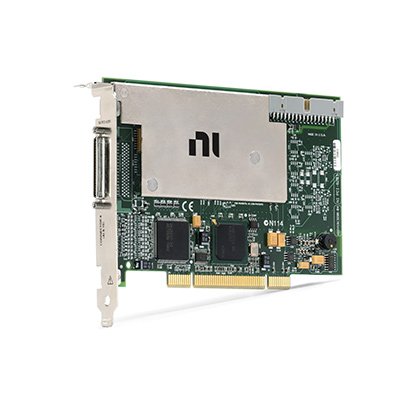
NI PCI Dynamic Signal Acquisition
NI PCI Dynamic Signal Acquisition devices provide high-resolution, simultaneously sampled inputs for sound, vibration, acoustic and frequency-domain measurements. These computer-based DSA boards combine 24-bit delta-sigma conversion, integrated anti-alias filtering, wide dynamic range, AC/DC coupling and IEPE sensor conditioning.
PCI DSA devices are designed for applications where signal quality, phase matching and frequency-domain performance are more important than general-purpose channel flexibility. Selecting the correct device requires reviewing sensor type, input range, sample rate, usable bandwidth, channel count, IEPE excitation, coupling, synchronization, data volume and NI-DAQmx compatibility.
What Is Dynamic Signal Acquisition?
Dynamic signal acquisition is the synchronized measurement of time-varying signals such as sound pressure, acceleration, vibration, force and voltage. DSA devices are optimized for signals that require low noise, high dynamic range, accurate phase relationships and spectral analysis.
A typical PCI dynamic signal acquisition device includes:
- Dedicated analog-to-digital converters for simultaneous sampling
- 24-bit delta-sigma conversion
- Analog and digital anti-alias filtering
- Software-selectable input ranges or gain settings
- AC or DC input coupling
- Integrated constant-current excitation for compatible IEPE sensors
- Hardware triggering and clock synchronization
- BNC signal connections
- NI-DAQmx driver support
Compared with a multiplexed DAQ device, a DSA board normally provides fewer channels but better dynamic range, frequency-domain performance and channel-to-channel timing.
Representative NI PCI DSA Devices
| Модель | Unique Category | Core Architecture | Best Fit |
|---|---|---|---|
| PCI-4461 | Dynamic Signal Input and Output | Two 24-bit analog inputs and two 24-bit analog outputs operating at rates up to 204.8 kS/s | Stimulus-response, audio, frequency-response and transfer-function measurements |
| PCI-4462 | Four-Channel Dynamic Signal Input | Four simultaneously sampled, 24-bit inputs operating at rates up to 204.8 kS/s per channel | Sound, vibration, acoustic, modal and machine-condition measurements |
The PCI-4461 is appropriate when the system must generate a controlled dynamic stimulus while measuring the response. The PCI-4462 provides four input channels for applications that do not require integrated analog output.
PCI-4461 and PCI-4462 use conventional PCI rather than PCI Express. Confirm that the host computer provides a compatible PCI slot and that the selected operating system and NI-DAQmx version support the exact device.
Key PCI Dynamic Signal Acquisition Features
24-Bit Delta-Sigma Conversion
Delta-sigma converters use oversampling and digital filtering to provide high dynamic range and low noise for audio-frequency and mechanical signals. They are well suited to spectral measurements in which small frequency components must be detected beside larger signals.
Nominal 24-bit resolution does not mean that all 24 bits are noise-free. Usable performance depends on the selected input range, sample rate, signal frequency, input noise, distortion and environmental interference.
Simultaneous Sampling
Each input channel uses a dedicated conversion path so all channels are sampled together. This preserves phase and timing relationships between microphones, accelerometers or other sensors.
Simultaneous sampling is important for:
- Transfer-function measurements
- Phase analysis
- Modal testing
- Sound-intensity measurements
- Microphone arrays
- Multiaxis vibration acquisition
- Rotating-machinery analysis
Integrated Anti-Alias Filtering
Signals above half the sample rate can appear as false lower-frequency components after digitization. DSA devices use analog and digital filters to attenuate out-of-band signals before they can alias into the measurement range.
The digital filter response normally tracks the configured sample rate. Maximum sample rate and usable measurement bandwidth are therefore not identical. Review the exact passband, transition band and stopband specifications for the selected rate.
High Dynamic Range
Dynamic range describes the difference between the largest measurable signal and the smallest signal that can be distinguished above the system noise. High dynamic range is important when measuring low-level vibration or acoustic components in the presence of larger signals.
Actual system dynamic range also depends on the sensor, cabling, grounding, input range, mounting method and environmental noise.
How to Select a PCI Dynamic Signal Acquisition Device
1. Identify the Sensor Electrical Interface
Begin with the complete sensor model and datasheet. Confirm whether the sensor provides:
- IEPE voltage output
- Externally conditioned voltage
- Charge output
- Microphone preamplifier output
- Bridge output
- Current-loop output
- Another specialized interface
Compatible IEPE accelerometers and microphones can use the board’s integrated constant-current excitation. Charge-mode piezoelectric sensors require a charge amplifier or charge-capable conditioner and cannot be connected as if they were IEPE sensors.
Bridge sensors, thermocouples and RTDs normally require different signal-conditioning hardware.
2. Select the Required Channel Count
Determine how many signals must be measured simultaneously. Include reference sensors, tachometer signals and possible future expansion.
The PCI-4462 provides four input channels, while the PCI-4461 provides two inputs and two outputs. Higher-channel-count systems may require multiple synchronized boards or migration to PXI, PXIe or CompactDAQ sound and vibration hardware.
3. Determine the Measurement Bandwidth
Select the highest signal frequency that must be measured accurately. The measurement bandwidth should include useful harmonics, bearing frequencies, acoustic content and transient components required by the analysis.
Then select a sample rate that provides the necessary usable bandwidth after the DSA filter response is considered. Simply selecting twice the highest signal frequency may not provide sufficient transition-band margin.
4. Choose the Input Range
Select the smallest input range that accommodates the maximum expected signal, sensor offset and transient peaks. A range that is too small can overload or clip the waveform, while a range that is unnecessarily large reduces effective resolution for low-level signals.
Estimate the expected sensor voltage using:
Sensor output = physical amplitude × sensor sensitivity.
For example, accelerometer sensitivity may be specified in mV/g, while microphone sensitivity may be specified in mV/Pa. Include peak amplitude rather than only RMS amplitude when checking the input range.
5. Select AC or DC Coupling
AC coupling blocks the DC component of the signal and is commonly used for vibration and acoustic measurements. It allows the dynamic waveform to be measured without a large DC bias consuming the selected input range.
DC coupling preserves both the static and dynamic signal components. It is appropriate for externally conditioned voltage sources, low-frequency measurements and applications requiring the signal offset.
AC coupling introduces a high-pass response. Verify the cutoff frequency when measuring very low-frequency vibration or slowly changing signals.
6. Confirm IEPE Excitation
IEPE sensors contain integrated electronics powered by a constant-current source through the same cable used for the measurement signal. When IEPE excitation is enabled, the channel supplies current and measures the resulting AC signal around the sensor bias voltage.
Before enabling IEPE, confirm:
- The sensor is IEPE compatible
- The excitation-current requirement
- The sensor bias-voltage range
- The required cable type and length
- The sensor settling time after excitation is enabled
Disable IEPE excitation when measuring ordinary voltage sources or sensors powered by separate signal-conditioning hardware unless the documentation explicitly permits it.
7. Review Phase and Timing Requirements
Modal, acoustic and transfer-function applications depend on channel-to-channel phase accuracy. Review channel phase matching, sample-clock accuracy and the synchronization method used across multiple devices.
When different converter families are combined, account for digital-filter delay. Two devices can start together but still produce sample streams with different group delays.
8. Determine Whether Analog Output Is Required
The PCI-4461 includes dynamic analog outputs that can generate excitation while its inputs measure the response. This architecture is useful for frequency-response, audio and electroacoustic testing.
The output signal may drive compatible high-impedance equipment, but it is not a power amplifier. Loudspeakers, shakers and other power loads normally require an external amplifier selected for the load and required output level.
9. Calculate the Continuous Data Rate
The approximate payload rate is:
Data rate = active channels × sample rate × transferred bytes per sample.
Use the transferred data type rather than only the ADC resolution. Include file-format overhead, timestamps, analysis results and output streams where applicable.
Long-duration recordings require adequate computer memory, sustained storage speed and properly configured software buffers. The complete application should be tested for the intended channel count and duration.
PCI DSA Compared with General-Purpose DAQ
| Функция | PCI Dynamic Signal Acquisition | General-Purpose DAQ |
|---|---|---|
| Converter Architecture | High-resolution delta-sigma conversion | SAR or multiplexed architecture, depending on model |
| Sampling | Simultaneous across dynamic input channels | Simultaneous or multiplexed, depending on model |
| Anti-Alias Filtering | Integrated filters that track the sample rate | May require external filtering |
| IEPE Excitation | Integrated on supported channels | Usually requires external conditioning |
| Dynamic Range | Optimized for low-noise spectral measurements | Optimized for measurement flexibility and broader DAQ functions |
| Best Fit | Sound, vibration, acoustic and modal analysis | General voltage, sensor, digital and counter measurements |
A general-purpose DAQ device may be sufficient for larger voltage signals or measurements that do not require IEPE excitation, high dynamic range or precise phase matching. DSA hardware is the better choice when frequency-domain accuracy and sensor conditioning are central requirements.
PCI DSA Compared with a Computer Sound Card
A professional sound card may be suitable for audio playback or basic recording, but it is not automatically a calibrated measurement instrument. PCI DSA devices provide documented input ranges, measurement accuracy, triggering, IEPE excitation and integration with automated test software.
Sound cards may also apply undocumented filtering, gain control or sample-rate conversion. These behaviors can make them unsuitable for calibrated vibration, acoustic or frequency-response measurements.
Sensor and Cable Considerations
Dynamic measurements are sensitive to sensor installation and cabling. Use low-noise cables appropriate for the sensor interface and installation environment.
Confirm:
- Sensor connector and cable type
- Cable capacitance and maximum recommended length
- Shielding and grounding method
- Environmental temperature and vibration exposure
- Sensor mounting method
- Expected cable movement
- Need for strain relief
- Calibration sensitivity and engineering units
Loose accelerometer mounting, moving cables, poor microphone placement and ground loops can produce measurement errors that cannot be corrected by increasing ADC resolution.
Grounding and Noise Control
PCI DSA devices are installed inside a computer and can be affected by grounding differences between the computer, sensor, test article and external equipment.
To reduce interference:
- Use shielded sensor cables
- Follow the sensor manufacturer’s grounding recommendation
- Avoid routing signal cables beside power or motor cables
- Review grounded and isolated sensor mounting
- Prevent unnecessary ground connections
- Use differential-compatible connections where supported
- Verify the computer chassis ground
If large ground-potential differences or hazardous voltages are present, use suitable isolation and signal-conditioning hardware. Do not rely on software settings to provide electrical isolation.
Delta-Sigma Filter Delay
Delta-sigma converters use digital filters that introduce a delay between the physical input signal and the delivered sample data. This delay is predictable but must be considered in timing-sensitive applications.
Filter delay matters when:
- Synchronizing DSA hardware with SAR-based DAQ devices
- Performing feedback or control calculations
- Comparing sensor data with digital events
- Measuring transient timing across different instruments
- Generating and acquiring signals in a stimulus-response system
Using one shared start trigger does not automatically compensate for different converter and filter delays. Apply the documented device delay in software or choose hardware with compatible measurement architectures.
Triggering and Synchronization
Hardware triggers allow an acquisition to begin relative to an external event. Multiple PCI devices may also share clocks or triggers through supported routing and external connections.
For multidevice systems, confirm:
- Start-trigger source and electrical level
- Sample-clock or reference-clock sharing
- Trigger-cable type and propagation delay
- RTSI or external synchronization requirements
- Group delay for each device family
- Acceptable channel-to-channel phase error
Several boards installed in one computer are not automatically synchronized. The clock and trigger architecture should be defined before the hardware is ordered.
Software and Analysis
PCI dynamic signal acquisition devices use NI-DAQmx for hardware detection, channel configuration, sample timing, triggering and data transfer. NI Measurement & Automation Explorer can be used to confirm device recognition and run supported self-tests.
LabVIEW can be used to create custom measurement and analysis applications. The LabVIEW Sound and Vibration Toolkit adds functions for frequency analysis, octave analysis, order tracking, distortion measurements, frequency response and related sound and vibration processing.
Typical analysis functions include:
- Fast Fourier transform and power spectrum
- Power spectral density
- Cross spectrum and coherence
- Transfer-function measurement
- Fractional-octave analysis
- Sound-level measurements
- Order analysis
- RMS, peak and crest-factor calculation
- Time waveform recording
Before purchasing legacy PCI hardware, verify the operating system, NI-DAQmx version, LabVIEW version and any required analysis-toolkit license.
Typical PCI Dynamic Signal Acquisition Applications
- Accelerometer and vibration measurement
- Microphone and acoustic testing
- Noise, vibration and harshness analysis
- Machine-condition monitoring
- Motor, gearbox, bearing and pump analysis
- Structural vibration and modal testing
- Audio and electroacoustic measurements
- Frequency-response testing
- Transfer-function and coherence measurement
- Rotating-machinery order analysis
- Environmental and product validation
- Research and laboratory measurements
Legacy PCI DSA Replacement
Replacing a PCI dynamic signal acquisition board requires more than matching the channel count and sample rate. The replacement may use a different form factor, converter architecture, filter response, input range, excitation source or synchronization method.
Compare the following before approving a replacement:
- PCI, PCI Express, PXI or CompactDAQ form factor
- Number of analog inputs and outputs
- ADC and DAC resolution
- Maximum sample and update rates
- Usable bandwidth and filter response
- Dynamic range and input noise
- Input ranges and gain settings
- AC/DC coupling
- IEPE excitation specifications
- Channel phase matching
- Delta-sigma group delay
- Triggering and synchronization
- BNC and trigger connectivity
- NI-DAQmx and operating-system support
- Application-code and analysis compatibility
The replacement should be validated with the original sensors, cables, sample rates, analysis settings and test limits. Frequency response, phase and noise performance should be requalified before production deployment.
PCI Dynamic Signal Acquisition RFQ Guide
Provide the following information for accurate product selection and quotation:
- Required NI model and complete part number
- Sensor manufacturer and complete model
- IEPE, charge or conditioned-voltage output
- Sensor sensitivity and expected measurement range
- Required input and output channel count
- Required frequency range and sample rate
- Maximum expected input amplitude
- AC or DC coupling requirement
- IEPE excitation requirement
- Phase and synchronization requirements
- Continuous recording duration
- Host-computer model and PCI slot information
- Operating system and NI-DAQmx version
- LabVIEW and analysis-toolkit version
- Required sensor and trigger cables
- New or pre-owned hardware preference
- Required quantity, destination and delivery date
For pre-owned DSA hardware, request device-recognition results, self-test status, functional channel testing, IEPE excitation verification and inspection of the PCI, BNC and trigger connectors. Device detection alone does not confirm noise, gain, phase or frequency-response performance.
Часто задаваемые вопросы
What is the difference between PCI-4461 and PCI-4462?
The PCI-4461 provides two dynamic analog inputs and two dynamic analog outputs for stimulus-response measurements. The PCI-4462 provides four dynamic analog inputs and no analog outputs.
Can PCI DSA devices measure IEPE accelerometers?
Yes. Compatible PCI-4461 and PCI-4462 input channels provide integrated constant-current excitation for supported IEPE accelerometers and microphones.
Can a PCI DSA board measure charge-mode sensors?
Not directly as an IEPE input. Charge-mode piezoelectric sensors require a charge amplifier or suitable external signal conditioner that converts the charge signal into a compatible voltage.
Why is simultaneous sampling important?
Simultaneous sampling preserves timing and phase relationships between channels. This is essential for modal, acoustic, phase, transfer-function and multiaxis vibration measurements.
Does 24-bit resolution mean 24 noise-free measurement bits?
No. Effective resolution depends on input noise, signal range, distortion, sample rate and environmental conditions. Dynamic range and noise specifications provide a more useful indication of actual performance.
Why does the measured signal appear delayed?
Delta-sigma converters use digital filters that introduce group delay. The delay should be considered when correlating DSA samples with other device families or digital events.
Can the PCI-4461 outputs directly drive a shaker or loudspeaker?
Normally no. The analog outputs generate measurement signals but do not replace a power amplifier. Select an external amplifier appropriate for the shaker, loudspeaker or other load.
Can a conventional PCI DSA card be installed in a PCIe slot?
No. Conventional PCI and PCI Express use different electrical and mechanical interfaces. The computer must provide a compatible PCI slot or the system must be migrated to supported PCIe, PXI or CompactDAQ hardware.
Related NI Measurement Platforms
Review NI PCI and USB devices for additional computer-based measurement hardware. For modular synchronized sound and vibration systems, explore NI PXI systems. For portable or distributed sensor acquisition, consider CompactDAQ systems.
NI PCI Dynamic Signal Acquisition Devices from PXISOURCE
PXISOURCE supports engineers, system integrators and procurement teams with NI PCI DSA selection, sensor-interface review, legacy replacement, cable matching and sourcing for sound, vibration, acoustic and condition-monitoring systems. Send the sensor models, channel count, frequency range, sample rate, computer configuration and software version for a technically matched quotation.
Need help selecting an NI PCI dynamic signal acquisition device? Email sales@pxisource.com or contact PXISOURCE on WhatsApp.