




Отображение 1–16 из 55

Фильтр по цене
Фильтровать по брендам

- Национальные инструменты
- Системы PXI
- PXI Шасси
- PXI Контроллер
- Модули PXI
- PXI Semiconductor Test
- PXI FPGA and RIO Modules
- PXI MXI Interfaces
- PXI Programmable Power Supplies & SMU
- PXI Sensor Measurements
- Генераторы сигналов PXI
- PXI Vision
- Сбор данных PXI
- Осциллографы/Цифровые преобразователи PXI
- PXI Счетчики/Таймеры
- PXI РЧ и беспроводное тестирование
- PXI GPIB, Ethernet and VXI
- PXI-коммутаторы
- Цифровые мультиметры PXI
- Цифровой ввод-вывод PXI
- Промышленная связь PXI
- Динамический анализ сигналов PXI
- Передача данных PXI
- CompactDAQ Systems
- CompactRIO Systems
- PCI Modules
- USB Devices
- Устройство программно-определяемого радио USRP
- Системы PXI
- ключи
- ТекТроникс





NI CompactRIO Controllers
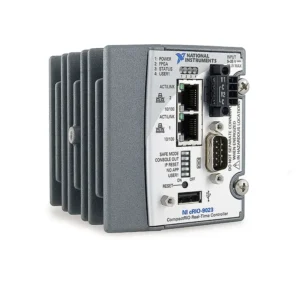
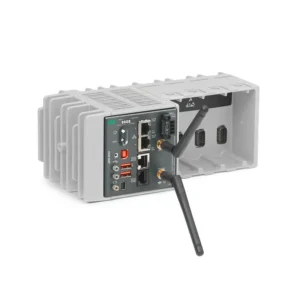
NI CompactRIO Controllers combine an embedded processor, user-programmable FPGA, C Series I/O module slots and industrial communication interfaces in one rugged platform. They are designed for deterministic measurement, embedded control, hardware-in-the-loop testing, machine automation and distributed monitoring applications.
A CompactRIO controller runs real-time application code locally while its FPGA executes custom timing, high-speed I/O, signal processing and control logic. This architecture is suited to applications that require more deterministic behavior and hardware-level customization than a standard PC-based data acquisition system.
What Is a CompactRIO Controller?
A CompactRIO controller is an integrated embedded control and measurement system. It includes a real-time processor for application logic, a user-programmable FPGA for deterministic hardware-level execution, and slots for compatible NI C Series modules.
The real-time processor and FPGA serve different roles. The processor manages communications, logging, control algorithms, user interfaces and system-level decisions. The FPGA handles operations that require precise timing, custom triggering, high-speed digital logic, inline processing or deterministic I/O response.
CompactRIO controllers are not standard CompactDAQ controllers. CompactDAQ is designed primarily for modular data acquisition, while CompactRIO adds user-programmable FPGA capability for custom timing and deterministic embedded control. Select CompactRIO only when the required real-time and FPGA functions are clearly defined.
CompactRIO Controller Architecture
| System Layer | Primary Role | Typical Tasks |
|---|---|---|
| Real-Time Processor | Runs the deployed embedded application and system-level control logic | Data logging, communications, supervisory control, network services, calculations and user-defined real-time loops |
| User-Programmable FPGA | Executes deterministic hardware-level logic close to the I/O | Custom triggering, pulse generation, encoder interfaces, fast control loops, protocol handling and inline signal processing |
| C Series I/O Modules | Provide electrical and sensor interfaces to the application | Analog I/O, digital I/O, thermocouples, strain, vibration, counters, CAN, LIN and industrial communication |
| Network and Peripheral Interfaces | Connect the controller to supervisory systems and external devices | Ethernet, serial communication, USB, CAN, removable storage and remote deployment |
| Software Environment | Configures, compiles and deploys real-time and FPGA applications | LabVIEW, LabVIEW Real-Time, LabVIEW FPGA, NI-RIO and applicable device drivers |
CompactRIO Controller Families
| Model Family | Unique Category | Platform Focus | Best Fit |
|---|---|---|---|
| cRIO-903x Series | Embedded Real-Time and FPGA Controller | Integrated CompactRIO control and measurement platform with processor, FPGA and C Series I/O capacity | Machine control, embedded monitoring, prototype development and legacy CompactRIO system support |
| cRIO-904x Series | High-Performance CompactRIO Controller | Expanded embedded processing and FPGA capability for demanding deterministic applications | Advanced automation, synchronized measurement, test systems and embedded control development |
| cRIO-905x Series | Industrial CompactRIO Controller | Modern CompactRIO architecture for modular real-time control, communication and FPGA-based I/O | Industrial control, high-channel-count embedded I/O and long-term deployed systems |
| cRIO-906x Series | Reconfigurable Embedded CompactRIO Controller | Integrated real-time processor and FPGA architecture for compact embedded applications | Custom FPGA development, deterministic data acquisition and embedded research systems |
Within each family, models can differ in C Series slot count, processor performance, FPGA resources, memory, storage, Ethernet ports, communication interfaces, environmental capability and operating-system support. Confirm the exact model and complete part number before selecting a replacement or configuring a new system.
How to Choose a CompactRIO Controller
1. Define the Real-Time Requirement
Start by identifying which actions must occur at deterministic intervals. Examples include control-loop execution, synchronized acquisition, hardware interlocks, fast digital response, motion coordination and closed-loop simulation.
Real-time operation is not simply faster program execution. It means that the application is designed to respond within defined timing limits. Specify the required loop rate, latency, jitter tolerance, failure response and synchronization method before choosing the controller.
2. Determine Whether FPGA Programming Is Necessary
Use the FPGA when the application requires custom hardware behavior that cannot be achieved through normal software timing. Typical examples include custom digital protocols, encoder processing, pulse-width modulation, fast protection logic, inline filtering, deterministic triggering and tightly synchronized I/O.
FPGA development requires a defined hardware design, FPGA resources and compatible software. If the application only requires standard sensor acquisition and data logging, a CompactDAQ controller may be the more appropriate platform.
3. Select the Required C Series Module Capacity
CompactRIO controllers are available with different numbers of integrated C Series module slots. Select the slot count from the complete I/O plan, including analog inputs, analog outputs, digital control, temperature, vibration, counters and communication interfaces.
Reserve capacity for realistic future expansion, but also confirm that the planned module combination is supported by the selected controller, driver version and FPGA architecture.
4. Match FPGA Resources to the Design
FPGA capacity is not defined only by the controller family. Available logic, memory, digital signal processing resources and I/O routing vary by model. An FPGA design that compiles successfully for one CompactRIO controller may not fit a different model.
Estimate resource requirements for custom logic, buffering, signal processing, communication engines and timing loops early in the project. If an existing FPGA bitfile is being migrated, verify target compatibility before approving the replacement hardware.
5. Choose the Processor and Operating-System Configuration
The embedded processor must support the complete real-time application, including logging, network communication, user-defined calculations, protocol processing and controller management. Higher acquisition rates do not necessarily require the fastest processor, but local analysis, databases, network services and complex control logic can increase processor demand significantly.
Confirm the installed or supported operating-system configuration for the exact model. Software compatibility, deployment tools and long-term maintenance requirements should be reviewed before selecting legacy or replacement hardware.
6. Verify I/O, Timing and Synchronization
Choose C Series modules according to the actual sensor or electrical interface, not only the physical measurement name. For example, pressure can require bridge conditioning, conditioned voltage input, current-loop measurement or digital communication depending on the transducer.
Define how modules will share clocks, triggers and timestamps. Simultaneous sampling, reference-clock distribution, FPGA timing and multichassis synchronization should be designed at the system level.
CompactRIO Software and Development Environment
CompactRIO systems are commonly developed with LabVIEW, LabVIEW Real-Time and LabVIEW FPGA. NI-RIO software provides the interface between software applications and the CompactRIO hardware architecture.
A typical CompactRIO project separates tasks into two execution environments:
- The real-time application manages system operation, communications, logging, alarms and high-level control.
- The FPGA application manages deterministic I/O, custom timing, high-speed processing and low-latency response.
The FPGA design must be compiled into a bitfile for the target hardware. Changes to the controller model, FPGA target or module configuration can require code updates, recompilation and full system validation.
Do not assume that an existing CompactRIO project can be moved to a newer controller without modification. Processor architecture, FPGA resources, driver versions, operating systems, I/O mappings and supported LabVIEW releases can all affect migration effort.
CompactRIO Controller and C Series Module Compatibility
CompactRIO controllers use compatible Модули NI серии C to interface with sensors, actuators and industrial networks. The module determines the electrical I/O characteristics, while the controller provides the real-time processor, FPGA and system architecture.
Before ordering, verify:
- Exact controller model, revision and operating-system configuration
- Required C Series module models and slot quantities
- Analog ranges, isolation, excitation and sensor connection requirements
- FPGA support and required custom I/O behavior
- Sample rate, timing, synchronization and trigger requirements
- NI-RIO, LabVIEW, LabVIEW Real-Time and LabVIEW FPGA compatibility
- Communication interfaces such as Ethernet, serial, CAN, LIN or industrial networks
- Power input, operating temperature, mounting and field-wiring requirements
CompactRIO Controller vs CompactDAQ vs PXI
| Platform | Primary Strength | Best Fit |
|---|---|---|
| Компактный контроллерRIO | Embedded real-time processor with user-programmable FPGA and modular C Series I/O | Deterministic control, custom I/O timing, embedded automation and hardware-in-the-loop systems |
| CompactDAQ Systems | Modular sensor measurement and data acquisition with integrated signal conditioning | Data logging, portable measurement, test validation and distributed sensor acquisition |
| Системы PXI | High-performance modular instruments, switching, RF and synchronized automated test | ATE, semiconductor test, RF validation, high-throughput acquisition and laboratory instrumentation |
Typical CompactRIO Controller Applications
- Industrial machine automation and monitoring
- Hardware-in-the-loop simulation and validation
- Automotive, aerospace and transportation test systems
- Custom high-speed digital protocol implementation
- Power electronics, motor and inverter control
- Energy, battery and renewable-energy testing
- Structural, vibration and sensor-based control systems
- Robotics, motion coordination and mechatronics
- CAN, LIN and industrial communication monitoring
- Embedded research, prototype development and teaching laboratories
- Remote systems requiring deterministic local control
Legacy CompactRIO Controller Replacement
Replacing a CompactRIO controller requires more than matching the number of C Series slots. A replacement may use a different processor architecture, FPGA family, operating system, memory capacity, communication interface or supported LabVIEW release.
Review the following before approving a replacement:
- Existing real-time application and LabVIEW project version
- FPGA target, bitfile, resource use and required recompilation
- Installed C Series modules and I/O mappings
- Sample timing, trigger, clock and synchronization design
- Operating-system support and driver compatibility
- Ethernet, serial, CAN/LIN and external-device interfaces
- Environmental, power and mounting requirements
- Startup behavior, data storage and remote-management process
- Validation, safety and calibration documentation requirements
Validate the replacement with the complete deployed application. A controller may be physically compatible with the same C Series modules while requiring FPGA recompilation, software migration or timing requalification.
CompactRIO Controller Procurement and RFQ Guide
Provide the following information for accurate controller selection and quotation:
- Existing CompactRIO model and complete part number, if replacing hardware
- Required C Series module models and quantities
- Required processor, FPGA and deterministic-control functions
- Control-loop rate, timing accuracy and latency requirements
- Analog, digital, sensor and communication I/O requirements
- Required slot count and planned expansion capacity
- LabVIEW, NI-RIO, LabVIEW Real-Time and LabVIEW FPGA versions
- Existing FPGA bitfile or custom logic requirements
- Network, serial, CAN, LIN and remote-access requirements
- Power input, mounting, temperature and environmental conditions
- Required accessories, terminal blocks and field wiring
- New or pre-owned hardware preference
- Required quantity, delivery date and destination
Часто задаваемые вопросы
What is the difference between a CompactRIO controller and a CompactDAQ controller?
A CompactRIO controller includes a user-programmable FPGA for deterministic hardware-level logic and custom I/O behavior. A CompactDAQ controller focuses on embedded data acquisition and local processing using standard measurement drivers and supported software workflows.
Can a CompactRIO controller run without an external PC?
Yes. A CompactRIO controller can run a deployed embedded application locally. A separate computer is commonly used for development, deployment, maintenance, remote monitoring or retrieving recorded data.
Does every CompactRIO application require FPGA programming?
No. FPGA programming is required only when the application needs custom hardware timing, deterministic I/O logic, specialized processing or other FPGA-level functions. However, the FPGA architecture remains part of the CompactRIO platform and must be considered during system design.
Can CompactRIO use C Series modules?
Yes. CompactRIO controllers use compatible C Series modules for analog, digital, sensor and communication I/O. Confirm support for the exact controller, C Series module and software version before installation.
Can I transfer a CompactRIO application to a newer controller?
Not automatically. A new target can require real-time application updates, FPGA bitfile recompilation, driver changes and timing validation. Review processor, FPGA, module support and software compatibility before migration.
When should I choose PXI instead of CompactRIO?
Choose PXI when the application requires high-performance modular instruments, RF test, switching, semiconductor test or high-throughput automated measurement. Choose CompactRIO when the primary requirement is embedded real-time control with user-programmable FPGA and field-deployed modular I/O.
Related NI CompactRIO Solutions
Use compatible Модули NI серии C to configure the required sensor, analog, digital and communication interfaces. For separate modular expansion hardware, explore CompactRIO chassis. Review the complete CompactRIO system range for controllers, chassis and compatible modules.
NI CompactRIO Controllers from PXISOURCE
PXISOURCE supports engineers, system integrators and procurement teams with CompactRIO controller selection, C Series module matching, FPGA and real-time platform review, software compatibility checks and legacy-system replacement. Send the required I/O list, control-loop requirements, software environment, existing controller model and preferred hardware condition for a technically matched quotation.
Need help selecting the right NI CompactRIO controller? Email sales@pxisource.com or contact PXISOURCE on WhatsApp.