




Product Introduction
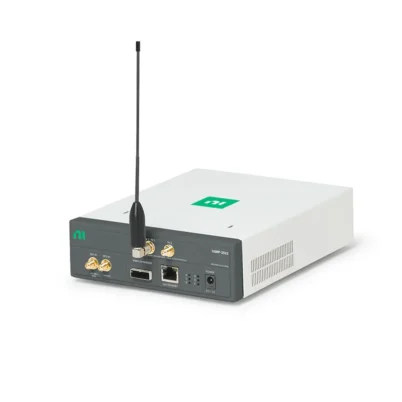
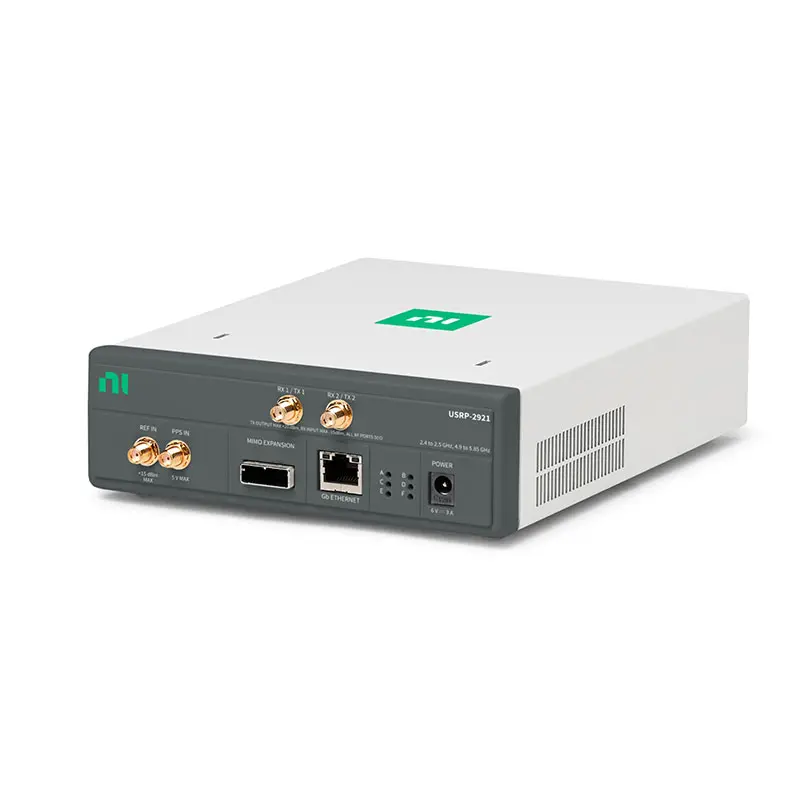
Земля NI USRP-2921 is a software-defined radio (SDR) device designed for wireless communications research, RF prototyping, algorithm development, education, and experimental radio systems. It combines a flexible RF transceiver with a programmable software environment, allowing engineers and researchers to develop and evaluate wireless communication systems without building dedicated RF hardware for every application.
The USRP-2921 operates in the 2.4 GHz and 5 GHz frequency bands, covering approximately 2.4 to 2.5 GHz and 4.9 to 5.9 GHz. These frequency ranges make it particularly useful for research involving Wi-Fi, WLAN, ISM-band communications, custom digital radio, spectrum monitoring, and other wireless applications operating in these bands.
Product Overview
Земля NI USRP-2921 belongs to the NI Universal Software Radio Peripheral family. Unlike conventional fixed-function RF instruments, a software-defined radio allows much of the radio functionality to be implemented and modified in software.
Engineers can use the USRP-2921 to transmit and receive RF signals while implementing modulation, demodulation, filtering, synchronization, channel coding, signal analysis, and communication algorithms in software.
The device connects to a host computer through Gigabit Ethernet, providing a convenient architecture for laboratory research, wireless communication teaching, protocol experimentation, and rapid RF system prototyping.
Key Features
2.4 GHz and 5 GHz RF Coverage
The USRP-2921 is designed for RF applications operating within two important wireless frequency ranges.
- 2.4 GHz frequency-band operation
- Approximately 2.4 to 2.5 GHz coverage
- Approximately 4.9 to 5.9 GHz coverage
- ISM-band wireless experimentation
- 5 GHz wireless communication research
Advantage: These frequency ranges cover widely used wireless communication bands, making the USRP-2921 suitable for WLAN, ISM, academic research, and custom RF experiments.
Software-Defined Radio Architecture
The USRP-2921 provides a flexible SDR platform in which communication functionality can be defined and modified through software.
- Software-controlled RF operation
- Programmable modulation schemes
- Пользовательские протоколы связи
- Digital signal processing experiments
- Rapid algorithm development
Advantage: Engineers can modify communication algorithms without redesigning the entire RF hardware platform.
RF Transmit and Receive Capability
The USRP-2921 provides both RF transmission and reception functionality for developing complete wireless communication systems.
- RF signal transmission
- RF signal reception
- Wireless link development
- Communication system prototyping
- RF experimentation
Advantage: A single SDR platform can be used to develop transmitters, receivers, and bidirectional wireless communication experiments.
Gigabit Ethernet Connectivity
The USRP-2921 communicates with the host computer through a Gigabit Ethernet interface.
- Gigabit Ethernet host connection
- Network-based device communication
- Flexible laboratory installation
- PC-based SDR development
- Streaming of baseband data
Advantage: Ethernet connectivity allows the SDR hardware to be positioned conveniently within laboratory and research environments while maintaining communication with the host computer.
Baseband I/Q Signal Processing
The USRP-2921 uses in-phase and quadrature signal processing for software-defined RF applications.
- I/Q signal acquisition
- I/Q signal generation
- Digital modulation research
- Digital demodulation
- Complex baseband processing
Advantage: I/Q data provides engineers with flexible access to signal amplitude and phase information for implementing advanced wireless algorithms.
Programmable RF Parameters
The operating characteristics of the USRP-2921 can be configured through compatible SDR software.
- Software-selectable center frequency
- Configurable RF gain
- Adjustable signal parameters
- Programmable transmit operation
- Programmable receive operation
Advantage: Software configuration enables rapid experimentation across different RF scenarios without extensive hardware modification.
FPGA-Based Signal Processing Architecture
The USRP architecture incorporates FPGA resources for high-speed digital processing and communication between the RF subsystem and host computer.
- FPGA-based processing
- Digital upconversion
- Digital downconversion
- Data-rate management
- RF-to-host data processing
Advantage: FPGA processing helps manage high-rate RF data before it is transferred to the host software environment.
External Reference and Synchronization Capability
The USRP-2921 provides synchronization capabilities for applications requiring improved timing or frequency coordination.
- External reference support
- Timing synchronization
- Frequency synchronization
- Multi-device experimental systems
- Coordinated RF measurements
Advantage: External synchronization is useful when multiple SDR devices must operate from a common timing or frequency reference.
Rapid Wireless Prototyping
The USRP-2921 is designed for experimentation and rapid development of wireless communication concepts.
- Physical-layer algorithm development
- Wireless protocol experimentation
- Modulation research
- Receiver algorithm development
- Communication-system demonstrations
Advantage: Researchers can move from simulation to over-the-air experimentation using a programmable SDR platform.
Educational SDR Platform
The USRP-2921 is suitable for university laboratories and communication engineering education.
- Wireless communication laboratories
- Digital communication teaching
- RF engineering education
- Signal processing experiments
- Student research projects
Advantage: Students can work with real RF signals while applying theoretical concepts in modulation, filtering, synchronization, and digital communications.
Technical Specifications
| Параметр | Описание |
|---|---|
| Product Type | Software Defined Radio / RF Transceiver |
| Модель | NI USRP-2921 |
| RF Frequency Range | Approximately 2.4–2.5 GHz and 4.9–5.9 GHz |
| RF Operation | Transmit and Receive |
| Signal Architecture | Complex Baseband I/Q |
| Host Interface | Гигабитный Ethernet |
| Frequency Configuration | Software Programmable |
| Gain Configuration | Software Programmable |
| Digital Processing | FPGA-Based SDR Architecture |
| Синхронизация | External Timing / Reference Support |
| Primary Frequency Bands | 2.4 GHz ISM and 5 GHz Wireless Bands |
| Primary Applications | Wireless Research, RF Prototyping, SDR Development, Spectrum Experiments and Education |
Software Ecosystem
The NI USRP-2921 can be integrated into software-defined radio development environments for RF generation, acquisition, signal processing, visualization, and communication algorithm development.
- LabVIEW: Enables graphical development of SDR applications including RF transmission, reception, modulation, demodulation, signal analysis, and visualization.
- NI-USRP Driver: Provides software interfaces for configuring and controlling compatible NI USRP hardware.
- LabVIEW Communications Applications: Can be used for developing and demonstrating wireless communication algorithms in compatible software environments.
- Custom SDR Applications: Engineers can create application-specific wireless communication and RF research systems using supported programming environments.
Industries
- Wireless Communications
- Telecommunications Research
- Universities and Education
- Scientific Research
- Aerospace and Defense Research
- RF Engineering
- Electronic System Development
- Wireless Product Development
Applications
Wireless Communication Research
The USRP-2921 provides a programmable RF platform for developing and evaluating wireless communication techniques.
- Digital modulation research
- Receiver algorithm development
- Channel characterization
- Wireless link experiments
- Communication algorithm validation
2.4 GHz ISM-Band Research
The 2.4 GHz frequency coverage makes the USRP-2921 useful for experimentation with wireless technologies operating within the 2.4 GHz ISM band.
- ISM-band experiments
- Wireless protocol research
- Interference studies
- Мониторинг спектра
- Custom 2.4 GHz communication systems
5 GHz Wireless Research
The upper operating range allows the USRP-2921 to support research involving wireless systems operating around the 5 GHz band.
- 5 GHz WLAN research
- RF propagation experiments
- Wireless channel studies
- Custom RF links
- Spectrum experiments
Modulation and Demodulation Experiments
The SDR architecture allows researchers to implement different digital modulation schemes in software.
- PSK experiments
- QAM research
- FSK experimentation
- OFDM development
- Custom modulation algorithms
Spectrum Monitoring
The receiver functionality can be used to observe RF activity within the supported frequency bands.
- RF spectrum observation
- Interference analysis
- Signal detection research
- Wireless environment monitoring
- RF signal characterization
Wireless Education
The USRP-2921 provides students with access to real RF signals for practical communication engineering experiments.
- Digital communications laboratories
- Software-defined radio courses
- RF engineering laboratories
- Signal processing education
- Wireless system demonstrations
Rapid RF Prototyping
Researchers can use the USRP-2921 to move communication algorithms from software simulation into real RF experiments.
- Proof-of-concept development
- Algorithm validation
- Wireless prototype development
- Over-the-air experimentation
- Research demonstrations
Comparison with Similar USRP Devices
| Модель | Основное различие | Best Application |
|---|---|---|
| NI USRP-2921 | SDR platform optimized for approximately 2.4–2.5 GHz and 4.9–5.9 GHz wireless frequency bands. | 2.4 GHz and 5 GHz wireless research |
| NI USRP-2920 | Different RF frequency coverage for applications requiring operation outside the primary 2.4 GHz and 5 GHz bands of the USRP-2921. | General lower-frequency SDR research |
| NI USRP-2932 | USRP platform with integrated GPS-disciplined timing capabilities for applications requiring improved synchronization and frequency reference performance. | Synchronized SDR and timing-sensitive RF research |
| NI USRP-2950 | Higher-performance USRP platform designed for more advanced wireless research and programmable RF applications. | Advanced SDR and wireless prototyping |
Recommended Related Products
| NI USRP-2920 | Software-defined radio platform for researchers requiring different RF frequency coverage from the USRP-2921. |
| NI USRP-2932 | SDR platform with integrated GPS-disciplined timing for synchronized wireless research and distributed RF applications. |
| NI USRP-2950 | Higher-performance software-defined radio for advanced wireless communication research and RF prototyping. |
Why Choose USRP-2921?
- Software-defined radio architecture
- Approximately 2.4–2.5 GHz RF coverage
- Approximately 4.9–5.9 GHz RF coverage
- RF transmit and receive capability
- Complex I/Q signal processing
- Gigabit Ethernet host connectivity
- Software-programmable RF parameters
- FPGA-based digital processing architecture
- External synchronization capability
- Suitable for 2.4 GHz and 5 GHz wireless research
- Ideal for rapid communication-system prototyping
- Suitable for university SDR laboratories
Frequently Asked Questions
What is the NI USRP-2921?
The NI USRP-2921 is a software-defined radio transceiver designed for wireless communication research, RF prototyping, spectrum experiments, algorithm development, and educational applications.
What frequency range does the USRP-2921 support?
The USRP-2921 operates approximately from 2.4 to 2.5 GHz and from 4.9 to 5.9 GHz, making it particularly suitable for experiments involving the 2.4 GHz ISM band and 5 GHz wireless applications.
Can the USRP-2921 transmit and receive RF signals?
Yes. The USRP-2921 provides RF transmit and receive functionality for developing and testing software-defined wireless communication systems.
What interface does the USRP-2921 use to connect to a computer?
The USRP-2921 uses Gigabit Ethernet for communication with a compatible host computer.
Can USRP-2921 be used for Wi-Fi research?
Yes. Its RF coverage includes frequency ranges used by 2.4 GHz and 5 GHz WLAN systems, making it useful as a programmable RF research platform for wireless communication experiments. Application compatibility also depends on the required bandwidth, protocol implementation, and software environment.
Can USRP-2921 be used for OFDM experiments?
Yes. Software-defined radio applications can implement OFDM and other modulation techniques within the capabilities of the hardware and software configuration.
Can USRP-2921 be used as a spectrum analyzer?
The USRP-2921 can acquire RF signals for software-based spectrum monitoring and analysis within its supported operating range. However, it should not automatically be considered a direct replacement for a calibrated laboratory spectrum analyzer when specified measurement accuracy, dynamic range, or regulatory compliance testing is required.
What is the difference between USRP-2920 and USRP-2921?
The main distinction is RF frequency coverage. The USRP-2921 is optimized for approximately 2.4–2.5 GHz and 4.9–5.9 GHz operation, while the USRP-2920 provides different frequency coverage for other SDR applications.
What is the difference between USRP-2921 and USRP-2932?
The USRP-2932 is intended for applications requiring integrated GPS-disciplined timing and synchronization capabilities, while the USRP-2921 is a general SDR platform for wireless communication experimentation within its supported frequency bands.
Can multiple USRP-2921 devices be synchronized?
The USRP-2921 provides external timing and reference capabilities that can be used when building synchronized experimental configurations. The exact synchronization architecture should be selected according to the number of radios and required phase, frequency, and timing accuracy.
Is the USRP-2921 suitable for university laboratories?
Yes. The USRP-2921 is well suited for communication engineering, RF, digital signal processing, and software-defined radio laboratories because students can implement algorithms in software and evaluate them using real RF signals.
What software is used with the USRP-2921?
The USRP-2921 can be used with compatible NI-USRP software and LabVIEW-based development environments for RF acquisition, generation, signal processing, visualization, and communication-system development.
What are typical applications of the USRP-2921?
Typical applications include software-defined radio development, 2.4 GHz and 5 GHz wireless research, modulation and demodulation experiments, OFDM development, spectrum monitoring, wireless algorithm validation, communication engineering education, and rapid RF prototyping.
Заключение
Земля NI USRP-2921 software-defined radio provides a flexible RF platform for wireless communications research, SDR development, education, spectrum experiments, and rapid prototyping. With RF operation around 2.4–2.5 GHz and 4.9–5.9 GHz, transmit and receive functionality, Gigabit Ethernet connectivity, programmable RF parameters, I/Q signal processing, and software-based development, the USRP-2921 is particularly useful for researchers and engineers working with 2.4 GHz and 5 GHz wireless communication systems.