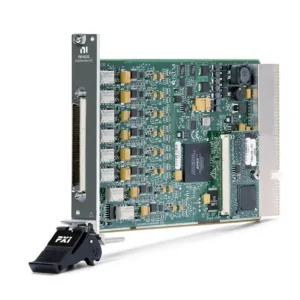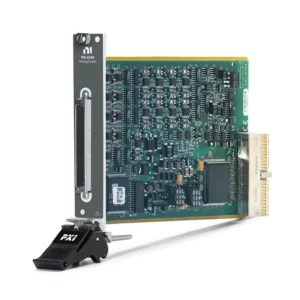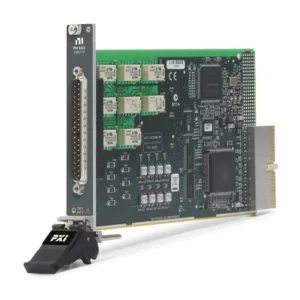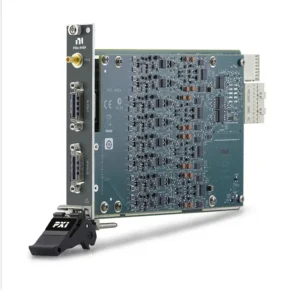




Product Introduction
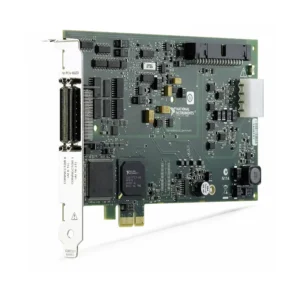
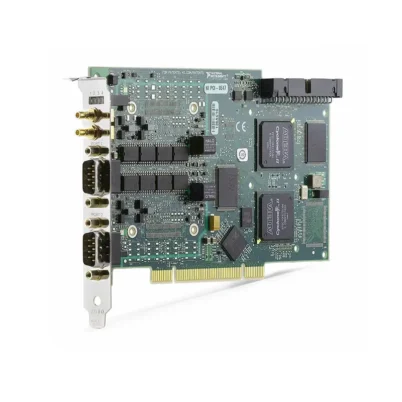
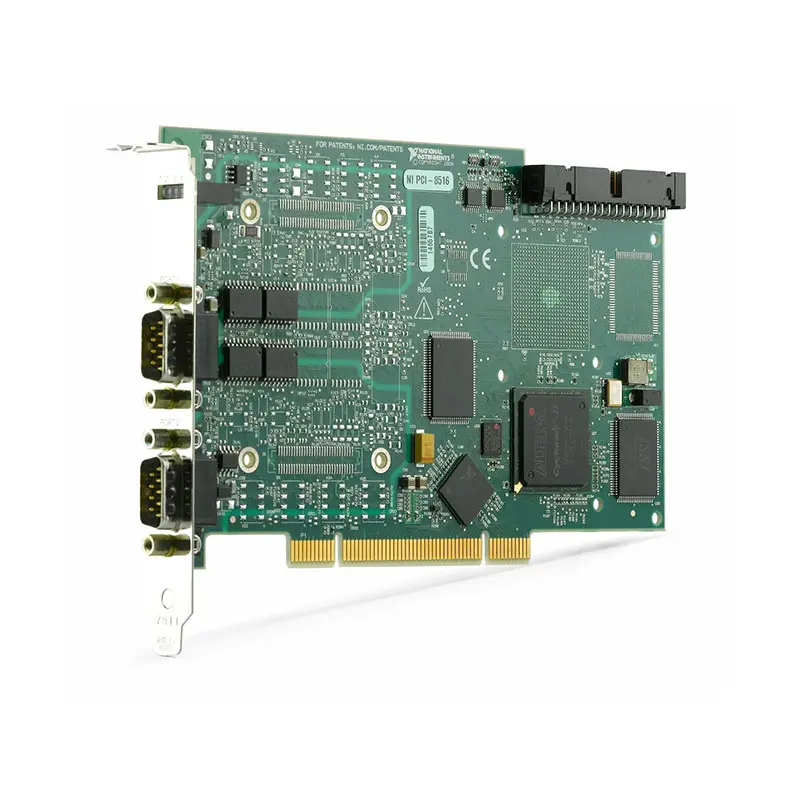
Земля NI PCI-8516 is a two-port PCI Local Interconnect Network (LIN) interface device designed for automotive ECU testing, hardware-in-the-loop (HIL) simulation, rapid control prototyping, vehicle network monitoring, automated validation, and embedded system development.
Featuring two LIN interfaces, communication rates from 2.4 kbit/s to 20 kbit/s, NI-XNET software support, hardware synchronization resources, and a device-driven DMA architecture, the PCI-8516 provides a high-performance solution for integrating LIN communication into desktop-based automated test and vehicle network systems.
Product Overview
Земля NI PCI-8516 belongs to the NI-XNET vehicle network interface family and is specifically designed for Local Interconnect Network communication.
LIN is commonly used as a lower-cost vehicle communication network for body electronics, sensors, actuators, switches, motors, and other automotive subsystems that do not require the bandwidth of CAN or Automotive Ethernet.
The PCI-8516 provides two LIN ports on a PCI interface card, making it suitable for desktop computers and industrial PCs that require direct access to one or more LIN networks.
With NI-XNET, engineers can transmit, receive, monitor, and manipulate LIN frames and signals while integrating network communication with automated measurement and control applications.
Key Features
2-Port LIN Interface
The PCI-8516 provides two LIN interfaces for connecting a test system to LIN networks.
- 2 LIN ports
- Independent vehicle network interfaces
- LIN frame transmission and reception
- Multi-network testing
- Automotive ECU communication
Advantage: Two LIN interfaces allow a single PCI card to communicate with multiple LIN networks, reducing the amount of additional interface hardware required in complex test systems.
2.4 kbit/s to 20 kbit/s LIN Communication
The PCI-8516 supports LIN communication rates from 2.4 kbit/s up to 20 kbit/s.
- Minimum baud rate: 2.4 kbit/s
- Maximum baud rate: 20 kbit/s
- Software-configurable communication
- Automotive LIN compatibility
- Embedded network testing
Advantage: Supports the communication rates required by a broad range of automotive and embedded LIN devices.
NI-XNET Architecture
The PCI-8516 is supported by NI-XNET, providing a high-performance software and hardware architecture for vehicle network communication.
- NI-XNET driver support
- Frame-based communication
- Signal-based communication
- Database-driven applications
- Automated network testing
Advantage: NI-XNET provides a standardized programming environment for developing LIN simulation, monitoring, logging, and automated validation applications.
Device-Driven DMA Engine
The NI-XNET architecture uses a device-driven DMA engine to efficiently transfer network data between the PCI-8516 and the host application.
- DMA-based data transfer
- Reduced CPU interrupt overhead
- Low message latency
- Efficient frame and signal transfer
- Optimized host processor utilization
Advantage: The onboard processing architecture reduces the burden placed on the host CPU, leaving more processing resources available for simulation models, data analysis, and automated test applications.
Real-Time LIN Frame and Signal Manipulation
The PCI-8516 is designed for applications requiring real-time manipulation of large numbers of LIN frames and signals.
- LIN frame transmission
- LIN frame reception
- Signal-level communication
- Network simulation
- Real-time automated testing
Advantage: Provides the performance required for demanding HIL, ECU validation, rapid prototyping, and network simulation applications.
LIN Master and Slave Applications
The PCI-8516 can be incorporated into test applications that interact with LIN nodes and simulate network behavior.
- LIN network simulation
- ECU communication
- Node simulation
- Automated message generation
- Network response testing
Advantage: Enables engineers to develop flexible test systems for validating LIN-enabled ECUs and other vehicle electronic devices.
Hardware Timing and Synchronization
The PCI-8516 provides hardware synchronization resources for coordinating network communication with other test-system events.
- 7 trigger input/output lines
- 1 clock input/output line
- TTL-compatible synchronization
- Rising-edge trigger response
- Multi-instrument synchronization
Advantage: LIN communication can be synchronized with DAQ devices, digitizers, signal generators, fault insertion hardware, and other automated test equipment.
External LIN Bus Power
The LIN physical layer of the PCI-8516 requires an external power supply.
- +8 V to +18 VDC external bus power
- VBat/Vsup connection
- Automotive power architecture
- LIN transceiver supply
- Vehicle test integration
Advantage: The external supply architecture allows the LIN physical layer to operate under electrical conditions representative of automotive LIN systems.
Automotive LIN Transceiver
The PCI-8516 uses an automotive LIN transceiver appropriate to the hardware revision.
- ATA6620 on earlier hardware revisions
- ATA6625 on Revision F and later hardware
- LIN physical-layer communication
- Automotive network interfacing
- Up to 20 kbit/s communication
Advantage: Provides a dedicated physical-layer implementation for LIN-based automotive and embedded communication systems.
PCI Host Interface
The PCI-8516 installs directly into a compatible desktop or industrial computer with a PCI expansion slot.
- PCI interface
- Desktop PC integration
- Industrial computer integration
- Automated test workstation deployment
- No PXI chassis required
Advantage: Provides NI-XNET LIN functionality for users building PC-based test systems rather than modular PXI systems.
NI-XNET Software Support
NI-XNET provides the primary software interface for configuring and controlling the PCI-8516.
- NI-XNET API
- Интеграция LabVIEW
- LIN database support
- Bus monitoring
- Automated network applications
Advantage: Engineers can integrate LIN communication into larger automated measurement, simulation, validation, and production test applications.
Technical Specifications
| Параметр | Описание |
|---|---|
| Product Type | PCI LIN Interface Device |
| Part Number | 781365-01 |
| Number of LIN Ports | 2 |
| Network Type | LIN (Local Interconnect Network) |
| Minimum LIN Baud Rate | 2.4 kbit/s |
| Maximum LIN Baud Rate | 20 kbit/s |
| LIN Transceiver | ATA6620 or ATA6625 Depending on Hardware Revision |
| External Bus Power | +8 V to +18 VDC |
| Trigger Lines | 7 Input/Output |
| Clock Lines | 1 Input/Output |
| Synchronization I/O | TTL Compatible |
| Trigger Response | Rising Edge |
| Host Interface | PCI |
| Driver | NI-XNET |
| Operating Temperature | от 0 °C до 55 °C |
| Storage Temperature | -20 °C to 70 °C |
| Maximum Operating Altitude | 2,000 m |
| Primary Applications | LIN Communication, ECU Testing, HIL Simulation, Bus Monitoring and Automotive Validation |
Software Ecosystem
The NI PCI-8516 integrates with NI software for LIN communication, network simulation, monitoring, automated testing, and vehicle electronics validation.
- NI-XNET: Provides the primary driver and API for transmitting, receiving, and manipulating LIN frames and signals.
- LabVIEW: Enables graphical development of LIN communication, data logging, network monitoring, simulation, and automated test applications.
- NI VeriStand: Can integrate vehicle network communication into real-time ECU validation and hardware-in-the-loop test systems.
- TestStand: Allows LIN communication and ECU validation steps to be incorporated into automated production and functional test sequences.
- NI-XNET Bus Monitor: Provides tools for monitoring network communication during development, validation, and troubleshooting.
Industries
- Automotive Electronics
- Electric Vehicle Testing
- ECU Development
- Automated Test Equipment
- Embedded Systems
- Transportation Electronics
- Electronic Manufacturing
- Research and Development
Applications
Automotive ECU Testing
The PCI-8516 can communicate with LIN-enabled electronic control units during development, validation, and production testing.
- ECU functional testing
- LIN communication verification
- Frame and signal validation
- Automated ECU testing
- End-of-line validation
Hardware-in-the-Loop Simulation
The PCI-8516 can be integrated into HIL systems that require communication between simulation software and LIN-enabled controllers.
- ECU HIL testing
- LIN node simulation
- Vehicle network simulation
- Controller response validation
- Automated fault testing
Rapid Control Prototyping
NI identifies rapid control prototyping as one of the applications for NI-XNET interfaces such as the PCI-8516.
- Prototype controller development
- LIN network integration
- Control algorithm validation
- Vehicle subsystem development
LIN Bus Monitoring
The PCI-8516 can monitor LIN frames and signals during vehicle network development and troubleshooting.
- LIN frame monitoring
- Signal monitoring
- Network traffic analysis
- Communication troubleshooting
- Vehicle network diagnostics
Automotive Body Electronics Testing
LIN is widely used for lower-bandwidth automotive electronics, making the PCI-8516 useful for testing vehicle body and comfort systems.
- Door electronics testing
- Seat control systems
- Mirror control systems
- Lighting electronics
- Climate-control subsystems
- Window and actuator control
LIN Node Simulation
The PCI-8516 can be used in applications that simulate network nodes and generate expected LIN communication.
- ECU environment simulation
- LIN message generation
- Network response simulation
- Automated communication testing
Производственное тестирование
The PCI-8516 can be incorporated into automated manufacturing test stations for products containing LIN interfaces.
- End-of-line testing
- LIN communication verification
- Electronic assembly validation
- Automated pass/fail testing
- Production ECU testing
Network Data Logging
NI-XNET allows applications to acquire LIN network data for analysis and long-duration testing.
- LIN frame logging
- Signal recording
- Network behavior analysis
- Long-duration vehicle testing
- Development data acquisition
Comparison with Similar Vehicle Network Interfaces
| Модель | Основное различие | Best Application |
|---|---|---|
| NI PCI-8516 | 2-port PCI interface specifically designed for LIN communication with NI-XNET. | Desktop and industrial PC-based LIN testing |
| NI PXI-8516 | PXI implementation of the NI-XNET LIN interface for modular PXI automated test systems. | PXI-based LIN and HIL testing |
| NI PCI-8512 | PCI vehicle network interface designed for High-Speed CAN rather than LIN communication. | PC-based High-Speed CAN testing |
| NI PCI-8517 | PCI NI-XNET interface designed for FlexRay vehicle networks rather than LIN. | FlexRay development and validation |
Recommended Related Products
| NI PXI-8516 | PXI LIN interface module for users requiring the same vehicle network technology within a modular PXI automated test platform. |
| NI PCI-8512 | High-Speed CAN interface for desktop systems requiring CAN communication alongside LIN testing. |
| NI PCI-8513 | Software-selectable CAN interface for PC-based automotive systems requiring flexible CAN physical-layer support. |
| NI PCI-8517 | FlexRay interface for automotive test systems requiring higher-performance deterministic vehicle network communication. |
Why Choose PCI-8516?
- 2 independent LIN interfaces
- 2.4 kbit/s to 20 kbit/s LIN communication
- Dedicated Local Interconnect Network hardware
- NI-XNET software architecture
- Device-driven DMA data transfer
- Real-time frame and signal manipulation
- 7 hardware trigger lines
- 1 hardware clock line
- TTL-compatible synchronization
- PCI interface for desktop and industrial PCs
- Suitable for ECU and HIL testing
- Ideal for automotive LIN network validation
Frequently Asked Questions
What is the NI PCI-8516?
The NI PCI-8516 is a two-port PCI LIN interface device designed for vehicle network communication, ECU testing, HIL simulation, LIN bus monitoring, rapid control prototyping, and automated automotive validation.
How many LIN ports does the PCI-8516 have?
The PCI-8516 provides two LIN interfaces, allowing a single PCI card to connect to multiple LIN networks.
What communication protocol does the PCI-8516 support?
The PCI-8516 is specifically designed for LIN (Local Interconnect Network) communication. It is not a CAN or FlexRay interface.
What baud rates does the PCI-8516 support?
The PCI-8516 supports LIN communication rates from 2.4 kbit/s to 20 kbit/s.
Does the PCI-8516 require an external power supply?
Yes. The LIN physical layer requires an external +8 V to +18 VDC supply connected through the appropriate VBat/Vsup connection.
What LIN transceiver does the PCI-8516 use?
The transceiver depends on the hardware revision. PCI-8516 Revision F and later hardware uses the ATA6625 LIN transceiver, while earlier revisions use the ATA6620.
Does the PCI-8516 use NI-XNET?
Yes. The PCI-8516 is an NI-XNET vehicle network interface and uses the NI-XNET driver and API for LIN communication.
Can the PCI-8516 be used for HIL testing?
Yes. Hardware-in-the-loop simulation is one of the primary applications for the PCI-8516. NI-XNET’s onboard processing and DMA architecture are designed for demanding real-time vehicle network applications.
Can the PCI-8516 monitor LIN bus traffic?
Yes. The PCI-8516 can be used in LIN monitoring and data-logging applications to acquire frames and signals for network analysis, ECU development, and troubleshooting.
Does the PCI-8516 support hardware synchronization?
Yes. The PCI-8516 provides seven trigger input/output lines and one clock input/output line with TTL-compatible signaling for synchronization with other test hardware.
What is the difference between PCI-8516 and PXI-8516?
Both devices provide NI-XNET LIN communication capability. The primary difference is the host platform: the PCI-8516 installs in a compatible desktop or industrial PC with a PCI slot, while the PXI-8516 is designed for modular PXI test systems. The correct choice therefore depends primarily on the architecture of the automated test platform.
What is the difference between PCI-8516 and PCI-8512?
The PCI-8516 is specifically designed for LIN communication, while the PCI-8512 is designed for High-Speed CAN. They serve different automotive physical layers and should be selected according to the communication protocol used by the device under test.
What is the part number of the PCI-8516?
The NI PCI-8516 two-port LIN interface device is associated with part number 781365-01.
What applications are best suited for the PCI-8516?
Typical applications include automotive ECU testing, HIL simulation, rapid control prototyping, LIN bus monitoring, body electronics validation, network data logging, node simulation, and automated production testing.
Заключение
Земля NI PCI-8516 2-port LIN interface device provides a dedicated PC-based solution for automotive LIN communication, ECU testing, HIL simulation, network monitoring, rapid control prototyping, and production validation. With two LIN interfaces, 2.4 kbit/s to 20 kbit/s communication, NI-XNET integration, device-driven DMA, hardware triggering and synchronization, and PCI connectivity, the PCI-8516 is well suited for automated automotive and embedded network test systems.