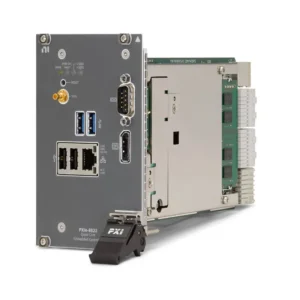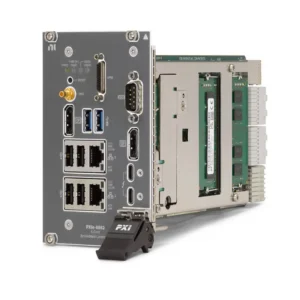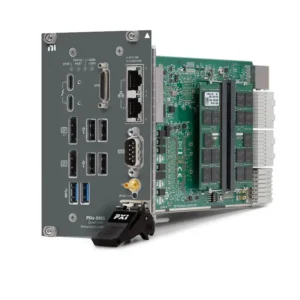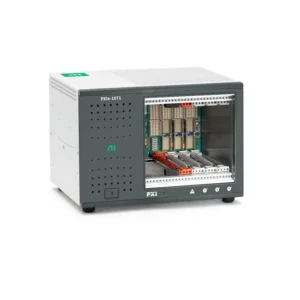




Product Introduction
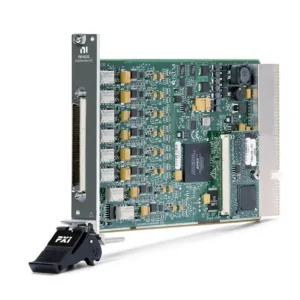
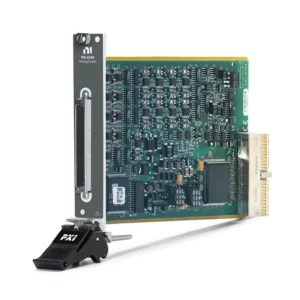
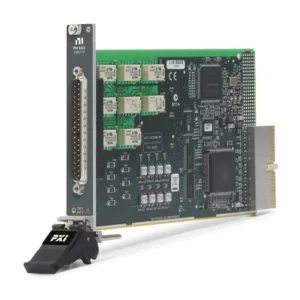
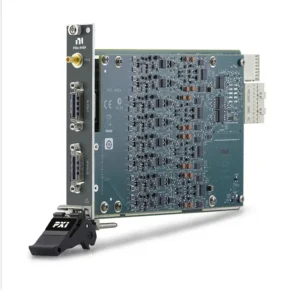
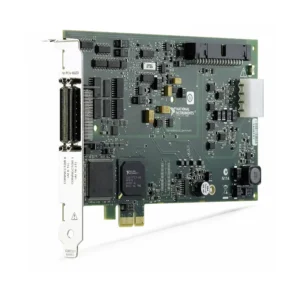
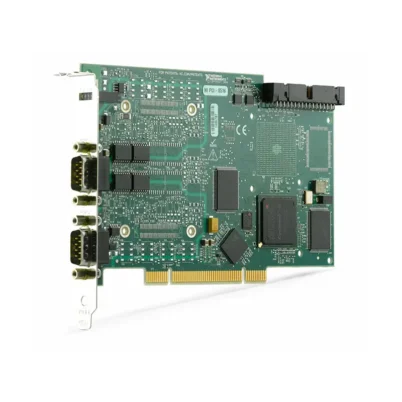
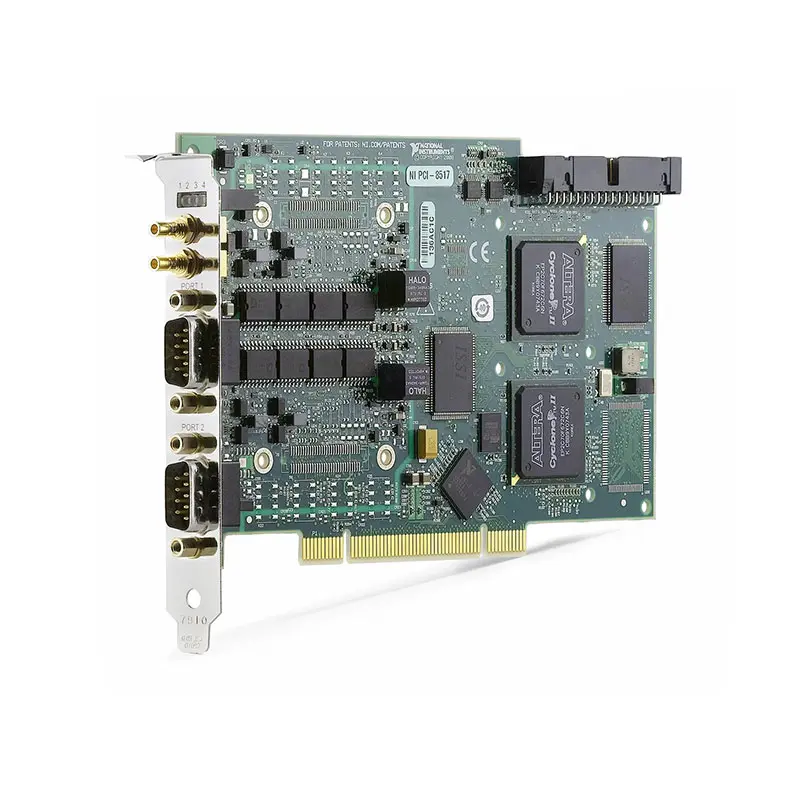
Земля NI PCI-8517 является 2-port FlexRay interface device designed for automotive network development, ECU testing, hardware-in-the-loop simulation, rapid control prototyping, FlexRay bus monitoring, and automated validation applications.
As part of the NI-XNET platform, the PCI-8517 provides two fully functional FlexRay interfaces capable of high-speed, real-time manipulation of large numbers of FlexRay frames and signals.
The device installs in a compatible conventional PCI slot and allows a desktop, workstation, industrial computer, or automated test system to communicate directly with FlexRay networks.
Product Overview
Земля National Instruments PCI-8517 is specifically designed for FlexRay communication rather than conventional analog or digital data acquisition.
A typical automotive test architecture is:
Host Computer → PCI-8517 → FlexRay Network → ECU / Automotive Controller
With two independent FlexRay interfaces, the PCI-8517 can also be configured as:
Port 1 → FlexRay Network A
Port 2 → FlexRay Network B
This allows a single PCI interface device to communicate with two separate FlexRay networks while maintaining full functionality on each interface.
Key Features
Two Fully Functional FlexRay Interfaces
The PCI-8517 provides two fully functional FlexRay interfaces.
These interfaces can be used for demanding automotive communication applications including:
- ECU testing
- FlexRay network monitoring
- Симуляция с аппаратным входом
- Rapid control prototyping
- Automated ECU validation
- Vehicle network development
- Communication troubleshooting
Connect to Two Separate FlexRay Networks
The two interfaces can be used independently to connect the host computer to two separate FlexRay networks.
A typical architecture is:
PCI-8517 Port 1 → FlexRay Network A
PCI-8517 Port 2 → FlexRay Network B
This is useful in test systems where multiple FlexRay networks must be monitored or controlled from one host computer.
ECU Testing Without Other Cold-Start Nodes
An important capability of the PCI-8517 is its suitability for testing an individual ECU when other required FlexRay cold-start nodes are not available.
This is particularly valuable in ECU development and validation laboratories where engineers need to test an electronic control unit independently from the complete vehicle network.
Up to 10 Mb/s FlexRay Communication
The PCI-8517 supports FlexRay communication rates up to 10 Mb/s.
The high communication rate and deterministic FlexRay architecture make the device suitable for automotive applications requiring predictable communication between electronic control units.
NI-XNET Platform
The PCI-8517 is part of the NI-XNET platform.
NI-XNET is designed for high-performance automotive network communication and provides APIs and tools for working with large numbers of frames and signals.
Typical NI-XNET operations include:
- Reading FlexRay frames
- Writing FlexRay frames
- Reading network signals
- Writing network signals
- Bus monitoring
- Automated communication testing
- Network database integration
Real-Time Frame and Signal Manipulation
The PCI-8517 is designed for applications requiring real-time, high-speed manipulation of hundreds of FlexRay frames and signals.
This capability is particularly important in HIL and ECU validation systems where many network messages must be transmitted, received, monitored, and analyzed continuously.
PCI Host Interface
The PCI-8517 installs into a compatible PCI expansion slot.
A typical configuration is:
Industrial PC → PCI Slot → PCI-8517 → FlexRay Cable → ECU / FlexRay Network
This makes the PCI-8517 particularly useful for maintaining existing PCI-based automotive test systems.
External Timing and Triggering
The PCI-8517 supports external timing and triggering, allowing the FlexRay interface to be integrated with other test and measurement hardware in synchronized validation systems.
This can be useful when coordinating automotive network activity with:
- DAQ measurements
- Oscilloscope acquisition
- ECU stimulus
- Цифровой ввод-вывод
- Fault insertion
- Automated test sequences
Internally Powered FlexRay Interface
The PCI-8517 uses an internally powered FlexRay interface architecture.
This simplifies integration compared with automotive communication interfaces that require a separate external bus-power supply.
Technical Specifications
| Параметр | Спецификация |
|---|---|
| Product Type | FlexRay Interface Device |
| Модель | PCI-8517 |
| Manufacturer | Национальные инструменты |
| Part Number | 780685-02 |
| Host Bus | PCI |
| Network Type | FlexRay |
| Number of FlexRay Interfaces | 2 |
| Maximum Baud Rate | 10 Mb/s |
| Software Platform | NI-XNET |
| External Timing and Triggering | Supported |
| Bus Power | Internally Powered |
| Operating Temperature | от 0 °C до 55 °C |
| Recommended FlexRay Cable | SHD9F-D9F FlexRay Cable, 198290-01 |
| Primary Function | FlexRay Network Communication and ECU Testing |
| Типичные применения | ECU Testing, HIL Simulation, RCP, Bus Monitoring and Automotive Validation |
How Does the PCI-8517 Work?
The PCI-8517 provides an interface between application software running on the host computer and a physical FlexRay automotive network.
A simplified communication path is:
Test Application → NI-XNET → PCI-8517 → FlexRay Bus → ECU
For received network traffic:
ECU → FlexRay Bus → PCI-8517 → NI-XNET → Test Application
This bidirectional architecture allows the test system to transmit, receive, monitor, log, and analyze FlexRay communication.
What Is FlexRay?
FlexRay is an automotive communication network technology designed for high-speed and deterministic communication between electronic control units.
It was developed for automotive systems where predictable timing, higher data rates, redundancy, and coordinated network communication are important.
Typical applications historically include:
- Chassis control
- Powertrain systems
- Vehicle dynamics
- Advanced automotive control
- ECU communication
- Automotive test and validation
Dual-Port FlexRay Architecture
One of the most important characteristics of the PCI-8517 is its dual-interface architecture.
The two FlexRay interfaces can support several test configurations.
Single ECU Test Configuration
The interfaces can support development and testing of an individual ECU when other cold-start nodes are unavailable.
A simplified configuration is:
PCI-8517 ↔ FlexRay ↔ ECU Under Test
Two Independent Network Configuration
The interfaces can also connect independently to two different FlexRay networks.
Например:
Interface 1 ↔ FlexRay Network A
Interface 2 ↔ FlexRay Network B
This architecture can reduce the number of separate communication devices required in complex validation systems.
FlexRay ECU Testing
ECU testing is one of the primary applications for the PCI-8517.
A typical ECU test system can:
- Load the required FlexRay network configuration.
- Initialize the PCI-8517 interfaces.
- Start FlexRay communication.
- Transmit simulated network frames and signals.
- Receive ECU response messages.
- Monitor network timing and communication behavior.
- Compare ECU responses with expected results.
- Record test data and determine pass/fail status.
Hardware-in-the-Loop Simulation
The PCI-8517 is suitable for hardware-in-the-loop (HIL) simulation applications that require FlexRay communication with an ECU under test.
A typical architecture is:
HIL Simulation → PCI-8517 → FlexRay Network → ECU
The HIL system can simulate other vehicle nodes and network traffic while monitoring the ECU response.
Additional measurement and stimulus hardware can be integrated to simulate sensors, actuators, power supplies, and other vehicle interfaces.
Rapid Control Prototyping
The PCI-8517 can be used in rapid control prototyping (RCP) systems where prototype control algorithms must communicate with other vehicle systems over FlexRay.
This allows engineers to evaluate control strategies before the final production ECU architecture is completed.
FlexRay Bus Monitoring
The PCI-8517 can monitor FlexRay communication for development, troubleshooting, and validation.
Bus-monitoring applications can analyze:
- FlexRay frames
- Network signals
- ECU communication
- Message timing
- Network activity
- Communication behavior
Captured information can be displayed, analyzed, or logged by the host application.
Automotive Network Validation
Automotive validation systems can use the PCI-8517 to verify whether an ECU communicates correctly under different network conditions.
Typical validation scenarios include:
- Normal network operation
- Startup behavior
- ECU communication response
- Network message verification
- Signal value testing
- Long-duration communication testing
- Automated regression testing
NI-XNET Integration
The PCI-8517 uses NI-XNET for automotive network communication.
A typical software workflow is:
Load Network Database → Configure Session → Start FlexRay Communication → Read / Write Frames or Signals → Analyze Results → Stop Session
NI-XNET is optimized for high-performance automotive communication and provides programmatic access to frames and signals.
Frame-Based Communication
Applications can communicate at the FlexRay frame level when direct access to network frames is required.
This approach can be useful for:
- Protocol development
- Raw network analysis
- Custom communication testing
- Frame-level ECU validation
- Bus monitoring
Signal-Based Communication
For many automotive test applications, engineers work with engineering-level signals rather than manually manipulating individual frame bytes.
A signal-based architecture can be represented as:
Network Database → Signal Definition → NI-XNET → PCI-8517 → FlexRay Network
This can simplify automated validation when the network database defines the relationship between frames and vehicle signals.
PCI-8517 vs PXI-8517
The PCI-8517 and PXI-8517 provide FlexRay communication capabilities for different hardware platforms.
| Функция | PCI-8517 | ПХИ-8517 |
|---|---|---|
| Network | FlexRay | FlexRay |
| FlexRay Interfaces | 2 | 2 |
| Maximum Rate | 10 Mb/s | 10 Mb/s |
| Software Platform | NI-XNET | NI-XNET |
| Hardware Platform | PCI Computer | PXI Шасси |
| Installation | Desktop / Industrial PC | Система PXI |
| Typical Application | PC-Based Automotive Test | Modular PXI Automotive Test |
The appropriate model should therefore be selected primarily according to the required host platform and overall test-system architecture.
PCI-8517 vs CAN Interface
The PCI-8517 is specifically designed for FlexRay and should not be confused with NI CAN interface devices.
| Функция | PCI-8517 | Typical NI CAN Interface |
|---|---|---|
| Primary Network | FlexRay | CAN / CAN FD Depending on Model |
| Maximum FlexRay Rate | 10 Mb/s | Not Applicable |
| NI-XNET | Да | Supported on Compatible Models |
| Typical Application | FlexRay ECU Testing | CAN ECU Testing |
The communication protocol used by the ECU must be confirmed before selecting the network interface.
PCI-8517 vs LIN Interface
FlexRay and LIN serve different automotive network requirements.
The PCI-8517 should be selected when the DUT or vehicle network uses FlexRay. A dedicated LIN interface should be selected when the ECU communicates over LIN.
PCI-8517 vs Automotive Ethernet
Automotive Ethernet represents a different vehicle-network architecture from FlexRay.
The PCI-8517 remains particularly relevant for maintaining and validating existing ECUs, test systems, and vehicle platforms designed around FlexRay communication.
For newer automotive systems using Automotive Ethernet, an appropriate Automotive Ethernet interface should be selected instead.
FlexRay Cable
NI lists the SHD9F-D9F FlexRay Cable, part number 198290-01, as a compatible accessory for the PCI-8517.
The listed cable is a 1-meter FlexRay cable without termination.
When building a FlexRay system, verify:
- Cable model
- Cable length
- Connector type
- Network topology
- Termination requirements
- ECU connector pinout
FlexRay Network Termination
Proper network termination is important for reliable FlexRay communication.
The complete physical network should be designed according to the FlexRay topology and the requirements of the connected ECUs.
Do not assume that the interface cable automatically provides the required network termination.
Power Requirements
The PCI-8517 is an internally powered NI-XNET FlexRay device.
This means the FlexRay interface itself does not require the same external bus-power arrangement used by certain other automotive interface types.
The power requirements of the connected ECU and complete FlexRay test network must still be handled separately.
External Timing and Triggering
External timing and triggering support can help coordinate network communication with other measurement and stimulus devices.
Например:
Trigger Event → Network Activity + DAQ Acquisition + Oscilloscope Capture
This can improve correlation between ECU network communication and physical electrical measurements during automated validation.
Automated ECU Validation
The PCI-8517 can be integrated into automated ECU validation platforms together with other measurement and stimulus hardware.
A complete system may include:
- PCI-8517 FlexRay interface
- DAQ hardware
- Цифровой ввод-вывод
- Programmable power supplies
- Source measure units
- Oscilloscopes or digitizers
- Fault insertion hardware
- Relay or switch systems
Test software can coordinate all hardware to automate ECU functional and communication testing.
LabVIEW Integration
The PCI-8517 can be integrated into compatible ЛабВью applications through the NI-XNET software platform.
LabVIEW applications can be developed for:
- FlexRay communication
- ECU testing
- Network monitoring
- Frame transmission
- Signal manipulation
- Automated test sequencing
- Регистрация данных
- Test result visualization
Legacy FlexRay System Maintenance
The PCI-8517 is particularly relevant for maintaining existing automotive validation systems that use FlexRay and conventional PCI computers.
Before replacing an existing PCI-8517, verify:
- Exact model and part number
- PCI slot compatibility
- FlexRay network configuration
- Number of required interfaces
- Existing FlexRay cable
- Connector pinout
- Network termination
- NI-XNET version
- Operating system compatibility
- LabVIEW or other development environment
- Existing network databases
- Application software compatibility
How to Choose a FlexRay Interface
Before selecting the PCI-8517, determine:
- Whether the ECU uses FlexRay
- Required number of FlexRay interfaces
- Required network data rate
- PCI or PXI system architecture
- Cold-start node requirements
- Network topology
- Cable requirements
- Termination requirements
- External timing and triggering requirements
- NI-XNET compatibility
- Operating system compatibility
- Application software requirements
Industries
- Automotive Engineering
- Automotive Electronics
- Vehicle Network Development
- ECU Manufacturing
- Automotive Component Testing
- Research and Development
- Automated Test
- Transportation
- Electronic Validation
Applications
ECU Testing
The PCI-8517 can transmit and receive FlexRay frames and signals during ECU development, verification, and automated validation.
Hardware-in-the-Loop Simulation
HIL systems can use the PCI-8517 to simulate FlexRay network communication between the test system and an ECU under test.
Rapid Control Prototyping
The device can provide FlexRay communication for prototype control systems that must interact with automotive ECUs and vehicle networks.
FlexRay Bus Monitoring
The PCI-8517 can monitor FlexRay frames and signals for network analysis, troubleshooting, development, and validation.
Automated Automotive Validation
NI-XNET integration allows FlexRay communication to be incorporated into automated ECU and automotive electronic test sequences.
Legacy Automotive Test Systems
The PCI interface makes the PCI-8517 particularly useful for maintaining existing FlexRay validation systems built around industrial or desktop computers with conventional PCI slots.
Recommended Related Products
| PCI-8517 | 2-port PCI FlexRay interface device for ECU testing, HIL simulation and automotive network validation. |
| ПХИ-8517 | PXI version of the dual-port FlexRay interface for modular PXI automotive test systems. |
| PCI-8512 | NI-XNET PCI interface for high-speed CAN automotive communication applications. |
| PCI-8516 | NI-XNET PCI interface for LIN automotive network communication. |
| PXIe-8510 | PXI Express vehicle multiprotocol interface platform for compatible automotive network test configurations. |
Why Choose PCI-8517?
- Two fully functional FlexRay interfaces
- Up to 10 Mb/s FlexRay communication
- NI-XNET platform
- Real-time manipulation of hundreds of frames and signals
- Two independent FlexRay network connections
- Individual ECU testing capability
- Cold-start node support for development applications
- External timing and triggering support
- Internally powered FlexRay interface
- PCI host interface
- Suitable for ECU testing
- Suitable for HIL simulation
- Suitable for rapid control prototyping
- Suitable for FlexRay bus monitoring
- Suitable for automotive network validation
- Useful for legacy FlexRay test-system maintenance
Frequently Asked Questions
What is the NI PCI-8517?
The NI PCI-8517 is a two-port PCI FlexRay interface device designed for automotive network development, ECU testing, HIL simulation, rapid control prototyping, bus monitoring, and automated validation.
What is the part number of PCI-8517?
The NI PCI-8517/2 is available under part number 780685-02.
How many FlexRay interfaces does PCI-8517 have?
The PCI-8517 provides two fully functional FlexRay interfaces.
What is the maximum baud rate of PCI-8517?
The PCI-8517 supports a maximum FlexRay communication rate of 10 Mb/s.
Can PCI-8517 connect to two different FlexRay networks?
Yes. The two interfaces can be used individually to connect to two separate FlexRay networks while maintaining full performance on each interface.
Can PCI-8517 be used to test a single ECU?
Yes. The dual-interface architecture allows an individual ECU to be connected and tested in development scenarios where other FlexRay cold-start nodes are unavailable.
Does PCI-8517 support NI-XNET?
Yes. The PCI-8517 is part of the NI-XNET platform and is designed for high-performance automotive frame and signal communication.
Does PCI-8517 support CAN?
The PCI-8517 is specifically designed as a FlexRay interface. If the application requires CAN, CAN FD, LIN, or Automotive Ethernet, select an NI interface designed for the required automotive network protocol.
Does PCI-8517 require an external power supply for the FlexRay interface?
The PCI-8517 is listed as an internally powered NI-XNET FlexRay device. The connected ECU and other components in the test system may still require their own power supplies.
Does PCI-8517 support external timing and triggering?
Yes. The PCI-8517 supports external timing and triggering for integration with synchronized automotive test and measurement systems.
What cable is used with PCI-8517?
NI lists the SHD9F-D9F FlexRay Cable, part number 198290-01, as a compatible accessory for the PCI-8517. Verify cable length, termination, topology, and ECU connection requirements for the specific system.
Can PCI-8517 be used for HIL testing?
Yes. Hardware-in-the-loop simulation is one of the primary applications for the PCI-8517. It can provide FlexRay communication between the HIL system and an ECU under test.
Can PCI-8517 be used with LabVIEW?
Yes. The PCI-8517 can be integrated into compatible LabVIEW applications through NI-XNET for FlexRay communication, monitoring, automated testing, and data logging.
What is the difference between PCI-8517 and PXI-8517?
Both devices provide dual-port FlexRay communication through NI-XNET. The primary difference is the hardware platform: PCI-8517 installs in a conventional PCI computer, while PXI-8517 installs in a PXI chassis.
Is PCI-8517 a DAQ card?
No. The PCI-8517 is an automotive network interface specifically designed for FlexRay communication. It is not a conventional analog or digital data acquisition card.
What should I check before purchasing PCI-8517?
Verify the part number, PCI slot, FlexRay network requirements, number of required interfaces, network topology, cable, termination, ECU connector, NI-XNET version, operating system, network database, and existing application software.
Заключение
Земля NI PCI-8517 2-Port FlexRay Interface Device provides two fully functional FlexRay interfaces, communication rates up to 10 Mb/s, NI-XNET integration, external timing and triggering, and PCI connectivity. Its dual-interface architecture makes it particularly suitable for ECU development, individual ECU testing, hardware-in-the-loop simulation, rapid control prototyping, FlexRay bus monitoring, automated automotive validation, and maintenance of existing PCI-based FlexRay test systems.