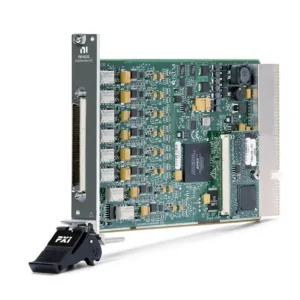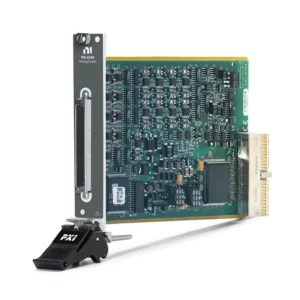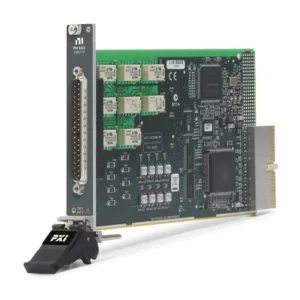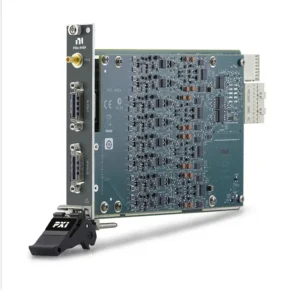




Product Introduction
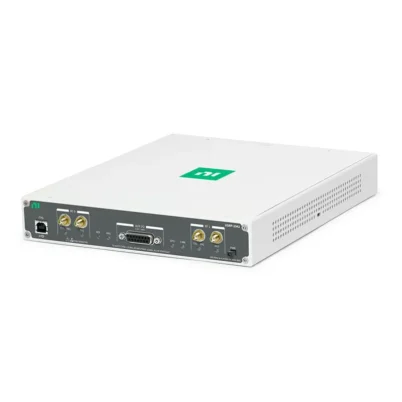
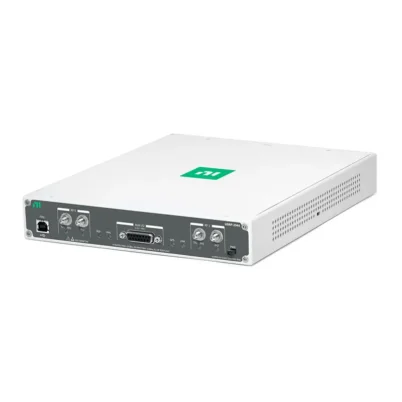
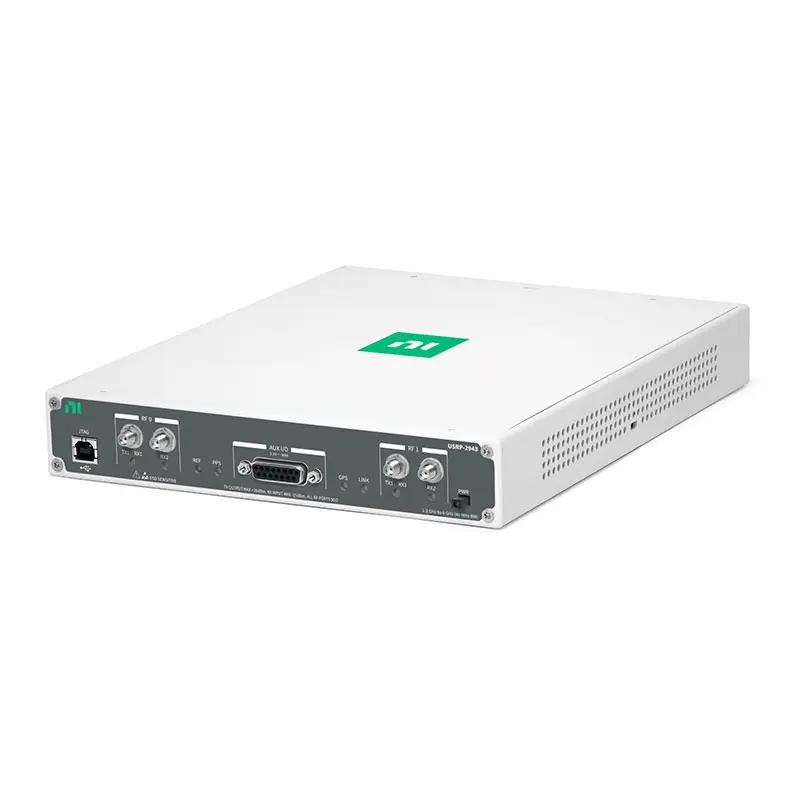
Земля NI USRP-2943 is a high-performance software defined radio (SDR) platform designed for advanced wireless communications research, RF prototyping, MIMO development, radar experimentation, spectrum monitoring, direction finding, and FPGA-based signal processing.
Featuring continuous RF coverage from 1.2 GHz to 6 GHz, two transmit channels, two receive channels, wide instantaneous bandwidth options, high-speed I/Q processing, and onboard programmable FPGA resources, the USRP-2943 provides a flexible platform for developing sophisticated multi-channel RF and wireless systems.
Its higher-frequency operating range makes the USRP-2943 particularly useful for applications involving 2.4 GHz and 5 GHz wireless systems, cellular research, ISM-band communications, radar, satellite-related experimentation, MIMO, beamforming, and other RF applications requiring operation up to 6 GHz.
Product Overview
Земля NI USRP-2943 belongs to the high-performance NI USRP family and provides a 2 TX / 2 RX RF architecture for multi-channel software-defined radio applications.
Compared with the USRP-2940 and USRP-2942, the USRP-2943 is optimized for higher-frequency RF applications. Its 1.2 GHz to 6 GHz tuning range extends coverage into important 5 GHz wireless bands and other microwave-frequency applications that are outside the operating range of lower-frequency USRP models.
The device combines wideband RF front ends, high-speed analog-to-digital and digital-to-analog conversion, onboard FPGA processing, and high-throughput host connectivity. Engineers can therefore implement signal-processing functions either on the host computer or directly in FPGA logic depending on latency, throughput, and application requirements.
Key Features
1.2 GHz to 6 GHz RF Frequency Range
The USRP-2943 provides continuous RF tuning across a broad high-frequency range for both transmit and receive applications.
- 1.2 GHz to 6 GHz transmit frequency range
- 1.2 GHz to 6 GHz receive frequency range
- Software-programmable center frequency
- Multi-band wireless research
- Microwave-frequency SDR experimentation
Advantage: The frequency range covers many important cellular, ISM, WLAN, radar, and experimental RF bands, allowing one SDR platform to support multiple research applications.
2 Transmit and 2 Receive RF Channels
The USRP-2943 provides two RF transmit channels and two RF receive channels for advanced multi-channel SDR systems.
- 2 RF transmit channels
- 2 RF receive channels
- 2×2 MIMO capability
- Multi-antenna experiments
- Parallel signal acquisition
- Parallel waveform generation
Advantage: The 2 TX / 2 RX architecture enables MIMO, spatial diversity, beamforming, direction finding, and other applications requiring multiple RF channels.
Wide Instantaneous Bandwidth
The USRP-2943 is designed for wideband RF signal acquisition and generation, with different bandwidth configurations available depending on the specific hardware version.
- Wideband RF acquisition
- Wideband RF generation
- High-throughput I/Q processing
- Broadband communication research
- Wideband spectrum experiments
Advantage: Wide instantaneous bandwidth enables engineers to capture and generate complex broadband signals required by modern wireless, radar, and spectrum research applications.
High-Speed I/Q Processing
The USRP-2943 supports high-rate complex I/Q signal processing for demanding RF applications.
- High-speed complex I/Q acquisition
- High-speed I/Q waveform generation
- Wideband digital signal processing
- Real-time RF experimentation
- High-throughput host streaming
Advantage: High-speed I/Q processing supports sophisticated modulation, demodulation, spectrum analysis, radar, and communication algorithms.
14-Bit Receiver ADC Architecture
The receiver subsystem incorporates high-speed analog-to-digital converters for digitizing incoming RF signals.
- 14-bit ADC resolution
- High-speed RF signal conversion
- Wideband signal acquisition
- Multi-channel reception
- Complex baseband processing
Advantage: The ADC architecture provides the digital signal representation required for wideband software-defined receiver applications.
16-Bit Transmitter DAC Architecture
The transmitter subsystem uses high-speed digital-to-analog conversion for programmable RF waveform generation.
- 16-битное разрешение ЦАП
- Complex I/Q generation
- Digital modulation
- Custom RF waveform generation
- Wideband transmitter development
Advantage: High-resolution DAC resources support flexible generation of complex modulated and experimental RF waveforms.
Software-Programmable RF Configuration
Operating parameters can be configured through compatible SDR software environments.
- Software-selectable center frequency
- Programmable transmit gain
- Programmable receive gain
- Configurable sample rate
- Custom RF waveform parameters
Advantage: Engineers can rapidly change RF operating conditions without redesigning the physical radio hardware.
User-Programmable FPGA
The USRP-2943 includes onboard FPGA resources for implementing customized real-time signal-processing algorithms.
- FPGA-based digital signal processing
- Real-time filtering
- Digital upconversion
- Digital downconversion
- Custom triggering
- Signal detection
- Low-latency processing
Advantage: FPGA processing allows time-critical functions to execute directly within the radio hardware, reducing latency and host-processing requirements.
Real-Time FPGA Signal Processing
Custom DSP functions can be implemented close to the RF front end using the onboard FPGA architecture.
- FFT processing
- Digital filtering
- Channelization
- Signal detection
- Custom modulation
- Custom demodulation
- Data reduction
Advantage: FPGA-based processing can reduce the amount of raw RF data that must be transferred to the host while providing deterministic real-time operation.
High-Speed Host Connectivity
The USRP-2943 supports high-throughput host connectivity for transferring wideband I/Q data between the SDR hardware and processing system.
- High-speed Ethernet connectivity
- High-throughput I/Q streaming
- PC-based SDR processing
- Flexible system integration
- Wideband data transfer
Advantage: High-speed host connectivity enables wideband signals to be streamed for software-based analysis and communication-system development.
External Timing and Reference Support
The USRP-2943 supports external clock and timing references for coordinated multi-device RF systems.
- External frequency reference support
- External timing synchronization
- Multi-radio synchronization
- Coordinated RF acquisition
- Coordinated RF generation
Advantage: Common timing and frequency references are particularly important for MIMO, beamforming, direction-finding, and multi-radio experiments.
Software Defined Radio Architecture
The USRP-2943 allows many traditional radio functions to be defined and modified through software and FPGA logic.
- Programmable modulation
- Programmable demodulation
- Digital filtering
- Synchronization algorithms
- Channel coding
- Пользовательские протоколы связи
Advantage: A single hardware platform can be reconfigured for many different wireless and RF applications.
Technical Specifications
| Параметр | Описание |
|---|---|
| Product Type | High-Performance Software Defined Radio |
| Модель | NI USRP-2943 |
| RF Channels | 2 TX / 2 RX |
| Transmit Frequency Range | 1.2 GHz to 6 GHz |
| Receive Frequency Range | 1.2 GHz to 6 GHz |
| Transmit Channels | 2 |
| Receive Channels | 2 |
| ADC Resolution | 14-bit |
| DAC Resolution | 16-битный |
| Signal Architecture | Complex Baseband I/Q |
| RF Gain | Software Programmable |
| ФПГА | User-Programmable FPGA Architecture |
| Host Connectivity | High-Speed Ethernet / Compatible High-Throughput Interface |
| External Reference | Supported |
| Синхронизация | External Clock and Timing Support |
| Primary Applications | MIMO, Wireless Communications, Radar, Spectrum Monitoring, Direction Finding and FPGA-Based SDR |
Software Ecosystem
The NI USRP-2943 integrates with compatible NI software environments for RF configuration, signal acquisition, waveform generation, FPGA programming, and advanced software-defined radio development.
- NI-USRP: Provides software interfaces for RF frequency configuration, gain control, sample-rate configuration, waveform generation, signal acquisition, and I/Q streaming.
- LabVIEW: Enables graphical development of communications, modulation, demodulation, RF measurement, spectrum analysis, and signal-processing applications.
- LabVIEW FPGA: Enables compatible configurations to implement customized real-time and low-latency processing directly on the onboard FPGA.
- Custom SDR Applications: Engineers can create application-specific wireless communication, MIMO, radar, spectrum-monitoring, and RF research systems.
Industries
- Wireless Communications
- Telecommunications Research
- Aerospace and Defense Research
- Radar Development
- RF and Microwave Engineering
- Electronic Warfare Research
- Wireless Product Development
- Universities and Education
- Scientific Research
Applications
2×2 MIMO Communications
The dual transmit and receive architecture makes the USRP-2943 suitable for advanced multi-antenna communication research.
- 2×2 MIMO
- Spatial multiplexing
- Transmit diversity
- Receive diversity
- Multi-antenna wireless systems
2.4 GHz Wireless Research
The USRP-2943 frequency range includes the widely used 2.4 GHz ISM band.
- 2.4 GHz WLAN research
- ISM-band experiments
- Wireless interference studies
- Пользовательские протоколы связи
- Multi-antenna wireless experiments
5 GHz Wireless Research
One of the key advantages of the USRP-2943 is its ability to operate in important 5 GHz wireless frequency bands.
- 5 GHz WLAN research
- Wideband wireless experiments
- RF channel characterization
- MIMO research
- Interference analysis
Cellular Communications Research
The 1.2 GHz to 6 GHz operating range covers numerous frequency bands relevant to experimental cellular communication systems.
- Cellular waveform development
- Physical-layer research
- MIMO algorithm development
- Channel characterization
- Receiver testing
Radar Research
Wide bandwidth, multiple RF channels, and FPGA processing make the USRP-2943 suitable for experimental radar applications.
- Radar waveform generation
- Radar signal acquisition
- FMCW radar research
- Pulse processing
- Multi-channel radar experiments
- Real-time radar DSP
Spectrum Monitoring
The USRP-2943 can acquire wideband complex I/Q signals for software-based spectrum monitoring and RF analysis.
- Wideband spectrum monitoring
- Signal detection
- Interference analysis
- RF environment monitoring
- Signal classification research
Beamforming Research
Multiple RF channels can support experimental beamforming and antenna-array applications.
- Digital beamforming
- Antenna-array research
- Spatial signal processing
- Phase-coherent experiments
- Multi-channel wireless systems
Direction Finding
Multiple synchronized receive channels can be used for experimental direction-of-arrival and localization research.
- Direction-of-arrival estimation
- Phase-comparison techniques
- Multi-antenna receiver systems
- RF localization
- Spatial spectrum analysis
FPGA-Based Real-Time Signal Processing
The onboard FPGA allows demanding signal-processing functions to execute directly inside the SDR hardware.
- Real-time digital filtering
- FFT processing
- Signal detection
- Channelization
- Custom triggering
- Low-latency control
Comparison with Similar USRP Devices
| Модель | Основное различие | Best Application |
|---|---|---|
| NI USRP-2943 | 1.2 GHz to 6 GHz high-performance SDR with 2 TX / 2 RX channels and programmable FPGA resources. | Higher-frequency MIMO and wideband RF research |
| NI USRP-2940 | 2 TX / 2 RX SDR covering 50 MHz to 2.2 GHz for lower-frequency RF and wireless applications. | VHF, UHF and lower-frequency MIMO research |
| NI USRP-2942 | 2 TX / 2 RX SDR covering 400 MHz to 4.4 GHz, providing broader lower-frequency coverage but a lower maximum RF frequency than the USRP-2943. | General wideband MIMO research up to 4.4 GHz |
| NI USRP-2953 | Related 1.2 GHz to 6 GHz high-performance SDR with integrated GPS-disciplined timing capability. | Synchronized high-frequency MIMO and distributed RF systems |
Recommended Related Products
| NI USRP-2942 | 2 TX / 2 RX SDR covering 400 MHz to 4.4 GHz for applications requiring greater lower-frequency coverage. |
| NI USRP-2953 | High-performance 1.2 GHz to 6 GHz SDR with GPS-disciplined timing for synchronized MIMO and distributed RF applications. |
| NI USRP-2940 | 50 MHz to 2.2 GHz 2 TX / 2 RX SDR for lower-frequency MIMO, communications, and RF research. |
| NI USRP-2932 | GPS-disciplined SDR covering 400 MHz to 4.4 GHz for synchronized RF research with lower channel and bandwidth requirements. |
Why Choose USRP-2943?
- 1.2 GHz to 6 GHz continuous RF coverage
- 2 transmit and 2 receive RF channels
- Suitable for 2×2 MIMO applications
- Supports 2.4 GHz wireless research
- Supports 5 GHz wireless research
- Wideband RF acquisition and generation
- 14-bit receiver ADC architecture
- 16-bit transmitter DAC architecture
- Software-programmable RF parameters
- User-programmable FPGA resources
- High-speed I/Q processing
- External synchronization support
- Suitable for beamforming and direction finding
- Suitable for radar and spectrum research
Frequently Asked Questions
What is the NI USRP-2943?
The NI USRP-2943 is a high-performance software-defined radio providing two transmit and two receive RF channels with frequency coverage from 1.2 GHz to 6 GHz. It is designed for MIMO, wireless communications, radar, spectrum monitoring, direction finding, and advanced SDR research.
What frequency range does the USRP-2943 support?
The USRP-2943 supports RF transmission and reception from 1.2 GHz to 6 GHz.
How many RF channels does the USRP-2943 have?
The USRP-2943 provides two transmit channels and two receive channels, enabling 2×2 MIMO and other multi-channel RF applications.
Can the USRP-2943 be used for MIMO?
Yes. The 2 TX / 2 RX RF architecture makes the USRP-2943 suitable for 2×2 MIMO, spatial multiplexing, transmit and receive diversity, and other multi-antenna wireless communication experiments.
Can the USRP-2943 operate at 2.4 GHz?
Yes. The 1.2 GHz to 6 GHz operating range includes the 2.4 GHz ISM band, making the USRP-2943 suitable for 2.4 GHz WLAN, ISM, interference, and custom wireless communication research.
Can the USRP-2943 operate in the 5 GHz band?
Yes. One of the important advantages of the USRP-2943 is its frequency coverage up to 6 GHz, allowing it to support many experimental applications operating in the 5 GHz wireless spectrum.
Does the USRP-2943 have a programmable FPGA?
Yes. The USRP-2943 includes onboard FPGA resources for real-time filtering, digital upconversion and downconversion, signal detection, triggering, modulation, demodulation, and other custom low-latency processing functions.
What is the difference between USRP-2942 and USRP-2943?
The primary difference is RF frequency coverage. The USRP-2942 covers 400 MHz to 4.4 GHz, while the USRP-2943 covers 1.2 GHz to 6 GHz. The USRP-2942 provides better lower-frequency coverage, whereas the USRP-2943 is the better choice when operation above 4.4 GHz, including many 5 GHz applications, is required.
What is the difference between USRP-2943 and USRP-2953?
Both models target high-performance RF applications in the 1.2 GHz to 6 GHz range. The USRP-2953 adds integrated GPS-disciplined timing capability, making it more suitable for systems requiring improved frequency accuracy, absolute timing, or synchronization between distributed SDR devices.
Can the USRP-2943 be used for radar research?
Yes. Its wide RF coverage, multiple transmit and receive channels, wideband signal-processing architecture, and programmable FPGA resources make the USRP-2943 suitable for experimental FMCW radar, waveform generation, signal acquisition, and real-time radar DSP applications.
Can the USRP-2943 be used for beamforming?
Yes. Its multiple RF channels can support experimental beamforming and multi-antenna signal-processing applications. Larger antenna arrays can be developed by coordinating multiple compatible SDR devices with an appropriate synchronization architecture.
Can the USRP-2943 be used for direction finding?
Yes. Multiple receive channels can support phase-based direction-of-arrival and RF localization research when the RF channels and antennas are configured with the synchronization and calibration required by the application.
Can the USRP-2943 be used as a spectrum analyzer?
The USRP-2943 can acquire wideband complex I/Q signals for software-based spectrum monitoring, signal detection, and interference analysis. However, it should not automatically be considered a replacement for a calibrated spectrum analyzer when traceable amplitude accuracy, regulatory compliance, or instrument-grade measurement performance is required.
Which should I choose, USRP-2942 or USRP-2943?
Choose the USRP-2942 when your application requires operation below 1.2 GHz or primarily within the 400 MHz to 4.4 GHz range. Choose the USRP-2943 when higher-frequency operation up to 6 GHz is required, particularly for 5 GHz wireless, microwave, radar, and related RF research applications.
What software supports the USRP-2943?
The USRP-2943 can be used with compatible NI-USRP, LabVIEW, and FPGA development environments for RF configuration, waveform generation, signal acquisition, I/Q streaming, digital signal processing, and advanced SDR development.
Заключение
Земля NI USRP-2943 software defined radio is a high-performance 2 TX / 2 RX SDR platform for MIMO communications, 2.4 GHz and 5 GHz wireless research, radar development, spectrum monitoring, direction finding, beamforming, and FPGA-based signal processing. With continuous 1.2 GHz to 6 GHz RF coverage, wideband signal acquisition and generation, programmable FPGA resources, high-speed I/Q processing, and multi-channel RF capability, the USRP-2943 provides a flexible platform for advanced high-frequency wireless and RF research applications.